
The best home improvement ideas deliver the biggest change for the least money and disruption: fresh paint, better lighting, improved energy efficiency, and stronger curb appeal. Below are 20 high-impact projects — most doable in a weekend — organized from cheapest to most ambitious, so you can start wherever your budget allows.
Home improvement does not have to mean a six-figure renovation. In fact, the projects with the best return on satisfaction are usually the unglamorous ones: sealing the drafts, upgrading the lights, painting the rooms you stare at every day. This guide skips the fantasy renovations and focuses on home improvement ideas that real homeowners actually finish — projects that make the house more comfortable, cheaper to run, and nicer to come home to.
Key Facts
- Start with a walk-through: list everything that bothers you room by room, then rank these home improvement ideas by impact-per-dollar, not by annoyance level.
- Budget 1–3% of home value per year for maintenance and improvements — a widely used planning rule of thumb.
- Energy projects pay twice: lower utility bills every month plus a more comfortable house immediately.
- DIY what is cosmetic; hire what is structural: paint and hardware are homeowner-friendly; electrical, plumbing, and load-bearing work belong to licensed pros.
- Curb appeal counts daily: you see the front of your house every time you come home — it deserves a share of every improvement budget.
The Ground Rules Before You Start
These ground rules make the home improvement ideas below work harder.
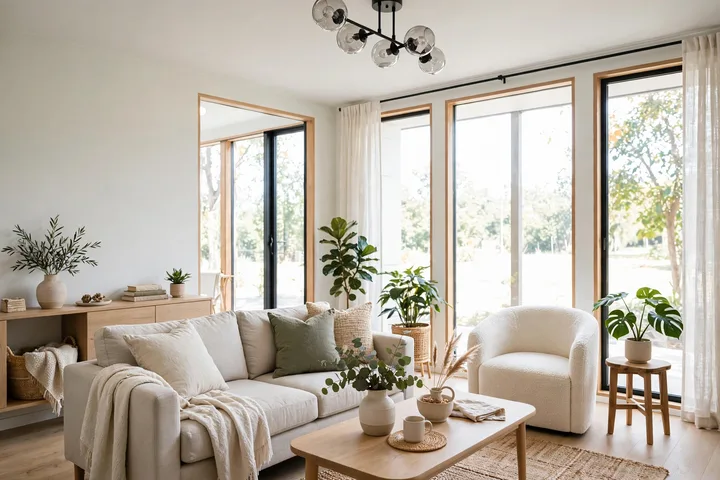
Rule 1: Fix what is broken before improving what is fine. A leaking gutter, a running toilet, or a failing water heater will destroy any cosmetic upgrade built on top of them. Do a maintenance pass first — roof, gutters, plumbing, HVAC filters, smoke detectors — then spend on the fun stuff with a clear conscience.
Rule 2: One project at a time. Half-finished rooms multiply stress. Finish the paint before starting the floors; finish one bathroom before demoing the second. Momentum comes from completions, not from having five projects “in progress.”
Rule 3: Know your permits. Cosmetic work (paint, flooring, fixtures) rarely needs permits. Structural, electrical, plumbing, and HVAC changes usually do — and unpermitted work can haunt a future sale. When in doubt, a quick call to your local building department settles it. Our small living room ideas guide is a good companion if your improvement list starts with making tight spaces live larger.
“The best home improvement is the one you actually finish. Pick projects sized to your weekends, not your fantasies.”
Weekend Wins: Ideas 1–5
The first five home improvement ideas are weekend wins — fast, cheap, and high-impact.
1. Paint the rooms you live in most
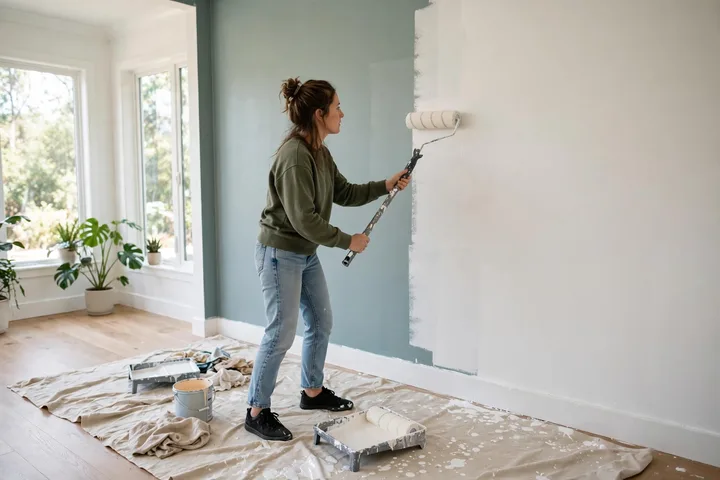
No project changes a room for less money than paint. A gallon or two, a weekend, and a tired room looks new. Stick to warm whites and light neutrals for the biggest brightening effect, use quality paint (it covers in fewer coats and touches up better), and do not skip the prep — cleaning, patching, and taping determine the result more than the brand. Ceilings count too: a fresh bright-white ceiling lifts the whole room. Of all home improvement ideas, paint delivers the biggest change for the least money.
2. Upgrade the light fixtures
Builder-grade “boob lights” and dated chandeliers drag down entire rooms. Swapping them for modern fixtures — a simple drum pendant, a sputnik-style chandelier, clean flush-mounts — is a one-hour job per fixture (turn off the breaker, obviously) that changes how the house feels at night. While you are at it, put dimmers on the main living areas; dimmable light is the cheapest luxury in home design.
3. Replace hardware throughout
Door handles, cabinet knobs, switch plates, outlet covers, towel bars — the small metal bits you touch and see constantly. Updating them to one consistent finish (matte black, brushed nickel, or brass) unifies the whole house for a few hundred dollars. It is tedious but simple work, perfect for an afternoon with a podcast.
4. Caulk, weatherstrip, and seal the obvious leaks
On a windy day, walk the house with a lit incense stick or just your hand: windows, doors, attic hatches, and where plumbing enters walls. Caulk the stationary gaps, weatherstrip the moving ones. This is the least photogenic project on this list and one of the highest-returning — drafts you eliminate are heating and cooling dollars you keep.
5. Deep clean like you are selling
Before spending a dollar, clean like a listing photographer is coming: wash windows inside and out, scrub grout, shampoo carpets, wipe every baseboard and switch plate, clean the oven and fridge coils. A truly deep-cleaned house can feel remodeled — and it reveals what actually needs improving versus what was just dirty. Many “we need new floors” emergencies turn out to be “we need a rental carpet cleaner” situations.
Energy Savers: Ideas 6–10
Home improvement ideas 6 through 10 are energy savers that pay you back.
6. Swap every bulb to LED
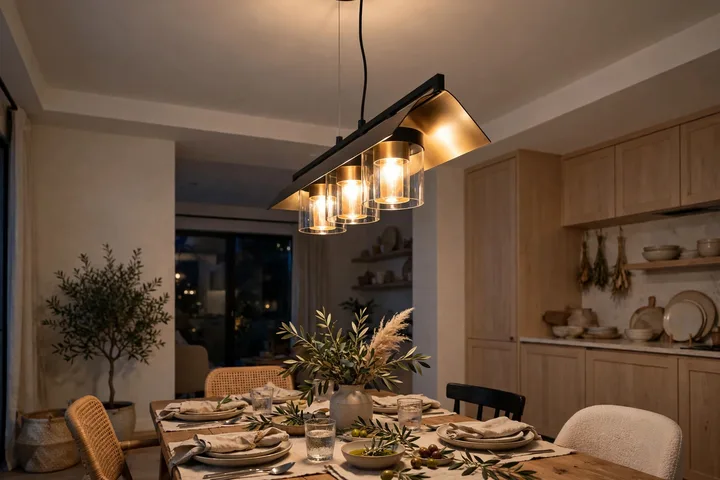
If any incandescents or CFLs remain, replacing them with LEDs is the fastest payback in the house — LEDs use a fraction of the energy and last years longer. Choose 2700K “warm white” for living areas and 3000–4000K for task areas like kitchens and garages. The U.S. Department of Energy’s Home Energy Checklist is a solid room-by-room reference for this and the other efficiency wins below — lighting, water heating, and HVAC habits that trim bills without any renovation.
7. Install a smart thermostat
Heating and cooling are typically the biggest slice of home energy use, and a smart thermostat trims the waste automatically — learning your schedule, dialing back when you are away, and reporting where the energy goes. Most install in under an hour on existing wiring. The comfort upgrade is immediate; the bill reduction follows.
8. Seal and insulate the attic
Heat rises, and in under-insulated houses it rises straight out through the attic. Air-sealing the attic floor (around lights, pipes, and the hatch) plus topping up insulation to recommended levels is consistently ranked among the highest-ROI improvements ever measured — invisible, unglamorous, and relentlessly effective. This is a great pro job: quick, affordable, and done right the first time.
9. Fix the water wasters
A running toilet can waste hundreds of gallons a day; a dripping faucet, thousands of gallons a year. Replace toilet flappers, fix drips, and when fixtures get replaced, choose WaterSense labeled models. These are plumbing basics, but they are also the cheapest “remodel” your utility bills will ever get.
10. Service the HVAC and seal the ducts
Annual professional maintenance keeps the system efficient and catches small problems before they become replacements. Sealing leaky ductwork — especially ducts running through attics and crawlspaces — keeps conditioned air reaching the rooms instead of the rafters. Change filters on schedule; it is a two-minute job that the system repays in efficiency and lifespan.
“Energy improvements are the only home projects that mail you a thank-you note every month. It is called a lower utility bill.”
Curb Appeal: Ideas 11–15
The next set of home improvement ideas boosts curb appeal.
11. Refresh the front door
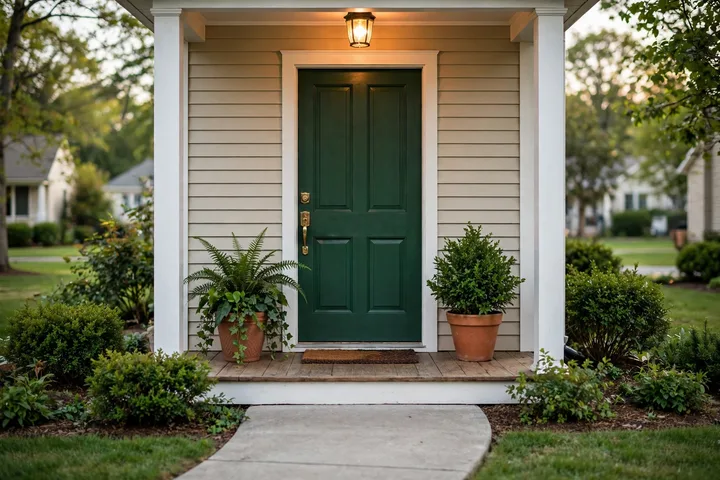
The front door is the handshake of the house. Paint it a confident color (deep green, navy, classic red, or black), update the handle and knocker, and add a new kick plate if needed. A quart of exterior paint and an afternoon is all it takes — and it is the first thing guests, neighbors, and future buyers notice.
12. Style the porch like a room
A couple of chairs or a bench, an outdoor rug, potted plants at two heights, and a lantern or two turn a bare porch into an outdoor room. It does not need to be expensive — thrifted furniture with outdoor cushions works beautifully. The goal is a porch that says someone lives here and loves it.
13. Mulch and edge the beds
Fresh mulch and crisp bed edges are the landscaping equivalent of a haircut: instant neatness. A few bags of mulch, an afternoon of weeding and edging, and trimmed-back overgrowth transform the whole front yard. While you are at it, prune anything touching the siding — plants against the house trap moisture and invite pests.
14. Light the path and the facade
Solar path lights have gotten genuinely good — no wiring, and they mark walkways and beds nicely. For the house itself, two well-placed uplights on the facade or a new porch fixture make the home look finished and welcoming after dark, and lit exteriors are a real (if modest) security plus. Keep light warm-toned; cool white on a house looks institutional.
15. Update the small exterior details
House numbers, mailbox, doorbell, porch light — the jewelry of the exterior. Modern, legible house numbers in a finish matching your new door hardware, a sturdy mailbox, and a working doorbell you are not embarrassed by. Individually trivial; together, they signal a cared-for home.
Comfort Upgrades: Ideas 16–20
Home improvement ideas 16 through 20 are comfort upgrades for daily life.
16. Add ceiling fans where they help
A ceiling fan lets you feel comfortable at a higher thermostat setting in summer, trimming cooling costs while the breeze does the work. Choose the right size for the room, hang it at the right height (blades about 8–9 feet off the floor), and reverse the direction in winter to push warm air down. In bedrooms, a quiet fan is a sleep-quality upgrade too.
17. Refinish or refresh one room of flooring
You do not need whole-house floors at once. Refinishing worn hardwood in the living room, or laying quality luxury vinyl plank in one high-traffic area, transforms the home’s feel underfoot. Start with the room you see first when you walk in — it sets the tone for everything else.
18. Give the bathroom a mini-remodel
New mirror, modern light fixture, fresh faucet, updated hardware, regrouted or repainted tile, and a deep clean — the cosmetic bathroom refresh from our bathroom remodel ideas guide delivers most of the visual impact for a fraction of a full renovation. Bathrooms are small, so every change is visible; that cuts both ways, so keep the palette calm.
19. Give the kitchen a mini-remodel
Same principle: paint or reface cabinets, new hardware and faucet, under-cabinet lighting, a fresh backsplash. Our kitchen remodel ideas guide walks through the full spectrum, but the mini version — a few thousand dollars and a couple of weekends — fixes 80% of what makes a kitchen feel dated.
20. Build a home maintenance calendar
The least exciting and most valuable project: a simple annual calendar of maintenance tasks — HVAC filters quarterly, gutters twice a year, water heater flush annually, smoke detector batteries, caulk inspection, dryer vent cleaning. Homes do not deteriorate all at once; they deteriorate one skipped task at a time. A calendar turns maintenance from guilt into routine, and routine is what keeps a house solid for decades.
Home Improvement Mistakes to Avoid
Even the best home improvement ideas won’t save a project that makes these mistakes:
- Improving past the neighborhood. The nicest house on the block rarely gets its investment back at sale. Match the area’s standard, then stop.
- Starting with the fun stuff. New paint over a leaking roof is money thrown away. Maintenance first, cosmetics second.
- DIYing electrical and plumbing. Beyond swapping a fixture or faucet, licensed pros protect your safety, your insurance, and your resale.
- No contingency. Keep 10–20% of every project budget unallocated. Surprises are not bad luck; they are the norm.
- Chasing trends in permanent choices. Trendy paint is cheap to redo; trendy tile is not. Put the bold choices where they are easy to change.
- Five projects at once. Finish one before starting the next. A house full of half-done projects is worse than a house with a list.
Frequently Asked Questions
Where should I start with home improvements?
Start with a maintenance pass (roof, gutters, plumbing, HVAC, detectors), then pick the project with the best impact-per-dollar — usually paint, lighting, or energy fixes. Do one room or one project at a time and finish it before starting the next.
What home improvements add the most value?
Historically, the best returns come from curb appeal, kitchen and bathroom refreshes kept tasteful and neutral, and energy-efficiency upgrades. The real answer depends on your market — but broadly appealing, well-executed basics beat bold personal statements at resale.
How much should I budget for home improvements each year?
A common planning rule of thumb is 1–3% of the home’s value per year for maintenance and improvements, with older homes toward the higher end. Keep a separate 10–20% contingency inside each individual project budget.
What can I DIY and what needs a pro?
DIY-friendly: painting, hardware, landscaping, caulking, basic fixture swaps, cosmetic updates. Hire licensed pros for: electrical panel and wiring work, plumbing rough-in, structural changes, roofing, and HVAC. When in doubt, get quotes — pro work is often cheaper than fixing DIY mistakes.
Do I need a permit for home improvements?
Cosmetic work like painting, flooring, and fixture swaps typically does not. Structural, electrical, plumbing, and HVAC changes usually do. Rules vary by locality, so check with your local building department before starting — unpermitted work can complicate insurance claims and future sales.
What is the fastest home improvement with visible results?
Paint. One weekend, a few gallons, and the most-used rooms look new. Second place: lighting — new fixtures and dimmers change how the whole house feels after dark — proof that the best home improvement ideas are often the simplest.
Conclusion
Home improvement is a long game played one finished project at a time. Maintain first, then work through these 20 home improvement ideas in whatever order fits your budget — a painted room here, sealed ducts there, a front door you are proud of. A year of steady weekend wins adds up to a house that is more comfortable, cheaper to run, and unmistakably yours.
Leave a Reply