
Canadian vs American Thanksgiving differ in three big ways: Canadians celebrate on the second Monday in October, Americans on the fourth Thursday in November; the Canadian holiday is rooted in European harvest festivals and early explorer thanksgivings, while the American one traces to the 1621 Plymouth harvest feast; and the American celebration is a far larger travel-and-shopping event. Both share roast turkey, family gatherings, and a spirit of gratitude — but their histories, timing, and traditions are genuinely distinct.
The comparison is worth making carefully, because the two holidays are easy to confuse at a glance. Same name, same bird, same autumn mood — yet they fall six weeks apart and grew out of different stories. This guide breaks down every meaningful difference between Canadian and American Thanksgiving, from the dates on the calendar to the food on the table.
Key Facts
Canada: second Monday in October — a statutory holiday in most provinces, fixed permanently in 1957.
United States: fourth Thursday in November — fixed by a 1941 act of Congress.
The Canadian thanksgiving tradition is older: Sir Martin Frobisher’s 1578 expedition held a thanksgiving in what is now Nunavut, more than four decades before the 1621 Plymouth feast.
Both center on roast turkey, family gatherings, and gratitude — but the American holiday is a massive travel week with parades and football, while the Canadian one is a quieter three-day autumn weekend.
Canadian vs American Thanksgiving Dates: When Each Country Celebrates
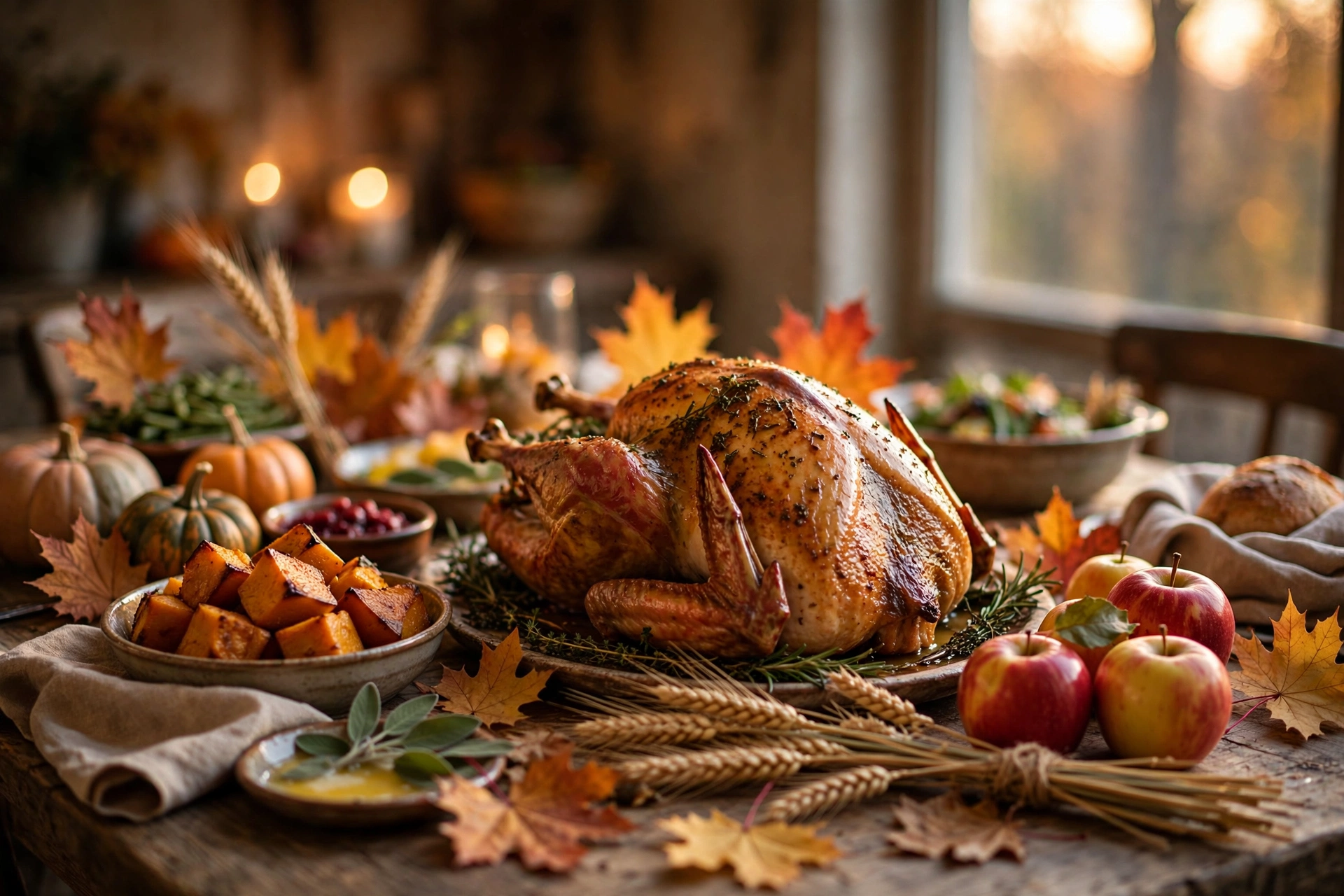
The most obvious difference in the Canadian vs American Thanksgiving comparison is the date. Canada celebrates Thanksgiving on the second Monday in October. Because it always falls on a Monday, Canadians get a reliable three-day weekend every year — in 2026, that means Monday, October 12. The Government of Canada lists Thanksgiving Day as “the second Monday in October” among its official statutory holidays on the canada.ca holiday closures page, which confirms its status as a federal holiday.
The United States celebrates Thanksgiving on the fourth Thursday in November. That puts it much later in the autumn — six weeks after the Canadian date — and creates a four-day weekend when combined with Friday. In 2026, American Thanksgiving falls on Thursday, November 26. Because the date shifts within the fourth week, Americans often need to check when Thanksgiving falls each year, while Canadians always know it will be that second October Monday.
The practical effects are very different. Canadian Thanksgiving lands in early-to-mid autumn, when fall foliage is still vivid and the weather is often mild enough for an afternoon walk or one last trip to the cottage. American Thanksgiving lands in late autumn, when much of the northern United States is already cold — it feels like the gateway to winter and the Christmas season rather than a harvest celebration.
Why the Dates Differ: Harvest, Climate, and History
The date gap is not an accident — it reflects real differences in climate and agricultural history. Canada sits farther north, so its growing season ends earlier. By the second Monday in October, the harvest is genuinely complete across most of the country. A thanksgiving tied to the harvest naturally falls in early October, when the crops are in and the fields are golden. In the United States, the growing season runs longer, especially in the South, so a late-November harvest thanksgiving still made seasonal sense when the tradition formed.
History shaped the dates just as much as climate. In Canada, thanksgiving proclamations were issued for decades on varying dates — the first national Thanksgiving was proclaimed by Parliament in 1879, and for years the date floated between October and November at the government’s discretion. On November 4, 1957, Parliament formally fixed Thanksgiving to the second Monday in October, calling it “a day of general thanksgiving to Almighty God for the bountiful harvest with which Canada has been blessed.” A Monday holiday created a predictable long weekend and locked the celebration into the harvest season.
In the United States, the path was messier. George Washington proclaimed a national day of thanksgiving in 1789, but it did not become a fixed annual holiday until Abraham Lincoln’s 1863 proclamation set the last Thursday in November. Then in 1939, Franklin D. Roosevelt moved it to the second-to-last Thursday to give retailers a longer Christmas shopping season — a controversial move nicknamed “Franksgiving” that split the country between two Thanksgivings for two years. Congress finally settled the matter in December 1941, passing a joint resolution that fixed Thanksgiving on the fourth Thursday in November starting in 1942.
“Two Thanksgivings, six weeks apart — one tied to the harvest, the other to history. The date is the whole story in miniature.”
Shared Traditions, Different Celebrations: Canadian vs American Thanksgiving Rituals
The Canadian vs American Thanksgiving traditions overlap at their core: both holidays gather families around a roast turkey, both involve expressions of gratitude, and both use autumn décor — pumpkins, gourds, wheat sheaves, and fall leaves — to set the scene. Both are also primarily family affairs rather than public spectacles, celebrated at home with the people closest to you. For the deeper meaning behind the holiday in both countries, our guide on why Thanksgiving is celebrated covers the shared spirit of gratitude that underpins both versions.
Beyond that shared heart, the celebrations diverge in scale and texture. American Thanksgiving is one of the country’s biggest travel events of the year. Tens of millions of Americans fly or drive home for the holiday, making Thanksgiving week the busiest travel period in the nation. The four-day weekend, the Macy’s Thanksgiving Day Parade (running since 1924), and a full day of NFL football — a tradition stretching back to 1920 — turn the day into a national
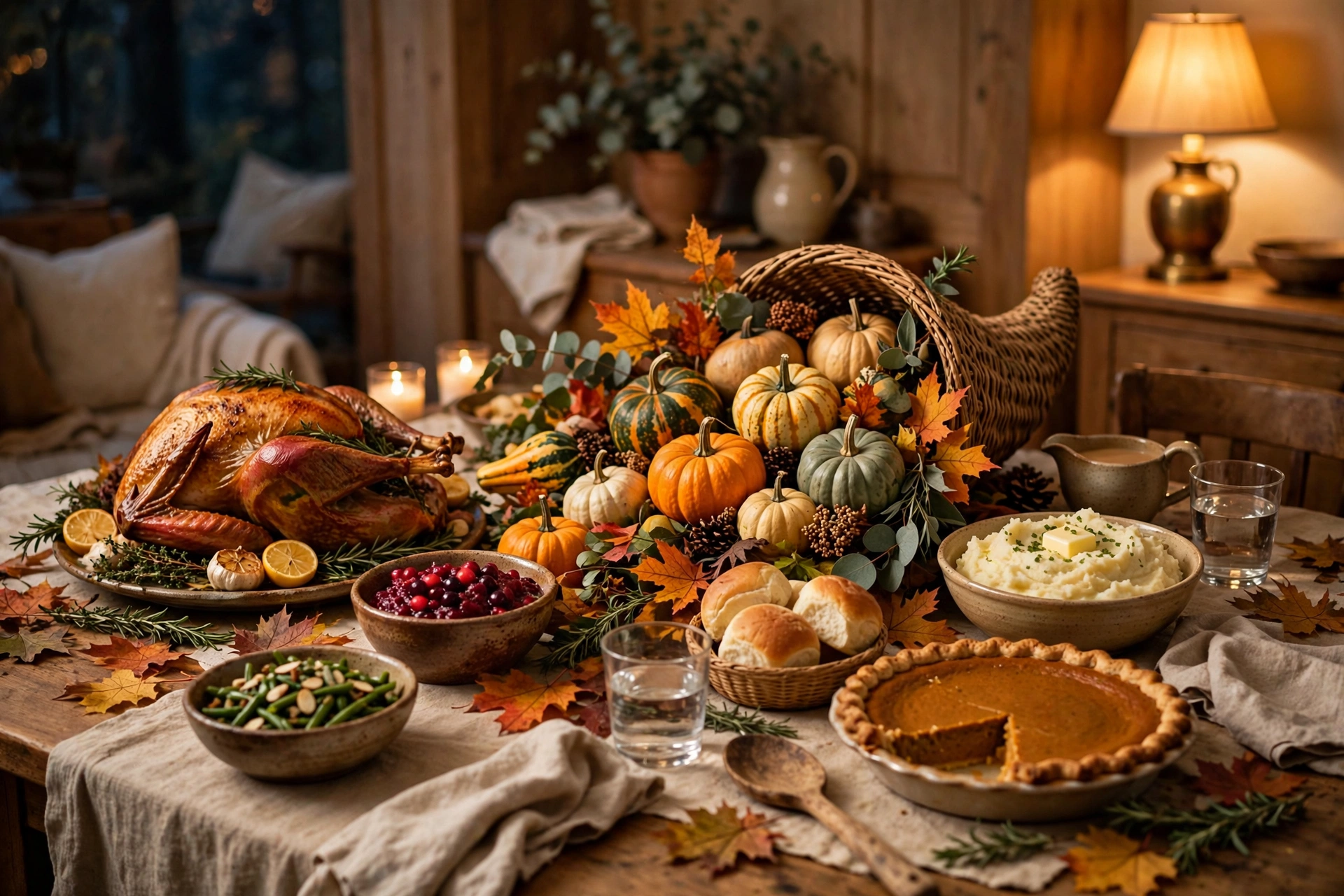
When it comes to canadian vs american thanksgiving food, both tables feature roast turkey, but the supporting dishes reflect each country’s distinct tastes.
media event. And it flows straight into Black Friday, the shopping phenomenon that makes Thanksgiving the unofficial launch of the Christmas retail season.
Canadian Thanksgiving is deliberately quieter. There is no cross-country travel crush, no equivalent of the Macy’s parade, and no football tradition on the same scale. It is a three-day weekend that Canadians often use as the last long weekend of autumn: many families make one final trip to the cottage before closing it up for winter, go apple picking, or take a last hike among the fall colors. Kitchener-Waterloo, Ontario, hosts a well-known Oktoberfest parade on Thanksgiving Monday — a distinctly Canadian twist — but the holiday as a whole remains lower-key and more intimate than its American counterpart. That difference in scale is the single biggest practical takeaway from any Canadian vs American Thanksgiving comparison.
Food Differences: Turkey and Beyond
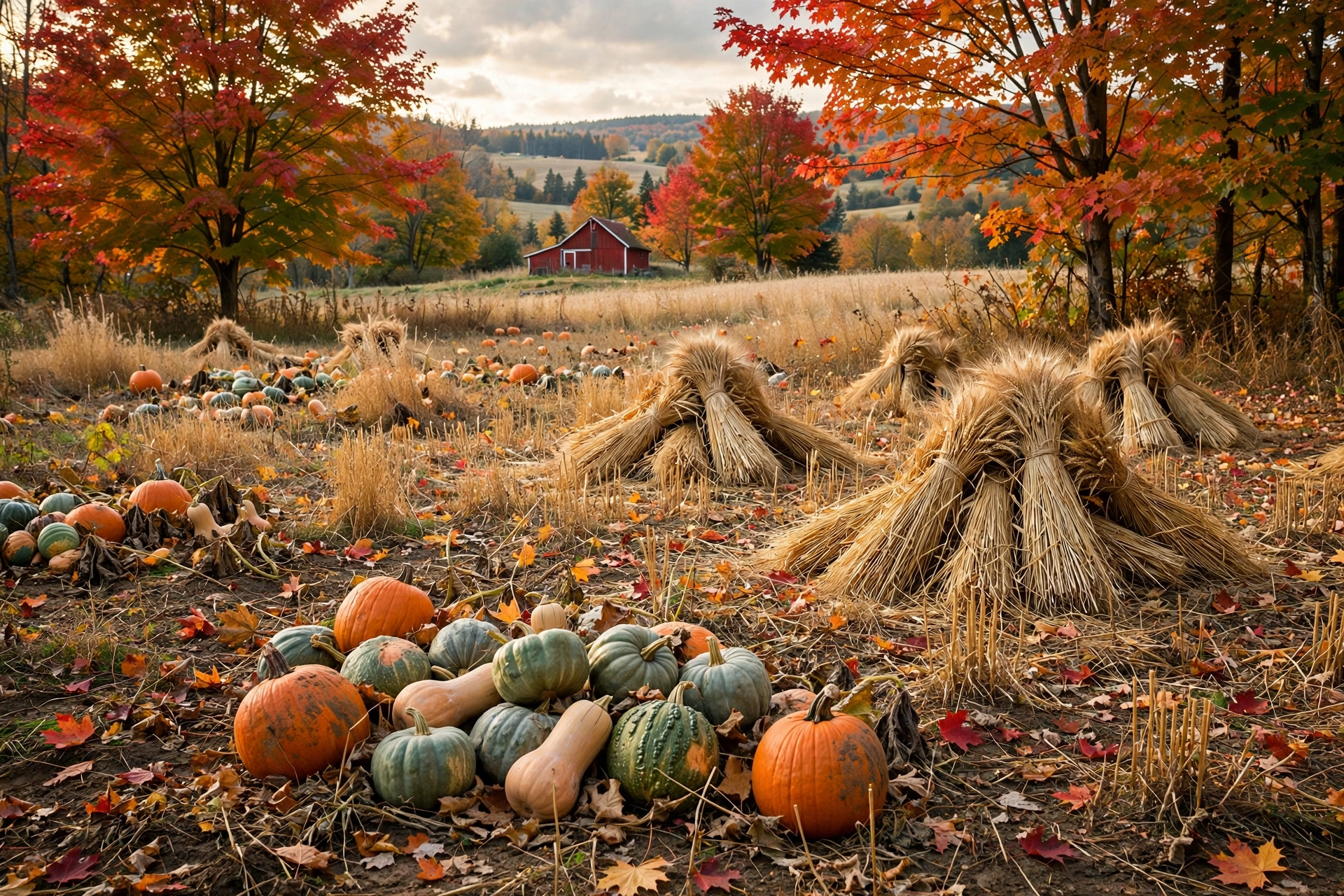
Roast turkey is the centerpiece of both tables — there is no version of Thanksgiving, Canadian or American, without the bird. Mashed potatoes, stuffing, gravy, and cranberry sauce appear on both sides of the border too. But the supporting dishes reveal real differences.
The American table is famously elaborate and regionally diverse. Sweet potato casserole topped with marshmallows, green bean casserole, and cornbread dressing (especially in the South) are dishes most Americans consider essential and most Canadians rarely encounter. The sheer variety of the American spread reflects the holiday’s role as the year’s biggest home-cooked meal, with regional specialties from New England clam stuffing to Louisiana oyster dressing. Pumpkin pie is the nearly universal American dessert, often followed by pecan pie in the South.
The Canadian table is simpler and often has a maple-sweetened twist. Maple-glazed squash, maple-roasted vegetables, and dishes sweetened with Canadian maple syrup give the meal a local signature. In Quebec, tourtière — the savory meat pie — sometimes joins or even replaces the turkey. Ham is a common alternative centerpiece in some provinces. Desserts lean Canadian too: pumpkin pie is popular, but so are butter tarts and Nanaimo bars, treats that rarely appear on an American Thanksgiving table. The overall Canadian menu tends to be smaller and less showy, reflecting the holiday’s quieter tone.
One more culinary difference is timing. Because Canadian Thanksgiving arrives six weeks earlier, the meal is made with early-autumn produce at its peak — fresh apples, squash, and root vegetables are genuinely in season. By late November, the American table relies more on stored and preserved harvest foods. If you are deciding what to cook, the Canadian vs American Thanksgiving menu question really comes down to which autumn you want to taste.
“Same turkey, different table: marshmallow-topped sweet potatoes in the U.S., maple-glazed everything in Canada.”
Which Thanksgiving Came First
This is the part of the Canadian vs American Thanksgiving story that surprises most people: the Canadian thanksgiving tradition is older — by more than four decades.
In 1578, the English explorer Sir Martin Frobisher led an expedition searching for the Northwest Passage. After a harrowing journey through the ice of what is now Nunavut, the expedition’s minister, Robert Wolfall, conducted a service of thanksgiving for their safe arrival — a moment widely cited as the first European thanksgiving in North America. Nearly three decades later, in 1606, Samuel de Champlain established the “Order of Good Cheer” at Port Royal in Nova Scotia, holding regular feasts of thanksgiving shared with the local Mi’kmaq people. You can read more about the colonial-era origins of the holiday in our history of Thanksgiving.
The famous American story comes later: in 1621, the Pilgrims of Plymouth and the Wampanoag people shared a three-day harvest feast, an event that Abraham Lincoln’s 1863 proclamation eventually anchored as the symbolic origin of the American holiday.
A fair caveat is that historians debate what counts as a “first.” Spanish explorers held thanksgiving services in Florida as early as 1565, and Indigenous peoples of North America had harvest celebrations long before any European arrival. But in the specific Canadian-vs-American comparison, the documented 1578 Frobisher thanksgiving predates the 1621 Plymouth feast — so Canada’s claim to the older tradition is a solid one, even though the two modern holidays developed independently of each other.
Canadian vs American Thanksgiving: The Comparison Table
Here is every major difference in the Canadian vs American Thanksgiving comparison at a glance:
| Feature | Canada | United States |
|---|---|---|
| Date | Second Monday in October | Fourth Thursday in November |
| 2026 date | Monday, October 12 | Thursday, November 26 |
| Made official | 1957, by Parliamentary proclamation | 1941, by act of Congress (effective 1942) |
| Earliest roots | Frobisher expedition, 1578 | Plymouth harvest feast, 1621 |
| Legal status | Statutory holiday in most provinces | Federal holiday nationwide |
| Weekend length | Three days | Four days (with Friday) |
| Scale | Quieter family holiday | Massive national event with travel crush |
| Parade | Oktoberfest parade (Kitchener-Waterloo) | Macy’s Thanksgiving Day Parade (since 1924) |
| Sports | No major football tradition | NFL Thanksgiving games (since 1920) |
| Shopping | Quiet weekend; many cross-border shop on U.S. Black Friday | Black Friday follows — the year’s biggest retail day |
| Signature foods | Maple-glazed dishes, butter tarts, tourtière (Quebec), ham as alternative | Sweet potato casserole, green bean casserole, cornbread dressing, pecan pie |
| Signature dessert | Pumpkin pie, butter tarts, Nanaimo bars | Pumpkin pie, pecan pie |
| Season | Early autumn; peak fall foliage | Late autumn; gateway to winter and Christmas |
| Distinct customs | Last cottage weekend, closing the cottage for winter | Going around the table sharing what you are thankful for, pardoning the turkey |
Frequently Asked Questions
Why is Canadian Thanksgiving in October?
Because Canada’s harvest comes earlier. The shorter northern growing season means crops are in by early October, so the thanksgiving holiday was tied to the actual harvest. Parliament fixed it permanently to the second Monday in October in 1957.
Do Canadians eat turkey on Thanksgiving?
Yes — roast turkey is the centerpiece of the Canadian Thanksgiving table just as it is in the United States. The surrounding dishes differ (more maple-flavored sides, butter tarts and Nanaimo bars for dessert), but the bird is the same.
Is Canadian Thanksgiving a statutory holiday?
Yes, in most provinces and territories, and at the federal level. Prince Edward Island, Newfoundland and Labrador, New Brunswick, and Nova Scotia treat it differently (it is optional or observed at the employer’s discretion in some of them), so it is worth checking local rules.
Which country had Thanksgiving first?
Canada’s documented tradition is older. Sir Martin Frobisher’s 1578 thanksgiving service in the Arctic predates the 1621 Plymouth feast by 43 years. That said, the two modern holidays developed independently — one did not copy the other.
Do Canadians celebrate Black Friday?
Canada has no Black Friday attached to its own Thanksgiving, since there is no U.S.-style post-holiday shopping day in October. Many Canadians do take part in the American Black Friday sales in late November, both online and via cross-border shopping trips.
Is Canadian Thanksgiving the same as American Thanksgiving?
No. They share a name, a roast-turkey centerpiece, and a theme of gratitude, but they fall on different dates, have different histories, and are celebrated at very different scales — the American holiday is a massive four-day travel and shopping event, while the Canadian one is a quieter three-day autumn weekend.
Conclusion
Canadian vs American Thanksgiving is really a tale of two harvests: Canada’s early-October celebration of a finished northern harvest, and America’s late-November national feast with its parades, football, and travel crowds. The Canadian holiday is older, quieter, and more seasonal; the American one is bigger, newer in its fixed form, and woven into the start of the Christmas season. Whichever side of the border you are on, the heart of the day — gratitude, family, and a good turkey — is exactly the same.
Leave a Reply