
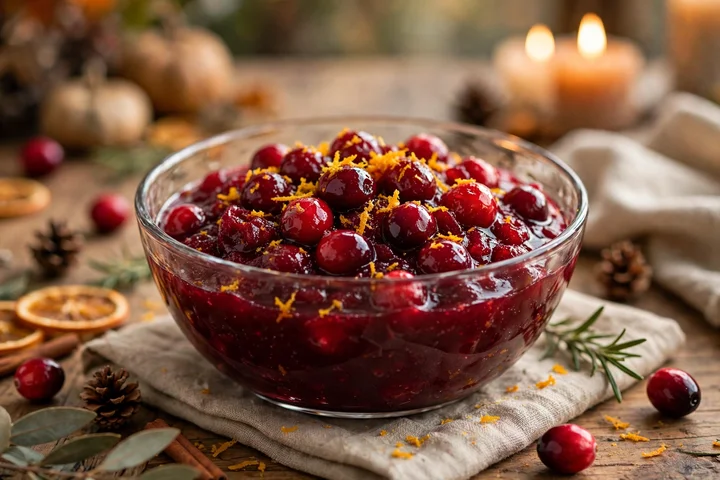
Homemade cranberry sauce is fresh cranberries simmered with sugar and water for about 15 minutes, until the berries pop and the sauce thickens — three ingredients, one pan, and no can opener. This guide gives you the classic recipe, the fresh-versus-frozen choice, six variations, and the make-ahead timing that makes it the easiest dish on the whole Thanksgiving table.
Key Facts
- Time: 15 minutes on the stove, plus cooling — the fastest Thanksgiving side to make.
- Ingredients: 12 ounces fresh cranberries, 1 cup sugar, 1 cup water. That is the whole classic recipe.
- Yield: about 2 1/4 cups, serving 8 to 10 people at 3 to 4 tablespoons each.
- Make-ahead: keeps 10 to 14 days in the fridge, and freezes for up to 2 months.
- Thanksgiving 2026: Thursday, November 26 — make the sauce up to a week ahead and cross it off the list early.
- Nutrition: raw cranberries are low in calories (about 46 per 100 grams) and high in vitamin C and fibre; the sugar in the sauce is where the calories come from.
Quotable: “Cranberry sauce is the one Thanksgiving dish where homemade beats canned in fifteen minutes — and the popping berries tell you exactly when it is done.”
Why Homemade Beats the Can
The canned jellied sauce that slides out of the tin in one ridged cylinder is a nostalgia object, and for some families it is non-negotiable. But homemade cranberry sauce tastes like actual fruit: tart, bright, a little textured, with whole berries that burst when you bite them. It takes fifteen minutes, it costs about the same as a can, and it does a job the canned version cannot — it cuts through the richness of turkey, gravy and buttered sides with real acidity.
It is also the most forgiving recipe on the Thanksgiving menu. There is almost nothing to get wrong. Cranberries contain natural pectin, so the sauce thickens on its own as it cools. If it looks too thin in the pan, it is not — it will set as it cools. If it tastes too tart, a spoonful of honey fixes it. And unlike the turkey, it does not care about timing: make it a week ahead and it will be better on the day, because the flavours have had time to settle.
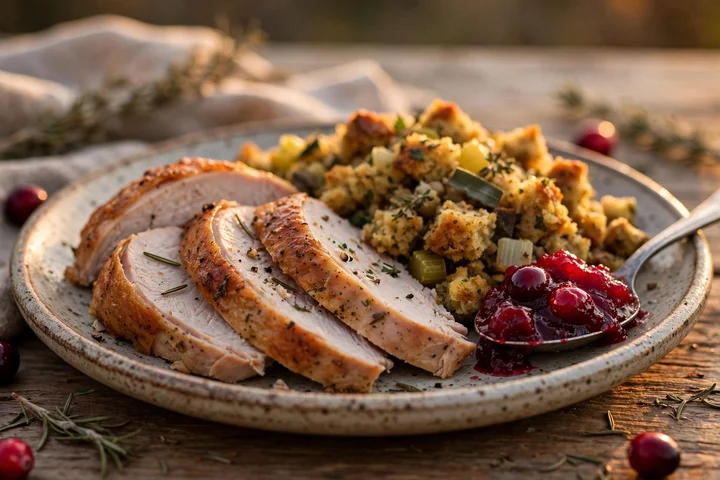
On the plate, cranberry sauce is the bright note. Turkey is savoury, stuffing is buttery, mashed potatoes are soft and mild — and cranberry sauce is the sharp, sweet-tart contrast that makes the rest of the meal taste more like itself. It earns its place in our Thanksgiving side dishes guide not as a garnish but as a flavour balancer, and it is the side most likely to be eaten straight from the bowl with a spoon while the turkey rests.

The Classic Recipe (3 Ingredients, 15 Minutes)
Ingredients:
- 12 ounces (about 3 cups) fresh cranberries, rinsed, soft or shrivelled ones picked out
- 1 cup granulated sugar
- 1 cup water
- Optional: a pinch of salt, and the zest of 1 orange
Method:
- Put the water and sugar in a medium saucepan and stir over medium heat until the sugar dissolves, about 2 minutes.
- Add the cranberries and bring to a gentle boil. Reduce the heat to medium-low.
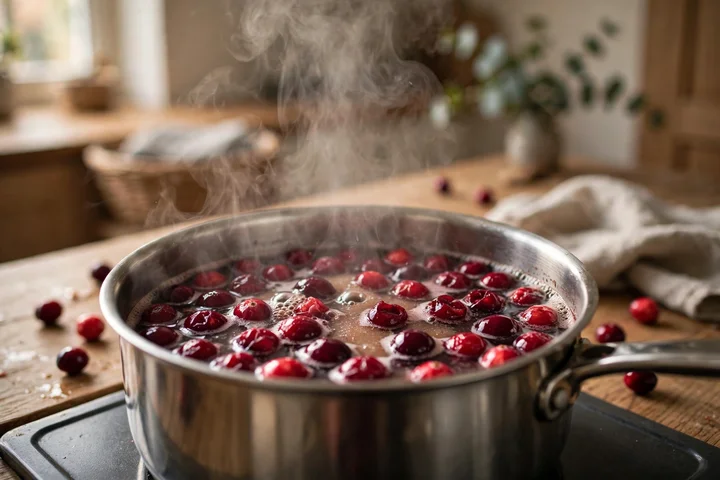
- Simmer for 10 to 12 minutes, stirring occasionally. The berries will start to pop — that popping sound is the pectin releasing, and it is the sign the sauce is working. Most berries should burst; a few whole ones left are good texture.
- When the sauce looks slightly thinner than you want, take it off the heat. It thickens a lot as it cools — this is the step people get wrong by overcooking.
- Stir in the orange zest and a pinch of salt if using. Cool to room temperature, then refrigerate. Serve chilled or at room temperature.
That is the whole recipe. No straining, no gelatine, no thermometer. If you want a smoother sauce, press half of it through a sieve before cooling and stir the smooth half back into the chunky half — you keep the texture and lose none of the flavour.
Fresh vs Frozen Cranberries
Fresh cranberries are available from October through December in most American supermarkets, and they are the best choice when you can get them. Look for firm, plump berries that bounce — the old “bounce test” is real, and growers once sorted cranberries by bouncing them over a barrier, keeping only the ones that bounced. Soft, wrinkled or brown-spotted berries should be picked out before cooking.
Frozen cranberries work just as well, and they are the better choice outside the autumn season or if you are making sauce in advance. Do not thaw them first — tip them straight from the bag into the pan and add 2 to 3 minutes to the simmering time. The sauce will be identical, and frozen berries are often cheaper and available all year.
Dried cranberries are a different ingredient and do not work here — they are sweetened, they will not pop, and they will not release pectin. Save them for stuffing, salads and baking. And cranberry juice is not a substitute for whole berries either; it makes a jelly, not a sauce, and it needs gelatine to set.
Six Variations Worth Trying
Start with the classic recipe once, then change one thing. These are the variations that actually get requested again.
1. Orange cranberry sauce. Replace half the water with fresh orange juice and add the zest of 1 orange and a cinnamon stick while it simmers. Remove the cinnamon before cooling. This is the most popular variation, and the orange rounds off the tartness without adding sweetness.
2. Apple cranberry sauce. Add 1 peeled, diced apple (Honeycrisp or Gala) with the cranberries. The apple softens into the sauce and adds body, and the result is sweeter and milder — a good choice if children or tart-sensitive guests are at the table.
3. Spiced cranberry sauce. Add 1 cinnamon stick, 3 whole cloves and a strip of orange peel while simmering, and remove them before serving. A pinch of nutmeg at the end adds warmth. This version smells like Thanksgiving itself, and it pairs well with the Thanksgiving desserts that follow dinner.
4. Jalapeño cranberry sauce. Add 1 small seeded, minced jalapeño with the berries. The heat is gentle — more warmth than fire — and it is excellent with turkey and with leftover sandwiches. Warn guests who do not expect spice in a fruit sauce.
5. Sugar-free cranberry sauce. Replace the sugar with 3/4 cup of a granulated sugar substitute made for cooking, and add 2 tablespoons of honey or maple syrup if the result tastes too sharp. The sauce will be slightly thinner, because sugar helps the set, so simmer it 2 minutes longer.
6. Whole-berry with port or red wine. Replace 1/2 cup of the water with port or a fruity red wine, and reduce the sugar to 3/4 cup. The alcohol cooks off, and the wine adds depth. Keep this version away from the children’s table, or make a separate plain batch for them.
Make-Ahead Timing and Storage
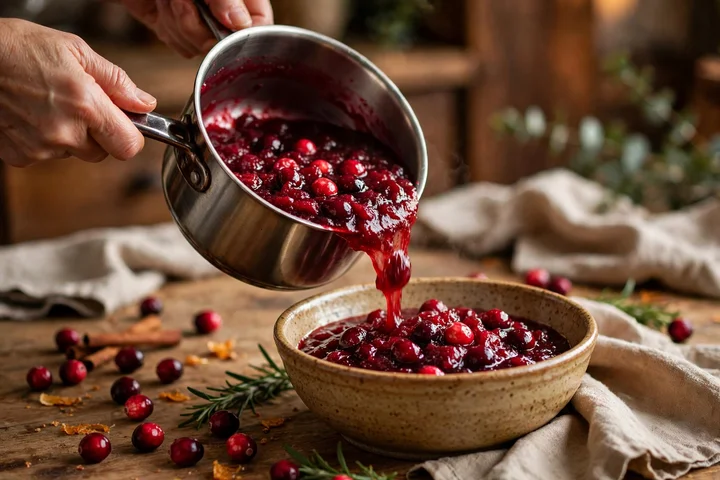
Cranberry sauce is the best make-ahead dish on the Thanksgiving menu, because it genuinely improves with time. Make it up to 10 days before Thanksgiving, refrigerate in a covered container, and serve it straight from the fridge or let it come to room temperature for 30 minutes first. The flavours meld, the texture sets properly, and one whole dish is already done before the cooking week even starts.
It also freezes well for up to 2 months. Freeze it in a flat bag or a small container, thaw overnight in the fridge, and stir before serving. If it looks a little loose after thawing, that is normal — a brief stir brings it back together.
On Thanksgiving Day itself, the sauce needs no attention at all. Put it in its serving bowl in the morning, cover it, and set it on the table when dinner is served. If you are transporting it to someone else’s house, it travels in a jar in a bag with an ice pack, and it does not need reheating at the other end. Plan the rest of the day around it with our Thanksgiving dinner planning guide, and let the sauce be the dish you never have to think about twice.
Serving Ideas Beyond the Turkey
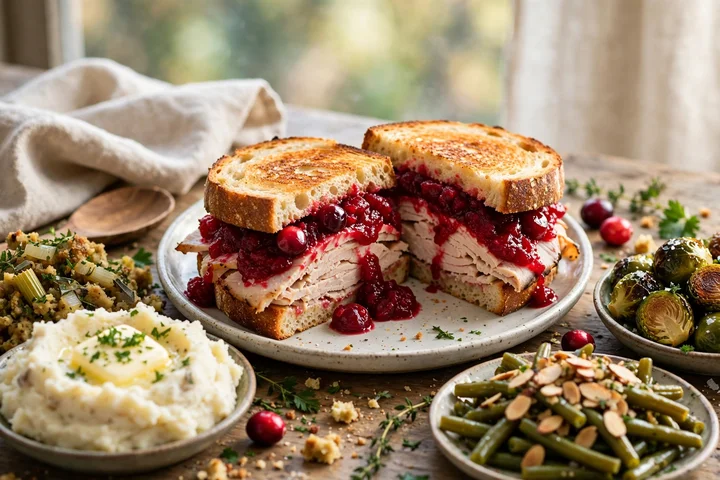
Cranberry sauce earns its fridge space after Thanksgiving too, and it is too good to throw away with the leftovers. Spread it on a turkey sandwich with stuffing and mayonnaise — the classic day-after sandwich, and the reason to make a double batch. Stir a spoonful into plain yoghurt or oatmeal for breakfast. Spoon it over brie or goat cheese on crackers as an appetiser. Mix it with a little mustard and use it as a glaze for roast chicken or pork. Or warm it gently and serve it over vanilla ice cream, where the tart sauce against cold cream is one of the best desserts nobody plans.
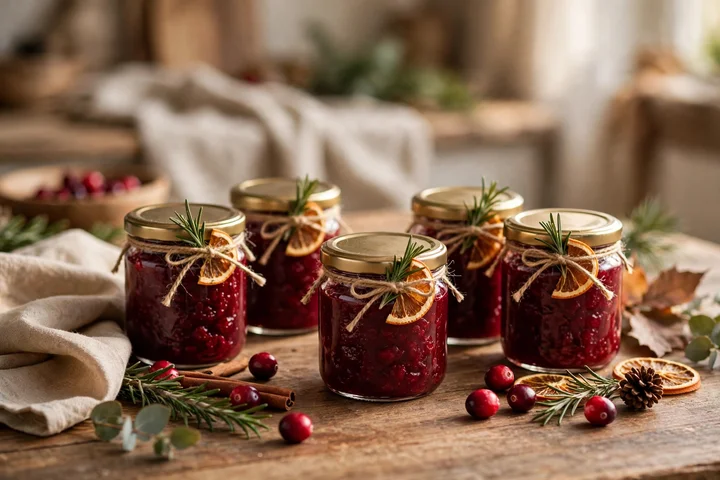
It also makes a good host gift. A small jar with a ribbon, made a few days before Thanksgiving, is a thoughtful thing to hand to the person who cooked dinner — and it costs almost nothing. Label it with the date, because homemade sauce keeps for two weeks in the fridge and the recipient should know that.
For nutrition context, the berries themselves are the healthy part: USDA FoodData Central lists raw cranberries at about 46 calories per 100 grams, with fibre and vitamin C, and notes their proanthocyanidin compounds. You can check the USDA’s food database at USDA FoodData Central — the sugar in the finished sauce is the part to watch, and the variations above let you control it.
Troubleshooting: Too Tart, Too Runny, Too Bitter
Too tart. Add sugar a tablespoon at a time, or a spoonful of honey or maple syrup, and stir while the sauce is still warm. A pinch of salt also softens tartness more than people expect. Taste after each addition — the sauce is easier to sweeten than to unsweeten.
Too runny. It probably is not. Cranberry sauce thickens dramatically as it cools, and judging it hot is the most common mistake. Cool it completely before deciding. If it is still runny when cold, simmer it for 5 more minutes the next day — the pectin will do the rest.
Too thick or jellied solid. Stir in a tablespoon of water or orange juice at a time until it loosens. Next time, take it off the heat a minute or two earlier — the sauce should look slightly too thin in the pan.
Bitter aftertaste. A few under-ripe berries, or pith from the orange zest, can add bitterness. Add a little more sugar and a squeeze of orange juice, and strain out any white pith next time. Bitterness also fades after a day in the fridge.
Berries did not pop. The heat was too low, or the berries were very cold from the freezer. Raise the heat slightly and give them a few more minutes, pressing gently with a spoon. They will pop — cranberries are built to do it.
Frequently Asked Questions
How long does homemade cranberry sauce last?
10 to 14 days in the fridge in a covered container, and up to 2 months in the freezer. Make it a week ahead of Thanksgiving and it will be at its best on the day.
Can I use frozen cranberries for homemade cranberry sauce?
Yes. Use them straight from the freezer without thawing, and add 2 to 3 minutes to the simmering time. The result is the same as with fresh berries.
Why is my cranberry sauce runny?
It almost certainly is not — it thickens a lot as it cools. Judge it only when fully cold. If it is still runny then, simmer for 5 more minutes to release more pectin.
Is homemade cranberry sauce healthier than canned?
The berries are the same, but you control the sugar. The classic recipe uses 1 cup of sugar per 12 ounces of berries; canned sauce is usually sweeter, and the sugar-free variation above cuts it further.
Can I make cranberry sauce without sugar?
Yes, with a cooking sugar substitute, or with orange juice and a little honey. The sauce will be slightly thinner, so simmer it 2 minutes longer to help it set.
What do I serve with homemade cranberry sauce?
Roast turkey first, then everything else: stuffing, mashed potatoes, ham, brie and crackers, and day-after turkey sandwiches. Its tartness balances rich, buttery dishes.
Leave a Reply