
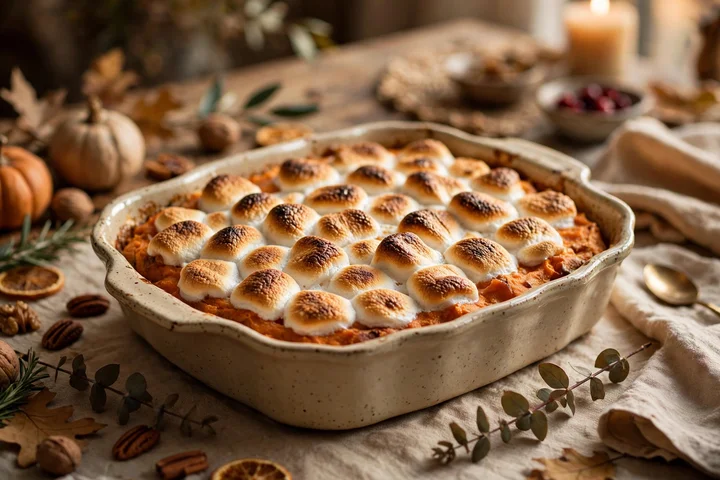
Sweet potato casserole is mashed sweet potatoes baked with butter, brown sugar and warm spices under a crunchy pecan streusel or a toasted marshmallow topping — the sweetest side on the Thanksgiving table, and the one guests ask about first. This guide gives you the classic recipe for 8 people, the fresh-versus-canned choice, both toppings, and the lighter and make-ahead versions that fit a real Thanksgiving Day.
Key Facts
- What it is: mashed sweet potatoes, butter, sugar, eggs and vanilla, baked and topped with pecans or marshmallows.
- Serves: the classic recipe below serves 8; allow about 3/4 cup per person.
- Time: about 20 minutes hands-on, 25 to 30 minutes in the oven at 350°F.
- Toppings: pecan streusel (crunchy, less sweet) or marshmallows (soft, sweet, nostalgic) — pick one, not both.
- Thanksgiving 2026: Thursday, November 26 — assemble the day before and bake on the day.
- Nutrition: sweet potatoes are rich in vitamin A and fibre; the sugar and butter in the topping are what make the finished dish a treat rather than a health food.
Quotable: “Sweet potato casserole is not a vegetable side pretending to be dessert — it is dessert that showed up early, and the table is better for it.”
Why This Dish Divides the Table (and Wins Anyway)
Every Thanksgiving table has a dish that splits the room, and sweet potato casserole is usually it. Half the table thinks a vegetable should not be this sweet; the other half thinks Thanksgiving is exactly the day for it. The second half wins, every year, because the dish is doing something no other side does: it is warm, soft, sweet and crunchy all at once, and it gives children and sweet-toothed adults a dish that feels like theirs.
The history helps explain the argument. Sweet potatoes are native to the Americas and were on early Thanksgiving tables in some form, but the casserole as Americans know it — mashed sweet potatoes with marshmallows — dates to the early 1900s, when marshmallow makers promoted the topping as a new use for their product. The pecan version is older and Southern, and it is the one most cooks now prefer. Both are legitimate, and the choice between them is the only real argument the recipe needs.
On the plate it sits between the savoury sides and the desserts, and that is its job. After turkey, stuffing and gravy, a spoonful of sweet potato casserole resets the palate with sweetness before the pie course arrives. It belongs in our Thanksgiving side dishes guide as the sweet anchor of the meal, and it is the side most likely to be finished first.

The Classic Recipe (Serves 8)
For the sweet potato base:
- 3 pounds sweet potatoes (about 4 large), peeled and cut into chunks — or 2 cans (29 ounces each) of sweet potatoes, drained
- 1/2 cup unsalted butter, melted
- 1/2 cup brown sugar, packed
- 2 large eggs, lightly beaten
- 1 teaspoon vanilla extract
- 1 teaspoon cinnamon, 1/4 teaspoon nutmeg
- 1/2 teaspoon salt
For the pecan topping (choose this or the marshmallow topping):
- 1 cup chopped pecans
- 1/2 cup brown sugar, packed
- 1/4 cup all-purpose flour
- 1/4 cup unsalted butter, melted
For the marshmallow topping (alternative):
- 2 cups miniature marshmallows
Method:
- Heat the oven to 350°F (175°C) and butter a 9×13-inch baking dish.
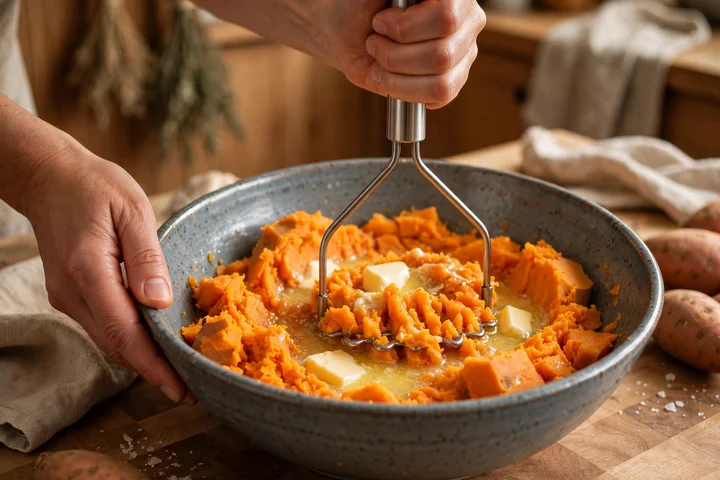
- If using fresh sweet potatoes, boil the chunks in salted water for 15 to 20 minutes until very tender, then drain well. If using canned, drain them thoroughly — extra liquid is the enemy of this dish.
- Mash the sweet potatoes in a large bowl until smooth, with a few small lumps left for texture. Stir in the melted butter, brown sugar, eggs, vanilla, cinnamon, nutmeg and salt. Taste and adjust: more cinnamon if it tastes flat, a pinch more salt if it tastes too sweet.
- Spread the mixture in the buttered dish and smooth the top.
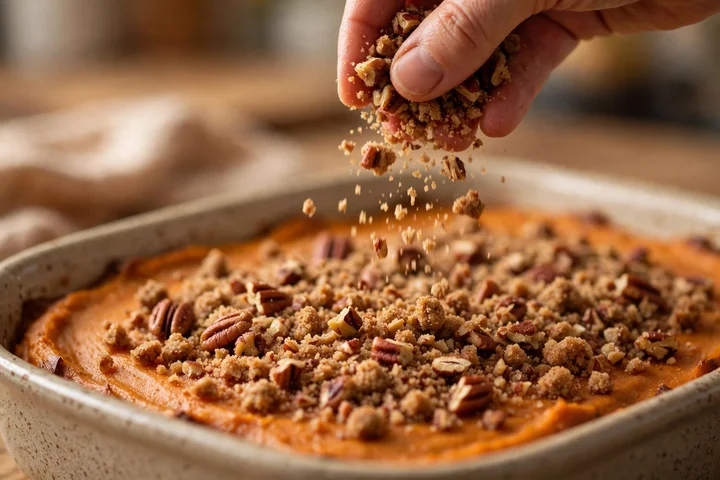
- For the pecan topping, mix the pecans, brown sugar, flour and melted butter in a small bowl until crumbly, and sprinkle evenly over the top. For the marshmallow topping, bake the base uncovered for 20 minutes first, then scatter the marshmallows over the top and bake 5 to 10 minutes more, until golden and puffed — watch them closely, because marshmallows go from golden to burnt in under a minute.
- Bake the pecan version for 25 to 30 minutes, until the topping is crisp and the edges bubble. Rest for 10 minutes before serving.
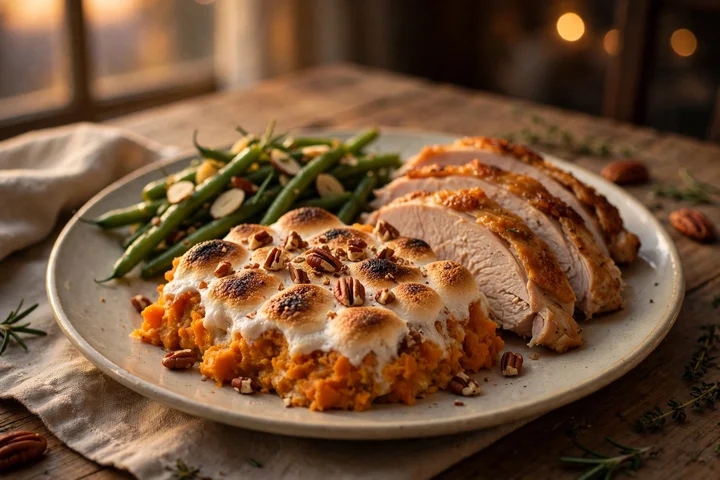
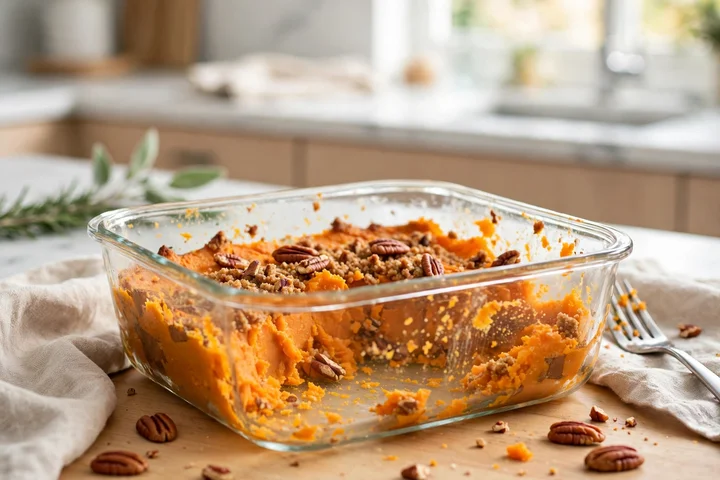
Serve it warm, in the dish it baked in, with a large spoon. It does not slice, and it does not need to — a generous spoonful that keeps its shape for about three seconds is exactly right.
Fresh vs Canned Sweet Potatoes
Fresh sweet potatoes give the best flavour and texture, and they are worth the extra 20 minutes if you have them. Choose firm potatoes with no soft spots or sprouts, and do not confuse them with yams — in American supermarkets, the orange-fleshed sweet potato labelled “yam” is still a sweet potato, and it is the right one for this dish. Boil rather than roast them for the casserole: boiling keeps them moist and easy to mash, while roasting concentrates the sugars and can make the finished dish too sweet.
Canned sweet potatoes are a legitimate shortcut, and they are what many families have used for generations. Drain them very well — press them gently in a colander and let them sit for 5 minutes — because canned potatoes carry extra liquid that will make the casserole runny. Reduce the brown sugar by 2 tablespoons, since canned sweet potatoes are often packed in syrup. The texture will be smoother and slightly softer than the fresh version, and most guests will not notice the difference once the topping is on.
Frozen mashed sweet potatoes are a third option, and they work well if you thaw and drain them first. They are the best choice if you are making the dish in a small kitchen with limited stove space, because they skip the boiling step entirely.
Pecan vs Marshmallow: How to Choose
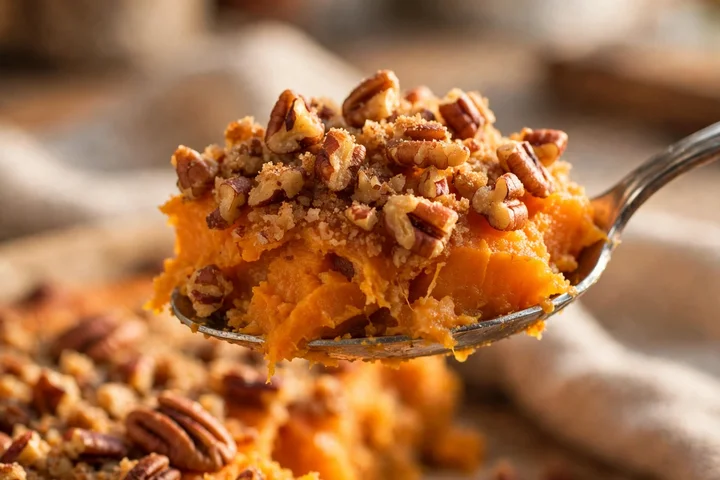
This is the real decision in the recipe, and it changes the dish completely. The pecan streusel topping is crunchy, buttery and only moderately sweet. It holds up well, it reheats well, and it is the topping adults tend to prefer. It also adds protein and healthy fats from the pecans, and it looks more like a finished dish and less like a dessert.
The marshmallow topping is soft, sweet and nostalgic. It is the version children ask for, and it is the version that photographs best, with its golden puffed top. It does not reheat as well — the marshmallows deflate and turn sticky — and it is noticeably sweeter, so it suits tables where the casserole is treated as a near-dessert.
Do not use both toppings on the same dish. A half-pecan, half-marshmallow casserole sounds like a compromise and eats like a mistake, because the two toppings bake at different rates and the marshmallow side will burn while the pecan side is still crisping. If your table is split, make two smaller dishes in 8×8-inch pans — one of each — and let people choose. That is a better solution than a divided dish, and it gives you a spare for the next day.
Six Variations Worth Trying
1. Lighter sweet potato casserole. Reduce the brown sugar to 1/4 cup, use 1/4 cup of butter, replace one egg with 2 egg whites, and use the pecan topping with half the sugar. The dish will still taste sweet, because sweet potatoes are naturally sweet, and you will cut roughly a third of the added sugar. The USDA’s nutrition portal, Nutrition.gov, has good background on sweet potatoes and other vegetables if you want the numbers behind the swap.
2. Bourbon sweet potato casserole. Add 2 tablespoons of bourbon to the mashed sweet potatoes. The alcohol cooks off, and the bourbon adds a warm, oaky note that pairs well with the pecans. Keep this version for the adult table.
3. Savoury sweet potato casserole. Cut the brown sugar to 2 tablespoons, skip the marshmallows, and add 1/2 cup of grated sharp cheddar and a pinch of cayenne to the topping. This version eats like a proper side dish and converts the people who object to sweet vegetables.
4. Vegan sweet potato casserole. Replace the butter with coconut oil or vegan butter, the eggs with 1/4 cup of unsweetened applesauce, and use a pecan topping made with coconut oil. Check that your sugar is vegan if that matters to your guests.
5. Maple and orange. Replace half the brown sugar with maple syrup and add the zest of 1 orange to the base. The maple adds a deeper sweetness than brown sugar, and the orange zest brightens it. This version pairs especially well with the cranberry sauce on the same plate.
6. Individual servings. Bake the base in buttered ramekins, top each one, and bake for 18 to 20 minutes. Individual portions look elegant, they bake faster, and they solve the serving problem at a formal table. They also make excellent leftovers, reheated one at a time.
Make-Ahead Timing and the Oven Plan
Sweet potato casserole is a good make-ahead dish, because the base and the topping keep separately. The day before, cook and mash the sweet potatoes, mix in the butter, sugar, eggs and spices, and spread the base in the baking dish. Cover and refrigerate. Mix the pecan topping in a separate bag or container and refrigerate it too. On Thanksgiving Day, let the dish sit at room temperature for 30 minutes, sprinkle the topping over it, and bake.
Do not put the topping on the night before — the brown sugar will draw moisture from the base and the streusel will turn soggy. And do not add marshmallows until the last 10 minutes of baking, for the same reason. The casserole bakes at 350°F, which is the same temperature as most Thanksgiving sides, so it can share the oven with the stuffing or the green bean casserole. If the turkey is still in the oven, bake the casserole while the turkey rests — 25 to 30 minutes is exactly the resting window, and the dish will be hot when the turkey is carved.
If you are transporting the casserole, bake it at home and carry it in a towel-lined box, or assemble it and bake it at the host’s house. The second option is better, because a freshly baked topping is the whole point, and a casserole that has travelled for an hour will have lost its crunch.
Troubleshooting: Runny, Bland, Burnt or Too Sweet
Too runny. The sweet potatoes were not drained well enough, or canned potatoes carried extra syrup. Return the dish to the oven uncovered for 10 minutes, and next time drain canned potatoes for a full 5 minutes and press them gently. A tablespoon of flour mixed into the base also helps bind it.
Too bland. Sweet potatoes need salt and spice to taste like themselves. Add more cinnamon, a pinch of nutmeg, and — most importantly — more salt. Taste the base before the eggs go in; it should taste slightly over-seasoned, because the topping and the baking will mellow it.
Too sweet. Reduce the brown sugar next time, and add a squeeze of orange juice or a tablespoon of lemon juice to the base. Acid balances sweetness better than any other fix, and it brightens the whole dish. The savoury variation above is the permanent answer for tables that find the classic too sweet.
Burnt topping, cold centre. The topping went on too early, or the oven was too hot. For the marshmallow version, add the marshmallows only in the last 5 to 10 minutes. For the pecan version, cover the dish with foil for the first 15 minutes if your oven runs hot, then uncover to crisp the top.
It tastes of nothing but sugar. The sweet potatoes were overcooked in syrup, or the topping overwhelmed the base. Use fresh sweet potatoes next time, cut the sugar in the base by a third, and let the topping be a garnish rather than a second layer of sugar.
Storage, Leftovers and Serving Size
Allow about 3/4 cup per person, and make a full 9×13-inch dish for 8 people even if the table is smaller — the leftovers are the point. Refrigerate within 2 hours of serving, in a covered container, and use within 3 to 4 days. Our Thanksgiving leftovers food safety guide has the full storage times for the whole meal, and the same rules apply here: shallow containers, quick cooling, and reheat to 165°F.
Reheat the casserole in the oven at 350°F for 15 to 20 minutes, covered with foil, with a fresh sprinkle of pecans on top if the topping has gone soft. The microwave works for single servings, but it will not restore the crunch. Leftover casserole also makes a good breakfast: warm it, top it with a fried egg, and the sweet-savoury combination works better than it sounds. Or spread it on toast with a little butter, which is a Southern breakfast that deserves a wider audience.
For dessert, the same plate can carry both this casserole and the pies that follow — the casserole is sweet enough to sit next to pumpkin pie without clashing, and the Thanksgiving desserts guide has the pie and cake options that complete the meal.
Frequently Asked Questions
What is the difference between sweet potato casserole and mashed sweet potatoes?
Mashed sweet potatoes are the base; the casserole is the base baked with a topping — pecan streusel or marshmallows — until the top is crisp or golden. The topping is what makes it a casserole.
Should I use fresh or canned sweet potatoes?
Fresh gives better flavour and texture. Canned works well if you drain them thoroughly and reduce the sugar by 2 tablespoons, since canned potatoes are often packed in syrup.
Pecan or marshmallow topping — which is better?
Pecan is crunchy, less sweet, and reheats better. Marshmallow is soft, sweet and nostalgic, and children usually prefer it. Make two small dishes if your table is split, rather than combining both toppings on one dish.
Can I make sweet potato casserole the day before?
Yes. Prepare the base and refrigerate it, keep the topping separate, and assemble and bake on Thanksgiving Day. Add the topping just before baking so it stays crisp.
How long does leftover sweet potato casserole keep?
Refrigerate within 2 hours and use within 3 to 4 days. Reheat to 165°F in the oven, covered, with a fresh sprinkle of pecans if the topping has softened.
Is sweet potato casserole healthy?
Sweet potatoes themselves are nutritious — rich in vitamin A and fibre. The finished casserole is a treat, because the butter, sugar and topping add calories. The lighter variation above cuts about a third of the added sugar.
Leave a Reply