
The best thanksgiving classroom activities give teachers a simple way to blend seasonal excitement with real learning: gratitude circles and read-alouds for early grades, hands-on crafts that build fine motor skills, persuasive writing projects for upper elementary, and research activities that challenge middle schoolers to separate holiday myths from historical facts. This guide organizes 15 classroom-ready ideas by grade band, each needing only basic supplies and fitting into a single class period.
Key Facts: Thanksgiving Classroom Activities at a Glance
| Grade bands covered | K-2, 3-5, and 6-8 |
| Activities included | 15 classroom-tested ideas |
| Average prep time | 10 to 20 minutes |
| Class time per activity | 20 to 45 minutes |
| Supplies needed | Paper, crayons, scissors, glue, branches in a vase |
| Core skills | Reading, writing, history, vocabulary, gratitude, fine motor development |
A classroom that practices gratitude in November builds empathy that lasts all year.
Thanksgiving Classroom Activities for Grades K-2
Young students learn best through movement, stories, and simple crafts. These thanksgiving classroom activities keep kindergarten, first, and second graders engaged while building early literacy and social skills. If you also want ideas families can use at home, our guide to Thanksgiving activities for kids pairs nicely with these lesson plans.
1. Gratitude Circle Read-Aloud
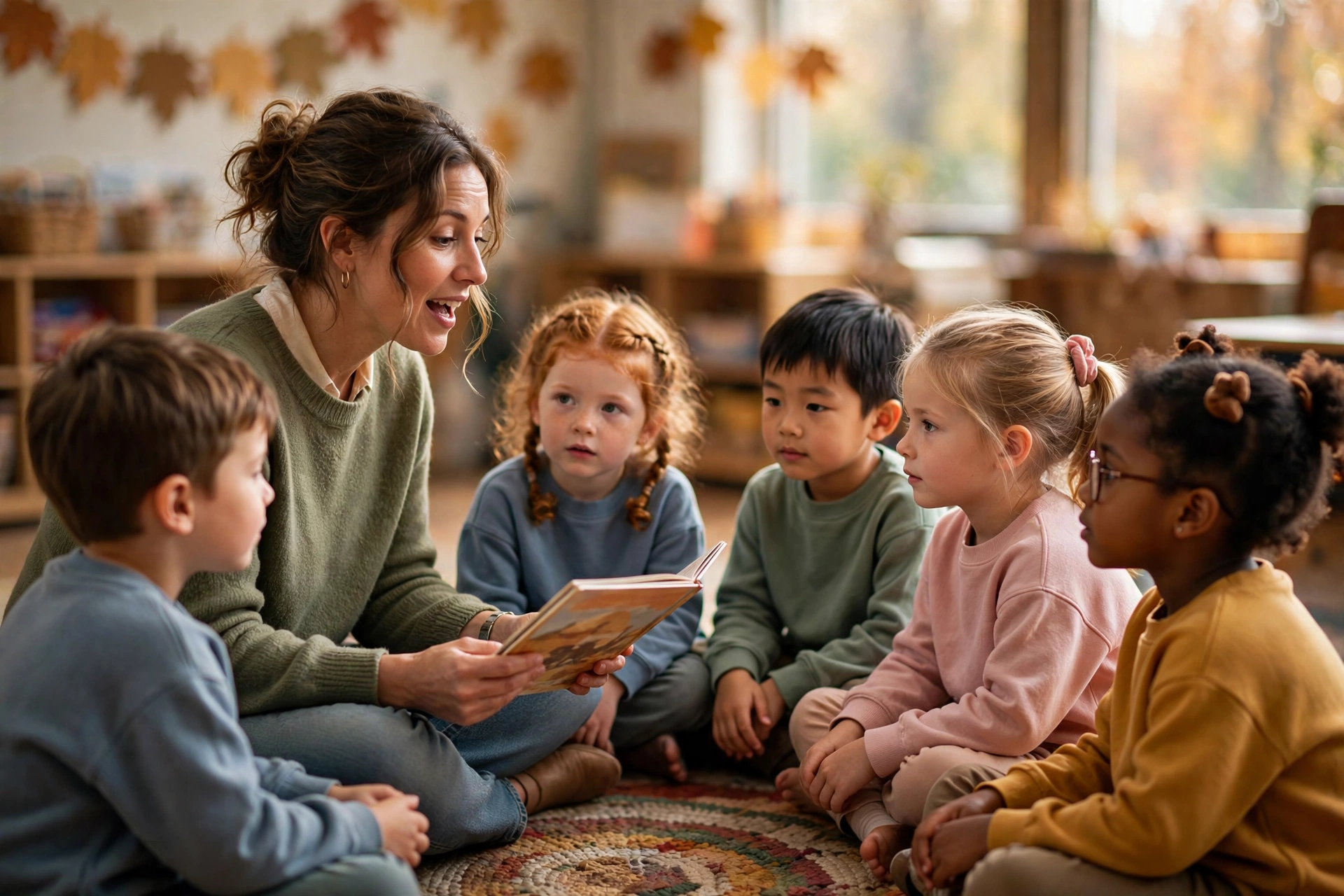
Start the week before Thanksgiving with a morning circle where each child names one thing they are thankful for. Read a picture book about gratitude first, then pass a small pumpkin around the circle so each speaker has a turn. This ten-minute routine builds speaking and listening skills, teaches turn-taking, and creates a calm start to busy November days. Record answers on chart paper so emerging writers can copy their own sentences later.
2. Paper Turkey Name Craft
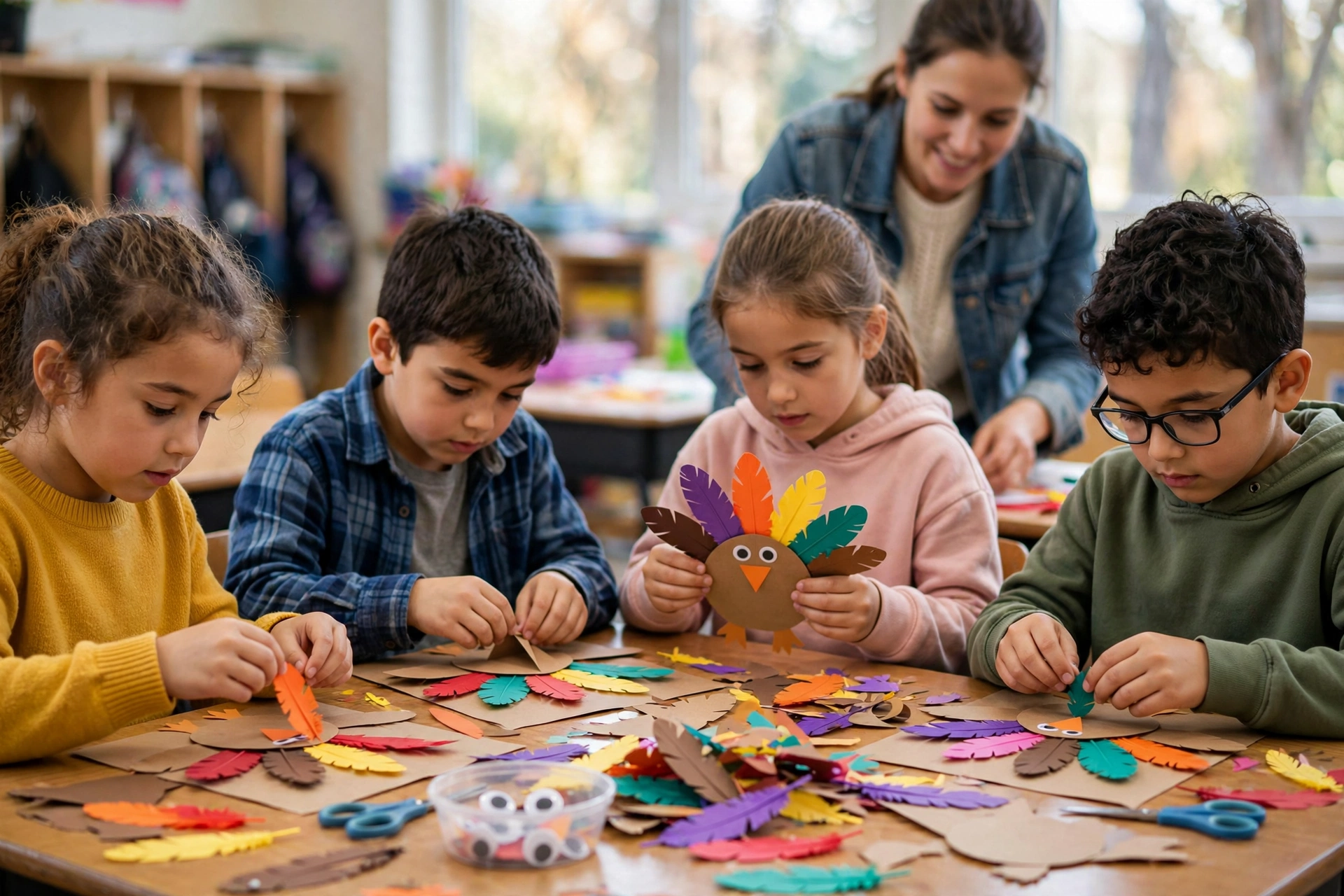
Give each student a brown paper circle for the turkey body and five paper feathers. Have them write one letter of their name on each feather, then glue the feathers behind the body. This simple craft reinforces letter recognition and name spelling while doubling as a colorful bulletin board display. Teachers can pre-cut the pieces for kindergarten or let second graders trace and cut their own to practice scissor skills.
3. Classroom Gratitude Tree
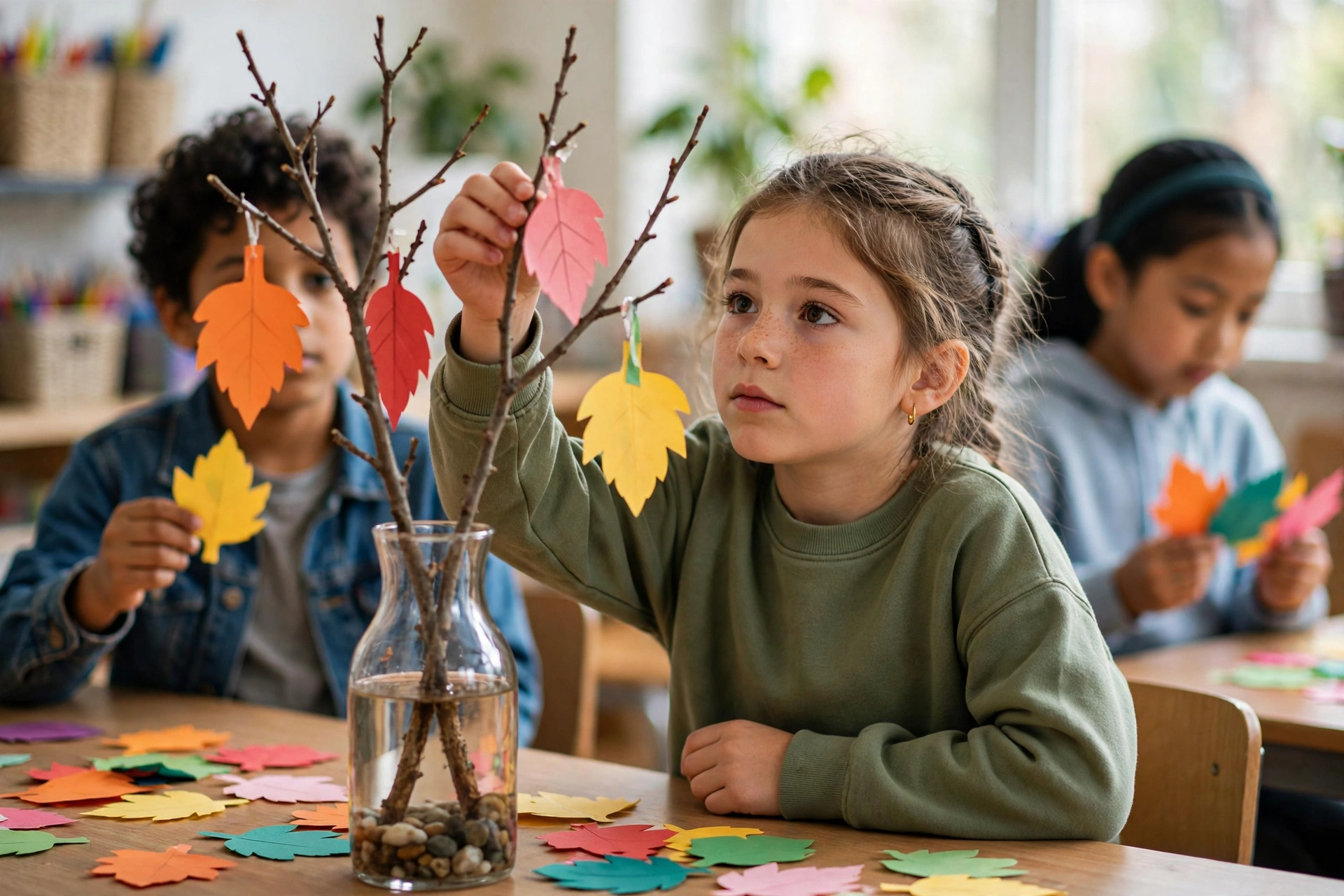
Place bare branches in a sturdy vase on a side table. Each morning, students write or dictate one thing they are thankful for on a paper leaf and hang it on the tree. By the week of Thanksgiving, the tree will be full of colorful leaves and the class will have a visual record of their gratitude. This activity takes five minutes a day and grows into a display parents love at pickup time. Non-writers can draw their thankful item instead of writing, and bilingual students can label leaves in two languages for a literacy bonus. Keep extra leaves near the tree so early finishers can contribute whenever inspiration strikes.
Thanksgiving Classroom Activities for Grades 3-5
Upper elementary students are ready for activities that connect Thanksgiving to the curriculum. These thanksgiving classroom activities tie the holiday to writing standards, vocabulary growth, and social studies, so no instructional time is lost. Pair the history activities with our kid-friendly Thanksgiving facts page to give students reliable details for their projects.
4. History Timeline Challenge
Divide the class into small teams and give each team a set of event cards from Thanksgiving history, from the 1621 harvest gathering to Abraham Lincoln declaring Thanksgiving a national holiday in 1863. Teams race to arrange the events in order on the floor. This gets students moving, sparks debate about dates, and corrects common myths. Follow up by having each team write a three-sentence summary of the event they found most surprising. Laminate the event cards so you can reuse them every November, and keep a answer key on your clipboard for quick checking while teams work.
5. Persuade the Farmer: Persuasive Writing
Ask students to write a persuasive letter from the point of view of a turkey trying to convince a farmer not to serve it for dinner. Set clear requirements: an opening hook, three supporting reasons, and a closing plea. The silly premise lowers the fear of writing, while the structure teaches real persuasive techniques. Read the best letters aloud for a classroom laugh that still reinforces opinion writing standards.
6. Cornucopia of Words Vocabulary Game
Draw a large cornucopia on the board and fill it with harvest words: grateful, harvest, bountiful, tradition, feast, and ancestor. Each day, pick one word for students to define, use in a sentence, and sketch. By Thanksgiving week, the cornucopia overflows with vocabulary the class owns. Turn it into a review game on the last day before break by having teams race to match words with definitions.
The best lesson plans use the holiday excitement already in the room instead of fighting it.
Thanksgiving Classroom Activities for Grades 6-8
Middle schoolers want activities that treat them seriously. These thanksgiving classroom activities lean into research, argument, and data so the holiday becomes a vehicle for critical thinking rather than a break from it. The fact-versus-myth exercise below works especially well as a one-day project with clear deliverables.
7. Fact vs. Myth Research Project
Give students a list of common Thanksgiving claims, such as the idea that the 1621 gathering featured pumpkin pie, and have them research which are true using school library sources. Each student presents one claim with evidence, and the class builds a shared fact-checked poster. This teaches source evaluation and media literacy, skills that matter far beyond November. It also leads to excellent class discussion about how traditions evolve. A simple exit ticket works well here: ask each student to write one claim they believed before class and what the evidence actually showed.
8. Gratitude Editorial Assignment
Challenge students to write a short editorial answering one question: does Thanksgiving still have meaning in modern America? Require a clear thesis, at least two pieces of supporting evidence, and a counterargument paragraph. The topic is rich enough for strong opinions on all sides, and the assignment doubles as preparation for argumentative essay units. Strong pieces can be published in the school newspaper or read on the morning announcements.
9. Thanksgiving Data Math
Bring real numbers into the holiday. Have students calculate the cost of a Thanksgiving dinner for their own family size using grocery store flyers, then compare costs per person across groups. Extension questions can cover scaling recipes up and down, comparing prices from different decades, or graphing class data. This activity shows students that math lives in everyday decisions and gives you an easy cross-curricular win.
Minimal-Prep Thanksgiving Crafts for Busy Teachers
Not every activity needs to be a full lesson. These quick crafts fill the gaps between subjects, work as early-finisher stations, and produce decorations the class will enjoy for weeks. For even more ideas with step-by-step instructions, see our collection of Thanksgiving crafts for kids, all of which adapt easily to a classroom setting.
Handprint Turkey Cards
Students trace their hands on brown paper, add feather-colored fingers, and turn the print into a turkey. The back holds a short note of thanks to a family member or school staff member. This takes fifteen minutes and produces a keepsake that families genuinely treasure.
Pumpkin Pie Fractions
Cut paper circles into eighths and let students assemble their own paper pumpkin pies, labeling each slice with its fraction. Young students simply count slices, while older ones can add, subtract, or compare fractions. Math and art in one ten-minute activity.
Thankful Bookmarks
Students design a bookmark listing three things they are grateful for, then laminate it for durability. This pairs perfectly with a November reading challenge, since every student leaves with a usable reward for finishing a book.
Teach the real story, not just the feast.
Tips for Fitting Thanksgiving Classroom Activities Into a Packed Schedule
November is short, and testing calendars do not pause for holidays. The secret is integration rather than addition: use a Thanksgiving-themed text for your regular reading block, run vocabulary games during transition time, and let crafts double as art grades. Research-backed teaching strategies from sources like Edutopia consistently show that hands-on projects raise engagement more than worksheets, so these activities earn their class time.
Aim for one headline activity per week in November, supported by quick five-minute daily routines like the gratitude tree, and you will capture the holiday spirit without derailing your pacing guide. Save the crafts for the day before break, when attention spans are short and a relaxed, creative period helps everyone, including you, head into the holiday feeling calm.
Frequently Asked Questions
How early should teachers start Thanksgiving classroom activities?
The first or second week of November works best for most classrooms. Starting early gives you two to three weeks to spread activities out without rushing. A daily five-minute routine like the gratitude tree can begin November 1, while larger projects fit well in the week before Thanksgiving break.
What supplies do most Thanksgiving classroom activities require?
Almost everything on this list uses paper, crayons or markers, scissors, glue, and everyday items like a vase with branches or a small pumpkin. You can prepare most of these thanksgiving classroom activities with supplies already in your classroom closet, which keeps costs near zero.
How do I make Thanksgiving classroom activities inclusive for all students?
Focus on the universal themes of gratitude, community, and harvest rather than a single historical narrative. Acknowledge that students celebrate differently, teach the accurate history including Native American perspectives, and offer choices so every child can participate in a way that respects their family traditions.
Can these activities be adapted for remote or hybrid classrooms?
Yes. Read-alouds, writing prompts, vocabulary games, and research projects all work well over video calls. For crafts, send home a simple supply list or a printable template in advance. The gratitude tree becomes a shared slide deck where each student adds one digital leaf per day.
Which activity works best with limited time before the break?
The gratitude circle read-aloud takes only ten minutes and needs zero preparation, making it the best last-minute option. If you have fifteen minutes, the handprint turkey cards double as a gift students can take home. Both keep the holiday feel alive on those short, restless days before break.
How do I connect Thanksgiving classroom activities to learning standards?
Map each activity to standards you already teach: writing prompts cover opinion and narrative writing standards, the timeline challenge supports history sequencing, vocabulary games target language standards, and data math covers fractions and measurement. Documenting these connections in your lesson plan shows administrators the activities are instructional, not just seasonal fun.
Conclusion
Great thanksgiving classroom activities do two jobs at once: they honor the warmth of the season and move real learning forward. Pick one idea from your grade band, keep the prep simple, and let your students surprise you with how much they engage. Your November classroom will be calmer, kinder, and still right on track. Keep the best student work from this year in a folder marked November, and next year your planning will take minutes instead of hours.
Leave a Reply