
If you are asking when is eid al-fitr 2027, the answer is Tuesday, March 9, 2027. Eid al-Fitr is the festival that ends Ramadan, and in 2027 it falls on the first day of Shawwal, the tenth month of the Islamic calendar. The date is expected, not final: it depends on the sighting of the Shawwal crescent moon on the evening of Monday, March 8, and if the crescent is not seen, Eid moves to Wednesday, March 10. About two billion Muslims around the world celebrate the day, and for the roughly 3.5 million Muslims in the United States it is the biggest family gathering of the year. This guide gives you the exact 2027 date, explains why some countries will celebrate a day later, walks through the Eid prayer and the charity that must be paid before it, covers the history and traditions, and answers what is open and closed. This guide answers when is eid al-fitr 2027 in full, from the moon-sighting rule to the prayer, the charity, and the traditions that follow it.

Key Facts
| Fact | Detail |
|---|---|
| When is Eid al-Fitr 2027 | Tuesday, March 9, 2027 |
| Islamic date | 1 Shawwal 1448 AH |
| Moon-sighting night | Evening of Monday, March 8, 2027 |
| Backup date if the crescent is not sighted | Wednesday, March 10, 2027 |
| Festival length | Three days, March 9–11, 2027 |
| End of Ramadan 2027 | Monday, March 8, 2027 (29 days) |
| First celebrated | 624 CE (2 AH), Medina |
| Zakat al-Fitr in the US (2026) | $10 per person, Fiqh Council of North America |
| Six days of Shawwal | From Wednesday, March 10, 2027 |
| Eid al-Fitr 2026 | Friday, March 20, 2026 |
| Eid al-Fitr 2028 | Saturday, February 26, 2028 |
| Is it a federal holiday in the US | No — it is not in 5 U.S.C. 6103 |
| New York City public schools | Closed Tuesday, March 9, 2027 |
| Greeting | “Eid Mubarak” — “Blessed Eid” |
Why the Date Moves Every Year
Eid al-Fitr does not have a fixed date on the Gregorian calendar because it follows the Islamic lunar calendar. A lunar month begins when the new crescent moon is sighted and runs 29 or 30 days, since one cycle of lunar phases averages 29.53 days. The Islamic year is about 11 days shorter than the solar year, so every festival slides 10 to 11 days earlier each year, and over about 33 years it cycles through every season. That is why when is eid al-fitr 2027 has a different answer from last year: Eid fell on Friday, March 20, in 2026, and it falls on Tuesday, March 9, in 2027, eleven days earlier. By 2031 it will fall on Friday, January 24, in the middle of winter.
The rule is simple once you see it. Ramadan is the ninth month of the Islamic calendar, and Eid al-Fitr is the first day of the tenth month, Shawwal. The month of Ramadan ends when the Shawwal crescent is sighted, so the festival can never be fixed in advance the way Christmas can. No one can give you a fixed date for Eid the way they can for a solar holiday: the answer is always a lunar calculation, confirmed by a moon sighting, and the only way to plan is to check the current year’s announcement. The civil calendars used in Saudi Arabia and several other countries calculate the date years ahead, but the religious announcement still waits for the sky.
This moving date is also why the festival feels different every year. In 2027 it lands in early March, so the Eid prayer happens on a cool spring morning in most of the United States, and the school day that follows it is an ordinary Tuesday for most children. A decade ago Eid fell in summer, when the days were long and the celebrations stretched into warm evenings. The drift is the reason families check the date fresh every year instead of memorizing it.
March 9 or March 10? Why Some Countries Celebrate a Day Later
The one-day split is the most confusing part of the date, and it is worth understanding before you book anything. Saudi Arabia’s Umm al-Qura calendar puts 1 Shawwal 1448 on Tuesday, March 9, 2027. The crescent is looked for on the evening of Monday, March 8, which is 29 Ramadan by the civil count. If the crescent is seen that evening, Eid is Tuesday. If it is not seen, Ramadan completes 30 days, the last fast moves to Tuesday, March 9, and Eid moves to Wednesday, March 10.
Different countries follow different rules, and that is where the split comes from. Countries that follow the Saudi announcement or a calculated calendar will celebrate on Tuesday, March 9. Countries that wait for their own local sighting usually celebrate a day later. The table below shows what the main authorities have published for 2027.
| Authority or region | Expected Eid al-Fitr 2027 | Basis |
|---|---|---|
| Saudi Arabia, UAE, Qatar, Bahrain, Kuwait, Oman | Tuesday, March 9 | Umm al-Qura calendar, subject to moon sighting |
| Egypt, Jordan, Turkiye, North Africa | Tuesday, March 9 | Astronomical calculation |
| Fiqh Council of North America | Tuesday, March 9 | Calculated: new moon, sun-moon angle and moon height |
| Turkiye Diyanet | Tuesday, March 9 | Bayram runs to Thursday, March 11 |
| Indonesia, Singapore (public holidays) | Wednesday, March 10 | Government holiday lists |
| Pakistan, India, Bangladesh | Wednesday, March 10 | Local moon sighting, usually a day later |
If you ask when is eid al-fitr 2027 in Pakistan or India, the honest answer is Wednesday, March 10, in most years, because the moon is usually sighted a day later there than in the Middle East. The same applies to many mosques in the United States that follow local sighting rather than the Saudi announcement. The practical advice is the same everywhere: confirm the date with your local mosque on the evening of Monday, March 8, before you make final plans. The expected date is March 9, and every major authority agrees on it, but the sighting is the final word.

From Ramadan to Eid: The 2027 Timeline
Eid al-Fitr is the morning after Ramadan ends, so the dates around it form one short season. Ramadan 2027 begins on Monday, February 8, and the first Taraweeh prayer is the evening before, on Sunday, February 7. The month is expected to last 29 days, ending on Monday, March 8. Laylat al-Qadr, the Night of Power, falls on one of the last ten nights, and most Sunni Muslims observe it on the 27th night, which in 2027 is the night of Friday, March 5, into Saturday, March 6. Our guide to When Is Ramadan 2027 covers the full month, the fasting hours, and the planning in detail.
| Date | Day | What happens |
|---|---|---|
| Saturday, February 6, 2027 | Saturday | New moon; Chinese New Year falls the same day |
| Sunday, February 7, 2027 | Sunday | First Taraweeh prayer in the evening |
| Monday, February 8, 2027 | Monday | First fast of Ramadan 2027 |
| Wednesday, February 10, 2027 | Wednesday | Ash Wednesday falls inside Ramadan |
| Sunday, February 14, 2027 | Sunday | Valentine’s Day falls during Ramadan |
| Friday, March 5 – Saturday, March 6, 2027 | Friday night | Laylat al-Qadr, the 27th night |
| Monday, March 8, 2027 | Monday | Last fast; Shawwal crescent is looked for in the evening |
| Tuesday, March 9, 2027 | Tuesday | Eid al-Fitr, 1 Shawwal 1448 |
| Wednesday, March 10, 2027 | Wednesday | Backup date if the crescent is not sighted; six days of Shawwal begin |
| Thursday, March 11, 2027 | Thursday | Third day of Eid in Turkiye and several other countries |
The February and March 2027 calendar is unusually crowded, and Eid sits right in the middle of it. Chinese New Year falls on Saturday, February 6, two days before Ramadan starts, on the same new moon weekend. Ash Wednesday falls on February 10, inside Ramadan, and Valentine’s Day falls on February 14, also during the fast. Then Eid arrives on March 9, and the spring festivals follow fast: Nowruz and Palm Sunday share Sunday, March 21, Holi falls on Monday, March 22, and Good Friday is Friday, March 26. Knowing when is eid al-fitr 2027 matters for planning because the whole month around it is full of dates that overlap.
What Happens on Eid Day
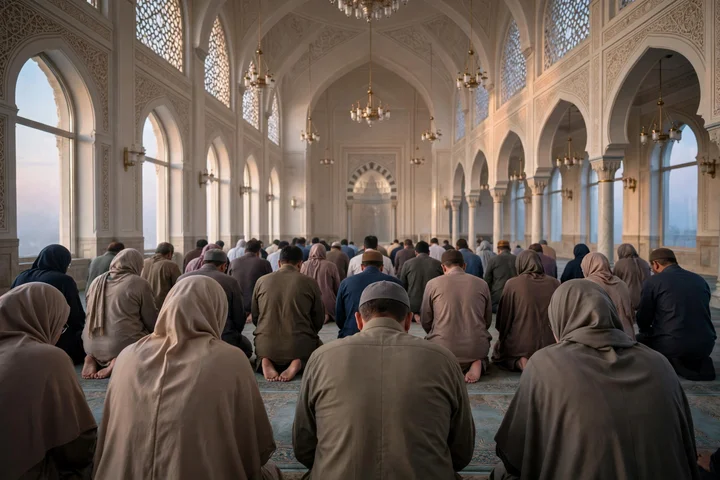
Eid al-Fitr is a day of prayer first and celebration second, and the order matters. The day begins before sunrise, when families eat something sweet, commonly dates, before leaving for prayer. The communal Eid prayer is held in the morning, usually in a mosque or in a large open ground, and it is different from the daily prayers: there is no call to prayer, and the prayer includes several extra takbirs, recitations of “Allahu akbar.” The exact number of extra takbirs varies by school of thought, so do not be surprised if the count sounds different from what you heard last year in another mosque. The sermon that follows the prayer is part of the service, and most people stay for it.
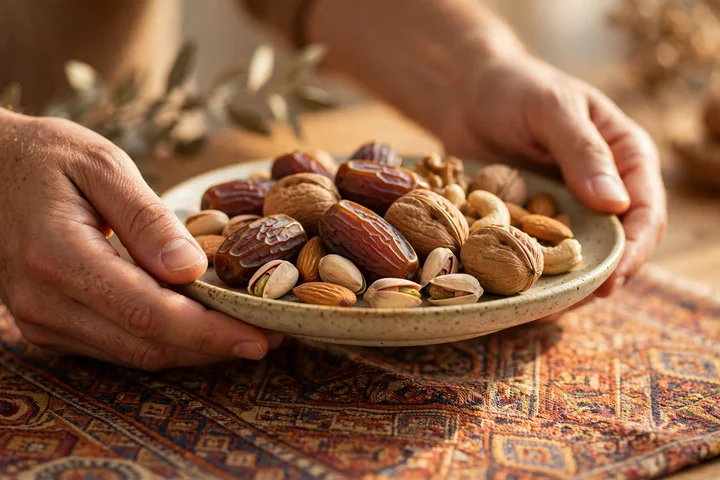
The rest of the day belongs to family. People wear their new or nicest clothes, and children often receive new outfits as Eid gifts. Relatives visit each other, friends drop in without an appointment, and the greeting is “Eid Mubarak,” which means “Blessed Eid.” Younger children receive eidi, small gifts of money in envelopes, from elders, and the envelopes are often decorated. The table is set again and again, and the food is sweet: the festival is also called “Sweet Eid” for the desserts served around the world, from ma’amoul, a shortbread cookie filled with dates and nuts, in Jordan, Lebanon, and other Levant countries, to sheer khurma, a vermicelli milk pudding, in South Asia, and kahk, a powdered-sugar cookie, in Egypt.

The celebration lasts three days, not one. The first day is the most formal, with the prayer and the big family meal. The second and third days are for visiting the relatives you did not reach on day one, for community events, and for the open-house style of hosting where the door stays open and guests come and go. In Turkiye the festival is called Bayram, and the holiday runs through Thursday, March 11. If you are hosting, plan the big meal for day one and keep days two and three light, with food ready for whoever stops by.
Zakat al-Fitr: The Charity That Must Come First
Before the Eid prayer, every Muslim who can afford it must pay zakat al-fitr, also called sadaqat al-fitr or fitrana. It is one sa’ of staple food per person, or its cash value, given so that people with few resources can also celebrate Eid. The payment is per person in the household, including children, and it must be paid before the Eid prayer. Paying it after the prayer still counts as ordinary charity, but it no longer counts as zakat al-fitr, so the timing matters.
The cash amount is set each year from the local price of staple food, and it changes by country. The Fiqh Council of North America recommended $10 per person for 2026 in the United States. Its working showed a blended average of staple foods at about $6, with rice at $4.75 for a sa’, wheat flour at $3.56, and dates far higher, and the council rounded up to $10 out of caution because prices vary so much by food and by city. The separate fidyah figure, paid for permanently missed fasts, was $15. A family of four in the United States using the 2026 recommendation pays $40. Most bodies announce the next amount shortly before or during Ramadan, so check your own body’s published figure for 2027 rather than reusing the 2026 number. In the United Kingdom the 2026 figure was about £5 to £7 per person, and in the United Arab Emirates it was Dh25.
Do not confuse zakat al-fitr with the ordinary zakat on savings, which is 2.5 percent of wealth held for a year. Zakat al-fitr is a small, fixed, per-person payment tied to food, and it is due from everyone who has enough to feed themselves on Eid day. Many mosques collect it in the last week of Ramadan and distribute it before the prayer, so the easiest way to pay is through your mosque or a charity you trust, and to pay it early rather than on the morning of Eid.
The History: The First Eid in 624 CE
Eid al-Fitr is the youngest of the great festivals, and its beginning is dated precisely. It was first celebrated in Medina in 624 CE, in the second year after the Hijrah, after the Muslim community completed its first Ramadan fast. The law of fasting was revealed in Shaban of that year, the law of zakat al-fitr was revealed in the same Ramadan, and the first Eid prayer was offered in an open ground, with the Prophet inviting all the Muslims, men and women, young and old, to the place of Eid. The famous Battle of Badr, in which the Muslims defeated a much larger army of the Quraysh, took place during Ramadan of the same year.
The origin is told in a hadith reported by Anas ibn Malik. When the Prophet came to Medina, the people had two days on which they engaged in games. He asked what these two days were, and they said they used to play on them in the pre-Islamic period. He said Allah had given them two better days in place of them: the day of sacrifice and the day of breaking the fast. Those two days are the festivals celebrated today as Eid al-Adha and Eid al-Fitr. The earlier festivals were the Persian New Year, Nowruz, and the feast of Mihrajan, and the new festivals replaced them. Britannica’s Eid al-Fitr guide describes the same history and the practices that have defined the festival ever since: the communal prayer at daybreak, the dates eaten before prayer, the new clothes, the visits, and the almsgiving that lets everyone celebrate.
The festival has kept the same shape for fourteen centuries, and that is part of its meaning. The prayer is still held in the morning, the charity is still paid before it, and the day is still spent with family. What has changed is the scale: the first Eid was celebrated by a small community in Medina, and today it is celebrated by about two billion people in nearly every country on earth, from the largest mosque gatherings in Indonesia to a single family praying at home in a small American town. The words have not changed, and neither has the order: prayer, charity, family, food.
Traditions and Foods Around the World
Eid al-Fitr looks different in every country, and the differences are the best part of it. In Saudi Arabia and the Gulf, families gather for a large lunch after the prayer, and the coffee and dates are served first, before anything else. In
Turkiye the festival is Seker Bayrami, the Sugar Festival, and children go door to door collecting sweets. In Indonesia, the world’s largest Muslim country, the festival is called Lebaran, and the great homecoming, mudik, sees tens of millions of people travel to their home villages before Eid, then return after it. In Malaysia and Singapore it is Hari Raya Puasa, and the open house, rumah terbuka, means any neighbor can walk in and eat. In Pakistan and India it is often called Choti Eid, the small Eid, to distinguish it from the bigger Eid al-Adha, and the morning starts with sheer khurma.
In the United States the celebration is a blend. Mosques hold large prayer gatherings, often in convention halls because the congregation is too big for the building, and the parking lot fills with families in new clothes. Community centers run carnivals with rides and games for children. Families cook the dishes of their home countries, so one table can hold biryani, kebabs, baklava, and macaroni and cheese at the same time. The American version of the festival is younger than the others, and it is still being invented, one family at a time, which is why no two American Eids look alike.
The foods are the memory of the day. Dates come first, because the fast is broken with them and the Prophet is reported to have eaten an odd number of dates before the Eid prayer. After that the table opens: sheer khurma and kheer in South Asia, ma’amoul and baklava in the Levant, kahk in Egypt, rendang and ketupat in Indonesia and Malaysia, and samosas and kebabs nearly everywhere. The sweets are the reason for the name “Sweet Eid,” and the best of them are the ones made at home, by hand, the night before.

The Six Days of Shawwal
Eid does not end the worship; it starts a small, voluntary fast that many people observe in the days after it. The six days of Shawwal are six voluntary fasts kept at any point during the month of Shawwal, starting from Wednesday, March 10, 2027. The reward is described in a hadith as being like fasting the whole year, because the month of Ramadan plus six days is counted as ten months, and the ten months plus the six days are counted as a full year. The six days can be kept together or spread out, and they cannot be kept on Eid day itself, when fasting is forbidden.
Most people who keep them start on the second or third day after Eid, when the celebrations have quieted. The fasts are short in 2027, because March days in the United States run about twelve hours from dawn to sunset, and the weather is mild. If you kept the full month of Ramadan, six more days feel easy, and the habit carries the discipline of the month a little further into the year. If you missed fasts during Ramadan, make those up first: the obligatory make-up fasts come before the voluntary six.
What Is Open and Closed in the United States
Eid al-Fitr is not a federal holiday in the United States, and it does not appear in the federal holiday law, so federal offices, banks, and the post office stay open on Tuesday, March 9, 2027. Most private businesses follow regular hours, and most schools hold classes. The main official recognition is at school-district level. New York City public schools close for Eid al-Fitr on Tuesday, March 9, 2027, and the city has closed for both Eids since 2015. Other districts with large Muslim populations close or excuse absences as well, and a growing number of employers offer the day as a floating holiday or excuse the absence. Because when is eid al-fitr 2027 falls on a Tuesday, in the middle of the work week, most people who celebrate will take a single day of leave rather than a long weekend.
If you are an employer or a teacher, a small amount of planning goes a long way. A Muslim colleague may ask for Tuesday, March 9, off, and a student may need an excused absence for the Eid prayer and the family day. Both are easy to arrange in advance. The day is short, the request is simple, and a little flexibility costs almost nothing. If you are a student, tell your teachers a week ahead, and ask about any work you will miss on the Tuesday.
In Muslim-majority countries the picture is the opposite. Saudi Arabia, the UAE, Egypt, Turkiye, Indonesia, Malaysia, and Pakistan all declare multi-day public holidays for Eid, and government offices, banks, and schools close for three to four days. The Saudi civil calendar fixes the date years ahead, so flights and leave can be planned early, but the religious announcement still waits for the crescent sighting on the evening of March 8. If you are traveling to the region for Eid, book early: the days around March 9 are among the busiest travel days of the year in the Gulf.
Eid al-Fitr and Eid al-Adha: The Two Eids
The two festivals are often confused, and the difference is simple. Eid al-Fitr ends Ramadan, the month of fasting, and falls on 1 Shawwal. Eid al-Adha falls about ten weeks later, on 10 Dhu al-Hijjah, and marks the end of the Hajj pilgrimage. Our guide to When Is Eid al-Adha 2027 covers the second festival: it falls on Sunday, May 16, 2027, the Day of Arafah is the day before, Saturday, May 15, and the festival runs for four days, through Wednesday, May 19. The two festivals have different meanings: one celebrates the completion of the fast, the other commemorates Ibrahim’s sacrifice and the pilgrimage. The first is the smaller, sweeter festival; the second is the bigger, longer one.
The gap between them is the shortest in the year for planning. Ramadan ends on March 8, Eid al-Fitr is March 9, and Eid al-Adha is May 16, just ten weeks later. If you are saving for qurbani, the ritual sacrifice of Eid al-Adha, the time to start is right after Eid al-Fitr, not in May. And if you are traveling for either festival, the same rule applies: book early, confirm the date with your mosque, and remember that both dates can move by a day.
Planning Checklist for Eid al-Fitr 2027
A little planning turns Eid from a rush into a rest. Start in the last week of Ramadan, not on the morning of Eid. Pay zakat al-fitr early, through your mosque or a charity you trust, and confirm the amount for 2027 rather than reusing last year’s figure. Buy the new clothes before the last weekend of Ramadan, when the shops are busiest. Cook what can be cooked ahead: the sheer khurma base, the cookie dough, the marinated meat. Clean the house on the weekend before Eid, so the morning of March 9 is free for prayer and family, not chores.
On the evening of Monday, March 8, check your mosque’s announcement for the crescent sighting, and confirm whether Eid is Tuesday or Wednesday. Set the alarm early on Eid morning, eat the dates, and leave for prayer with time to spare, because the parking lot fills fast. Keep the first day for the closest family and the big meal, and save the wider visiting for days two and three. And if you are hosting, remember the rule of the open house: cook more than you think you need, because on Eid the guests keep coming, and the door stays open.

For children, the day is the memory they will carry. Let them choose their new clothes, give them their eidi envelopes themselves, and take the family photo before the food comes out, while everyone is still neat. The prayer, the dates, the new clothes, and the envelopes are the four things a child remembers about Eid, and they cost almost nothing. The rest of the day takes care of itself. Knowing when is eid al-fitr 2027 in good time makes it easier to book travel, request leave, and plan the prayer.
Frequently Asked Questions
When is Eid al-Fitr 2027?
Eid al-Fitr 2027 is expected on Tuesday, March 9, 2027, which is 1 Shawwal 1448 on the Umm al-Qura calendar. The date depends on the sighting of the Shawwal crescent on the evening of Monday, March 8. If the crescent is not sighted, Ramadan completes 30 days and Eid moves to Wednesday, March 10. Countries that follow local sighting, including Pakistan, India, and Bangladesh, usually celebrate on Wednesday, March 10.
How long does Eid al-Fitr last?
Eid al-Fitr lasts three days, from Tuesday, March 9, to Thursday, March 11, 2027. The first day is the main day, with the Eid prayer in the morning and the big family meal. The second and third days are for visiting relatives, community events, and open-house hosting. In Turkiye the festival is called Bayram and runs through Thursday, March 11.
What is zakat al-fitr, and how much is it?
Zakat al-fitr is an obligatory charitable payment of one sa’ of staple food per person, or its cash value, given before the Eid prayer so that people with few resources can celebrate. The Fiqh Council of North America recommended $10 per person for 2026 in the United States, and a family of four pays $40. The 2027 amount is announced shortly before Ramadan, so check your body’s published figure rather than reusing the 2026 number.
Is Eid al-Fitr a federal holiday in the United States?
No. Eid al-Fitr is not a federal holiday, and it is not on the list in 5 U.S.C. 6103. Federal offices, banks, and post offices stay open. The main official recognition is at school-district level: New York City public schools close for Eid al-Fitr on Tuesday, March 9, 2027, and other districts with large Muslim populations close or excuse absences as well.
What is the difference between Eid al-Fitr and Eid al-Adha?
Eid al-Fitr ends Ramadan and falls on 1 Shawwal, while Eid al-Adha falls about ten weeks later, on 10 Dhu al-Hijjah, and marks the end of the Hajj pilgrimage. Eid al-Fitr 2027 is Tuesday, March 9, and Eid al-Adha 2027 is Sunday, May 16. The first celebrates the completion of the fast; the second commemorates Ibrahim’s sacrifice and the pilgrimage. Eid al-Fitr is the smaller, sweeter festival; Eid al-Adha is the bigger, longer one.
Can Eid al-Fitr 2027 fall on March 10 instead of March 9?
Yes, in some places. The date depends on the sighting of the Shawwal crescent on the evening of Monday, March 8, 2027. If the crescent is not seen, Ramadan runs to 30 days and Eid moves to Wednesday, March 10. Indonesia and Singapore have already listed March 10 as the public holiday, and Pakistan, India, and Bangladesh are likely to observe March 10 as well. Check your local mosque’s announcement on the evening of March 8 for the date your community will follow. When is eid al-fitr 2027 is therefore best answered as Tuesday, March 9, with Wednesday, March 10, as the one-day backup.
Leave a Reply