
When is Hanukkah 2026? It begins on the evening of Friday, December 4, and ends at nightfall on Saturday, December 12 — eight nights of candle lighting. If you’re asking when is hanukkah 2026 because you’re planning a visit, a dinner, or simply want to greet someone properly, this guide gives you the exact night-by-night dates, when the candles are lit each evening, why the date shifts every year, and what non-Jewish friends should know.
Key Facts
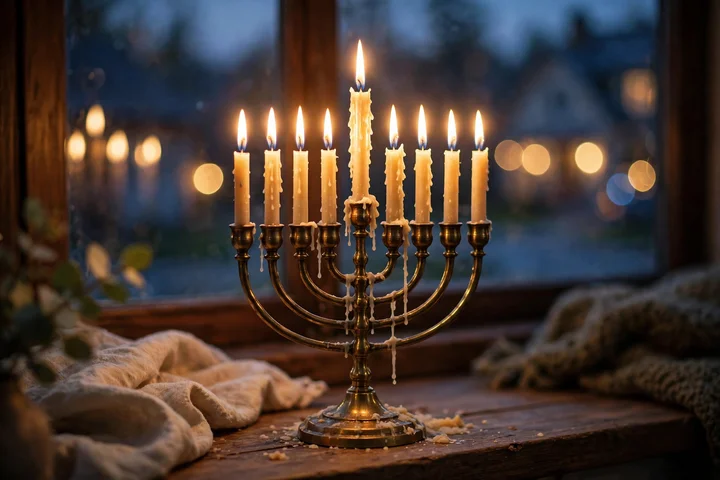
- Hanukkah 2026: begins Friday, December 4 in the evening; ends Saturday, December 12 at nightfall.
- Eight nights: one additional candle is lit each night — from 1 candle on night one to 8 on night eight (plus the shamash, the helper candle, every night).
- Hebrew date: Hanukkah always begins on the 25th of Kislev; the Gregorian calendar date drifts between late November and late December.
- Candle-lighting time: after nightfall each evening — except Friday, December 4 and Friday, December 11, when candles are lit before sunset ahead of Shabbat.
- The greeting: “Happy Hanukkah” is perfect; “Chag Sameach” (pronounced khag sah-ME-akh, “happy holiday”) is the traditional Hebrew greeting.
The Exact Dates: Night by Night
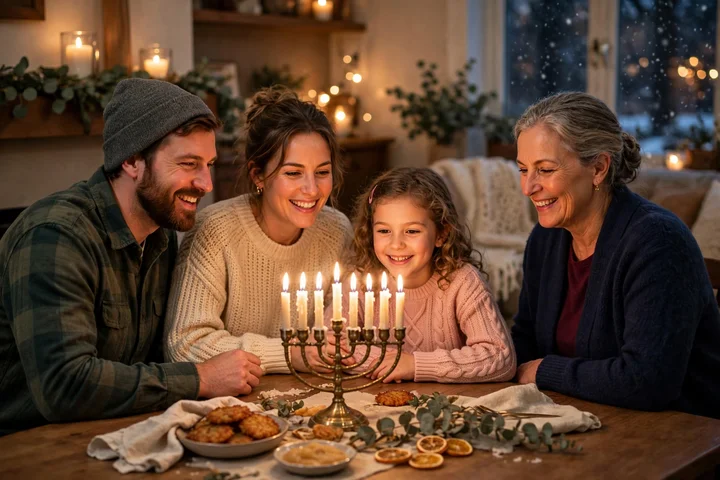
Hanukkah is eight nights long, and each night adds one more flame. Here is the full 2026 schedule:
- Night 1 — Friday, December 4: 1 candle (+ shamash), lit before sunset, ahead of Shabbat candles.
- Night 2 — Saturday, December 5: 2 candles (+ shamash), lit after nightfall once Shabbat ends.
- Night 3 — Sunday, December 6: 3 candles (+ shamash), after nightfall.
- Night 4 — Monday, December 7: 4 candles (+ shamash), after nightfall.
- Night 5 — Tuesday, December 8: 5 candles (+ shamash), after nightfall.
- Night 6 — Wednesday, December 9: 6 candles (+ shamash), after nightfall.
- Night 7 — Thursday, December 10: 7 candles (+ shamash), after nightfall.
- Night 8 — Friday, December 11: 8 candles (+ shamash), lit before sunset, ahead of Shabbat candles.
- Saturday, December 12: the holiday ends at nightfall; no candles are lit this evening.
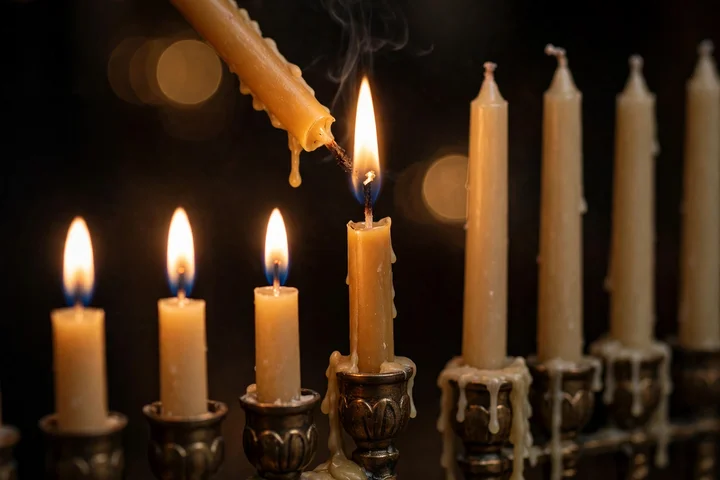
Two practical notes for planners. First, because the first and last nights fall on Friday evenings in 2026, the candle lighting happens earlier than usual those nights — before sunset rather than after dark — so plan dinners and gatherings around that. Second, the “evening of December 4” wording matters: in Jewish tradition, days begin at sundown, so the first candle is lit on the evening that starts the holiday, even though most of December 4 itself is an ordinary day.
If you ever need to verify the dates for another year, Hebcal’s Hebrew calendar converter is the most reliable free tool — it converts between Hebrew and Gregorian dates and lists candle-lighting times by location.
Why the Date Moves Every Year
Hanukkah never moves on the calendar it was designed for. It always begins on the 25th of Kislev, a month in the Hebrew calendar — the same date it has begun for more than two thousand years. What moves is where that date lands on the Gregorian calendar most of the world uses day to day.
The Hebrew calendar is lunisolar: its months follow the moon (about 29.5 days each), while its years stay roughly aligned with the sun through leap years. A standard Hebrew year has 354 days — about 11 days shorter than a solar year. To keep the seasons from drifting, seven years out of every nineteen get an extra month (a second Adar). The result is that Hebrew dates slide back and forth against Gregorian dates within a range of several weeks.
That is why Hanukkah can start as early as late November (November 28 in 2021) and as late as late December (December 25 in 2024). In 2026 it falls in the earlier part of its range: December 4–12. The same mechanics explain why Easter, Ramadan, and Lunar New Year all “move” — any holiday anchored to a lunar or lunisolar calendar will wander across the solar calendar.
For context, the Hebrew year turning over during this period is 5787 — Hanukkah 2026 falls in the Hebrew year 5787, beginning on 25 Kislev 5787.

What Time Are the Candles Lit?
The standard rule is simple: light after nightfall, once stars are visible, and let the candles burn for at least 30 minutes into the night. The point is pirsumei nisa — publicizing the miracle — so the flames should be visible in the darkness, traditionally placed in a window facing the street.
2026 has two exceptions, both because the holiday overlaps Shabbat:
- Friday, December 4 (night 1): Hanukkah candles are lit before the Shabbat candles, which means before sunset — roughly 18 minutes before sundown in most traditions. They must be long-burning enough to last until at least 30 minutes after nightfall, since they cannot be relit or touched once Shabbat begins.
- Saturday, December 5 (night 2): candles are lit after Shabbat ends at nightfall, following Havdalah (the ceremony marking Shabbat’s end).
- Friday, December 11 (night 8): same as night 1 — light before sunset, ahead of Shabbat.
If you’re hosting or attending a lighting, the Friday timing is the one that catches people out: guests expecting an after-dinner candle lighting will miss it entirely. For the complete ritual — the candle order, the blessings, where to place the menorah, and safety basics — see our step-by-step guide to how to light the menorah.
What Non-Jewish Readers Should Know
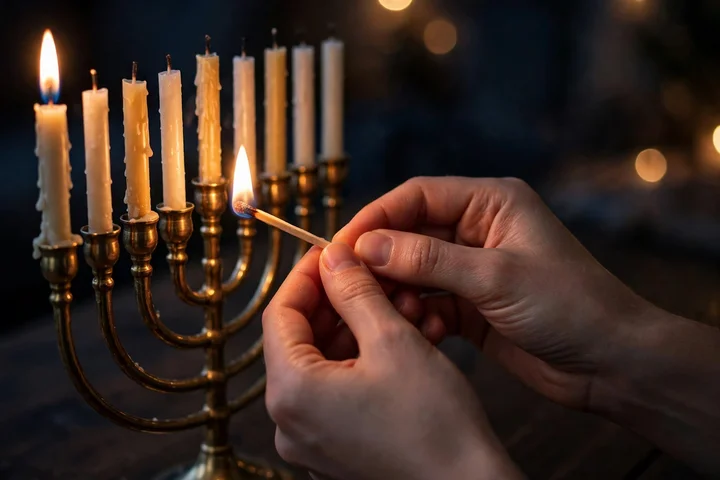
Hanukkah is a warm, family-centered holiday, and non-Jewish friends are often welcomed into the celebration. A few things worth knowing:
Greetings are easy. “Happy Hanukkah” is always appropriate. If you want the traditional Hebrew greeting, “Chag Sameach” (happy holiday) works for any Jewish festival, including Hanukkah. Nobody expects perfect pronunciation — the thought is what counts.
Gifts are optional, not obligatory. Gift-giving grew as a Hanukkah custom largely because of the holiday’s December timing, but it is not a religious requirement. Children often receive small gifts or gelt (chocolate coins) on one or more nights. If you’re invited to a Hanukkah gathering, a small host gift — wine, dessert, flowers — is appreciated, exactly as at any dinner party.
It is not “Jewish Christmas.” This is the single most common misconception. Hanukkah is a minor religious holiday that became culturally prominent in America because it falls in December. Its themes — dedication, resilience, light in darkness — are entirely its own. To understand the actual story of the Maccabees and the oil that burned for eight days, read what is Hanukkah.
If you’re invited to a candle lighting, say yes. Guests are genuinely welcome, and watching the blessings and the growing row of flames is the heart of the holiday. You don’t need to do anything but be present — though bringing dessert never hurts.
Quotable: “Hanukkah’s date moves, but its message doesn’t: light grows, one small flame at a time.”
Quotable: “Asking when Hanukkah falls isn’t calendar trivia — it’s how you show up for the people you care about.”

Hanukkah and Christmas in 2026
In 2026, the two holidays keep a respectful distance: Hanukkah ends on December 12, and Christmas follows on Friday, December 25 — nearly two weeks later. Some years they overlap (in 2024, Christmas Day fell during Hanukkah, a combination some families celebrate as “Chrismukkah”), and some years Hanukkah lands squarely on Thanksgiving week. The wandering date is part of what makes each year’s December feel a little different.
Both holidays are, at heart, festivals of light in the darkest month — candles in windows, glowing trees, gatherings against the early dark. The symbolism rhymes even though the stories, rituals, and meanings are entirely distinct. If your December includes both traditions, 2026 gives you a comfortable two-week breather between them: eight nights of candles, then Christmas.

Frequently Asked Questions
When is Hanukkah 2026?
Hanukkah 2026 begins on the evening of Friday, December 4 and ends at nightfall on Saturday, December 12 — eight nights. The first candle is lit December 4 (before sunset, ahead of Shabbat) and the eighth on December 11.
Why does Hanukkah change dates every year?
Hanukkah always begins on 25 Kislev in the Hebrew (lunisolar) calendar. Because the Hebrew year is about 11 days shorter than the solar year, the Gregorian date drifts between late November and late December from year to year.
What time do you light the Hanukkah candles?
After nightfall each evening, with the candles burning at least 30 minutes. On Friday evenings (December 4 and 11 in 2026), light before sunset ahead of Shabbat; on Saturday night (December 5), light after Shabbat ends.
How do you wish someone a happy Hanukkah?
“Happy Hanukkah” is perfect. “Chag Sameach” (khag sah-ME-akh), Hebrew for “happy holiday,” is the traditional greeting.
Is Hanukkah the Jewish Christmas?
No. Hanukkah is a minor Jewish holiday celebrating the rededication of the Temple in Jerusalem over 2,000 years ago. It became culturally prominent in America mainly because it falls in December near Christmas.
How long does Hanukkah last?
Eight days and eight nights, commemorating the Temple oil that miraculously burned for eight days. One additional candle is lit each night, from one on the first night to eight on the last.
Leave a Reply