
What is Hanukkah? It is the Jewish Festival of Lights — an eight-night winter holiday commemorating a 2,200-year-old victory for religious freedom and the miracle of Temple oil that burned for eight days when there was only enough for one. If you’ve ever wondered what is hanukkah beyond the candles in windows each December, this guide explains the story, the history, and the traditions simply and respectfully — written for the curious, whatever your background.

Key Facts
- The basics: Hanukkah (“dedication”) is an 8-day Jewish holiday celebrating the rededication of the Second Temple in Jerusalem in 164 BCE.
- The story: the Maccabees, a small band of Jewish rebels, defeated the Seleucid Empire’s attempt to erase Jewish practice — then found only one day’s worth of pure Temple oil, which burned for eight.
- When: always begins on 25 Kislev in the Hebrew calendar; in 2026, the evening of December 4 through December 12.
- How it’s observed: lighting the menorah (one more candle each night), foods fried in oil, the dreidel game, songs, and prayers of thanksgiving.
- Its status: historically a minor religious holiday — its big cultural footprint in America comes from falling in December near Christmas.
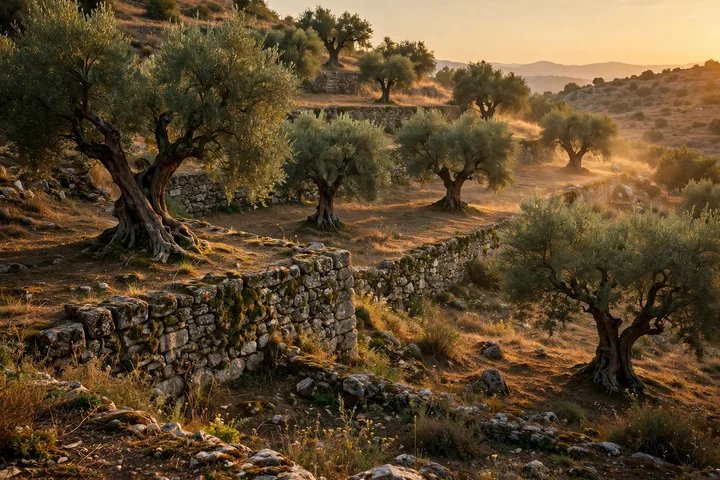
The Story: The Maccabees’ Revolt
In the 2nd century BCE, Judea was controlled by the Seleucid Empire under King Antiochus IV Epiphanes. Antiochus didn’t just demand taxes and loyalty — he set out to erase Judaism itself. Torah study was banned, circumcision was outlawed, and in 167 BCE his soldiers desecrated the Temple in Jerusalem, erecting an altar to Zeus and sacrificing pigs on it.
The revolt began in the village of Modiin, where an elderly priest named Mattathias refused the king’s order to sacrifice to idols — and killed both the complying Jew and the king’s officer. Mattathias fled to the hills with his five sons, lighting the fuse of a guerrilla war. After his death, his son Judah Maccabee (“Judah the Hammer”) took command.
Against staggering odds, the Maccabees — farmers and priests, not soldiers — defeated the Seleucid armies in a series of battles. In 164 BCE they recaptured Jerusalem and set about the urgent work the holiday is named for: Hanukkah means “dedication,” and the first Hanukkah was the rededication and purification of the desecrated Temple.
The Miracle of the Oil
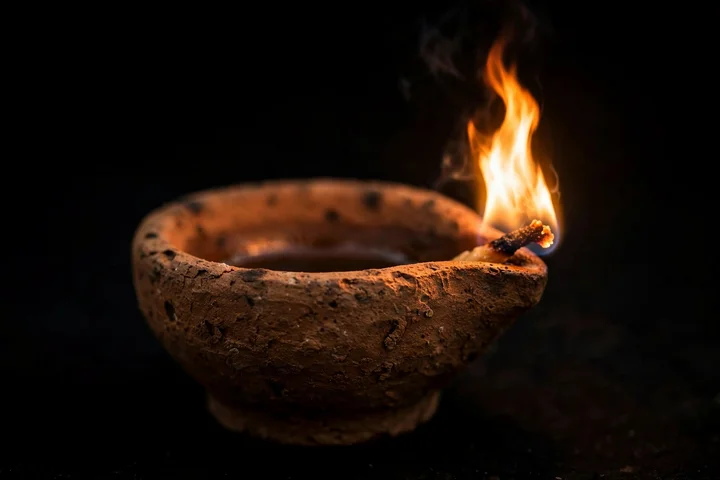
Here is where history becomes legend — the part every Jewish child learns. When the Maccabees reclaimed the Temple, they needed pure olive oil, sealed by the High Priest, to light the Temple menorah. They found only a single small cruse — enough for one day. Preparing more pure oil would take eight days.
They lit it anyway. And according to the Talmud (Shabbat 21b), the oil burned for all eight days.
Was it a literal miracle or a story that grew around a military victory? Scholars debate; believers don’t need the debate. The rabbis who shaped the holiday chose to emphasize the oil over the battlefield — Hanukkah became a festival of light, not of war. The candles we kindle are a reenactment: a little light, against the odds, lasting longer than it should.
How Hanukkah Is Celebrated
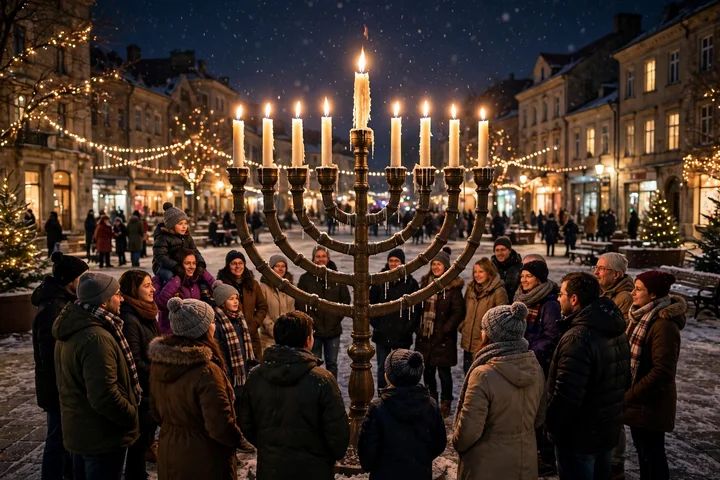
Lighting the menorah. The central ritual: a nine-branched hanukkiah (eight candles plus the shamash helper candle). One additional candle is lit each night — placed right to left, lit left to right, newest first — after nightfall, with blessings. Our step-by-step guide explains exactly how to light the menorah, including the Shabbat timing rules.
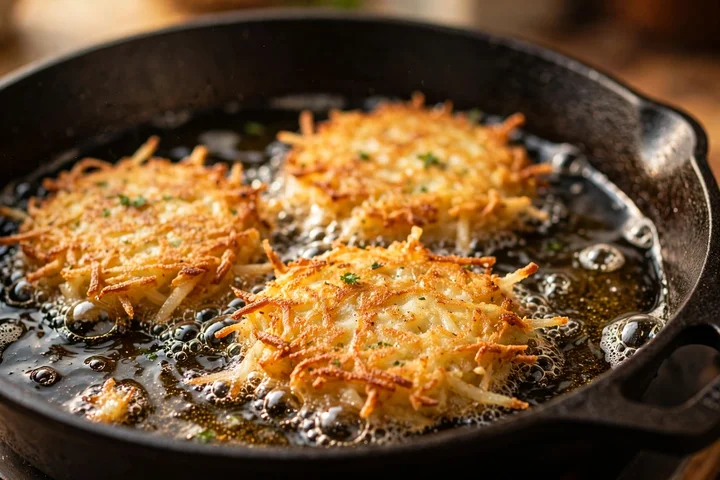
Foods fried in oil. Latkes (crisp potato pancakes), sufganiyot (jelly doughnuts), and their Sephardic cousins — all to remember the oil. Dairy foods also appear, recalling the story of Judith (see below).
The dreidel game. A four-sided spinning top with the Hebrew letters nun, gimel, hey, shin — initials for “a great miracle happened there.” Legend says it began as a cover for secret Torah study under persecution. Learn how to play dreidel in about five minutes.
Gelt. Chocolate coins (real coins, historically) given to children — a small, sweet piece of the holiday’s generosity.
Prayer and song. The Hallel psalms of praise are recited, and Al HaNissim (“for the miracles”) is added to the grace after meals and daily prayers. Families sing Maoz Tzur (“Rock of Ages”) after lighting the candles.
No work restrictions. Unlike Shabbat or Yom Kippur, Hanukkah is a regular workday — the holiday happens in the evenings, around ordinary life. That’s part of why it’s so family-friendly: the celebration fits into the week rather than stopping it.
Quotable: “Hanukkah is the story of a little light that refused the math — one day of oil, eight days of flame.”

The Story of Judith (The Holiday’s Other Hero)
The Maccabees get the headlines, but Hanukkah has a second heroine: Judith. Legend tells that when the Assyrian general Holofernes besieged the town of Bethulia, the widow Judith charmed her way into his tent, fed him salty cheese to make him thirsty, plied him with wine — and when he fell asleep, took his sword and ended the siege.
That is why dairy foods — cheese latkes, blintzes, cheesecake — are traditional Hanukkah foods alongside the fried ones. Judith’s story adds a layer the military narrative lacks: cunning over force, and a woman’s courage at the center of the deliverance.
What Hanukkah Is Not
Clearing up misconceptions is part of understanding the holiday honestly:
It is not “Jewish Christmas.” The most common misunderstanding, and worth stating plainly. Hanukkah predates Christmas by two centuries, has entirely different origins and meanings, and is historically a minor holiday. Gift-giving and December decorations are cultural adaptations, mostly American, driven by the calendar — not religious requirements.
It is not in the Hebrew Bible. The Books of Maccabees, which tell the revolt’s story, are in the Catholic and Orthodox biblical canons but not the Jewish Tanakh. The holiday’s authority comes from the Talmud and two millennia of rabbinic tradition.
It is not only for the strictly observant. Hanukkah is among the most widely celebrated Jewish holidays precisely because its rituals are home-based, joyful, and accessible. Lighting candles requires no synagogue, no expertise — just a menorah, flames, and the blessings.

Why the Holiday Still Resonates
Strip away the centuries and Hanukkah’s themes are startlingly current:
- Religious freedom: the first recorded war fought for the right to practice one’s faith — and a victory for the small and principled over the powerful.
- Light in darkness: it falls near the winter solstice, when the nights are longest. Every tradition that answers darkness with light — candles, lamps, bonfires — speaks the same human language.
- Dedication: the name itself. The Maccabees didn’t just win; they cleaned, repaired, and rededicated. The holiday honors the unglamorous work of rebuilding after the battle.
- Hope as discipline: one more candle each night, even before you can see the full row. Optimism, practiced nightly.
Quotable: “Dedication is Hanukkah’s real name — the victory mattered, but the rebuilding is what we celebrate.”
Hanukkah Around the World
The holiday wears local dress everywhere it travels. In Israel, sufganiyot are a national obsession — bakeries compete for the most extravagant filled doughnuts, and schools go on holiday. Yemenite Jews have their own melodies for the blessings; Moroccan Jews fry sfenj; Indian Jewish communities make their own fried sweets. In America, the White House has hosted a menorah lighting since 1979, and giant public menorahs glow in town squares from New York to small suburbs — the “publicizing the miracle” principle, scaled up.
For clear, in-depth explainers on every aspect of the holiday, MyJewishLearning is one of the best single resources available — accurate, accessible, and written for exactly the curious reader this article serves.
When Is It This Year?
In 2026, Hanukkah runs from the evening of Friday, December 4 through nightfall on Saturday, December 12. See our full breakdown of when Hanukkah falls in 2026 for the night-by-night candle schedule and lighting times.
Frequently Asked Questions
What is Hanukkah?
Hanukkah is the eight-night Jewish Festival of Lights, commemorating the Maccabees’ rededication of the Temple in Jerusalem (164 BCE) and the miracle of oil that burned for eight days instead of one.
Why is Hanukkah celebrated for 8 days?
Because the Temple’s single day’s supply of pure oil miraculously lasted the full eight days needed to prepare more. Each night’s additional candle reenacts that growing light.
Who were the Maccabees?
A family-led band of Jewish rebels (Mattathias the priest, then his son Judah “the Hammer” Maccabee) who defeated the Seleucid Empire’s religious persecution in the 2nd century BCE and rededicated the Temple.
Is Hanukkah a major Jewish holiday?
Religiously, it’s a minor holiday — there are no work restrictions and it’s not in the Hebrew Bible. Culturally, especially in America, it’s one of the most widely celebrated, largely because it falls in December.
What does the word Hanukkah mean?
“Dedication” — for the rededication of the Second Temple in Jerusalem after its desecration.
Do you have to be Jewish to celebrate Hanukkah?
The rituals are Jewish religious observances, but non-Jewish friends are often warmly welcomed at candle lightings and Hanukkah gatherings. “Happy Hanukkah” is always an appropriate greeting.
Leave a Reply