
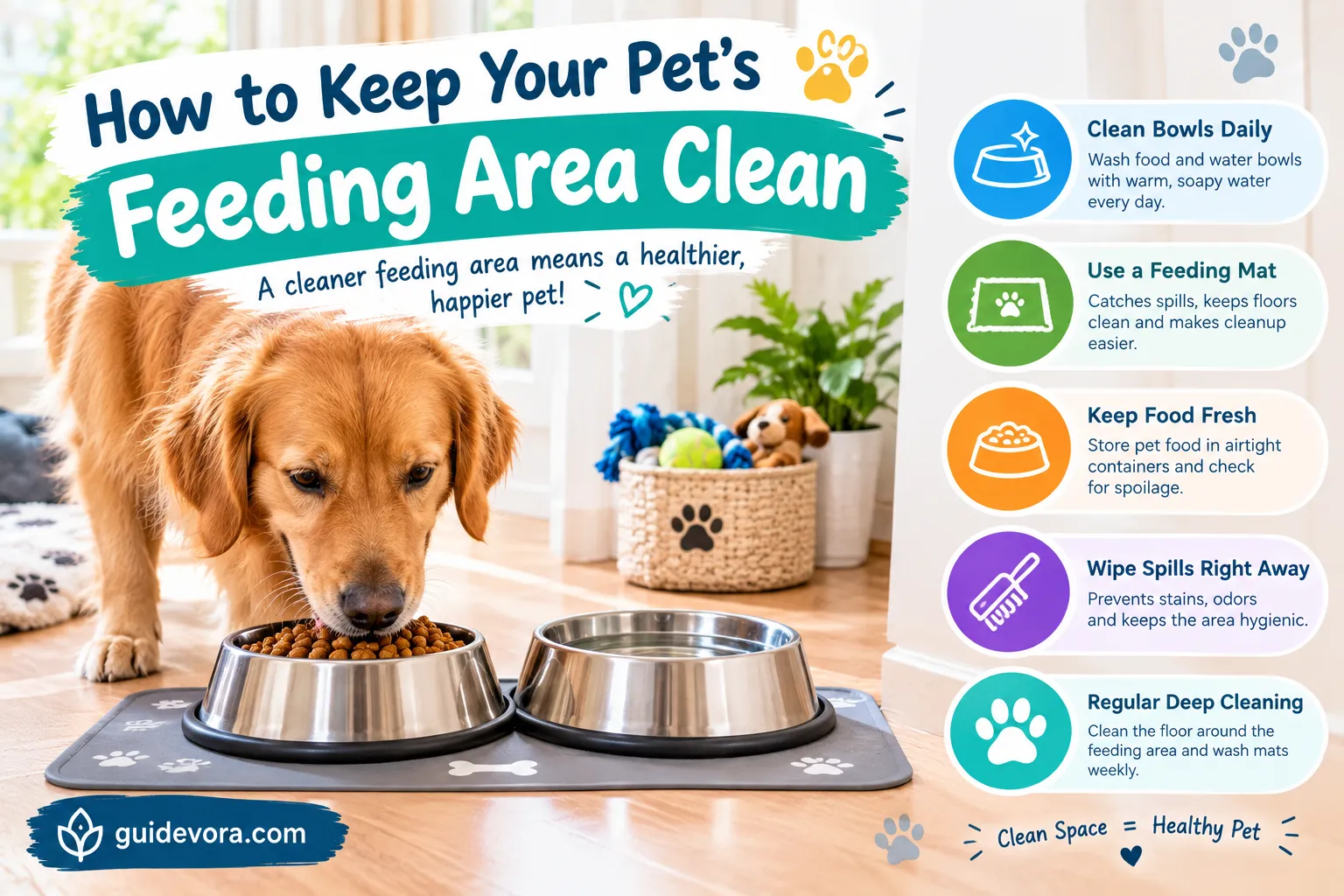
Pet food bowls consistently rank among the germiest items in the average home — NSF International’s household microbiology study placed them fourth overall, behind items like kitchen sponges and toothbrush holders, and ahead of the bathroom faucet handle. Yet a peer-reviewed survey of 417 dog owners found that fewer than 5% were even aware that the FDA publishes specific pet food handling guidelines, and 18% admitted to washing their dog’s bowls less than once every three months — some not at all.
A clean feeding area isn’t just about tidiness. It directly affects the odds of your dog — and you — being exposed to bacteria like Salmonella and E. coli. Here’s exactly what to clean, how often, and what setup choices make the whole routine easier.
How Often Should You Actually Wash Your Dog’s Bowls?
This is the single most-searched question on this topic, so here’s the direct answer: the FDA recommends washing food bowls and scooping utensils after every use, and washing water bowls at least once daily. In the Luisana study, only 50% of dog owners washed the food dish after each use, and just 12% washed it daily — meaning roughly half of all dog owners are underwashing by FDA standards.
The same research found that when owners followed FDA-aligned protocols for about a week, bacterial swab counts dropped significantly compared to owners who changed nothing — and this held true regardless of whether the bowl was plastic, stainless steel, or another material, and regardless of whether the dog ate wet or dry food.
1. Choose the Right Bowl Material
Material affects how easily bacteria take hold, not just how the bowl looks.
- Stainless steel is the most consistently recommended option — non-porous, dishwasher-safe, and resistant to scratching, which matters because scratches on plastic and grooves in ceramic glaze give bacteria places to hide.
- Ceramic/porcelain works well if it’s fully glazed and free of cracks, but chipped glaze creates the same hiding spots as scratched plastic.
- Plastic is the least recommended long-term choice — separate research has found Salmonella and E. coli more commonly on ceramic and plastic dishes than on stainless steel, and plastic degrades and micro-scratches faster with regular scrubbing.
Practical takeaway: if you’re replacing bowls, stainless steel is the lowest-maintenance, most hygienic default.
2. Wash on the Right Schedule
- Food bowls: wash with hot, soapy water after every meal — not just a rinse.
- Water bowls: empty, wash, and refill with fresh water at least once daily; standing water grows biofilm (that slimy residue) within 24 hours even without visible dirt.
- Food scoops and measuring cups: wash after each use — in the same study, fewer than 25% of owners washed the scoop regularly, making it one of the most overlooked contamination points in the entire feeding routine.
- Weekly deep clean: run stainless steel bowls through a dishwasher on a hot cycle, or hand-wash with water above 160°F (71°C), which the research found more effective at reducing bacterial load than cold or lukewarm washing.
3. Wash Your Hands, Not Just the Bowls
Only about one-third of dog owners in the Luisana survey reported washing their hands after feeding their dog. The FDA guidance is specific: wash hands with soap and water for at least 20 seconds before and after handling pet food, treats, or feeding equipment — the same standard used for human food safety.
Read More: Essential Items Every New Dog Owner Should Have
4. Set Up the Feeding Area to Reduce Mess and Contamination
- Use a dedicated feeding mat under bowls to catch spilled kibble and water drips — uncontained spills left on flooring attract bacteria growth and pests faster than contained ones.
- Never use your dog’s bowl as a scoop — always use a separate, clean scoop or cup, since dipping a used bowl into the food bag transfers bacteria directly into your stored supply.
- Store dry food in an airtight container, ideally the original bag sealed inside the container rather than poured loose, to preserve freshness data printed on the packaging and prevent pest access.
- Keep the feeding station away from litter boxes, trash cans, or high-traffic walkways — proximity to these areas increases cross-contamination risk significantly.
5. Handle Raw and Wet Food With Extra Care
If you feed a raw diet, the CDC recommends additional precautions beyond standard kibble handling, since raw meat carries a meaningfully higher risk of Salmonella and Listeria contamination.
- Prepare raw food on a separate cutting surface, never the one used for human food.
- Refrigerate opened wet food immediately and discard anything left out for more than 2 hours (less in hot weather).
- Disinfect any surface that raw food touched with a pet-safe disinfectant before it’s used again.
6. Don’t Forget the Surrounding Area
- Wipe down counters or floor areas near the feeding station weekly, even if no spill is visible — residue from splashed water and dropped kibble accumulates gradually.
- Wash feeding mats on the same schedule as bowls; fabric mats especially can harbor moisture and bacteria if left unwashed for weeks.
- If you use automatic feeders or water fountains, follow the manufacturer’s cleaning schedule closely — these have more crevices and moving parts than a standard bowl, which means more places for buildup.
Quick-Reference Cleaning Schedule
| Item | Cleaning Frequency |
|---|---|
| Food bowl | After every meal |
| Water bowl | At least once daily |
| Food scoop/cup | After every use |
| Feeding mat | Weekly (or immediately if soiled) |
| Bowls — deep clean | Weekly, hot dishwasher cycle or 160°F+ hand wash |
| Surfaces near feeding area | Weekly |
| Automatic feeder/fountain | Per manufacturer guidance (typically weekly) |
Frequently Asked Questions
How often should you wash dog bowls? Food bowls should be washed after every meal, and water bowls at least once daily, per FDA pet food handling guidelines. A weekly deep clean in a hot dishwasher cycle or with water above 160°F further reduces bacterial buildup.
What is the best material for a dog bowl to prevent bacteria? Stainless steel is the most recommended option — it’s non-porous, resists scratching, and research has found it carries lower rates of Salmonella and E. coli compared to plastic and ceramic bowls.
Is it safe to wash my dog’s bowl in the same sink as my dishes? Yes, as long as you wash both thoroughly with hot, soapy water afterward. Many households also run dog bowls through the dishwasher, which reaches higher, more effective sanitizing temperatures than hand-washing.
How dirty are dog bowls really? An NSF International household study ranked pet food and water bowls among the top five germiest items in an average home — ahead of common concerns like bathroom faucet handles.
Do I need a separate scoop for dog food? Yes. Using the dog’s own bowl to scoop food directly from the bag transfers bacteria into your entire food supply. A dedicated, regularly washed scoop prevents this.
Final Thoughts
Keeping a pet’s feeding area clean comes down to three consistent habits: wash food bowls after every meal, water bowls daily, and hands before and after feeding. Add a stainless steel bowl, a containment mat, and a proper food storage container, and the entire routine takes only a few extra minutes a day — a small trade-off for meaningfully lowering the risk of bacterial illness for both your dog and your household.
Leave a Reply