
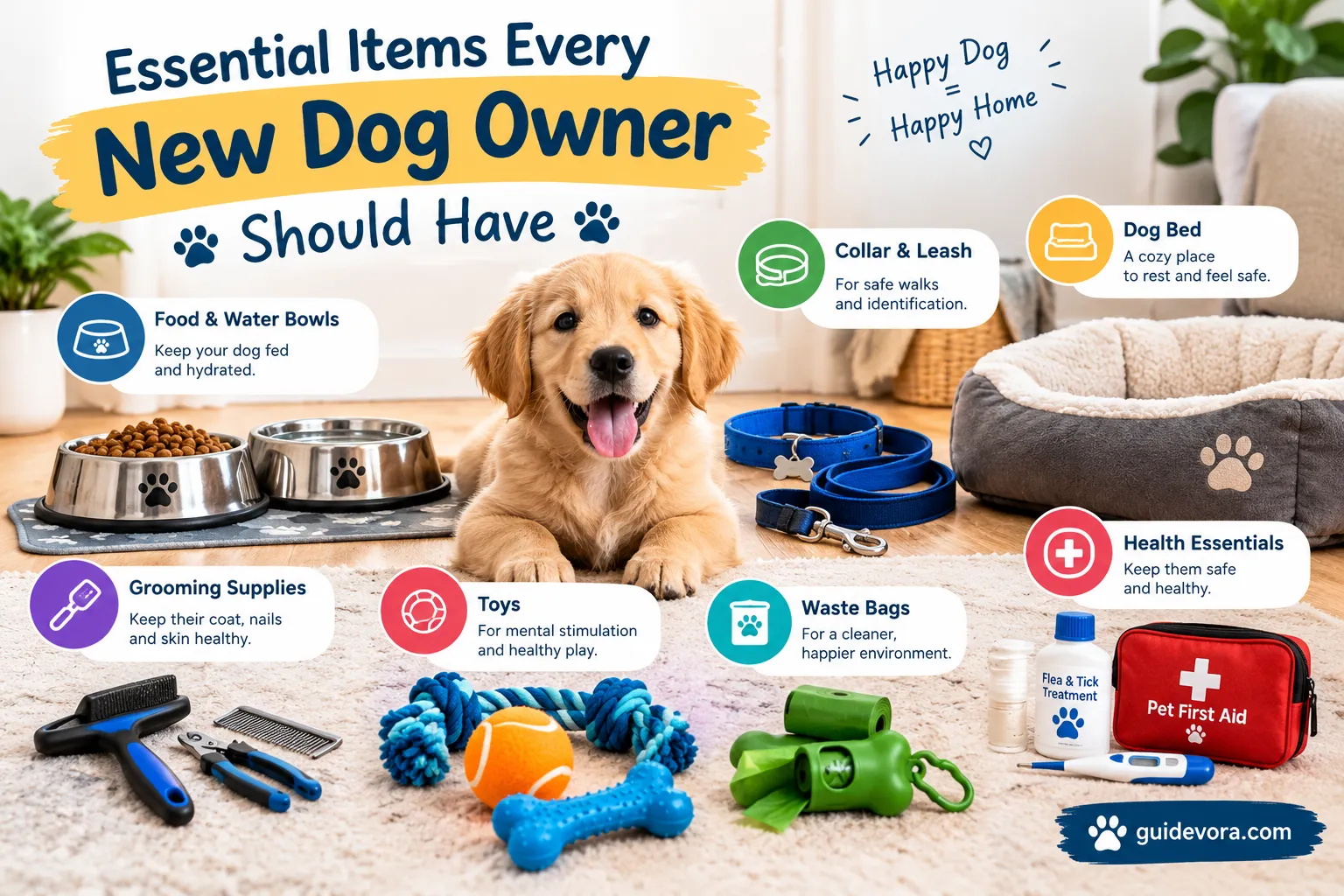
Bringing a dog home — whether an eight-week-old puppy or a five-year-old shelter dog — is one of those decisions that feels simple until you’re standing in the pet aisle overwhelmed by options. The truth is, you don’t need everything on the shelf. You need a short, specific list of essentials that cover feeding, safety, sleep, training, grooming, and health — and a plan for the first 48 hours.
This guide covers the essential items every new dog owner should have, plus the details most checklists skip: what to buy differently for an apartment, what changes if you’re adopting from a shelter instead of a breeder, and how long it realistically takes for a dog to bond with a new owner.
Before You Shop: What Kind of Dog Owner Are You?
Your shopping list changes slightly depending on your situation:
- First-time puppy owners need more house-training gear (pads, baby gates, teething toys).
- Shelter or rescue adopters often need less puppy-specific gear but more comfort and decompression items — a rescue dog may be anxious in the first weeks, so calming aids and a predictable routine matter more than toys.
- Apartment dwellers need space-efficient gear: a smaller crate, an indoor potty solution if outdoor access is limited, and noise-conscious training tools.
Keep this in mind as you go through the list below — not every item applies the same way to every dog.
1. Feeding and Hydration Essentials
- Age-appropriate dog food — puppy, adult, or senior formula, sized to breed (a Chihuahua and a Labrador Retriever have very different caloric needs)
- Stainless steel or ceramic bowls — more hygienic than plastic, which can harbor bacteria and trigger chin acne
- A slow-feeder bowl for fast eaters, to reduce bloat risk
- An airtight food storage container
If you’re not sure what to buy before adopting a shelter dog, start here: ask the shelter or foster what the dog has been eating, and buy a small bag of the same food to transition slowly over 7–10 days. Sudden diet changes are one of the most common causes of digestive upset in newly adopted dogs.
2. Sleeping and Comfort
- A properly sized crate — enough room to stand, turn, and lie down comfortably, no more
- A washable dog bed or crate mat
- A blanket for scent comfort and warmth
- An exercise pen (x-pen) for a temporary larger containment area
For a dog checklist for apartment living, a compact wire or soft-sided crate that folds flat is worth the extra cost — it solves both the containment and the storage problem in a small space.
3. Safety and Identification
- A properly fitted collar
- An ID tag, updated with your phone number the same day your dog arrives
- A leash — a standard 4–6 foot leash gives better control than a retractable one while your dog is still learning walking manners
- A harness — a front-clip harness is generally recommended by trainers for dogs that pull, since it redirects motion instead of straining the neck
- Microchipping, done at the first vet visit as a backup to a tag that can fall off
If you’re deciding between a harness or collar for a new dog, the short answer: use both. The collar holds the ID tag; the harness (not the collar) should be what your leash clips to for walks, especially for brachycephalic breeds like the French Bulldog, which are prone to breathing issues if neck pressure is added.
4. Training Essentials
- Small, soft training treats for positive reinforcement
- Potty pads, if house-training indoors first or working with limited outdoor access
- Poop bags — keep a roll on every leash
- Baby gates for puppy-proofing and room-by-room introductions
- A clicker, if using clicker training
The American Kennel Club (AKC) and most professional trainers recommend reward-based, positive-reinforcement methods over punishment-based training, particularly in the first few weeks, when trust is still being established.
5. Grooming Must-Haves
- A brush matched to coat type — slicker brush for long coats (Golden Retriever), rubber curry brush for short coats
- Dog-safe shampoo — human shampoo disrupts a dog’s skin pH
- Nail clippers or a grinder
- A dog toothbrush and enzymatic toothpaste — the AVMA lists dental disease as one of the most common, and most preventable, conditions in adult dogs
- Ear-cleaning solution, especially for floppy-eared breeds
6. Health and First Aid
- A basic pet first aid kit: antiseptic wipes, gauze, tweezers, digital thermometer
- Flea, tick, and heartworm prevention, vet-prescribed
- A vet appointment booked within the first week
- Copies of vaccination records, if adopting from a shelter, rescue, or breeder
Scheduling that first vet visit early — even if your dog seems perfectly healthy — is the single most skipped step on most new dog owner checklists, according to guidance echoed by the ASPCA and Humane Society adoption resources.
Budget Checklist: What’s Essential vs. What Can Wait
For a budget checklist for new dog owners, split spending into two tiers:
Buy before day one: food, bowls, crate, collar, ID tag, leash, harness, poop bags, a few chew toys Add in week 2–4: grooming tools, additional toys, training classes, seasonal gear (boots, coats)
Basic starter supplies typically run $150–$300, not including food or veterinary costs, which are ongoing.
How Long Does It Take for a Dog to Bond With a New Owner?
This varies by dog, but as a general pattern: many dogs show initial comfort within the first few days, while a deeper sense of trust and routine often takes two to four weeks, and sometimes up to a few months for dogs with a difficult history. Consistent feeding times, calm daily walks, and short training sessions build that bond faster than toys or treats alone.
First-Time Dog Owner Mistakes to Avoid
- Buying the wrong crate size — too large delays house-training, too small is uncomfortable
- Skipping the first vet visit because the dog “seems fine”
- Clipping the leash to the collar instead of a harness for a puller
- Switching food too abruptly
- Overwhelming a new dog with visitors and outings in the first week — quiet, low-stimulation days help far more than a welcome party
Quick-Reference Checklist
| Category | Must-Have Items |
|---|---|
| Feeding | Food, bowls, slow feeder, storage container |
| Sleeping | Crate, bed, blanket, x-pen |
| Safety | Collar, ID tag, leash, harness, microchip |
| Training | Treats, potty pads, poop bags, baby gates |
| Grooming | Brush, shampoo, nail clippers, toothbrush |
| Health | First aid kit, parasite prevention, vet visit |
Frequently Asked Questions
What are the most essential items every new dog owner should have? Food and bowls, a crate or bed, a collar with ID tag, a leash and harness, training treats, and a vet visit scheduled in the first week. Everything else can be added gradually.
What do I need before bringing home a puppy versus an adult or shelter dog? Puppies need more house-training supplies (pads, baby gates, teething toys). Shelter and rescue dogs often need fewer puppy-specific items but more comfort and decompression tools, since anxiety is common in the first weeks.
Do I need both a harness and a collar for a new dog? Yes. The collar holds the ID tag; the harness is generally the safer point to clip a leash to, especially for dogs that pull or for flat-faced breeds prone to breathing issues.
How long does it take for a dog to bond with a new owner? Initial comfort often develops within days, but deeper trust typically builds over two to four weeks, and longer for dogs with a difficult history.
What’s the biggest mistake first-time dog owners make? Buying the wrong crate size and skipping the first vet visit are the two most common — and most avoidable — mistakes.
Final Thoughts
You don’t need every product in the store — you need the right essentials for feeding, safety, training, grooming, and health, ready before your dog arrives, adjusted for whether you’re raising a puppy, welcoming a rescue, or working with a small apartment. Get those basics in place, book the vet visit early, and the rest of dog ownership becomes far less overwhelming.
Leave a Reply