
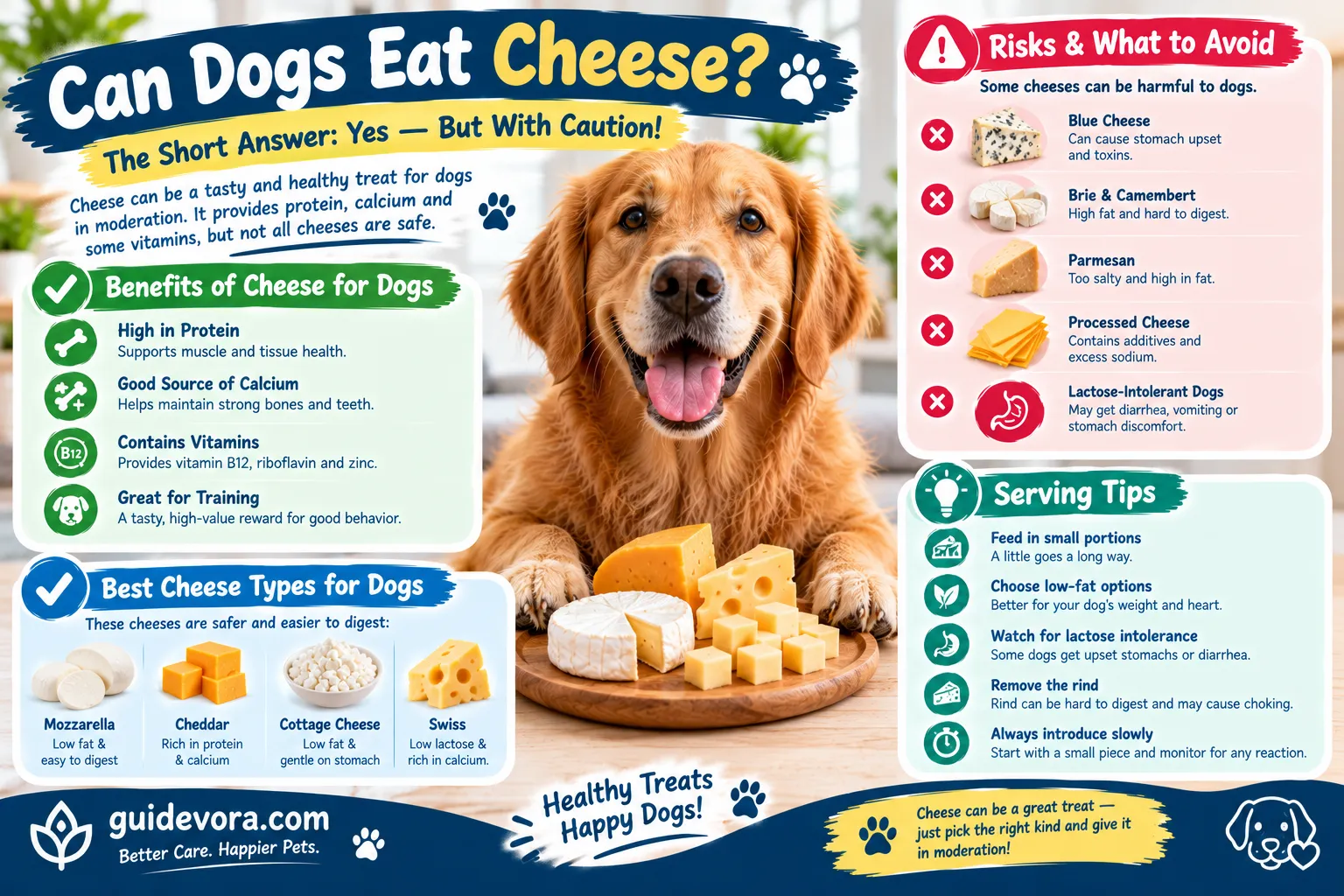
Yes — most dogs can eat cheese in small amounts as an occasional treat. It’s not on the toxic-food list the way chocolate or grapes are, and plenty of trainers use it precisely because dogs love it. That said, “generally fine in moderation” comes with real caveats worth understanding before you make it a habit: many dogs are lactose intolerant, cheese is calorie- and fat-dense, and one specific category — blue cheese — is a genuine toxicity risk, not just a stomach-upset one.
What Kind of Cheese Is Safe for Dogs?
The safer choices are plain, low-lactose, low-sodium cheeses with no added seasonings:
- Mozzarella — low in fat and sodium relative to most cheeses, and a common “safer” recommendation
- Cottage cheese — high in protein, relatively low in fat; still contains some lactose, so introduce gradually
- Cheddar (plain, aged) — lower in lactose than fresh cheeses since aging reduces lactose content, but higher in fat and sodium, so keep portions small
- Swiss — naturally low in lactose, generally well-tolerated even by dogs with mild sensitivity
- Plain cream cheese — fine in small amounts, and commonly used to help dogs take pills
- Ricotta — similar profile to cottage cheese, mild and generally tolerated in small quantities
- Provolone (plain, unsmoked) — low in lactose as an aged cheese, but watch sodium and fat; avoid smoked or seasoned varieties entirely
The rule that applies across all of these: plain and unflavored only. Any cheese with added garlic, onion, chives, or herbs should be avoided regardless of the base cheese type, since onion and garlic are independently toxic to dogs — flavoring can turn an otherwise fine cheese into a genuine hazard.
Read More: Best Cheese for Dogs: Ranked by Type and Use Case
What Cheese Can Dogs Not Eat?
Blue cheese is the one real toxicity exception, and it deserves to be treated differently from everything else on this list:
- Blue cheese, Roquefort, Gorgonzola, Stilton, Danish Blue — these are ripened using a mold that produces roquefortine C, a mycotoxin that’s genuinely toxic to dogs, not just hard to digest. Symptoms include vomiting, diarrhea, high temperature, tremors, and in serious cases, seizures. If your dog eats blue cheese, contact your vet immediately rather than waiting to see if symptoms develop.
Other cheeses and cheese products to avoid or limit heavily:
- Cheese with garlic, onion, or chives — these ingredients damage a dog’s red blood cells and are toxic independent of the cheese itself; check labels on flavored cheese spreads and dips carefully
- Processed cheese products (American cheese slices, Cheez Whiz, spray cheese) — very high in sodium and artificial additives; occasional small amounts are unlikely to cause harm, but these shouldn’t be a regular treat
- Cheese containing nuts — some specialty cheeses include macadamia nuts or walnuts, both toxic to dogs
- Brie and Camembert — very high in fat, and their soft rind can carry molds worth avoiding beyond the fat concern alone
How Much Cheese Is Okay for a Dog?
There’s no single universal number, since it depends on your dog’s size, weight, and individual tolerance — but the consistent guidance across veterinary sources is small amounts, occasionally, not as a regular part of the diet.
- A general treat guideline: any treat, cheese included, should make up no more than about 10% of your dog’s daily caloric intake — a small cube or two for a medium-sized dog, not a handful.
- Start with a small piece the first time, regardless of cheese type, and watch for any digestive reaction over the following several hours before offering more.
- Smaller dogs need proportionally smaller amounts — the same cube that’s a trivial treat for a Labrador is a much larger relative dose for a Chihuahua.
- Discuss a specific amount with your vet if your dog has any existing health condition, especially pancreatitis, obesity, or a heart or kidney condition where sodium matters more.
What Happens If a Dog Eats Cheese Every Day?
This is where “generally fine occasionally” changes to a real concern. Daily cheese feeding, even in small amounts, adds up in three specific ways:
- Weight gain — cheese is calorie-dense, and daily extra calories accumulate faster than most owners expect relative to a dog’s much smaller caloric needs
- Pancreatitis risk — the fat content in regular cheese feeding is a genuine contributing factor to pancreatitis, a painful and sometimes serious inflammation of the pancreas; dogs that already have pancreatitis should avoid cheese entirely as part of a low-fat diet
- Worsening lactose intolerance symptoms — even a dog that tolerates an occasional small piece may develop diarrhea, gas, or bloating from daily dairy exposure, since lactase production (the enzyme needed to digest lactose) naturally decreases as dogs move past puppyhood
Practical takeaway: cheese works well as an occasional training treat or a special addition, not a daily habit — the difference in risk between “sometimes” and “every day” is real and adds up primarily through fat and calorie load, not any single dangerous ingredient.
Common Real-World Scenarios
Can dogs eat cheese pizza? Approach with caution — it’s rarely just about the cheese. Pizza cheese is often processed and high in sodium, and toppings frequently include onion, garlic, or seasoned sauces that carry their own risks. A small plain bite of just the cheese portion is unlikely to cause harm, but pizza as a whole isn’t a good regular treat, and a whole slice (crust, sauce, and toppings included) is a meaningfully bigger risk than an isolated piece of plain cheese.
Can dogs eat cheese slices? Standard American cheese slices are heavily processed and high in sodium. An occasional small piece is unlikely to cause a problem in a healthy dog, but they’re one of the less nutritionally useful cheese choices — plain mozzarella or cheddar in the same small amount is a better regular option.
Can dogs eat cheese balls? Most packaged cheese balls (the snack food, not homemade cheese treats) are heavily seasoned and often contain onion or garlic powder specifically for flavor — check the ingredient label carefully before sharing, since this is one of the more likely “accidentally toxic” cheese products given how common onion/garlic seasoning is in this category.
The Real Issue for Most Dogs: Lactose Intolerance
Most adult dogs are, to some degree, lactose intolerant — as dogs age past puppyhood, they naturally produce less lactase, the enzyme needed to break down lactose in dairy. This isn’t the same as a toxicity risk; it’s a digestive tolerance issue, and it varies significantly between individual dogs.
Signs your dog may be lactose intolerant:
- Diarrhea or loose stool within a few hours of eating cheese or dairy
- Excess gas or bloating
- Vomiting
- Stomach pain or visible discomfort
If you notice this pattern, the straightforward answer is to remove dairy from your dog’s diet entirely rather than experimenting with different cheese types — a lactose-intolerant dog generally doesn’t have a “safer” cheese option, since the intolerance is to the lactose itself, present in some amount across nearly all cheese.
Frequently Asked Questions
Can dogs eat cheese? Yes, most dogs can eat plain, unflavored cheese in small amounts as an occasional treat. It’s not toxic the way chocolate or grapes are, but it’s calorie-dense, and many dogs are lactose intolerant to some degree.
What kind of cheese is safe for dogs? Mozzarella, cottage cheese, plain aged cheddar, Swiss, plain cream cheese, ricotta, and plain provolone are the commonly recommended lower-fat, lower-lactose options. Always choose plain, unseasoned varieties with no added garlic, onion, or herbs.
How much cheese is okay for a dog? As a general guideline, treats (cheese included) should make up no more than about 10% of a dog’s daily calories — a small cube or two occasionally for a medium-sized dog, adjusted down for smaller dogs. It’s best as an occasional treat, not a daily addition.
What cheese can dogs not eat? Blue cheese (Roquefort, Gorgonzola, Stilton) is the main one to avoid entirely — it contains roquefortine C, a genuine toxin. Also avoid any cheese with garlic, onion, or chives added, and limit heavily processed cheese products.
What happens if a dog eats cheese every day? Regular cheese feeding, even in small amounts, increases the risk of weight gain and pancreatitis due to its fat and calorie density, and can worsen digestive symptoms in dogs with lactose intolerance. Occasional treats are a meaningfully different risk profile than a daily habit.
Can dogs eat cheese pizza? A small bite of plain cheese from pizza is unlikely to cause harm, but pizza as a whole often includes high sodium, processed cheese, and toppings like onion or garlic that carry their own risks — it’s not a good regular treat as a full slice.
What foods are poisonous to dogs? Chocolate, grapes and raisins, onions and garlic, xylitol (in sugar-free gum and some peanut butters), and certain mushrooms are among the most common and dangerous. This is a broad topic that deserves its own full breakdown beyond cheese specifically.
Final Thoughts
Cheese sits in a genuine gray area: not dangerous the way several other human foods are, but not a free pass either. The safe path is simple — plain, unflavored, low-lactose cheese, in small amounts, occasionally — and the one hard rule worth remembering regardless of everything else: keep blue cheese away from your dog entirely, and call your vet immediately if they get into it.
This article is for informational purposes and doesn’t replace veterinary guidance for a dog with existing health conditions or a specific dietary concern.
Artifacts
Useful products for dogs that spend a lot of time alone
Document·MD
Dog food for kidney disease
Document·MD
Essential items new dog owner seo v2
Document·MD
Useful cat accessories for small homes
Document·MD
Cat not peeing causes and emergency care
Document·MD
Common dog walking problems and simple solutions
Document·MD
Useful products for dogs home alone v2
Document·MD
How to make your home more comfortable for your dog
Document·MD
Dog is wobbly and off balance
Document·MD
Essential items every new dog owner should have
Document·MD
Cat stung by a bee
Document·MD
Dog ate silica gel packet
Document·MD
How to keep your pets feeding area clean
Document·MD
Dog ate chocolate what to do
Document·MD
Dog ate a bee
Document·MD
Best ways to keep your dog entertained indoors
Document·MD
How to make grooming easier at home
Document·MD
Can dogs eat chocolate
Document·MD
Leave a Reply