
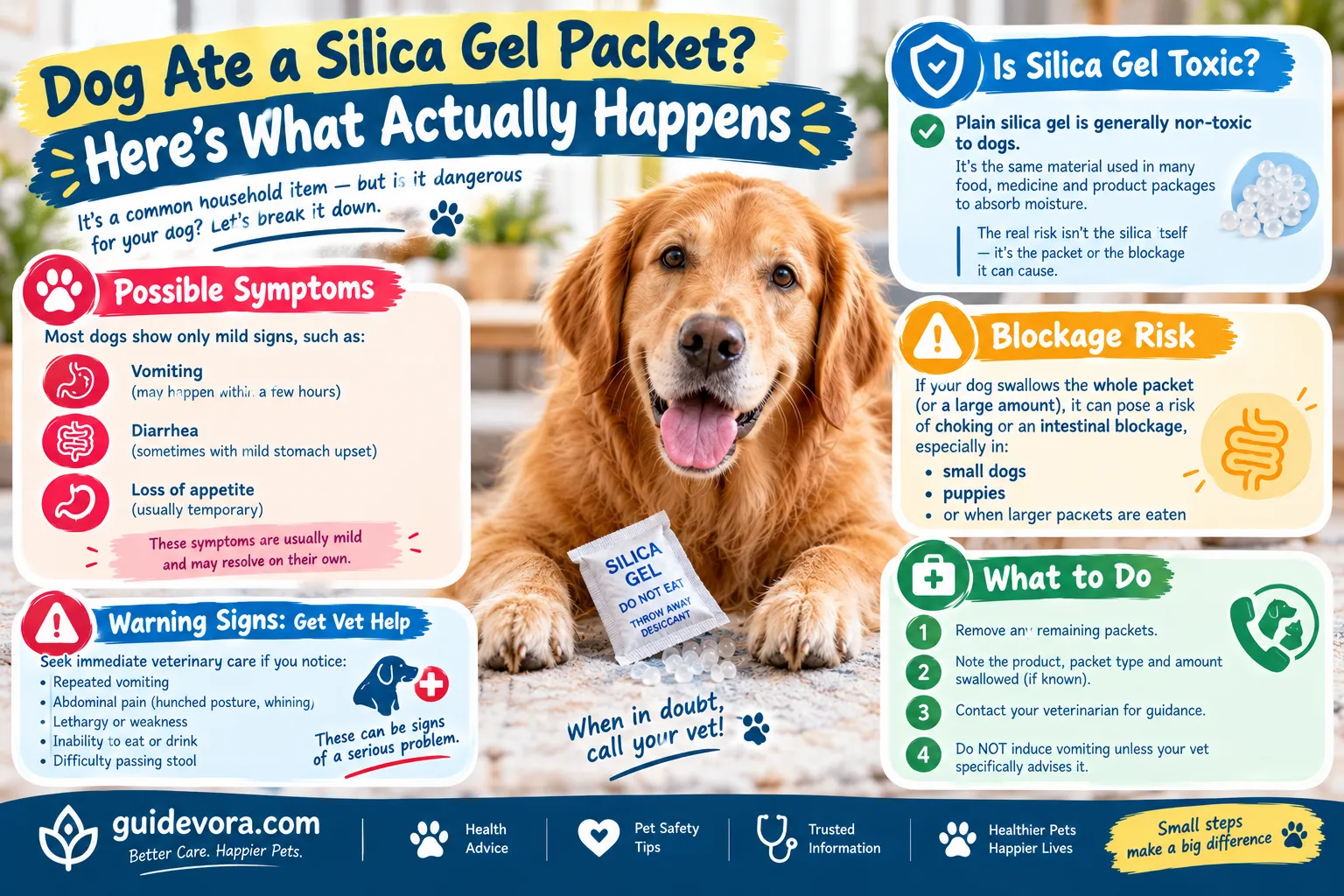
Take a breath — in the large majority of cases, this is far less alarming than it feels in the moment. According to the ASPCA Animal Poison Control Center, plain silica gel itself is not toxic, and most dogs pass the beads and packet without any issue at all. That said, there are two specific exceptions worth checking for right now, before you relax completely.
Check These Two Things First
1. What color are the beads? Plain silica gel is clear or white and is chemically inert — this is the version in the overwhelming majority of packets found in shoes, electronics, vitamins, and food packaging.
Some silica gel is dyed as a moisture indicator — typically orange, blue, pink, or green — and that dye can be cobalt chloride, which is potentially harmful in larger amounts. If the beads your dog got into were colored rather than plain white/clear, treat this with more urgency: call your vet or the ASPCA Animal Poison Control Center (888-426-4435) and mention the color specifically.
2. How big is the packet, and how big is your dog? This — not the silica itself — is the real risk. The packet material can pose a choking hazard, and if swallowed whole, especially a larger packet in a small dog, it can cause a gastrointestinal obstruction. This is uncommon, per the ASPCA, but it’s the actual reason to pay attention here, not chemical toxicity.
If It Was a Single, Plain White Packet
This is the most common scenario, and the good news is real: according to veterinary sources including PetMD and the ASPCA, a single small silica gel packet in a normal-sized dog usually just passes through the digestive system without incident.
- Monitor at home for the next 24 hours.
- Watch for vomiting, diarrhea, decreased appetite, or drooling — mild GI upset is the most common (and honestly, the only likely) reaction.
- Offer fresh water — silica gel absorbs moisture, so your dog may seem a bit thirstier than usual.
- Dispose of remaining packets securely, especially any that came packaged with food or treats — pets are more likely to eat these specifically because they carry the food’s scent.
Dogs who show no symptoms within a day or two don’t need any further action. If mild vomiting or diarrhea does occur, it typically resolves with basic supportive care.
Read More: Dog Ate Chocolate? Here’s Exactly What to Do
When to Actually Call the Vet
Call your veterinarian or the ASPCA Animal Poison Control Center (888-426-4435) if:
- The beads were colored (orange, blue, pink, green) rather than plain white or clear
- Your dog is small (roughly under 10–15 lbs) and swallowed a larger packet whole
- Multiple packets were eaten, not just one
- Symptoms develop and don’t resolve — persistent vomiting, ongoing loss of appetite, visible discomfort, or straining
- You notice signs of a blockage — repeated vomiting, a bloated or painful abdomen, or an inability to keep food down, which can develop over the following day or two if a packet gets lodged
Don’t induce vomiting unless a vet specifically instructs you to — bringing an unopened or partially opened packet back up can cause additional irritation on the way, and it isn’t necessary for the common, low-risk scenario.
What If It Was an Oxygen Absorber Instead?
Oxygen absorber packets look similar to silica gel and are often found in the same kinds of packaging (jerky, pet treats, dried food). They work differently — typically using iron powder rather than silica — but veterinary guidance treats accidental ingestion the same way: generally low risk in small amounts, with mild GI upset being the most likely outcome, and the same monitoring approach applies. If you’re not sure which type your dog ate, mention both possibilities when you call your vet.
Why the “Do Not Eat” Label Exists
This trips people up: the warning on silica gel packets isn’t primarily a poison warning. It’s there because the product isn’t food, isn’t regulated as food, and manufacturers can’t guarantee what happens if it’s ingested in any circumstance — a standard liability label rather than evidence that a single packet is dangerous. That’s consistent with what actual veterinary toxicology data shows: real risk here is mechanical (choking, obstruction) and situational (colored/dyed beads), not general chemical toxicity from the silica itself.
Preventing This Going Forward
- Dispose of packets immediately when unboxing shoes, electronics, or food items — don’t set them aside “for later.”
- Check treat bags and jerky packaging specifically, since food-adjacent packets retain scent and are the ones pets are most likely to go after.
- Keep an eye out for colored beads specifically if you buy products from brands or regions that use dyed moisture indicators — knowing this in advance means you’re not scrambling to identify the color after the fact.
Frequently Asked Questions
Is silica gel toxic to dogs? Plain white or clear silica gel is not toxic — it’s chemically inert and typically passes through a dog’s digestive system without causing illness. The exceptions are colored/dyed beads (which may contain cobalt chloride) and the packet itself posing a choking or obstruction risk, particularly in small dogs.
What happens if a dog eats a silica gel packet? In most cases, nothing beyond mild, temporary stomach upset — vomiting, diarrhea, or reduced appetite — if anything at all. Most dogs pass the beads and packet material without any treatment needed. Monitor for 24 hours and contact your vet if symptoms develop or don’t resolve.
My dog ate a colored silica gel packet — is that different? Yes, treat it with more urgency. Colored beads (orange, blue, pink, green) are often a moisture indicator containing cobalt chloride, which can be harmful in larger amounts. Call your vet or the ASPCA Animal Poison Control Center and mention the bead color specifically.
Can a silica gel packet cause a blockage in a dog? It’s uncommon but possible, especially in small dogs that swallow a larger packet whole. This is a mechanical risk from the packet material itself, not chemical toxicity from the silica. Watch for repeated vomiting, a painful or bloated abdomen, or an inability to keep food down over the following day or two.
Should I make my dog throw up after eating silica gel? No, not unless a veterinarian specifically instructs you to. For the common scenario — a single plain white packet — inducing vomiting isn’t necessary and can cause additional irritation.
Is an oxygen absorber packet the same risk as silica gel? Similar in practice — both are generally low-risk in small amounts and typically cause mild GI upset at most, though they use different materials (iron powder vs. silica). Mention which type your dog may have eaten when you call your vet, if you’re unsure.
Final Thoughts
Most silica gel incidents resolve without any treatment at all — the label’s warning is about liability, not a reflection of real toxicity in the plain white/clear form found in the vast majority of packets. The two things actually worth checking are the bead color and the packet size relative to your dog — get those two answers, and you’ll know within a minute whether this is a simple 24-hour watch-and-wait or a call your vet needs to hear about right away.
This article is for informational purposes and doesn’t replace veterinary guidance for a specific ingestion.
Leave a Reply