
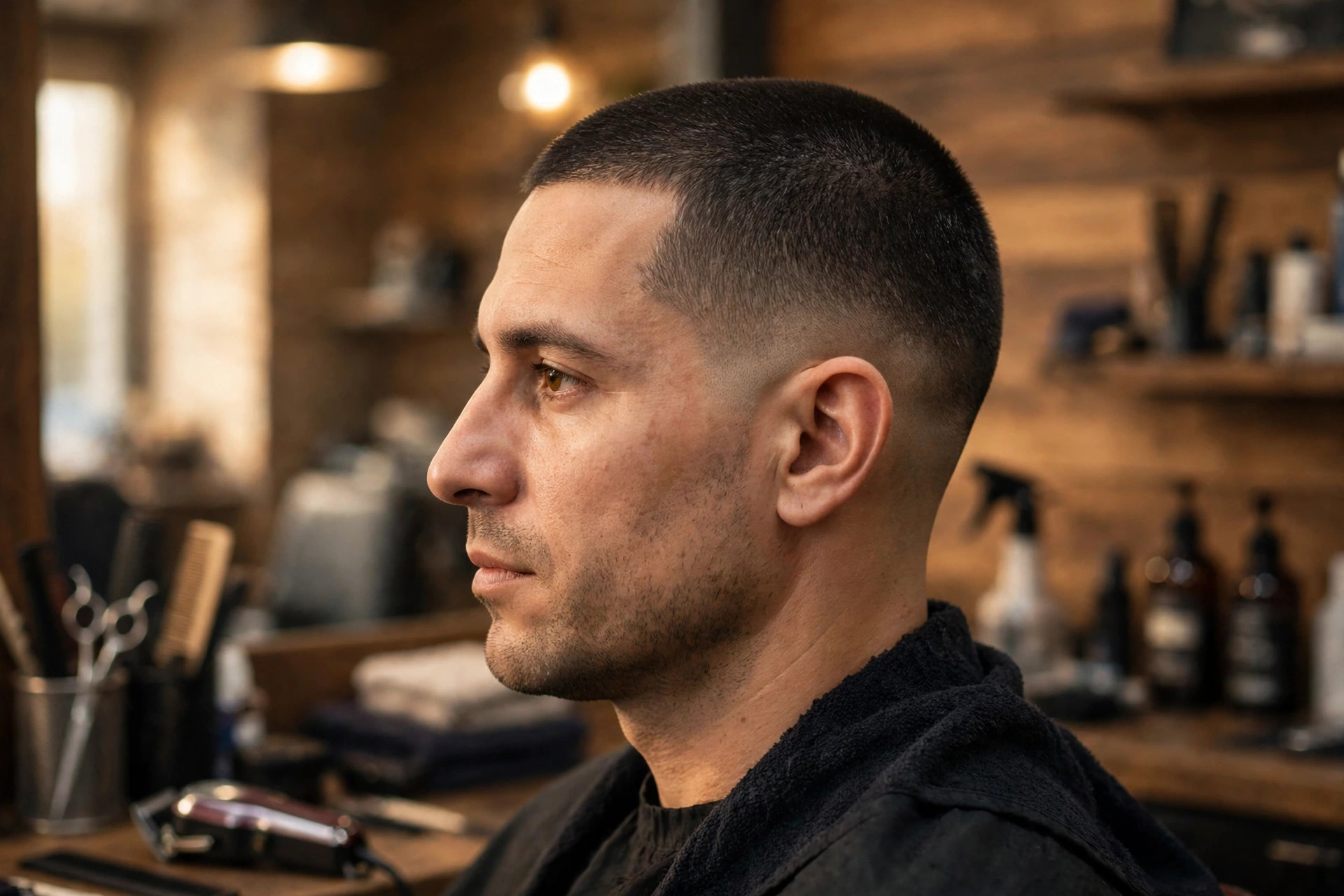
A crew cut for men is a classic short haircut in which the hair on top is kept short and upright, the sides and back are cut shorter still, and the overall shape follows the natural curve of the head. It is one of the most practical haircuts in existence: neat without daily effort, tidy as it grows out, and suitable for work, sport and formal occasions alike. If you want a haircut that looks intentional with almost no styling, the crew cut is hard to beat.
The style takes its name from university rowing crews, whose members needed hair that stayed out of the way and looked uniform. That sporting origin still shows in the finished result: clean, functional and confident rather than fussy. Modern versions vary more than the original, with faded sides, textured tops and different lengths on top, but the core idea has not changed. Hair is short enough to stand up on its own, the outline is crisp, and nothing is left to flop, curl or fall across the face.
Key Facts
- A crew cut keeps the top short and upright, with shorter sides and back.
- Typical top lengths range from about half an inch to around an inch, depending on the variation.
- The cut suits most face shapes, and works especially well for thick or straight hair.
- It needs trimming roughly every three to four weeks to keep its shape.
- Styling takes a minute or less, with little or no product needed.
- It can be adapted with a fade, a textured top, or a slightly longer front.
- It is a strong option for men with a receding hairline or thinning at the crown.
What Exactly Is a Crew Cut?
In a traditional crew cut, the hair on top is longest at the front hairline and gradually shorter towards the crown, following the shape of the skull. The sides and back are tapered or faded, so there is a smooth graduation rather than a harsh line. The fringe, if there is one at all, is very short and usually brushed forward or left to stand naturally. Nothing on top is long enough to be parted or swept to one side in any meaningful way.
That graduation is what separates a crew cut from a buzz cut. A buzz cut uses one short length all over, while a crew cut keeps deliberate variation: longer on top, shorter at the sides, shortest at the nape. The difference may be only a few millimetres, but it changes the whole silhouette, giving the head a shaped, finished look rather than a uniform stubble. Barbers often use clippers with different guards for the sides and scissors or a longer guard on top, blending the two zones so no obvious step appears.
Who Does a Crew Cut Suit?
The crew cut is unusually forgiving when it comes to face shape. On round faces, the added height on top can lengthen the appearance of the face. On square faces, it echoes a strong jawline without competing with it. On oval faces, which suit most styles, it simply looks clean and balanced. Men with longer faces should be slightly cautious about extra height on top, and a barber can balance this by keeping the top a little shorter and the sides less tightly faded.
The cut is also a practical choice for men dealing with hair loss. A receding hairline looks less noticeable when the rest of the hair is short, because there is less contrast between the hairline and the surrounding hair. Similarly, thinning at the crown draws less attention when the whole cut is close. The crew cut does not hide hair loss completely, and no honest guide should claim that it does, but it manages it better than most longer styles, which tend to emphasise the difference between thick and thin areas.
How to Ask Your Barber for a Crew Cut
Asking clearly is half the battle, because “short” means different things to different barbers. Start with the words “crew cut”, then specify the length you want on top, the finish you want on the sides, and how you want the neckline handled. A useful request sounds like this: “A crew cut, about three-quarters of an inch on top, slightly longer at the front, with a tapered fade on the sides and a natural neckline.” Bringing a photo of the exact version you want removes almost all guesswork, and good barbers welcome it.
Popular Crew Cut Variations
The classic crew cut is only the starting point, and several variations suit different tastes. A crew cut with a fade keeps the traditional top but fades the sides down to the skin, giving a sharper, more modern finish. A high fade creates a bold contrast, while a low fade is subtler and grows out more gracefully. A textured crew cut uses point cutting on top to create separation and movement, which suits men who want a slightly less uniform look.
An Ivy League cut, sometimes called a Harvard clip, is essentially a longer crew cut: the top is long enough to be parted to one side, while the sides remain short. It bridges the gap between a true crew cut and a more formal short style, and it works well in professional settings. A crew cut with a short fringe, brushed forward, is another option, though it needs the fringe kept neat to avoid looking accidental. For men with beards, keeping the sideburns blended into the beard, rather than cut separately, gives a more cohesive result overall.
Styling and Maintenance
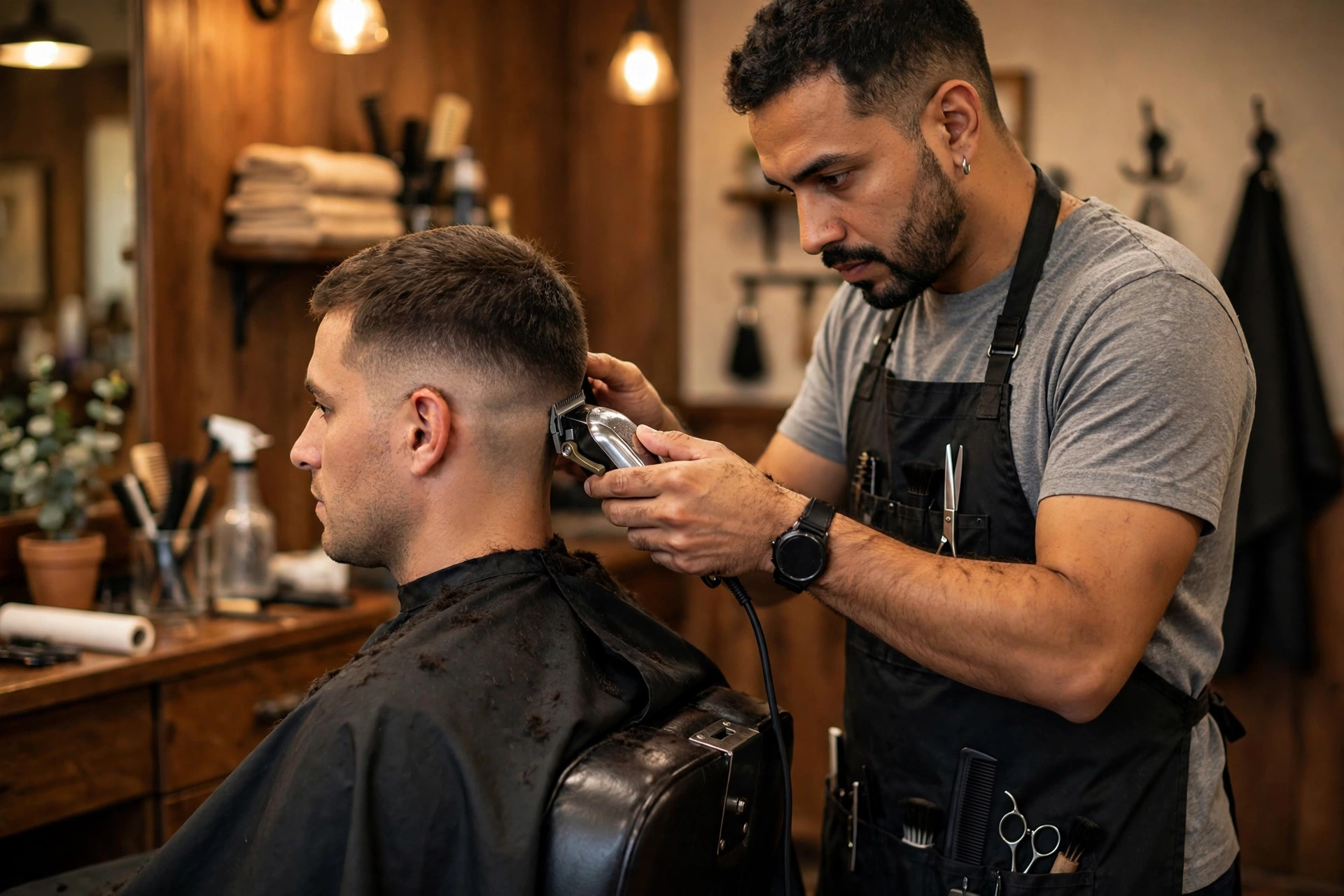
One of the great appeals of the crew cut is how little it asks of you in the morning. Most men need nothing more than a towel dry, and the hair falls into its upright shape on its own. If your hair is fine or tends to lie flat, a pea-sized amount of matte clay or paste, worked through damp hair and left to dry naturally, will add grip and texture without shine. Avoid heavy gels and wet-look products, which weigh short hair down and defeat the purpose of the cut.
Washing needs no special routine. A normal shampoo every day or two is enough, and conditioner is optional at this length, though it can help if your hair feels dry. When choosing styling products, it is worth checking reliable safety information: the FDA cosmetics information pages explain how cosmetic products are regulated and what to look for on labels, which is useful background before trying a new product on your hair or scalp.
Crew Cut Versus Similar Short Styles
Men often confuse the crew cut with its close relatives, so a quick comparison helps. The buzz cut is shorter all over and has no graduation, which makes it simpler but also less flattering for many face shapes. The French crop keeps a longer, textured top with a blunt fringe, and suits men who want more styling options up front. A high and tight cut takes the sides very short and leaves only a small patch on top, producing a much more severe, military look.
If a receding hairline is your main concern, our guide to the best haircuts for receding hairline compares several short options side by side. If you like the short top but want a softer, textured front, the French crop for men is the closest alternative. And if you wear a beard, the way the sides blend into facial hair matters as much as the cut itself, which is why our guide to the mid fade with beard is worth reading alongside this one. Each style shares the crew cut’s practicality, but they frame the face differently.

Frequently Asked Questions
How long is a crew cut on top?
Typically between half an inch and an inch, with the front slightly longer than the crown. Shorter versions sit around half an inch, while longer versions reach about an inch.
Is a crew cut the same as a buzz cut?
No. A buzz cut uses one short length all over, while a crew cut is longer on top than at the sides, with a graduated shape that follows the head.
How often should I get a crew cut trimmed?
Every three to four weeks is typical. The shape depends on precise lengths, so it loses definition faster than a longer style, though each appointment is usually quick.
Does a crew cut suit a receding hairline?
Yes, it is often a good choice, because short hair reduces the contrast between the hairline and the surrounding hair. It does not hide hair loss completely, but it manages it better than most longer styles.
Can I style a crew cut at home?
Usually no styling is needed beyond towel drying. A small amount of matte clay or paste can add texture for fine hair, but heavy gels should be avoided.
Does a crew cut work for curly hair?
Yes, if kept shorter on top. Longer curly hair creates volume that changes the silhouette, so barbers usually recommend a closer length for very curly hair types.
Leave a Reply