

A mid fade with beard styling works because the two halves of the look meet in the middle. The fade tapers the sides of the head down towards the skin, the beard adds weight and structure below, and a smooth blend between them makes the whole style look deliberate rather than accidental. Get that transition right and the result is sharp and balanced from every angle.
The secret is proportion. A mid fade sits halfway up the sides, so it pairs naturally with most beard lengths, from short and professional to medium and fuller — provided the blend point is placed with care.
Key Facts
- A mid fade starts roughly halfway up the sides of the head, around temple level.
- The blend point is where faded hair meets the beard — it should graduate smoothly, never stop in a hard line.
- Short to medium beards are the easiest to balance with a mid fade.
- Most men need a tidy-up every two to three weeks to keep the fade sharp.
- Daily beard care takes only a few minutes but visibly improves softness and shape.
What Makes a Mid Fade and Beard Look Balanced
Balance comes down to visual flow. The fade removes bulk from the sides, drawing attention to the hair on top and the beard below. If the beard is very heavy and the fade very tight, the lower face can dominate; if the beard is short and wispy, the fade can dominate instead. The aim is a smooth progression from longer hair on top, through the graduated fade, into a beard with its own clear shape. Texture matters too: dense beards hold shape well, while finer beards often look better shorter. A mid taper fade offers a softer alternative, while a French crop for men pairs well with a fuller beard.
Choosing the Blend Point and Beard Length
The blend point is the single most important decision in this style. In most cases it should sit just above or at the top of the beard, around the ear and cheekbone area, so the fade melts into the beard without a visible step. Ask your barber to graduate the length gradually through this zone rather than leaving a line where the clipper work stops and the beard begins.
Choose beard length with your daily routine in mind. A short beard — a few millimetres to about a centimetre — is low maintenance and keeps the fade as the star. A medium beard, a few centimetres long, frames the jaw. A longer beard can look superb, but needs regular shaping. As a rough guide, a skin-tight fade pairs best with a clearly shaped beard, while a softer shadow fade forgives a more natural beard.
Best Combinations for Your Face Shape
Round Face: Add length and angles. Keep height and texture on top, and let the beard grow slightly longer at the chin to elongate the face. A neat mid fade avoids adding width, while a beard with a gentle point at the chin creates a more oval impression. Avoid a beard that is full and round at the cheeks.
Oval Face: Almost any combination works. A classic mid fade with a medium, evenly shaped beard is a safe and flattering choice. Keep proportion in mind: if you go longer on top, keep the beard tidy, and if you grow a fuller beard, keep the top more controlled.
Square Face: Soften rather than exaggerate the angles. A mid fade with a slightly rounded blend works well, and a medium beard following the natural jawline enhances structure without looking boxy. Keep the cheek line natural rather than carved too low.
Oblong Face: Avoid too much height on top or too much length at the chin, as either can make the face look longer. A flatter, textured top keeps the silhouette compact, and a beard fuller at the sides but trimmed at the chin adds width where it helps most.
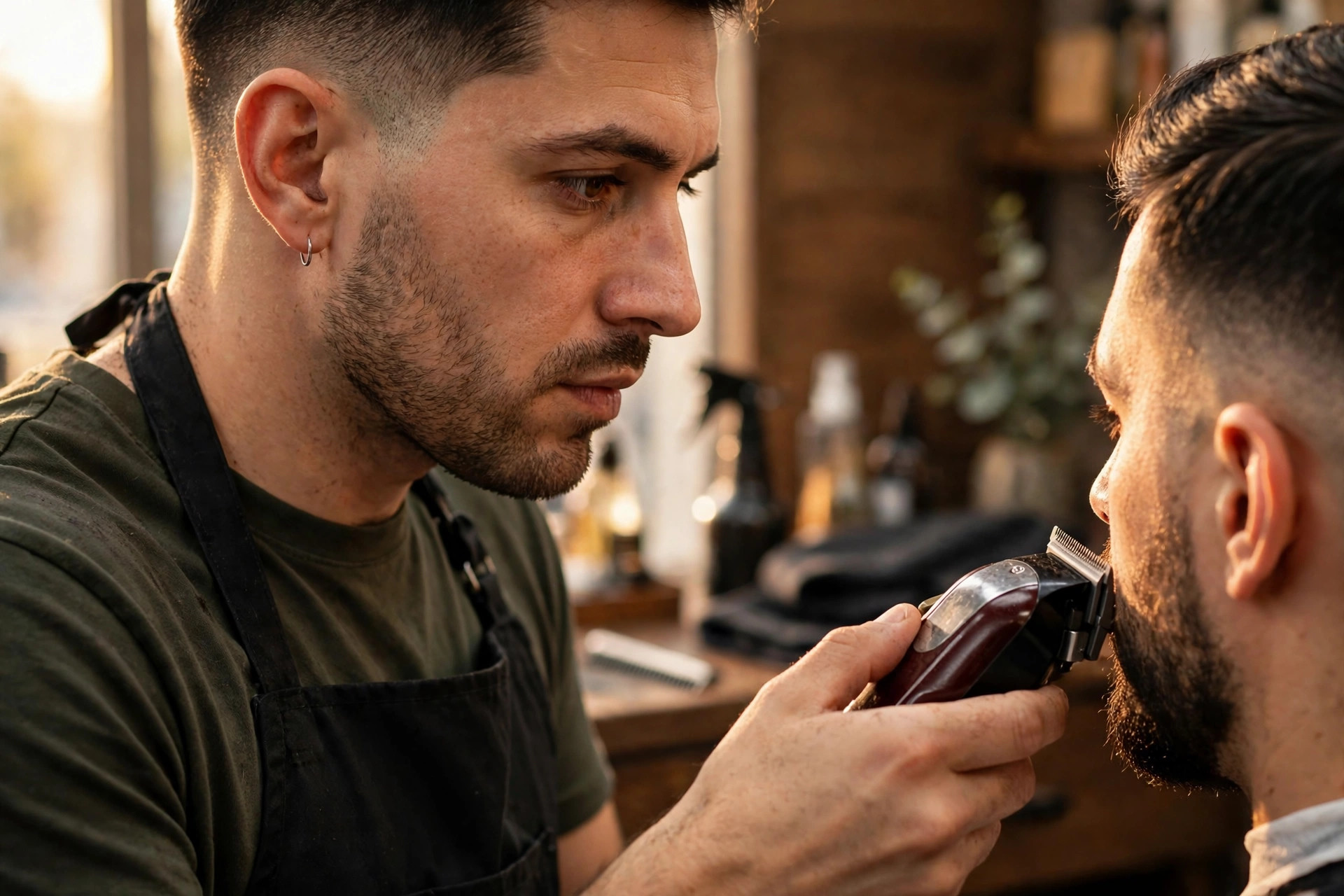
Exactly What to Ask the Barber
Clear instructions prevent a disappointing appointment. Show a reference photograph too, since photographs remove guesswork about what “medium” means.
- Fade height: “A mid fade, starting around the temples, fading down to the skin” — or to a shadow finish for a softer result.
- Blend: “Please blend the fade into the beard gradually, with no hard line where they meet.”
- Beard length: State a length or show a photograph, and say whether you want it even all over or longer at the chin.
- Cheek line: “Keep the cheek line natural” or “Clean up the cheek line.” A natural line suits most men; a defined line looks sharper but needs more upkeep.
- Neckline: “A clean, curved neckline” following the natural curve above the Adam’s apple, not cut straight across too high.
- Beard shaping: Ask for the beard to be shaped to your face, with bulk removed where needed, rather than trimmed to one length.
For a subtler fade, compare the low taper fade.
Maintenance and Trim Schedule
A mid fade grows out faster than the beard, so the two parts drift apart at different speeds. Most men need a barber visit every two to three weeks to keep the fade crisp, while the beard can be tidied at home between visits. Waiting much longer usually means the fade loses its shape and the blend becomes fuzzy.
Between appointments, tidy only obvious strays: hairs below the neckline and long hairs over the cheek line. Resist re-cutting the fade yourself, as one slip with clippers can ruin the graduation; small beard scissors are safer. Wash the beard two to three times a week, rather than daily, so natural oils are not stripped away, and pat dry rather than rubbing, which can cause frizz.
Beard Care Products Worth Using
You do not need a large collection; four products cover almost everything this style requires. Beard oil is the daily essential: a few drops massaged through the beard and into the skin beneath softens coarse hair, reduces itch and adds sheen. Apply it to a slightly damp beard. Beard balm offers light hold and conditioning, and suits medium and longer beards. Many men use oil daily and balm when shaping matters more. Beard wash cleans without harsh detergents, keeping beard and skin comfortable. A brush or comb ties the products together: a boar bristle brush suits shorter beards, a wide-tooth comb suits longer ones, and brushing trains the beard to lie as you want.
Daily Styling Routine
Brush or comb the beard downwards and outwards, following the shape your barber created. Apply two to four drops of beard oil and massage it through to the skin. If your beard is medium or longer, follow with a little balm and brush it into shape, keeping the sides neat against the fade. Check the blend zone in the mirror, where growth shows first, and in the evening a quick brush is normally enough.

Common Mistakes to Avoid
A harsh line between the fade and the beard: This usually comes from trimming the fade and beard as two separate jobs. The transition must be graduated, so ask for blending specifically.
An uneven neckline: A neckline cut too high makes the beard look detached; one left too low looks untidy. Follow the natural curve above the Adam’s apple and keep both sides level.
Over-thinning the beard: Thinning scissors and aggressive clipper work can leave patchy areas that take weeks to grow back. Remove bulk gradually and check the shape before taking more off.
Neglecting the skin beneath: A beard can look good yet feel uncomfortable if the skin underneath is dry. Regular oil and washing prevent most irritation.
Copying a photograph without adjusting for your face: A style that suits one face shape can unbalance another, so let your barber adapt the blend and shape to your features.
Frequently Asked Questions
Does a mid fade suit a beard?
Yes, in most cases. The mid fade sits at a height that connects naturally with a beard, and its graduation gives the barber room to blend the two together.
Where should the fade blend into the beard?
Around the top of the beard, near the ears and cheekbones, graduating smoothly rather than stopping in a line.
What beard length works best with a mid fade?
A short to medium beard is the easiest starting point and suits most face shapes and workplaces. A longer beard can work beautifully too, but needs more shaping and care.
How often should I get a mid fade with a beard trimmed?
Most men need a barber visit every two to three weeks to keep the fade sharp. The beard can be tidied at home between visits, but the fade is best refreshed by a barber.
Should the cheek line be natural or defined?
A natural cheek line suits most men and needs less upkeep, while a defined line looks sharper but shows regrowth sooner. If unsure, start natural.
Can I maintain a mid fade with a beard at home?
You can maintain the beard at home with oil, balm, a wash and a brush, and tidy stray hairs between appointments. The fade itself is best left to a barber, as re-cutting it at home risks a harsh line.
Leave a Reply