
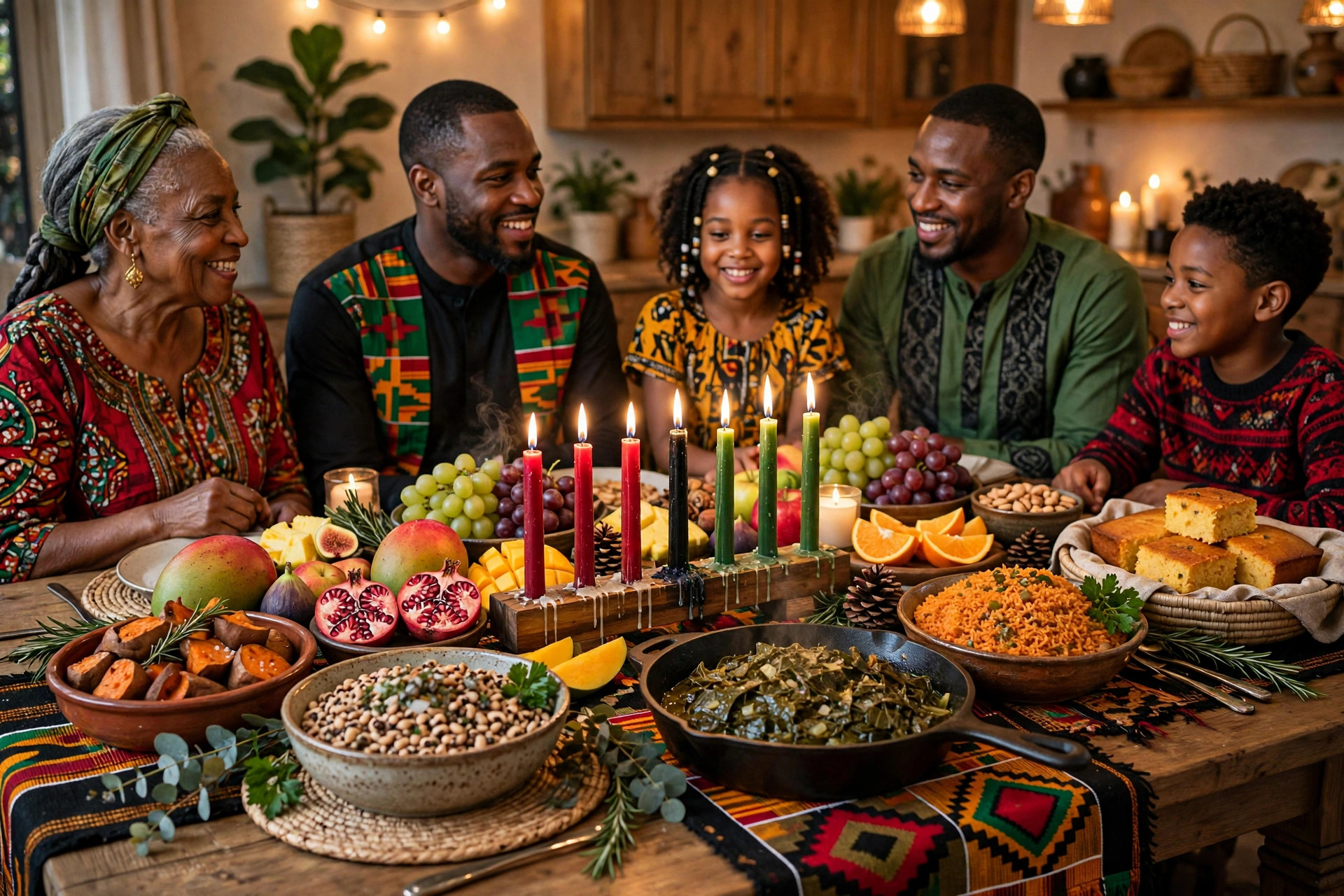
Kwanzaa traditional foods tell a story of heritage, family and celebration. Kwanzaa is a seven-day celebration of African heritage and culture, observed from 26 December to 1 January, with the great feast known as Karamu held on 31 December. Food plays a central role throughout the week, but especially at Karamu, where families gather around a table filled with dishes that honour African roots, the harvest, and the shared history of African American communities. This guide explains what families eat, why each dish matters, and how to plan a Kwanzaa table of your own.
Key Facts
- Kwanzaa is observed from 26 December to 1 January, with each day dedicated to one of the seven principles, the Nguzo Saba.
- Karamu, the feast of faith, is traditionally held on 31 December and is the main celebratory meal.
- There is no single fixed Kwanzaa menu; dishes vary by family, region and heritage.
- Many dishes draw on African, Caribbean and African American cooking traditions.
- Common foods include black-eyed peas, collard greens, sweet potatoes, okra, peanuts and fruit.
- The table itself is symbolic, with fruits, vegetables, a unity cup and ears of corn arranged with care.
The Meaning Behind Kwanzaa Food
Food at Kwanzaa is never just food. Each dish connects to history, to the land, and to the people who cooked it before. Crops such as okra, black-eyed peas, peanuts and yams travelled with African people and became foundations of African American cooking. Serving them at Kwanzaa honours that journey and the creativity of cooks who turned simple ingredients into beloved dishes.
The harvest theme matters too. Kwanzaa takes its name from a Swahili phrase meaning “first fruits”, and the celebration draws on harvest festivals across Africa. Fruit on the table, known as mazao, represents the fruits of collective labour, while ears of corn, known as muhindi, represent children and the future. When families set the table, they are telling this story in food as well as in words.
To explore the holiday further, see our guides to kwanzaa traditions and celebrations and what is kwanzaa, and compare seasonal tables with our hanukkah dinner menu.
The Karamu Feast
Karamu, held on 31 December, is the high point of the Kwanzaa table. Families and friends gather for a large shared meal, often with music, storytelling and libations from the unity cup. The feast is generous and joyful, with dishes passed around the table and guests encouraged to eat well and linger.
Unlike some holidays, Karamu has no prescribed menu. Families choose dishes that reflect their own heritage, whether that means West African stews, Southern soul food, Caribbean dishes, or a mixture of all three. This freedom is part of the celebration: the table reflects the family sitting around it.
Planning a Karamu feast begins with balance. A good table includes a main dish or two, several vegetable sides, a grain or starch, bread, a fresh salad or fruit, and a dessert. Drinks, often including fruit juices, spiced punches or ginger beer, complete the spread.
Main Dishes
Main dishes at Karamu are hearty and made for sharing. Roast chicken, often seasoned with herbs and spices, is a common centrepiece, as are slow-cooked stews. Peanut stew, a rich dish made with groundnuts, tomatoes and vegetables, sometimes with chicken, is a West African classic that appears on many Kwanzaa tables.
Jerk chicken, marinated in a spicy Caribbean seasoning and grilled or roasted, is another favourite, bringing heat and fragrance to the feast. For families who prefer a meat-free table, a vegetable and bean stew, a lentil dish, or a stuffed squash can serve as a satisfying centrepiece.
Seafood also appears in some households, particularly in coastal or Caribbean traditions, where grilled fish or shrimp dishes add variety. Whatever the main dish, it should be plentiful, because Karamu is about abundance and welcome.
Black-Eyed Peas and Greens
Few dishes are as closely linked to Kwanzaa and the New Year as black-eyed peas and greens. Black-eyed peas, often cooked with onions, garlic and smoked seasoning, are traditionally eaten for good luck in the coming year. They are humble, nourishing and deeply symbolic, a reminder that prosperity grows from simple beginnings.
Collard greens, mustard greens or turnip greens, slow-cooked until tender, are another essential side. In African American tradition, greens are associated with wealth, because their colour recalls paper money, and they are often served alongside black-eyed peas as a pair. Together, the two dishes form a hopeful wish for the year ahead.
Both dishes improve with slow cooking and generous seasoning. Families often prepare them a day ahead, allowing flavours to deepen, and reheat gently before the feast.
Sweet Potatoes, Yams and Okra
Sweet potatoes are a Kwanzaa staple, served mashed with butter and spices, roasted in wedges, or baked into a sweet potato pie. Candied yams, sweet potatoes baked with sugar, butter and warm spices, are a beloved Southern variation.
Okra, another crop with African roots, appears fried, stewed or in soups such as gumbo. Its distinctive texture and flavour make it a conversation piece at the table, and it pairs well with tomatoes, peppers and rice. For children trying Kwanzaa foods for the first time, fried okra is often the easiest introduction.
Rice, Grains and Breads
Rice anchors many Kwanzaa meals. Jollof rice, a West African dish of rice cooked in a rich tomato and pepper sauce, is a festive favourite, often served in a large pot at the centre of the table. Plain rice, pilaf, or rice and peas, a Caribbean dish of rice cooked with kidney beans or pigeon peas and coconut milk, also appear frequently.
Cornbread is another essential. Some families bake it plain, others add sweetcorn kernels, peppers or cheese. Flatbreads, rolls and sweet potato biscuits offer further variety, and a good bread basket makes a feast feel complete.
Fruits, Salads and Fresh Sides
Fresh fruit has a symbolic place at Kwanzaa. The mazao, fruits arranged on the table, represent the harvest and the rewards of working together. Families display whole fruits such as oranges, bananas, mangoes, apples and grapes, and serve fruit salads or platters alongside the main dishes.
A fresh salad offers balance to a rich feast. A simple green salad, a cabbage slaw, or a salad of tomatoes, cucumbers and red onion with a light dressing all work well. Some families serve a peanut salad or a dish of pickled vegetables, adding brightness and crunch to the table.
The Unity Cup and Drinks
The unity cup, known as kikombe cha umoja, holds a central place at Kwanzaa. During the ceremony, elders pour a libation and all present drink from the cup in turn, symbolising unity. The drink itself may be water, juice or wine, depending on family custom, and the ritual is treated with respect.
For the feast, families serve drinks that suit all ages. Fruit punches, spiced apple cider, ginger beer and sorrel, a Caribbean drink made from hibiscus flowers, are popular choices. Sorrel, deep red and lightly spiced, is especially associated with Caribbean Christmas and New Year celebrations, and it suits the Karamu table beautifully.
Desserts
Kwanzaa desserts are generous and sweet. Sweet potato pie is perhaps the most iconic, with its smooth, spiced filling and flaky crust. Peach cobbler, another Southern classic, brings summer fruit to a winter table, while pound cake, banana pudding and bread pudding all appear in different households.
For a lighter finish, a fruit platter, a bowl of berries, or a simple cake with fresh fruit can close the meal gracefully. Whatever dessert you choose, serve it with tea or coffee and give guests time to enjoy it slowly. Karamu is not a meal to rush.
Keeping the Feast Safe
A large feast means large quantities of food, and food safety matters. Cook meats thoroughly, keep hot foods hot and cold foods cold, and refrigerate leftovers promptly rather than leaving dishes out for hours. Families planning a big spread can check the official cold food storage chart from FoodSafety.gov to confirm how long leftovers keep in the refrigerator and freezer.
This is especially important at Karamu, where dishes may be prepared a day ahead and reheated for a crowd.


Frequently Asked Questions
What is the Karamu feast?
Karamu is the feast of faith held on 31 December during Kwanzaa, when families and friends gather for a large shared meal with music, storytelling and the unity cup ceremony.
What foods are traditionally eaten at Kwanzaa?
Traditional Kwanzaa foods include black-eyed peas, collard greens, sweet potatoes, okra, peanuts, jollof rice, cornbread, roast chicken or stews, fresh fruit and desserts such as sweet potato pie.
Why are black-eyed peas eaten at Kwanzaa?
Black-eyed peas are traditionally eaten for good luck in the coming year.
Is there a set Kwanzaa menu?
No. There is no prescribed Kwanzaa menu; families choose dishes that reflect their own heritage, region and traditions.
What is the unity cup at Kwanzaa?
The unity cup, or kikombe cha umoja, is a cup from which all present drink in turn during a Kwanzaa ceremony, symbolising unity.
When is Kwanzaa in 2026?
Kwanzaa in 2026 begins on Saturday 26 December 2026 and ends on Friday 1 January 2027.
Leave a Reply