
The perfect Hanukkah dinner menu is built on one theme: foods cooked in oil, honoring the Temple oil that burned for eight days. Crisp latkes, pillowy sufganiyot, slow-cooked brisket, golden kugel, and braided challah — this guide gives you a complete hanukkah dinner menu for 2026, with the classics explained, night-by-night ideas for all eight nights, sides, desserts, and hosting tips that keep the cook out of the kitchen during candle lighting.

Key Facts
- The theme is oil: latkes, sufganiyot, and all fried foods recall the miracle of the oil — the culinary heart of the holiday.
- The anchor mains: brisket (make-ahead, feeds a crowd) and roast chicken are the classic centerpieces.
- The staples: potato latkes with applesauce and sour cream, noodle or potato kugel, and challah appear on most Hanukkah tables.
- Dairy has a place too: cheese latkes, blintzes, and cheesecake honor Judith’s story.
- The rhythm: light the candles first, then eat — the flames burn while the family gathers, so plan dinner after lighting. Here’s exactly how to light the menorah and when.
Why Oil? The Theme Behind the Menu
Every Hanukkah menu answers the same question: why is everything fried? The answer is the holiday’s founding miracle — when the Maccabees rededicated the Temple, the single day’s supply of pure olive oil burned for eight. Fried foods are edible remembrance. (For the full story, see what is Hanukkah.)
That single theme produces an entire cuisine: Ashkenazi Jews fry potato latkes; Israelis fry sufganiyot by the million; Sephardic and Mizrahi families fry bimuelos, sfenj, and zalabia. Different doughs, different oils, same memory. Once you understand the theme, the menu designs itself.

The Classics: What Belongs on the Table
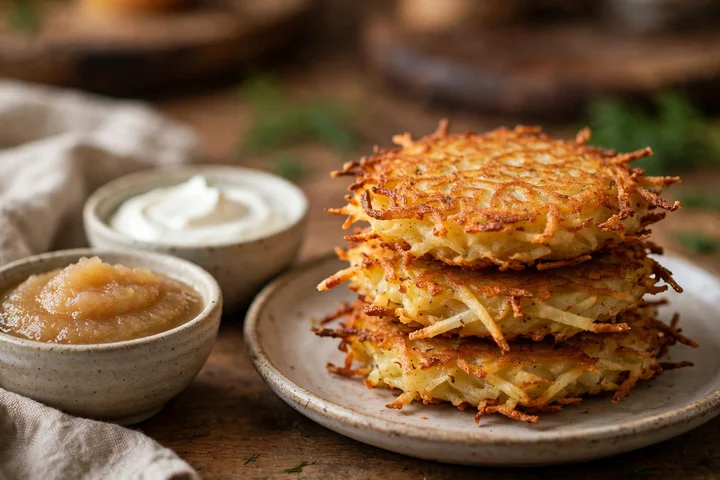
Latkes. The undisputed king. Grated potato and onion, squeezed very dry (the secret to crispness), bound with egg and a little matzo meal or flour, fried in shimmering oil until deeply golden. Serve with applesauce and sour cream — the eternal debate over which is correct has no winner, so serve both.
Sufganiyot. Jelly doughnuts — soft, yeasty rounds fried and filled with strawberry or apricot jam, dusted with powdered sugar. In Israel they’re a national obsession; at home they’re easier than they look if you have a thermometer (350°F oil, patience, and no crowding the pot).
Brisket. The great make-ahead main. A whole brisket braised low and slow with onions, carrots, and garlic until it surrenders — better the next day, which makes it ideal for a holiday with eight nights of cooking. Slice against the grain.
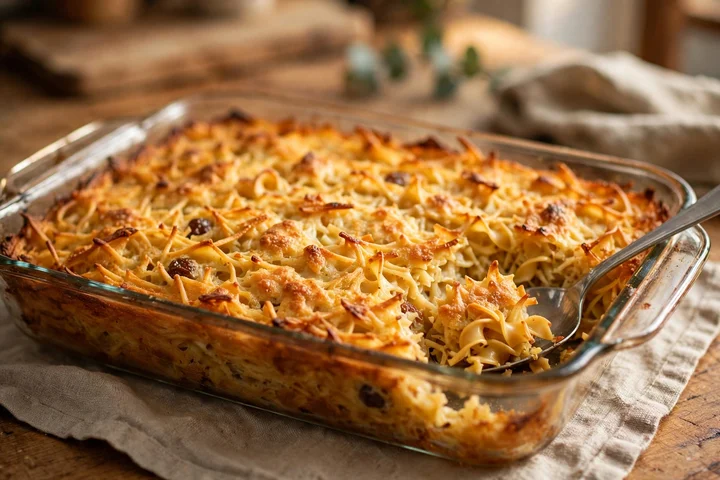
Kugel. Baked pudding, two great schools: noodle kugel (egg noodles, eggs, cottage cheese or sour cream, sweet or savory) and potato kugel (like one giant latke). Both feed crowds, reheat beautifully, and taste like someone’s grandmother is supervising.
Challah. The braided Sabbath bread, welcome at any Hanukkah table — especially on the Friday nights of the holiday (December 4 and 11 in 2026), when the meal doubles as Shabbat dinner.
Roast chicken. The weeknight hero: simpler than brisket, universally loved, and its schmaltz (rendered chicken fat) is liquid gold for the next batch of latkes.
Matzo ball soup. The opening act — clear golden broth, fluffy matzo balls. It buys the cook twenty peaceful minutes while guests settle.
Night-by-Night Menu Ideas (All 8 Nights)
Eight nights is a lot of dinners — the trick is themes, so no two nights feel the same. Here is a full 2026 plan (night-by-night dates here):
Night 1 — Friday, December 4: The Classic. Candles are lit before sunset ahead of Shabbat, so everything must be ready early. Brisket (made Thursday), potato kugel, challah, latkes fried just before lighting, applesauce, a big green salad. Make-ahead is non-negotiable tonight.
Night 2 — Saturday, December 5: Soup Night. After Shabbat ends, keep it cozy: matzo ball soup, roast chicken, roasted root vegetables, noodle kugel. Comfort food for a late lighting.
Night 3 — Sunday, December 6: Sephardic Night. Bimuelos (crisp fried dough puffs with honey), sfenj (Moroccan doughnuts), shakshuka or a slow tagine, couscous, orange-and-olive salad. A delicious reminder that Hanukkah belongs to many food cultures.
Night 4 — Monday, December 7: Dairy Night. Honoring Judith: cheese latkes, cheese blintzes with sour cream and berries, a big chopped salad, and cheesecake for dessert. Lighter, brighter, and the kids’ favorite.
Night 5 — Tuesday, December 8: Sufganiyot Party. The main event is the doughnut fry — set up a filling station (jam, chocolate, custard) and let everyone fill their own. Dinner stays simple: soup, salad, and whatever latkes are left.
Night 6 — Wednesday, December 9: Kugel & Comfort. Potato kugel as the star (make two — it vanishes), pot roast or short ribs, braised red cabbage, challah for sopping.
Night 7 — Thursday, December 10: Fish Night. A lighter turn before the finale: baked salmon with herbs, crispy smashed potatoes (fried, of course), roasted Brussels sprouts, lemony green salad.
Night 8 — Friday, December 11: The Grand Finale. Everything, all at once: brisket and latkes, both kugels, challah, sufganiyot, rugelach, gelt for the kids. Light before sunset, then feast like the oil will never run out.
Quotable: “Eight nights, one theme: if it isn’t fried, golden, or braised low and slow, it can wait for another holiday.”

Sides, Salads & Something Green
After the third night of fried food, the table needs brightness:
- Cucumber-dill salad — the classic latke companion; cold, sharp, and cutting through richness.
- Roasted beets with citrus — jewel colors, earthy-sweet, gorgeous on a holiday table.
- Braised red cabbage with apple — sweet-sour, traditional, and it reheats perfectly.
- Simple green salad with lemon vinaigrette — non-negotiable. Someone has to balance the brisket.
- Pickles and olives — set them out and watch them disappear before dinner starts.
Desserts Beyond the Doughnut
- Rugelach: crescent cookies rolled with chocolate, cinnamon-walnut, or raspberry jam. Freezer-friendly; bake from frozen.
- Hanukkah cookies: sugar cookies cut as dreidels and menorahs, decorated with blue-and-white icing. A great kids’ activity for night 3 or 4.
- Chocolate gelt: not just for the dreidel pot — scatter it as edible table confetti.
- Apple cake or honey cake: simple, seasonal, and quietly perfect after a heavy meal.

Drinks
Wine is traditional — Kiddush (the blessing over wine) opens Shabbat and festival meals, so a good bottle earns its place twice over on the Friday nights. For everyone else: sparkling apple cider for the kids’ toasts, hot spiced cider on the sideboard all eight nights, and strong coffee with the sufganiyot. Egg creams (chocolate syrup, milk, seltzer — no egg, despite the name) are a nostalgic New York touch.
Hosting Tips: Feed a Crowd Without Missing the Candles
- The golden rule: dinner follows lighting, not the reverse. Plan the meal around the candle schedule — especially December 4 and 11, when lighting happens before sunset.
- Brisket and kugel are your allies: both improve overnight. Cook Thursday, serve Friday; the flavors deepen and the day-of work vanishes.
- Fry in batches, keep warm: latkes hold beautifully on a rack in a 200°F oven for up to an hour. Never fry to order for twelve people — you’ll miss the blessings.
- Delegate the salad and dessert. Guests always ask what to bring; this is the answer.
- The 30-minute window: candles must burn about 30 minutes — traditionally the family stays nearby. That’s your built-in cocktail half-hour: soup, pickles, and conversation while the flames do their work.
For the broader context of the holiday’s food traditions across communities, MyJewishLearning’s Hanukkah food traditions is a wonderful deeper read.
Quotable: “Cook once, celebrate eight times — the best Hanukkah menus are built on brisket made yesterday and latkes fried today.”

Frequently Asked Questions
What is a traditional Hanukkah dinner menu?
Latkes, brisket or roast chicken, kugel, challah, and sufganiyot — unified by the theme of foods cooked in oil, recalling the Temple miracle. Add soup to start and a green salad for balance.
Why are Hanukkah foods fried in oil?
To remember the miracle of the oil: the Temple’s one-day supply burned for eight days. Latkes, sufganiyot, bimuelos, and sfenj are all edible commemorations.
What is served on the first night of Hanukkah?
In 2026 the first night (Dec 4) is a Friday, so the meal doubles as Shabbat dinner: brisket, kugel, challah, and latkes — everything made ahead, since candles are lit before sunset.
Can you have dairy at a Hanukkah meal?
Yes — dairy foods honor Judith’s story (she fed the enemy general salty cheese). Cheese latkes, blintzes, and cheesecake are traditional, though not mixed with meat in the same meal under kosher practice.
What desserts are traditional for Hanukkah?
Sufganiyot (jelly doughnuts) are the signature; rugelach, Hanukkah sugar cookies, honey cake, and chocolate gelt round out the table.
How do you host Hanukkah dinner for a crowd?
Lead with make-ahead dishes (brisket, kugel), fry latkes in batches and hold them warm, schedule dinner after candle lighting, and delegate salad and dessert to guests.
Leave a Reply