
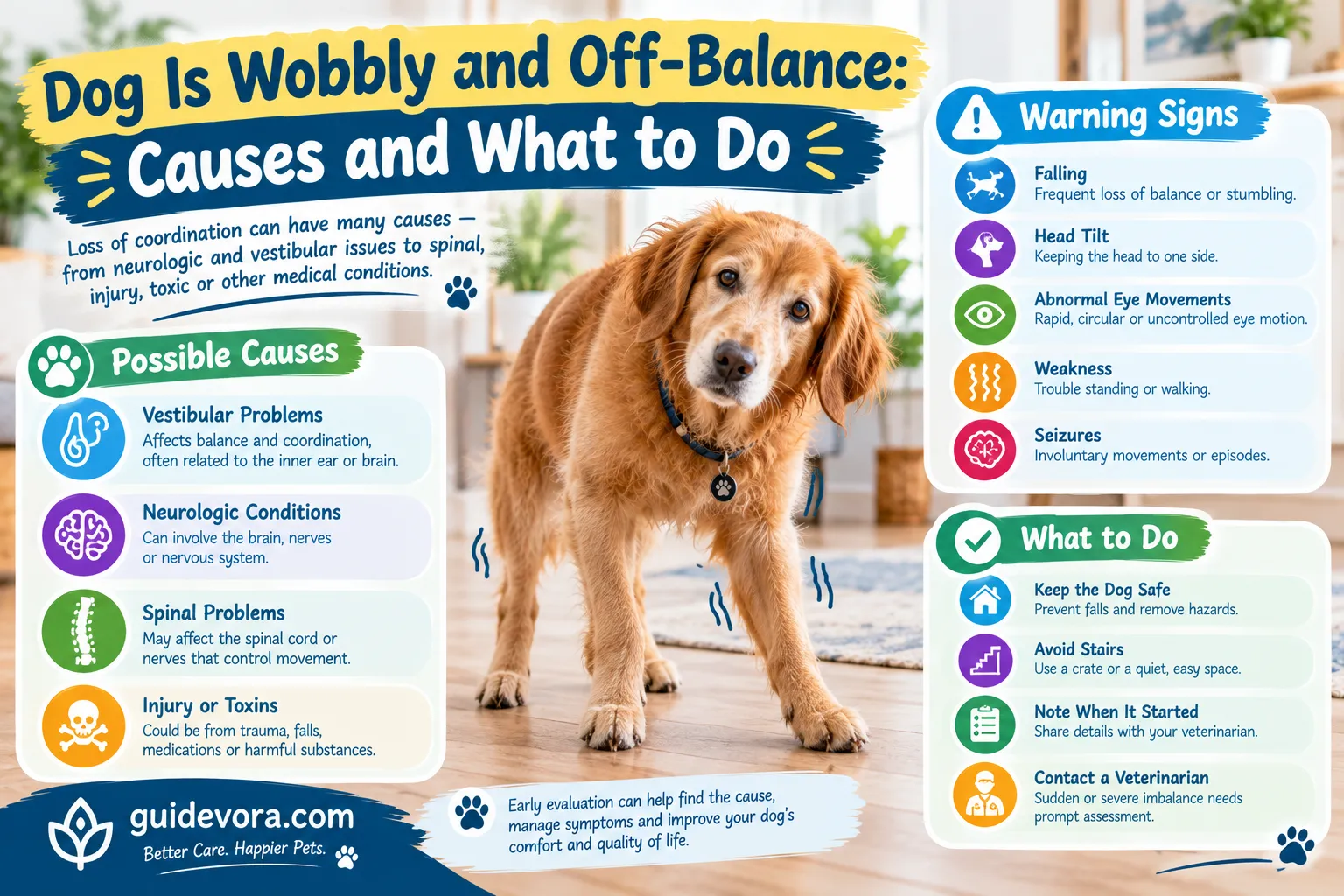
A dog that suddenly can’t walk straight is frightening to watch — stumbling, a tilted head, circling, or eyes flicking back and forth. Here’s the honest, two-part answer: the most common cause is something that usually resolves well on its own, but you genuinely cannot tell that from the more serious causes without a veterinary exam. That’s not a hedge — it’s what every veterinary source on this topic agrees on, which is why the right move is always the same regardless of which cause turns out to be true: a same-day vet visit.
What to Do Right Now
- If your dog cannot stand at all, is seizing, collapsed, or you suspect they ate something toxic — this is an emergency. Go to an emergency vet immediately, or call the ASPCA Animal Poison Control Center at 888-426-4435 if poisoning is possible.
- If your dog is wobbly but otherwise responsive — call your vet today for a same-day appointment, or an emergency clinic if your regular vet isn’t available. Don’t wait overnight to see if it passes.
- While you’re getting ready to go: keep your dog somewhere padded and low, block access to stairs, and don’t force them to walk if they’re struggling — support them with a towel sling under the belly if you need to move them.
The Most Common Cause: Vestibular Disease
The vestibular system — inner ear and brainstem — controls balance. When it malfunctions, dogs develop what’s often described as “doggy vertigo”: a sudden head tilt, stumbling or falling to one side, circling, and nystagmus (rhythmic, jerky eye movement). Many affected dogs also drool, refuse food, or vomit — the same nausea a person feels with severe vertigo.
In senior dogs, the most common version is idiopathic vestibular disease (sometimes called “old dog vestibular disease”) — no specific cause is ever found, symptoms come on fast (often within minutes to hours), and most dogs improve substantially within 72 hours, with fuller recovery over 1–3 weeks. Some dogs are left with a mild, permanent head tilt, but severe cases are uncommon.
Other causes of vestibular disease include:
- Inner or middle ear infections — a common and very treatable cause
- A perforated eardrum
- Hypothyroidism
- Trauma
- Certain medications
- Tumors, more often in cases that don’t improve or that worsen over time
German Shepherds and Doberman Pinschers are noted as somewhat more prone to vestibular disease, though it can affect any breed.
Read More: Best Ways to Keep Your Dog Entertained Indoors
Why You Can’t Diagnose This at Home
This is the part worth taking seriously: a true stroke, brain problem, or poisoning can look almost identical to benign vestibular disease in the first hours — same head tilt, same wobbling, same circling. The only reliable way to tell the reassuring version from the dangerous one is a physical and neurological exam, which checks whether the signs map to the inner ear (peripheral) or to the brain itself (central) — something genuinely difficult to assess by watching your dog at home. That’s why “wait and see if it’s just vestibular” isn’t good guidance, even though vestibular disease is statistically the most likely explanation.
Other Serious Causes of Sudden Wobbliness
Intervertebral disc disease (IVDD): A ruptured or bulging disc compressing the spinal cord — especially common in Dachshunds, Beagles, and Corgis — can cause sudden wobbling, weakness, or dragging of the hind legs, sometimes progressing to paralysis. This needs prompt veterinary evaluation, and outcomes are generally better the sooner it’s treated.
Poisoning: Certain mushrooms, insecticides, recreational drugs, some prescription medications, and xylitol (found in sugar-free gum and other products) can all cause sudden neurological symptoms, including wobbliness. If ingestion is possible, treat this as an emergency and call the ASPCA Animal Poison Control Center immediately.
Low blood sugar (hypoglycemia): Can cause sudden wobbling, weakness, confusion, and tremors, particularly in small-breed puppies, diabetic dogs on insulin, or dogs that have gone an unusually long time without eating.
Trauma or spinal injury: A fall, being hit by a vehicle, or other physical trauma can cause ataxia from spinal cord or brain injury.
Red Flags That Mean “Go Now,” Not “Call Today”
Treat these as immediate emergencies rather than same-day appointments:
- Collapse or inability to stand at all
- Seizures
- Suspected ingestion of a toxin
- Rapidly worsening symptoms over the course of hours
- Significant change in mental state — disorientation beyond what you’d expect from dizziness alone
- Vomiting alongside any of the above
Signs that also warrant closer attention (discuss specifically with your vet, even at a same-day visit): a head tilt toward what seems like the stronger side, and any weakness in the legs beyond wobbliness in the head/balance itself — these can point more toward a central (brain) cause than a peripheral (inner ear) one.
What Happens at the Vet Visit
- A physical and neurological exam to localize the problem — inner ear versus brain
- An otoscopic ear exam to check for infection or a perforated eardrum
- Bloodwork, particularly to rule out hypoglycemia or thyroid issues
- Advanced imaging (MRI/CT), typically reserved for cases that don’t fit the classic idiopathic pattern, don’t improve as expected, or show signs pointing toward a central cause
Supporting a Wobbly Dog at Home During Recovery
Once a vet has confirmed the cause and it’s something manageable at home (most often idiopathic or ear-infection-related vestibular disease):
- Block access to stairs with a baby gate to prevent falls
- Use a towel or sling under the belly to support your dog on walks or when navigating slippery floors
- Provide non-slip footing — rugs or mats over hardwood or tile
- Keep food and water close by and easy to reach without navigating far
- Expect gradual improvement, typically most noticeable within the first 72 hours, with continued improvement over 1–3 weeks — and call your vet back if you’re not seeing improvement on that timeline.
Frequently Asked Questions
Is a dog being wobbly and off-balance an emergency? It should be treated as a same-day veterinary concern at minimum, and an immediate emergency if your dog can’t stand, is seizing, or may have ingested something toxic. The most common cause (vestibular disease) is usually not dangerous, but it cannot be reliably distinguished from more serious causes without an exam.
What is vestibular disease in dogs? A sudden disruption to the balance system — inner ear or brainstem — causing head tilt, stumbling, circling, and jerky eye movements (nystagmus). The most common form in senior dogs is idiopathic, meaning no specific cause is found, and most dogs improve substantially within about 72 hours.
How long does vestibular disease in dogs last? Symptoms are typically most severe in the first 24–48 hours, with noticeable improvement by 72 hours and continued recovery over 1–3 weeks. A mild residual head tilt sometimes remains permanently, but severe long-term impairment is uncommon.
My dog is wobbly in the back legs only — what does that mean? Wobbliness isolated to the hind legs, especially with dragging or weakness, points more toward a spinal issue like intervertebral disc disease (IVDD) than vestibular disease, which more typically involves the head and overall balance. This still warrants prompt veterinary evaluation.
Can something my dog ate cause sudden wobbliness? Yes. Certain toxins — including xylitol, some medications, insecticides, and certain mushrooms — can cause sudden neurological symptoms including wobbliness. If ingestion is possible, contact the ASPCA Animal Poison Control Center (888-426-4435) or an emergency vet immediately.
How can I tell if it’s vestibular disease or a stroke? You generally can’t, reliably, without a veterinary neurological exam — the early presentation can look very similar. This is exactly why sudden wobbliness always warrants same-day veterinary attention rather than a wait-and-see approach at home.
Read More: Can Dogs Eat Chocolate? No — Here’s Why, and What to Do If They Already Did
Final Thoughts
Most dogs who suddenly become wobbly and off-balance have vestibular disease, and most of those dogs recover well within a few weeks. But because the same symptoms can also signal poisoning, a spinal problem, or a brain issue — and because there’s no reliable way to tell them apart at home — the right response is the same either way: a same-day veterinary visit, or immediate emergency care if your dog can’t stand, is seizing, or may have ingested something toxic.
This article is for informational purposes and doesn’t replace veterinary diagnosis, especially for a sudden neurological symptom.
Leave a Reply