
This sufganiyot recipe shows you how to make golden, fluffy Hanukkah jelly doughnuts at home, with a soft centre, a crisp sugared outside and jam in the middle. They are easier than they look, provided the dough rises fully and the oil stays hot. You need only a bowl, a rolling pin, a deep pan, a thermometer and a piping bag or spoon. Hanukkah 2026 begins on Friday 4 December 2026, so practise once before making them for guests.

Key Facts
- What they are: Deep-fried, jam-filled doughnuts traditionally eaten at Hanukkah.
- Festival date: Hanukkah 2026 begins on Friday 4 December 2026.
- Makes: About 12 medium doughnuts.
- Preparation time: About 25 minutes hands-on, plus about 1 hour 30 minutes rising.
- Cooking time: About 15 to 20 minutes, frying in batches.
- Best served: Warm, on the day they are made.
- Classic filling: Strawberry or raspberry jam.
- Key to success: Let the dough rise fully; keep the oil steady.
What Are Sufganiyot, and Why Are They Eaten at Hanukkah?
Sufganiyot are round, yeast-leavened doughnuts fried in oil, filled with jam and rolled in sugar. They are soft inside, lightly crisp outside, and usually served warm.
Their place at Hanukkah comes from the festival story: a small amount of oil, enough for one day, is said to have burned for eight days. Foods fried in oil therefore became part of the celebration. Sufganiyot sit alongside latkes in that tradition; our crispy Hanukkah latkes recipe makes a savoury partner. The classic home version is simplest: plain enriched dough, strawberry or raspberry jam and caster or icing sugar.
Ingredients
This recipe makes about 12 medium sufganiyot; bring the milk and egg to room temperature first.
For the dough: 500g plain flour, plus extra for dusting; 7g fast-action dried yeast (about 2 teaspoons); 60g caster sugar; 1 teaspoon fine sea salt; 180ml whole milk, lukewarm; 2 large eggs, at room temperature; 60g unsalted butter, softened; 1 teaspoon vanilla extract; finely grated zest of 1 lemon or orange (optional).
For frying and filling: About 1 litre neutral vegetable oil or sunflower oil; 150g strawberry or raspberry jam, smooth or lightly warmed and stirred; caster sugar or icing sugar, for dusting. Use a neutral oil; olive oil tastes too strong here.
How to Make Sufganiyot: Step by Step
1. Make the dough
Mix the flour, yeast, sugar and salt in a large bowl. Add the lukewarm milk, eggs, vanilla and zest, if using, and stir until a shaggy dough forms. Add the butter gradually, then knead for 8 to 10 minutes until smooth, soft and slightly tacky, but not sticky.
2. Let the dough rise
Shape the dough into a ball, place it in a lightly oiled bowl, cover, and leave somewhere warm and draught-free for about 1 hour to 1 hour 15 minutes, until roughly doubled — judge by size, not the clock.
3. Shape the doughnuts
Turn the dough onto a lightly floured surface, press gently to remove large air bubbles and roll to about 1.5cm thick. Cut rounds with a 7cm to 8cm cutter or the rim of a glass, re-rolling the offcuts. Place them on a lined baking tray, cover loosely, and leave to rise for 25 to 30 minutes, until puffy and light — this second rise gives the fluffy centre, so do not rush it.
4. Fry the doughnuts
Heat the oil in a deep, heavy-based pan to 175°C, using a thermometer if you have one: steady temperature matters most. Too-cool oil makes heavy doughnuts; too-hot oil darkens the outside before the centre cooks.

Lower three or four at a time into the oil; do not crowd the pan, or the temperature will drop. Fry for about 2 minutes until golden, turn, and fry for a further 1 to 2 minutes. Drain on kitchen paper, letting the oil return to temperature between batches. While still warm, roll in caster sugar, or dust with icing sugar later. Cool briefly before filling, so the jam does not melt.
5. Fill the doughnuts
Put the jam in a piping bag with a small nozzle; if very thick, warm it gently until it loosens, then cool slightly. Make a small hole in the side of each doughnut with a chopstick or knife tip, wiggling gently to make a pocket.
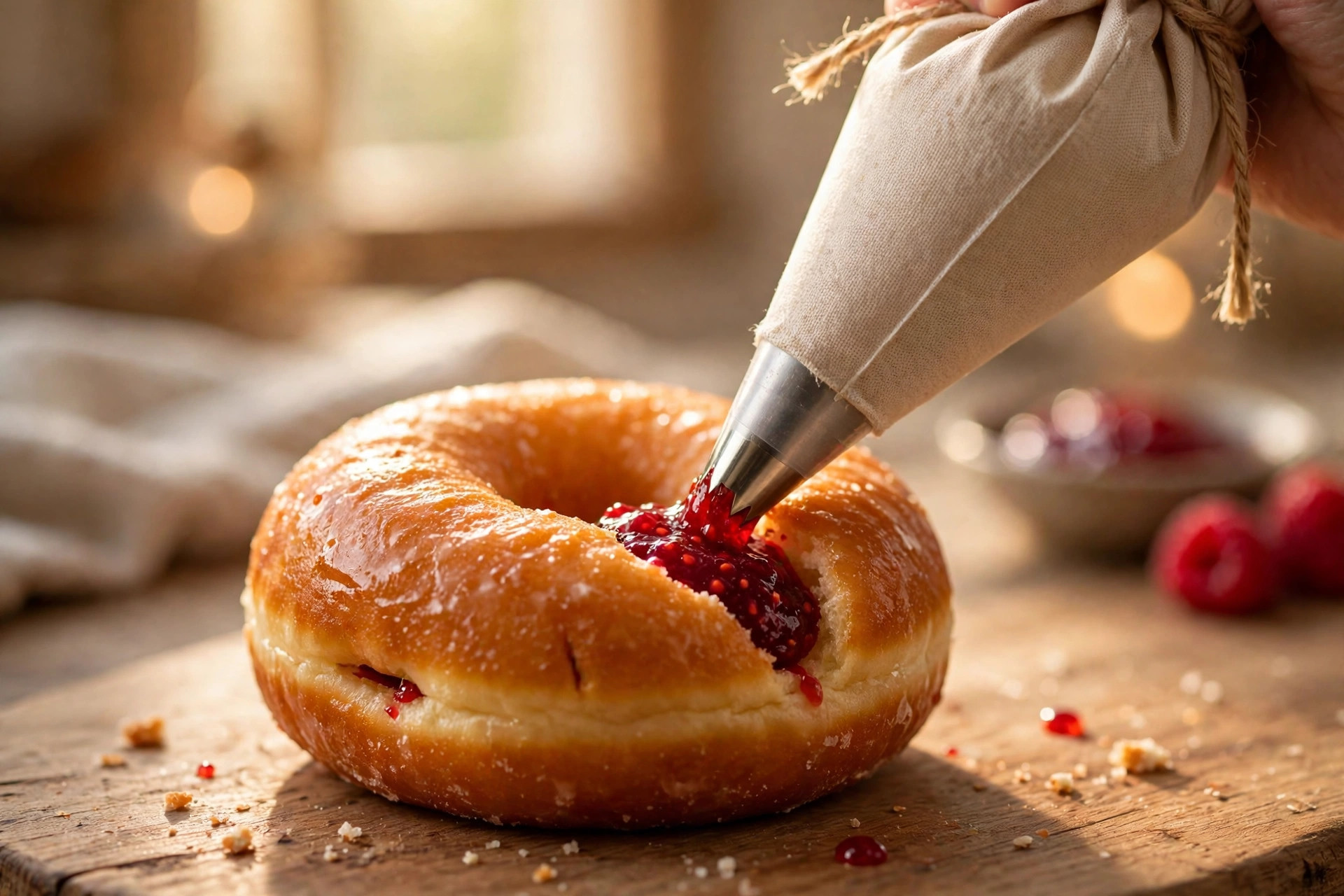
Insert the nozzle and squeeze in about a tablespoon of jam, until you feel a little resistance. Wipe away any that escapes, dust again if you like and serve warm.
Filling Ideas Beyond Classic Jam
Strawberry and raspberry jam are traditional: their tartness balances the sweet dough. Once confident, try chocolate spread, chocolate or vanilla custard, dulce de leche, lemon curd or apricot jam. Orange zest in jam, or stewed apple with cinnamon, also works.
For a party, offer two or three fillings with one batch, and fill just before serving. Do not overfill: a generous spoonful is enough.
Frying Tips for Light, Golden Sufganiyot
Keep the oil at around 175°C, checking it between batches. Without a thermometer, test with a small piece of dough: it should sizzle, rise within seconds and turn golden in about a minute. If it browns at once, the oil is too hot; if it sinks and stays pale, it is too cool.
Fry in small batches, giving each doughnut room to float — crowding the pan lowers the temperature and can leave them greasy. Turn once if you can, drain well, and use fresh oil for the best flavour. Let used oil cool completely before straining, storing or disposing of it safely. Never pour hot oil down the sink, and never leave it unattended.
Food safety matters as much as flavour when frying at home — see the guidance on cooking foods to a safe internal temperature, especially for children, older guests, or anyone with a weaker immune system. The doughnuts are done when evenly golden, with no raw dough in the centre.
Make-Ahead and Storage Advice
Sufganiyot are best on the day they are made, served warm within a few hours of frying. To plan ahead, chill the dough in the fridge overnight after the first rise, then bring it to room temperature, shape it and let it rise again before frying. This slow rise can even improve the flavour.
Unfilled doughnuts keep for a day in an airtight container, although they soften. Warm briefly in a low oven, about 150°C, then fill and sugar just before serving. Filled doughnuts are best eaten the same day, as jam softens the dough. Freeze unfilled doughnuts for up to one month; defrost, warm briefly and fill while slightly warm. Do not freeze filled doughnuts.
Serving Ideas for a Hanukkah Gathering
Serve sufganiyot warm, dusted with sugar, on a large plate or in a cloth-lined basket. A small bowl of extra jam lets guests add more, with tea or coffee alongside.
For a fuller celebration, serve them as part of a wider spread. Our Hanukkah recipes collection brings together savoury and sweet dishes, and our Hanukkah dinner menu can help plan the whole meal. They work well as the sweet finish, after latkes and other savoury dishes. Let children choose fillings and dust the doughnuts, while an adult handles the frying.
Frequently Asked Questions
Can I make sufganiyot without a piping bag?
Yes. Use a zip-seal bag with a corner snipped off, or cut a slit in the top and spoon the jam in. A piping bag is neater, but the flavour is the same.
Why did my sufganiyot turn out heavy or greasy?
Usually the oil was too cool, or the dough did not rise enough. Cool oil is absorbed instead of sealing the outside, while under-risen dough has no air to keep it light. Check the temperature, fry in small batches and let the doughnuts rise until puffy.
Can I bake sufganiyot instead of frying them?
You can bake them until golden, but the result is closer to a sweet bread roll. Frying gives the crisp outside and soft centre that define the doughnut. If baking, brush with melted butter first and fill once cooled.
How far ahead can I make the dough?
Yes. Make the dough the day before and chill it overnight after its first rise. Bring it to room temperature, shape it, and allow the second rise before frying.
What is the best jam for sufganiyot?
Strawberry or raspberry jam is classic, as its sharp flavour balances the sweet dough. Apricot jam, blackcurrant jam and lemon curd also work. Choose a smooth jam, or warm a chunky one gently until easy to pipe.
Can I make sufganiyot dairy-free?
Yes. Use plant-based milk and a dairy-free butter alternative, and check your jam and sugar are suitable. The texture will differ slightly, but they should still rise, fry and fill well.
Leave a Reply