

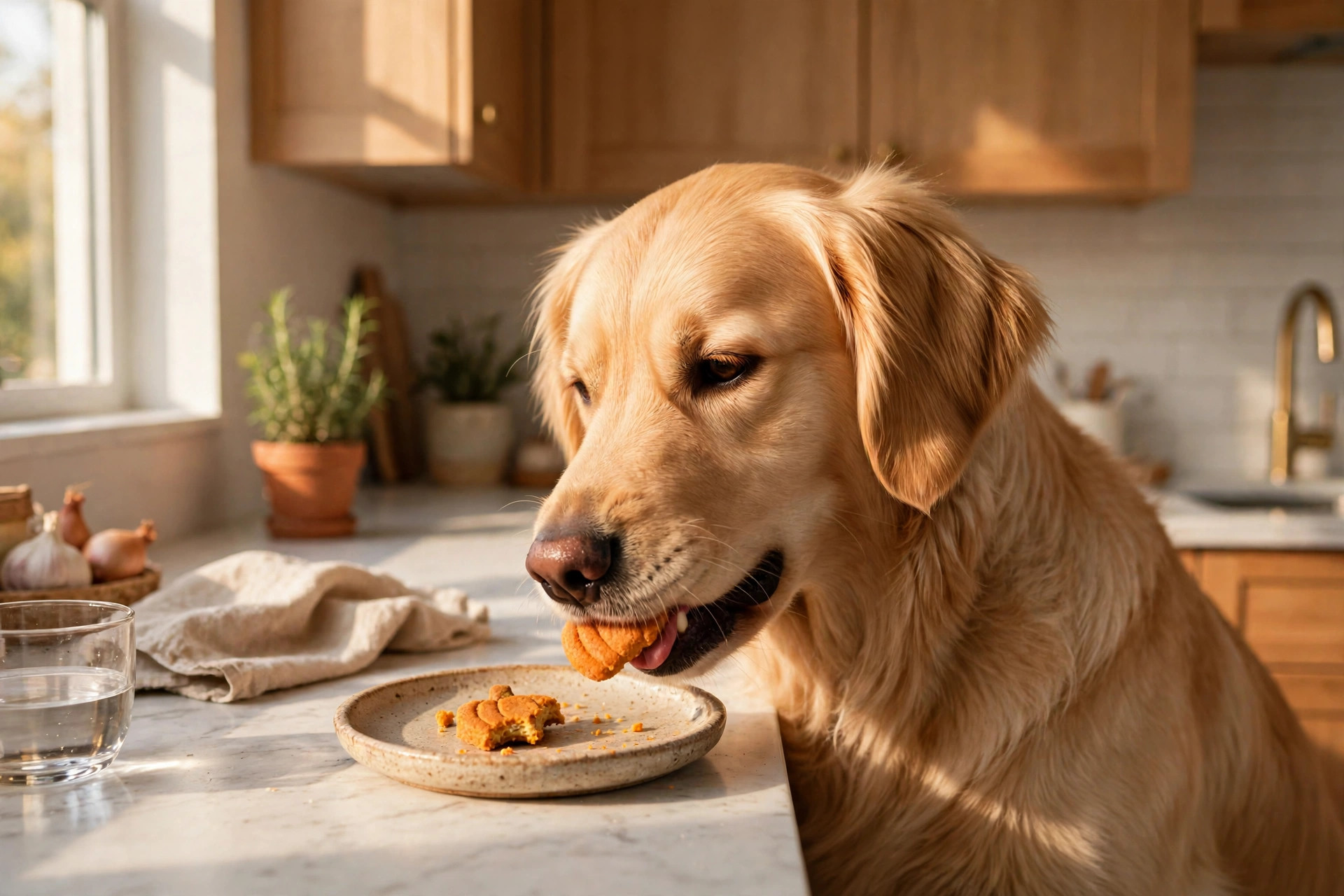
Can dogs eat pumpkin? Yes, most dogs can eat plain, cooked pumpkin in small amounts, and it is one of the safer seasonal foods you can share from your kitchen. The key word is plain. Fresh pumpkin that has been cooked and mashed, or plain canned pumpkin puree with no added sugar, spices, salt, or other ingredients, is the only kind to offer. Pumpkin pie filling, spiced pumpkin desserts, raw pumpkin, and the rind, stem, and seeds are a different story, and they should stay out of your dog’s bowl.
Pumpkin turns up everywhere in autumn, from porridge and pies to decorations on the porch. A spoonful of plain pumpkin can be a useful, low-fat treat, and many owners use it to add a little fibre to their dog’s meals. Too much, or the wrong kind, can upset the stomach it was meant to help, so the details in this guide matter.
Key Facts
- Plain, cooked pumpkin is generally safe for most healthy dogs in small amounts.
- Always use plain pumpkin puree, never pumpkin pie filling or spiced pumpkin mix.
- A good starting portion is one to two tablespoons for a medium or large dog, and one teaspoon for a small dog.
- Never feed raw pumpkin, rind, stem, or whole seeds.
- Pumpkin pie, pumpkin spice treats, and sweetened pumpkin desserts are not safe for dogs.
- Pumpkin can help some dogs with mild digestive upset, but it is not a treatment for illness.
- Always check with your vet if your dog has diabetes, kidney disease, or another health condition.
Is Pumpkin Safe for Dogs?
For most healthy adult dogs, plain pumpkin is safe. It is low in fat, easy to digest when cooked, and contains fibre, water, and vitamins such as vitamin A. That combination is why vets often mention plain pumpkin as a gentle addition to a dog’s diet, and why it appears in some commercial dog foods and treats. It is not an essential food — a balanced dog food already provides what your dog needs — but as an occasional treat, plain pumpkin is a sensible choice.
Safety depends entirely on the form. Cooked pumpkin flesh, mashed until smooth, is easy for a dog to eat and digest. Plain canned pumpkin puree is equally good, provided the label lists only pumpkin and nothing else. Check the tin carefully before you buy it, because pumpkin pie filling sits on the same shelf and looks very similar. Pie filling contains sugar and spices, and sometimes sweeteners, and it is not suitable for dogs at all.
How Much Pumpkin Can a Dog Eat?
Start small, even if your dog loves the taste. A teaspoon is enough for a small dog, while a medium or large dog can usually manage one to two tablespoons. Offer it a few times a week at most, rather than every day, and watch how your dog responds. If the stools become loose, or your dog seems uncomfortable, cut the amount back or stop altogether.
Plain Pumpkin vs Pumpkin Pie Filling
This is the most important distinction in the whole guide, and it is easy to get wrong in a busy supermarket. Plain pumpkin puree contains only pumpkin. Pumpkin pie filling contains pumpkin plus sugar, spices such as cinnamon and nutmeg, and sometimes other flavourings. Some sweetened products also contain xylitol, a sweetener that is dangerous for dogs.
Pumpkin pie itself is also unsuitable. It is rich, sweet, and often made with butter, cream, sugar, and spices, and a slice can upset a dog’s stomach badly. The same applies to pumpkin spice lattes, pumpkin biscuits made for people, pumpkin muffins, and other seasonal bakes. They may smell wonderful, and your dog may beg for a taste, but they are people food, not dog food. If you want to learn more about the pie itself, read our guide to can dogs eat pumpkin pie.

How to Serve Pumpkin to Your Dog
Cooking fresh pumpkin is simple. Cut it in half, scoop out the seeds and stringy flesh, and roast or steam the flesh until it is soft. Let it cool, scoop the soft flesh away from the skin, and mash it until smooth. You can store the puree in the fridge for a few days, or freeze it in small portions and defrost one at a time.
Canned plain pumpkin puree is quicker and just as good, as long as it has no added ingredients. Spoon a small amount into your dog’s bowl, or mix it through their usual food so it is evenly spread. Some owners freeze pumpkin puree in small moulds to make a cool summer treat, and that works well too, provided the portion stays small.
Can Pumpkin Help an Upset Stomach?
Pumpkin is often suggested for dogs with mild digestive upset, and there is a good reason for that. Its soluble fibre can help absorb extra water in the gut, which may firm up loose stools, while the same fibre can also help things move along if a dog is mildly constipated. That sounds contradictory, but fibre works in both directions by helping the gut return to a more normal rhythm. Many owners keep a tin of plain pumpkin puree in the cupboard for exactly this reason.
It is important to be clear about the limits. Pumpkin can help with mild, short-lived digestive wobbles, but it is not a treatment for illness. If your dog has diarrhoea that lasts more than a day, blood in the stool, vomiting, a swollen or painful belly, or seems lethargic and off their food, do not rely on pumpkin — contact your vet. The same applies if the problem keeps coming back. A home remedy can mask a problem that needs proper attention, and a vet visit is always the safer choice when you are unsure.
Which Parts of a Pumpkin Should Dogs Avoid?
The flesh is the only part worth sharing, and only when it is cooked and plain. The skin, or rind, is tough and hard to digest, and pieces of it can cause choking or a blockage, especially in small dogs. The stem is hard and woody and should never be given to a dog. The seeds are also best avoided. While a few pumpkin seeds are sometimes listed as safe for dogs when roasted and ground, whole seeds are a choking risk and are difficult to digest, so it is simpler and safer to leave them out altogether.
If your dog does manage to eat rind, stem, seeds, or a piece of a mouldy pumpkin, watch them closely for vomiting, diarrhoea, loss of appetite, or signs of pain, and call your vet if you are worried. It is also worth keeping the FDA’s list of potentially dangerous items for pets in mind when you are checking whether a food or household item is safe, because it covers many common hazards beyond pumpkin.
Sharing Other Autumn Foods
Plain, cooked turkey without skin, bones, or seasoning can be fine in small amounts — see our guide to can dogs eat turkey — and plain cooked sweet potatoes are another gentle option, explained in our guide to can dogs eat sweet potatoes. Keep rich, sweet, and spiced dishes for the people at the table, and give your dog a treat of their own instead.
Frequently Asked Questions
Can dogs eat pumpkin every day?
Most healthy dogs can have a small amount of plain pumpkin a few times a week, but every day is not necessary. Keep portions small — a teaspoon for a small dog and one to two tablespoons for a larger dog — and stop if it causes loose stools. Ask your vet first if you want to feed it more often.
Can dogs eat canned pumpkin?
Yes, if it is plain canned pumpkin puree with pumpkin as the only ingredient. Do not use pumpkin pie filling or pumpkin pie mix, which contain sugar, spices, and sometimes sweeteners. Always read the label before serving.
Is pumpkin good for a dog with diarrhoea?
Plain pumpkin may help some dogs with mild, short-lived diarrhoea, because its fibre can help firm up loose stools. It is not a treatment for illness. If diarrhoea lasts more than a day, or your dog is also vomiting or lethargic, contact your vet.
Can dogs eat pumpkin seeds?
It is best not to feed whole pumpkin seeds. They can be a choking risk, especially for small dogs, and they are hard to digest. Keep the seeds, rind, and stem away from your dog, and share only the plain, cooked flesh.
Can puppies eat pumpkin?
Puppies can have a tiny amount of plain, cooked pumpkin, but introduce it very slowly and watch for stomach upset. Puppies dehydrate more quickly than adult dogs, so if a puppy has diarrhoea or any other health concern, speak to your vet first.
Can dogs eat pumpkin pie?
No. Pumpkin pie is made with sugar, butter, cream, and spices, and it can upset a dog’s stomach badly. Some pie fillings also contain xylitol, which is dangerous for dogs. Only plain pumpkin puree is suitable.
Leave a Reply