
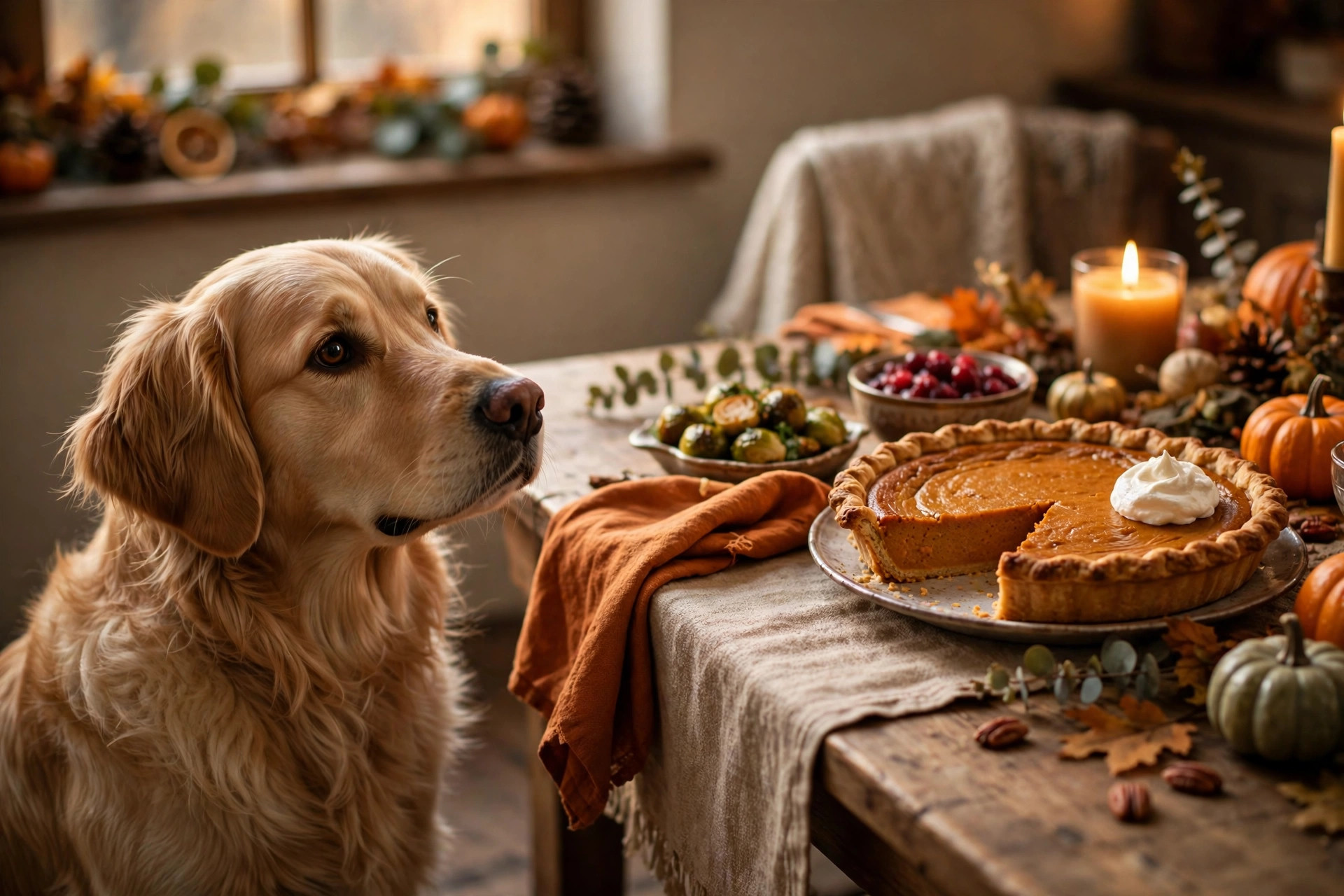
Can dogs eat pumpkin pie? The short answer is no — pumpkin pie is not a safe treat for dogs, even though plain cooked pumpkin is. That distinction matters at Thanksgiving, when a hopeful dog is very likely to be sitting under the table as dessert is served. A slice of pumpkin pie is not just pumpkin. It is pumpkin mixed with sugar, spices, butter and a rich pastry crust, and some shop-bought or sugar-free versions may contain xylitol, a sweetener that is highly toxic to dogs. So while your dog can enjoy pumpkin in its plain form, the pie itself should stay off their menu.
Key Facts
- Plain cooked pumpkin is generally safe for dogs in small amounts — but pumpkin pie is not the same thing.
- Pumpkin pie is not a safe treat because of its added sugar, spices, fat and pastry crust.
- Nutmeg, found in most pumpkin pie spice mixes, can be toxic to dogs in larger amounts and should be avoided.
- Xylitol, sometimes used in sugar-free pies, is an emergency — contact your vet urgently if your dog may have eaten it.
- The safe alternative is plain pumpkin puree with nothing added, served in a small portion.
- Treats should make up no more than 10% of your dog’s daily calories.
Why Pumpkin Pie Is Not the Same as Plain Pumpkin
Pumpkin itself has a well-earned reputation as a dog-friendly food. Vets often recommend plain cooked pumpkin for dogs with mild digestive upset, because it is rich in fibre and gentle on the stomach. That reputation, however, belongs to plain pumpkin only — not to the dessert made from it.
A typical pumpkin pie adds a generous amount of sugar, evaporated milk or cream, eggs and butter, plus a blend of spices, all baked into a buttery pastry crust. Each addition changes a simple, gentle food into something rich, sweet and fatty. A dog’s digestive system is not designed for that kind of dessert, and even a small slice can cause vomiting or diarrhoea.
A slice of pie also delivers far more sugar and fat than a spoonful of plain pumpkin. Dogs do not need added sugar, and rich, fatty foods can trigger pancreatitis, a painful inflammation of the pancreas, particularly in dogs that eat a large amount at once.

The Ingredients That Make Pumpkin Pie Risky
Sugar: Most pumpkin pies contain a large amount of added sugar, which offers dogs no nutritional benefit and contributes to weight gain, dental problems and blood-sugar issues.
Nutmeg: Nutmeg is a standard part of pumpkin pie spice and is the most concerning of the spices. It contains myristicin, which can be toxic to dogs in larger quantities, potentially causing disorientation, increased heart rate and, in severe cases, seizures. A dog that eats a whole pie could take in a meaningful amount.
Xylitol and other sugar substitutes: This is the most serious risk of all. Some sugar-free or “light” pies, and some shop-bought fillings, use xylitol (also labelled as birch sugar) instead of sugar. Xylitol is extremely toxic to dogs, even in small amounts: it can cause a sudden, dangerous drop in blood sugar, and in larger amounts it can lead to liver failure. If there is any chance your dog has eaten a pie containing xylitol, treat it as an emergency and contact your vet immediately — do not wait for symptoms.
Butter and fatty crust: Pastry crust is made largely from butter or shortening, making it very high in fat. Rich, fatty food is a common cause of stomach upset in dogs and can contribute to pancreatitis, while adding almost nothing nutritionally.
The Safe Alternative: Plain Pumpkin Puree
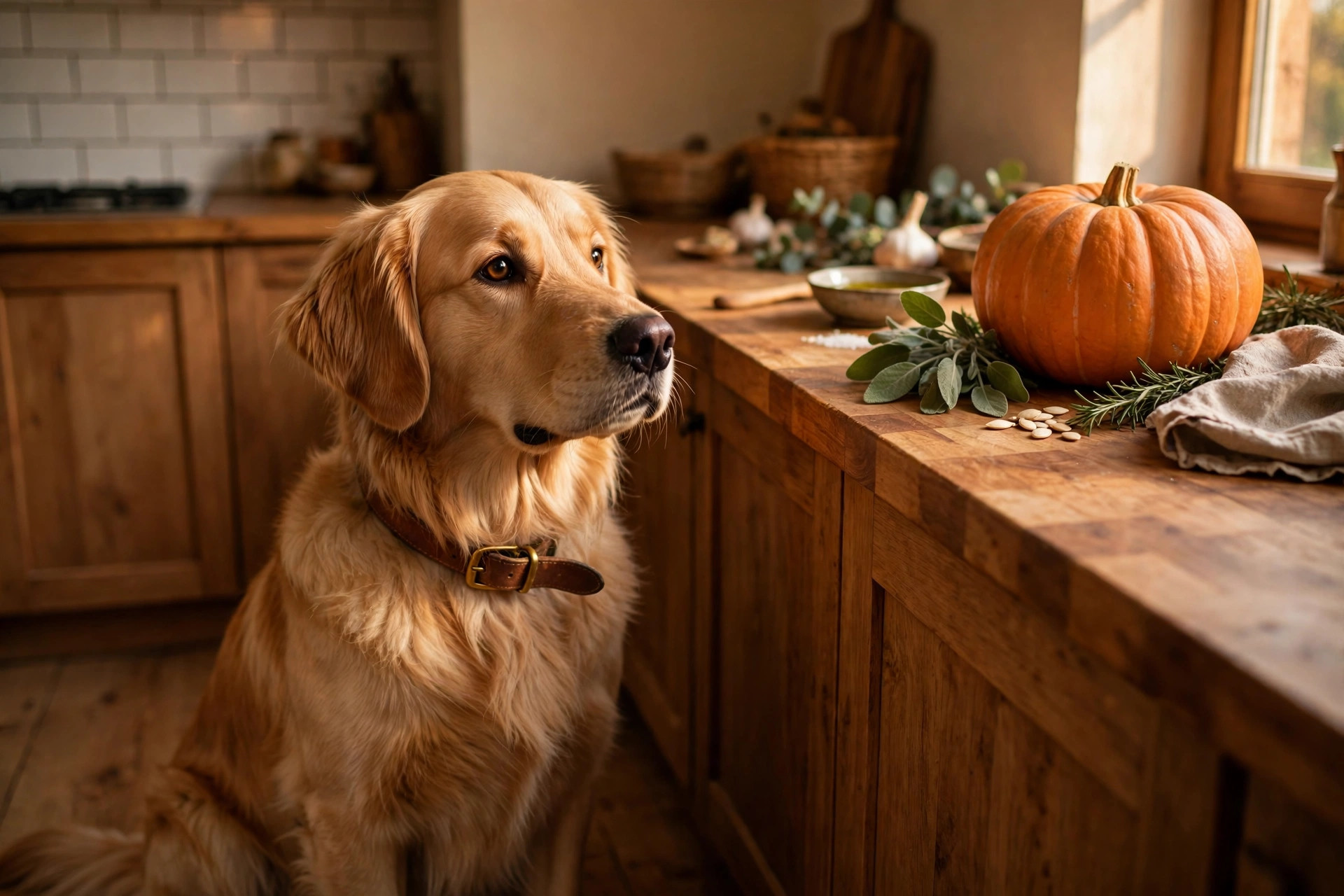
The good news is that your dog does not have to miss out on pumpkin altogether. Plain pumpkin puree — the kind that is 100% pumpkin, with nothing added — is a genuinely dog-friendly food, and it gives your dog the flavour of pumpkin without the sugar, spices and fat of the pie.
When you buy it, read the label carefully. You want a tin or packet that lists only pumpkin as its ingredient. Do not confuse plain pumpkin puree with pumpkin pie filling, which is sold in similar-looking tins but already contains sugar and spices. If you cook fresh pumpkin at home, boil or roast it until soft, remove the skin and seeds, and mash the flesh. Serve it plain, with no butter, sugar, salt or seasoning.
Serve it on its own, stirred into regular food, or frozen in a Kong for a longer-lasting snack.
How Much Plain Pumpkin Can Dogs Have?
Portion size matters, even with a safe food. Treats of any kind — including plain pumpkin — should make up no more than 10% of your dog’s daily calorie intake, with the remaining 90% coming from their complete, balanced dog food. For most dogs, a tablespoon or two of puree is plenty, and smaller dogs need less: a teaspoon may be enough for a toy breed, while a large dog can handle a couple of tablespoons.
Introduce pumpkin gradually, starting with a small amount and watching for stomach upset over the next day. Too much at once can loosen stools, because of its high fibre content. If your dog has diabetes or an ongoing digestive condition, check with your vet first.
What to Do If Your Dog Eats Pumpkin Pie
Dogs are opportunists, and at Thanksgiving a stolen bite is always possible. If your dog eats some pumpkin pie, try not to panic — but do act promptly.
First, work out what they ate and how much, and check the recipe or packaging for xylitol or any other sugar substitute. This single fact changes everything. If xylitol is involved, or if you are unsure and the pie was sugar-free, contact your vet or an animal poison helpline immediately, telling them your dog’s weight and roughly how much was eaten. Do not try to make your dog vomit unless a vet specifically tells you to.
If the pie was an ordinary pie with no xylitol, a small stolen bite is unlikely to cause serious harm, though it may cause mild stomach upset. Watch your dog for 24 hours, give them fresh water, and feed their normal food. If they ate a whole slice or more, call your vet even if they seem fine, and do not give human medicine unless your vet advises it.
Warning Signs to Watch For
Contact your vet promptly if you notice vomiting or diarrhoea that does not settle, loss of appetite, unusual lethargy or weakness, drooling, restlessness, trembling or wobbling when walking, a rapid heartbeat, or signs of abdominal pain such as hunching or whimpering. Collapse or seizures are emergencies — get your dog to a vet immediately.
Signs of xylitol poisoning can appear within 30 minutes, and may include vomiting, weakness, collapse and seizures. Do not wait and see if xylitol is a possibility — early treatment makes a real difference.
Keeping Thanksgiving Safe for Your Dog
Thanksgiving brings several seasonal hazards besides pumpkin pie. Plain, cooked turkey meat without skin, bones or seasoning can be a safe treat in a small amount — see our guide to whether dogs can eat turkey. Cranberry sauce, by contrast, is usually very high in sugar and is best avoided, as explained in our guide to whether dogs can eat cranberry sauce. Chocolate, which appears in many Thanksgiving desserts, is toxic to dogs, so keep it well out of reach; if your dog does eat some, our guide on what to do if your dog has eaten chocolate covers the steps to take.
Keep desserts on high surfaces, warn guests not to slip your dog treats from the table, and prepare a dog-safe treat in advance, such as plain pumpkin puree. Clear plates promptly and keep bins covered.
Frequently Asked Questions
Can dogs eat a small piece of pumpkin pie?
A tiny taste of ordinary pie is unlikely to cause serious harm, but it is still not recommended: it contains sugar, spices and fat with no benefit, and if it contains xylitol, even a small amount is dangerous.
Is pumpkin pie filling safe for dogs?
No. Pie filling already contains sugar and spices, including nutmeg, and some versions contain sugar substitutes. Only 100% plain pumpkin puree is suitable.
What about pumpkin pie without nutmeg?
Leaving out nutmeg removes one risk, but the pie would still contain sugar, butter and fatty pastry. It is less risky, but still not a good treat.
Can puppies eat pumpkin puree?
Yes, in very small amounts, introduced gradually. If your puppy has digestive problems or is on a special diet, ask your vet first.
How much plain pumpkin can I give my dog each day?
One to two tablespoons a day is plenty for a medium or large dog, and a teaspoon is enough for a small dog, within the 10% treat rule.
What should I do if my dog eats a whole pumpkin pie?
Call your vet straight away, especially if the pie may have contained xylitol — that is an emergency. Even without xylitol, a whole pie means a large amount of sugar, fat and nutmeg.
This article is general information only, not veterinary advice. If your dog shows worrying symptoms after eating something, consult your vet promptly.
Leave a Reply