

Can dogs eat ham? A tiny piece of plain, lean ham is unlikely to harm a healthy adult dog, but holiday ham is generally not a good choice. It is very high in salt and fat, and most holiday hams are glazed with sugar or honey, studded with cloves or served with rich sauces. A small taste may be fine for some dogs, yet far safer festive foods exist — and for dogs that are small, older or prone to stomach problems, ham is best avoided altogether.
Ham seems harmless because it is “just meat”, but cured ham is one of the saltiest meats on the holiday table. A dog’s body is not built to handle that much salt and fat in one go, and the rich glaze only adds sugar. If your dog is begging at the table, it helps to know the risks and what to offer instead.
Key Facts
- A tiny piece of plain, lean ham is unlikely to harm a healthy dog, but holiday ham is not recommended.
- Ham is very high in salt and fat, which can cause vomiting, diarrhoea and thirst.
- Fatty, salty meals can trigger pancreatitis in some dogs.
- Honey or sugar glazes, cloves and rich sauces add extra sugar and seasoning dogs do not need.
- Ham bones are dangerous: cooked bones can splinter and cause choking or internal injury.
- If your dog eats a large amount of ham or shows symptoms, contact your vet promptly.
- Safer swaps include plain cooked turkey, plain pumpkin and plain green beans.
Why Ham Is a Problem for Dogs
The main issue with ham is its salt content. Cured and smoked hams are preserved with large amounts of salt, and even a few slices can contain far more sodium than a dog should eat in a day. Too much salt can cause vomiting, diarrhoea, tremors and more serious problems. Dogs with kidney or heart conditions are especially vulnerable, so ham is a poor choice for them in any amount.
Fat is the second problem. Ham, especially the fattier cuts and the skin, is rich in fat. A sudden fatty meal can upset a dog’s stomach and, in some dogs, trigger pancreatitis — an inflammation of the pancreas that causes severe abdominal pain, vomiting and loss of appetite and often needs veterinary care. Dogs that have had pancreatitis before, or breeds prone to it, should not be given ham at all.
Glazes, Seasonings and Ham Bones
Holiday ham rarely arrives plain. Most hams are coated in a honey, brown-sugar or maple glaze, studded with whole cloves and sometimes served with a sweet or mustard sauce. The glaze adds a lot of sugar, which dogs do not need and which can upset their stomachs. Whole cloves are also a choking hazard and can irritate the mouth and stomach.
Ham bones deserve a special warning. Cooked ham bones can splinter into sharp pieces that may cut the mouth or throat, get stuck, or damage the stomach and intestines. They are also dense enough to crack teeth. Never give your dog a ham bone, however much they beg for it, and make sure bones from the carving board go straight into a secure bin. Raw bones carry their own risks too, so the safest rule is simple: no bones of any kind from the holiday table.

Can Dogs Ever Eat Ham Safely?
If you do decide to share a little ham, keep it truly tiny — a piece the size of your thumbnail, cut from a lean, unglazed part of the meat, with all visible fat trimmed off. It should be an occasional treat, not a meal, and only for a healthy adult dog with no history of stomach trouble, pancreatitis or kidney problems. Puppies, small dogs and older dogs should skip it entirely, because a portion that looks small to us can be a lot for them.
There is no need to feel guilty about saying no. Dogs do not understand holidays, and they will be just as happy with a safe treat. A small piece of plain cooked turkey is leaner, less salty and far easier on the stomach — our guide on whether dogs can eat turkey explains how to serve it safely. Plain cooked pumpkin is another gentle option that many dogs love and that is much kinder to their digestion than ham.
What to Do If Your Dog Eats Ham
If your dog sneaks a slice of ham, try not to panic. A single small piece of plain ham is unlikely to cause serious harm in a healthy dog, but a large amount — especially fatty, glazed or bone-in ham — is a different matter. Remove any remaining ham and bones from reach, and watch your dog over the next day or two for vomiting, diarrhoea, excessive thirst or urination, loss of appetite, abdominal pain, weakness and lethargy.
Contact your vet promptly if your dog ate a large amount, swallowed a bone, or shows any of these symptoms. It helps to tell the vet roughly how much was eaten and whether the ham was glazed or seasoned. Do not try to make your dog vomit at home unless your vet specifically tells you to. For a reliable list of foods that can be dangerous for pets, the FDA’s guide to potentially dangerous items for your pet is worth checking before the holidays.
Safer Thanksgiving Foods for Your Dog
Your dog can still enjoy a festive plate — it just needs to be built from the right foods. Plain cooked turkey without skin or bones is the best holiday protein for dogs: lean, filling and easy to digest in a small portion. Plain cooked pumpkin is gentle on the stomach and rich in fibre. Plain green beans and plain cooked carrots, served without butter or seasoning, add crunch and variety.
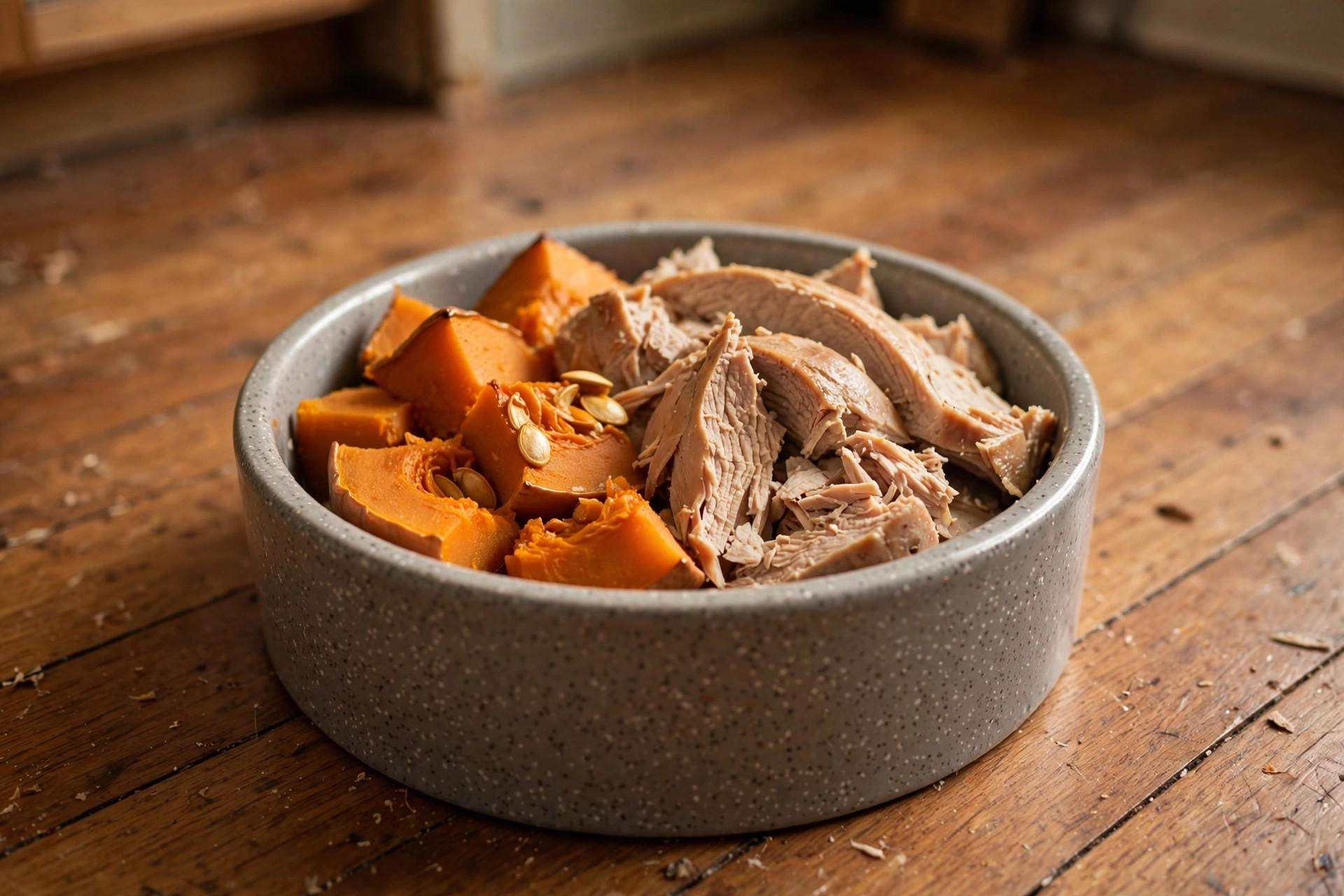
Prepare your dog’s plate before you add butter, salt and sauces to the family dishes, and serve it in their own bowl at the usual mealtime. Tell guests — especially children — not to slip the dog food from their plates, and keep the serving dishes and carving board out of reach. Our guide to what dogs can eat at Christmas dinner follows the same plain-and-small rule.
Keeping the Holiday Table Dog-Safe
Thanksgiving brings more hazards than ham alone. Keep turkey and ham bones, foil, string and wrappers in a secure bin, since a curious dog will happily raid an open bin while everyone is busy. Chocolate desserts, mince pies with raisins, xylitol-sweetened treats and alcohol should be kept well away from pets. Grapes and raisins, often found in stuffing and desserts, are toxic to dogs.
It also helps to give your dog a calm space of their own. A house full of guests, cooking smells and loud conversation can be stressful, and a stressed dog is more likely to scavenge. A comfortable bed in a quiet room, a long-lasting chew and fresh water will keep them content while you enjoy the meal. A long walk before dinner helps them settle too.
Frequently Asked Questions
Can dogs eat ham at Thanksgiving?
A tiny piece of plain, lean ham is unlikely to harm a healthy adult dog, but holiday ham is very salty and fatty and usually covered in a sweet glaze. It is best avoided, especially for puppies, small dogs and older dogs. Plain cooked turkey is a safer festive choice.
Is ham bad for dogs?
Ham is not toxic like chocolate or grapes, but it is a poor choice. It is very high in salt and fat, which can cause vomiting, diarrhoea and excessive thirst, and fatty meals can trigger pancreatitis in some dogs. The glaze, seasoning and bones add further risks.
Can dogs eat ham bones?
No. Cooked ham bones can splinter into sharp pieces that may cut the mouth or throat, cause choking or damage the stomach and intestines, and they can also crack teeth. Never give your dog a ham bone, and dispose of bones in a secure bin.
What should I do if my dog ate a lot of ham?
Remove any remaining ham and bones, then watch for vomiting, diarrhoea, excessive thirst, loss of appetite, abdominal pain or lethargy over the next day or two. Contact your vet promptly if your dog ate a large amount, swallowed a bone or shows any symptoms.
Can dogs eat honey-glazed ham?
Honey-glazed ham is worse than plain ham because the glaze adds a lot of sugar on top of the salt and fat. A tiny piece is unlikely to cause serious harm, but it is not recommended — choose plain turkey instead.
What holiday meats are safe for dogs?
Plain cooked turkey without skin or bones is the safest holiday meat, and plain cooked chicken is also fine in small amounts. Avoid ham, bacon, sausage and any meat that is cured, smoked, heavily seasoned or served with rich sauces.
Leave a Reply