
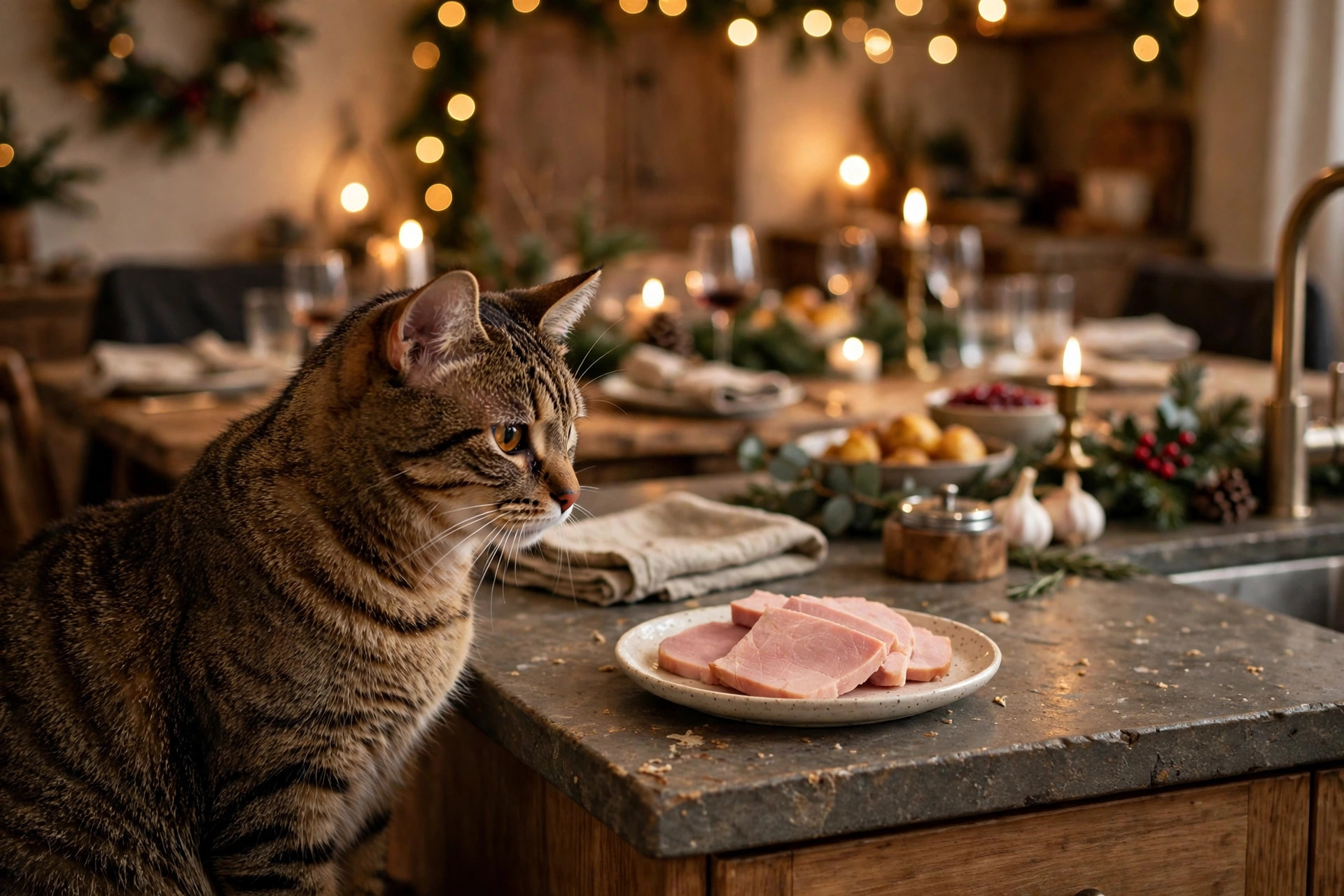
Can cats eat ham? Yes, a tiny piece of plain cooked ham is not acutely toxic for cats, but that does not make it a good food for them. Ham is very salty and high in fat, and most holiday ham is cured, glazed or seasoned. An occasional thumbnail-sized piece of plain, unseasoned ham is unlikely to harm a healthy adult cat, but it should never become a regular treat, and some cats should not have it at all.
Key Facts
- Short answer: Yes, in a tiny amount — but it is not a healthy food for cats
- Main problem: Ham is very high in salt and fat
- Toxic? Plain cooked ham is not acutely toxic, unlike chocolate or xylitol
- Avoid: Cured, smoked, honey-glazed or heavily seasoned ham, and any ham with onion, garlic or bones
- Safe portion: A thumbnail-sized piece of plain cooked ham, occasionally
- If your cat eats a lot: Watch for vomiting, diarrhoea or excessive thirst, and call your vet if symptoms appear
- Better choice: Plain cooked turkey or chicken with no skin, seasoning or bones
Why Ham Is Not a Good Food for Cats
Cats are obligate carnivores, which means they need meat — but the right kind, in the right balance. A cat’s body is built to process fresh, lean animal protein, and its diet should be built around complete cat food. Ham does not fit that picture: it is a processed meat, and processing is where the problems start. The biggest issue is salt — a single slice can contain a large share of a cat’s daily sodium tolerance, and too much salt causes excessive thirst and urination, worse still for cats with kidney or heart problems. Fat is the second problem: a rich, fatty meal can upset a cat’s stomach and, in some cats, trigger pancreatitis, a painful inflammation of the pancreas.
Holiday ham adds further risks. Most festive hams are cured with salt or nitrates, smoked, or coated in a honey or brown-sugar glaze, which adds sugar cats do not need. Seasonings are another concern: garlic and onion, sometimes rubbed on a ham, are toxic to cats. Even the cooking juices concentrate salt and fat. A single small piece of plain ham is not an emergency — but ham is a poor choice as a treat, and the fancier the ham, the worse it gets.
What Kind of Ham Is Safest — and What to Avoid
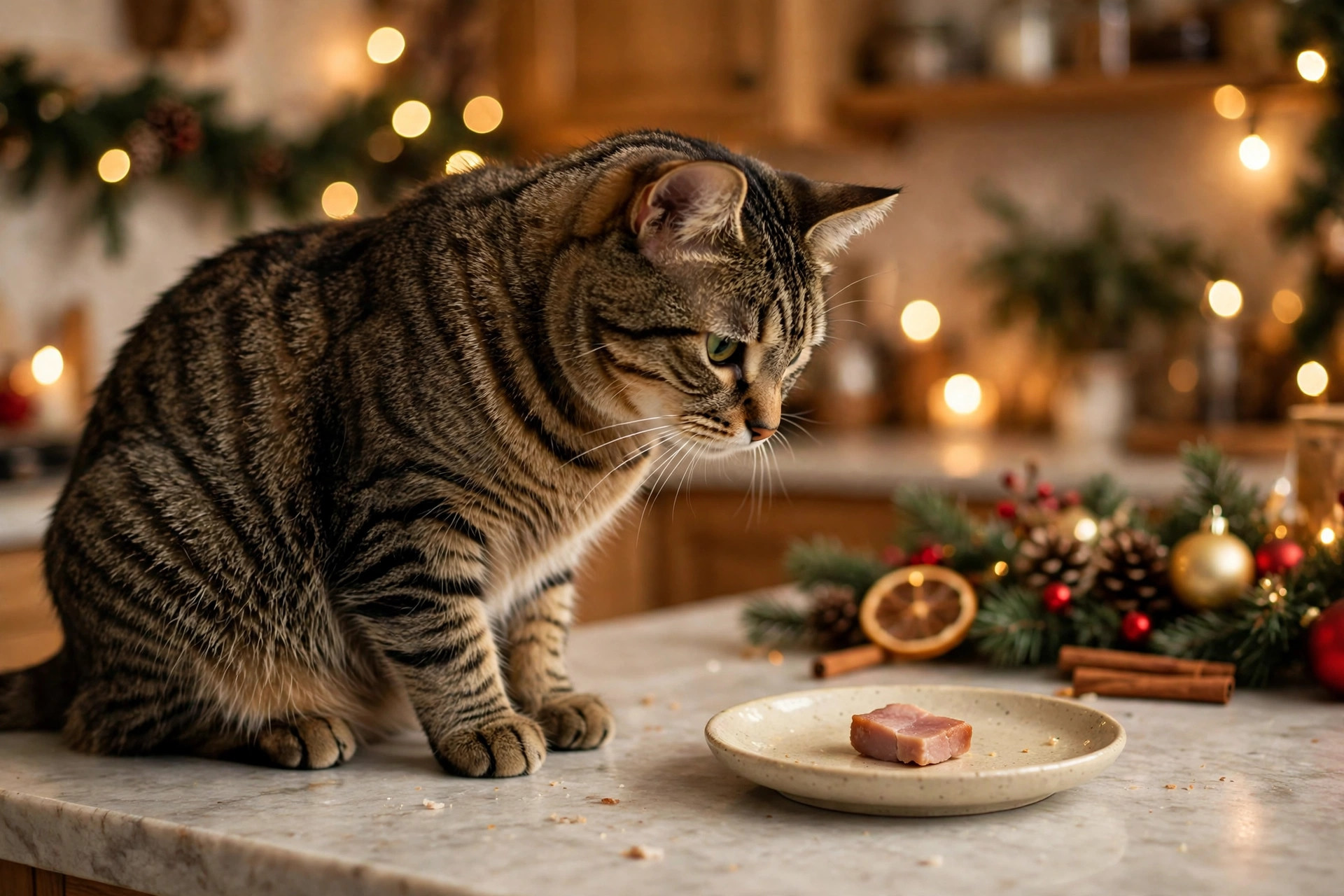
If you do share a piece, the type of ham matters a great deal. Plain, cooked, unseasoned ham is the least risky option, served in a tiny piece with any visible fat trimmed off, at room temperature rather than straight from the fridge.
Avoid cured and deli ham where you can — these are usually the saltiest varieties, and they often contain preservatives and added sugar. Honey-glazed, maple-glazed and brown-sugar hams are worse still, because the sweet coating adds sugar on top of the salt.
Never give your cat ham with bones, and never give ham seasoned with garlic, onion or chives — these alliums are toxic to cats and can damage red blood cells. Cooked bones can splinter and injure the mouth or gut. Also skip any ham that has been sitting out for hours, or that has touched stuffing, gravy or other seasoned dishes.
Raw ham is not safe either — raw or undercooked pork can carry bacteria and parasites, so only offer ham that is fully cooked. And “a little” really means a little: a piece about the size of your thumbnail is plenty.
How Much Ham Can a Cat Eat?
There is no official safe daily amount for ham, because ham is not part of a balanced cat diet. The practical rule is simple: a thumbnail-sized piece of plain cooked ham, offered occasionally, is unlikely to harm a healthy adult cat — once in a while, not every day, and not as a replacement for proper cat food.
Treats of any kind should make up no more than about a tenth of your cat’s daily calories. A cat that fills up on ham will eat less of its balanced food, and over time that can lead to weight gain and nutrient gaps. Kittens, elderly cats, and cats with kidney disease, heart disease, diabetes or a sensitive stomach should not be given ham at all.
What to Do If Your Cat Eats Too Much Ham
Most cats that eat a large piece of ham will be fine, but watch them closely for the next day or two. The most common signs of trouble are vomiting, diarrhoea, a loss of appetite, drinking far more water than usual, or seeming unusually tired. A cat straining to urinate, or in pain around the belly, should be seen by a vet promptly.
If the ham contained garlic, onion or chives, or if your cat ate a large amount of very salty ham, call your vet rather than waiting. Garlic and onion poisoning can take a day or two to show, and the signs — pale gums, weakness, rapid breathing — need veterinary care.
Do not try to make your cat vomit at home unless a vet tells you to. Offer fresh water, keep the cat comfortable and indoors, and watch appetite, litter tray habits and energy. Most mild stomach upsets settle within a day, but anything lasting longer deserves a vet visit.
The U.S. Food and Drug Administration publishes a list of potentially dangerous items for your pet, covering foods and household items that can harm cats and dogs.
Holiday Foods Cats Should Avoid
Ham is not the only festive food that causes problems for cats. The holiday table is full of dishes that are harmless to people but risky for a cat.
Turkey is usually the safest festive meat for cats, as long as it is plain. Our guide on whether cats can eat turkey explains which parts are safe — plain cooked meat with no skin, bones or seasoning. Our guide to whether cats can eat cranberries covers the difference between plain cranberries and sweetened sauce.
Chocolate, which appears in many Christmas desserts, is toxic to cats, and so are grapes, raisins, currants and sultanas — the dried fruit in mince pies and Christmas pudding. Stuffing often contains onion and garlic, both toxic to cats. Gravy is very salty and fatty, and many desserts contain xylitol, a sweetener that is dangerous for pets. Alcohol is also toxic to cats, even in small amounts. The safest approach is to keep your cat’s food routine unchanged and give any festive treat in a separate small bowl, away from the table.
Better Holiday Treats for Your Cat
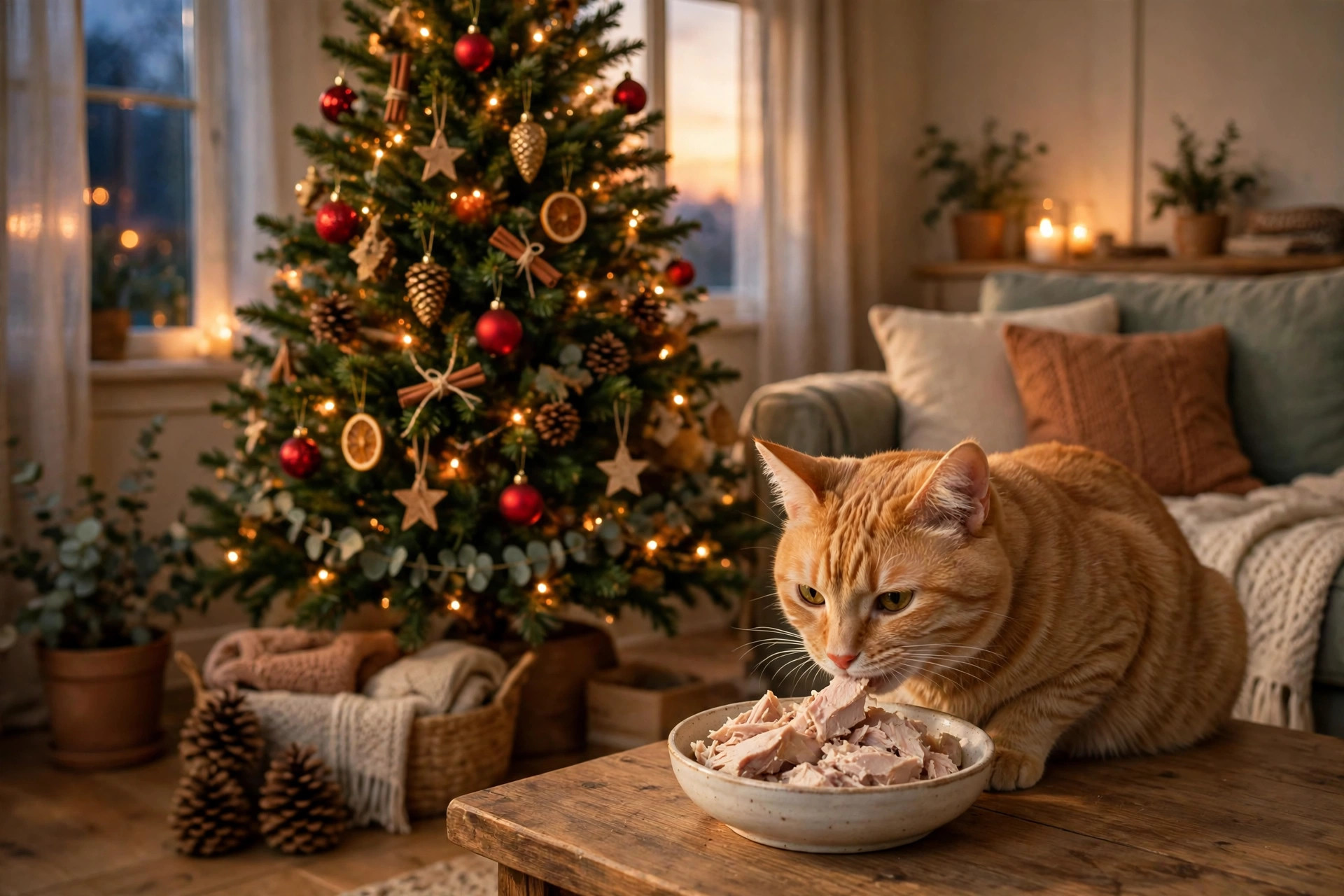
Your cat does not need ham to enjoy the holidays. A small piece of plain cooked turkey or chicken, with no skin, bones or seasoning, is the best festive treat for a cat. It is lean and easy to digest. A spoonful of plain cooked pumpkin or a few pieces of plain cooked carrot can also work, though not every cat will be interested.
You can also make the day special without food. A new toy, a cardboard box, a warm spot by the fire, or a little extra playtime will please most cats more than a piece of ham. If you want to give a food gift, look for treats made specifically for cats — they are balanced for a cat’s needs and carry none of ham’s salt and fat problems. For dog owners, our guide on whether dogs can eat ham covers the risks for dogs.
Frequently Asked Questions
Can cats eat deli ham?
Deli ham is one of the worst choices. It is usually very salty, often contains preservatives and added sugar, and is sometimes flavoured. A tiny piece is unlikely to cause serious harm, but deli ham should not be given as a treat.
Can cats eat ham bones?
No. Cooked bones can splinter and injure a cat’s mouth, throat or gut. Never give your cat a ham bone, and keep bones out of reach while you are carving.
Is ham toxic to cats?
Plain cooked ham is not acutely toxic in the way chocolate or onion are, but it is very salty and fatty, and it is not a healthy food for cats. Ham seasoned with garlic or onion is a different matter — those seasonings are toxic to cats.
Can kittens eat ham?
No, kittens should not be given ham. Kittens need a complete kitten food for proper growth, and their small bodies are more sensitive to salt and fat. Stick to food made for kittens.
How much ham is safe for a cat?
A piece about the size of your thumbnail, of plain cooked ham, offered occasionally, is unlikely to harm a healthy adult cat. It should never be a daily treat or a replacement for proper cat food. Cats with kidney, heart or weight problems should not have ham at all.
Can cats eat honey-glazed ham?
Honey-glazed ham is best avoided. The glaze adds sugar on top of the salt, and the ham underneath is usually cured and salty. If your cat eats a small piece by accident, watch for an upset stomach, but do not offer glazed ham as a treat.
Leave a Reply