
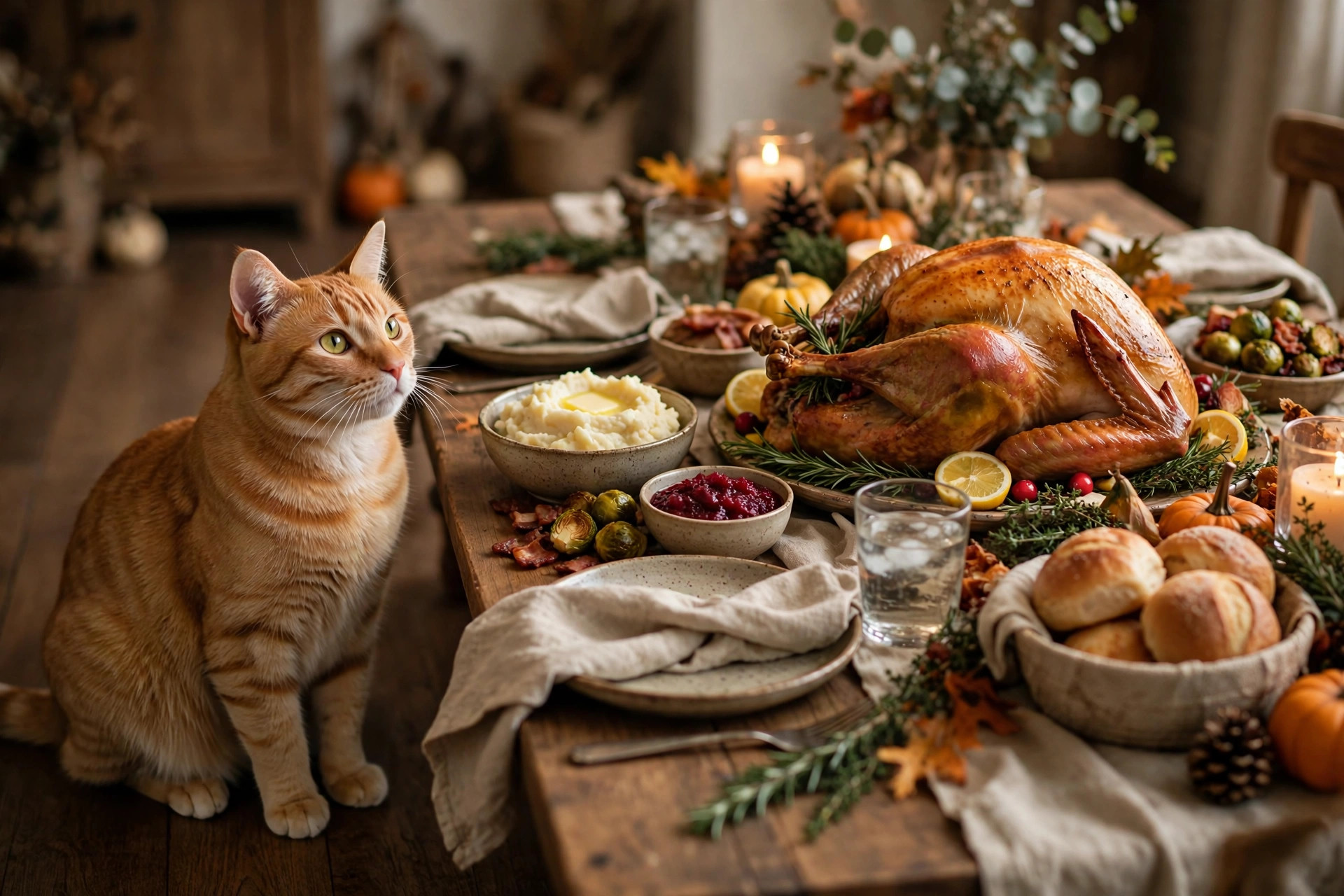
Yes — can cats eat turkey? In short, plain, cooked turkey in small amounts is generally considered safe for most healthy adult cats. It is a lean source of protein, and many cats enjoy the taste. The important detail is the kind of turkey you offer: a few shreds of unseasoned, boneless, skinless turkey are very different from holiday turkey covered in gravy, butter, herbs, and seasoning. Keep the portion small, remove skin and bones, and skip anything seasoned, and turkey can be an occasional treat.
Key Facts
- Plain, cooked, boneless, skinless turkey in small amounts is generally safe for healthy adult cats.
- Skin, bones, gravy, butter, and seasoning are not safe for cats.
- Onion and garlic are toxic to cats and must be avoided entirely.
- Treats, including turkey, should be no more than about 10% of daily calories.
- Raw turkey risks harmful bacteria; deli turkey is usually too salty and processed.
- Kittens, older cats, and cats with health conditions need extra caution — ask your vet first.
What Kind of Turkey Is Safe for Cats?
The safest turkey for a cat is simple: cooked through, plain, boneless, and skinless, served in small, soft pieces. Boiled, steamed, or roasted turkey with nothing added is best. Let it cool first, and shred it into small pieces. Cats are obligate carnivores, so meat is natural for them, but that does not mean any turkey from your plate is suitable. If it has been seasoned, sauced, or cooked with anything other than plain heat, do not share it. Offer only meat set aside before seasoning, or cook a small separate portion with nothing added.
Plain vs Seasoned Turkey
Plain turkey is just meat; seasoned turkey may contain ingredients that are harmless to people but dangerous for cats. Onion and garlic are the biggest concern. Both are toxic to cats, even in small amounts and even when cooked or powdered. They can damage red blood cells and lead to anaemia, and symptoms may not appear straight away. Chives, leeks, and shallots belong to the same family and should also be avoided.
Gravy is another common problem. It is often made with meat drippings, flour, salt, onion, and garlic, and it is high in fat. Fatty food can upset a cat’s stomach and, in larger amounts, may contribute to pancreatitis. Turkey served with gravy, butter, or pan juices should therefore stay off your cat’s plate. As with other pets, the same caution applies: our guide on whether dogs can eat turkey makes the same point about seasoned leftovers.
White Meat vs Dark Meat
Both white and dark meat can be offered, provided they are plain, cooked, boneless, and skinless. The difference is fat: white meat from the breast is leaner, while dark meat from the legs and thighs is richer. For most cats, white meat is the better choice, especially with weight gain or a sensitive stomach. Dark meat is not forbidden, but give it in even smaller amounts, with all visible fat trimmed away. Remove the skin first — it is high in fat and often seasoned.
How Much Turkey Can a Cat Eat?
As a general guide, treats should make up no more than about 10% of a cat’s daily calories, and turkey counts as a treat when given on top of normal food. For an average adult cat, that means a tablespoon or so of shredded turkey at most, and less for smaller cats. Start with a tiny amount and watch how they respond over the next day.
Turkey should be an occasional extra, not a daily addition. Given too often or in large amounts, it can unbalance your cat’s diet, add unwanted calories, and cause stomach upset. A complete cat food provides nutrients cats need, including taurine, which plain turkey alone does not. If your cat has a sensitive stomach, is overweight, or is on a restricted diet, check with your vet first. The same principle applies to other human foods: our guide on whether dogs can eat cheese shows how a seemingly harmless food can still be unsuitable in larger amounts.

Kittens, Older Cats and Cats with Health Conditions
Kittens need a diet formulated for growth, so a tiny taste of plain cooked turkey is unlikely to harm a fully weaned kitten, but it offers no benefit beyond kitten food and should not displace regular meals. If your kitten is very young or unwell, skip the extras. Older cats may have sensitive digestion, dental problems, or conditions such as kidney disease, diabetes, or pancreatitis, for which even plain turkey may not be appropriate or the portion may need to be very small. If your cat has an ongoing condition, takes medication, or follows a special diet, ask your vet first. Introduce any new food slowly, as it can still trigger vomiting, diarrhoea, or itchy skin.
Raw Turkey: Why It Is a Risk
Raw turkey should not be fed to cats. Raw poultry can carry harmful bacteria such as Salmonella and Campylobacter, as well as parasites, and cats can become ill from them just as people can. Handling raw meat also spreads bacteria to bowls and surfaces. Cooking turkey thoroughly kills most harmful organisms and makes it safer and easier to digest, so always cook it until fully done, with no pink meat. Do not share meat left out at room temperature for a long time. If your cat steals raw turkey, watch for vomiting, diarrhoea, or lethargy, and contact your vet if symptoms appear.
Deli and Processed Turkey
Deli slices, smoked turkey, and turkey ham are a poor choice for cats. They are usually high in salt, and many contain preservatives, flavour enhancers, and added sugar. Too much salt can cause thirst and stomach upset and, in larger amounts, more serious problems, particularly for cats with kidney or heart conditions. Processed meats may also contain onion or garlic powder, even when the label does not make it obvious. There is no nutritional reason to offer deli turkey when plain cooked turkey is safer, so skip the treat if plain turkey is not available.
What to Do If Your Cat Eats Seasoned Turkey or Bones
If your cat eats seasoned turkey, work out what was in it and how much they ate. If onion, garlic, chives, or leeks were involved, contact your vet promptly, even if your cat seems fine — symptoms of onion and garlic toxicity can be delayed. Do not try to make your cat vomit unless your vet specifically tells you to. Cooked bones carry a different risk: they can splinter and injure the mouth, throat, or digestive tract, or cause a blockage. Watch for drooling, gagging, vomiting, difficulty swallowing, or blood in vomit or stool, and contact your vet straight away if any appear. For fatty food such as skin or gravy, the usual result is stomach upset; withhold further treats and call your vet if symptoms persist.
Warning Signs to Watch For
After any new food, watch your cat for a day or so. Most reactions are mild and pass quickly, but contact your vet if you notice vomiting or diarrhoea lasting more than a day, blood in vomit or stool, difficulty breathing, swelling of the face or mouth, extreme lethargy, weakness, collapse, pale gums, persistent loss of appetite, or signs of pain such as hiding or reluctance to move. Pale gums and lethargy after possible onion or garlic exposure can signal anaemia. Breathing difficulty, swelling, or collapse needs urgent care.
A Safe Thanksgiving for Your Cat
Thanksgiving is when this question comes up most, and when risks are highest — not because turkey itself is dangerous, but because holiday cooking involves so much seasoning, fat, and rich food. Plan ahead: before seasoning the bird, set aside a small piece of plain meat and keep it separate. Feed your cat’s regular food at the usual time, offer the plain turkey as a small extra afterwards, and remind guests not to share food from their plates. Holiday hazards go beyond food, too: our cat-specific guide on whether roses are toxic to cats is a reminder that not every festive decoration is harmless.
Frequently Asked Questions
Can cats eat turkey every day?
No — keep it an occasional treat, within about 10% of daily calories, using only small amounts of plain, cooked, boneless, skinless meat.
Can cats eat turkey skin?
No. It is high in fat, often seasoned, and may contribute to pancreatitis, so always remove it first.
Can cats eat turkey bones?
No. Cooked bones can splinter and cause injury or blockage. Always serve turkey completely boneless.
Can cats eat deli turkey slices?
Not recommended: it is usually high in salt and may contain preservatives or onion and garlic powder.
Can kittens eat turkey?
Once fully weaned, a tiny taste is unlikely to harm a kitten, but it should not replace kitten food.
What should I do if my cat eats seasoned turkey?
Work out the seasonings and amount eaten. If onion, garlic, chives, or leeks were present, contact your vet promptly, even if your cat seems well.
This article provides general information only and is not veterinary advice. If your cat has a health condition, is on medication, or shows worrying symptoms after eating turkey, consult your vet.
Leave a Reply