
These Christmas cookie recipes are the twelve classics, written out in full — real ingredients, real steps, and the decorating and troubleshooting know-how that makes them turn out right the first time. No shortcuts, no “just buy the dough” — if you can cream butter and sugar, you can bake every cookie on this list. If you want the quick version instead, our easy Christmas cookies guide covers 25 simple recipes for busy bakers.

Key Facts
- The twelve: gingerbread, sugar cookies, snickerdoodle, shortbread, thumbprint, chocolate crinkle, peanut butter blossoms, spritz, molasses, Russian tea cakes, peppermint bark, and Linzer.
- Skill level: beginner-friendly — every recipe uses one bowl, one pan, and pantry staples.
- Time: most batches take 30–45 minutes including chilling; plan a weekend afternoon for all twelve.
- Make-ahead: dough freezes up to 3 months; baked cookies keep 1 week airtight, 3 months frozen.
- The rule that matters most: chill the dough. Cold dough spreads less, holds its shape, and bakes evenly.
Quotable: “A Christmas cookie is not judged by how fancy it looks — it is judged by whether anyone reaches for a second one.”
1. Gingerbread Men
The cookie that smells like December. Molasses and warm spices give these their deep color and snap, and the dough is sturdy enough for cutters and decorating.
Ingredients: 3 cups flour, 1 tsp baking soda, 1 tsp ground ginger, 1 tsp cinnamon, 1/4 tsp cloves, 1/4 tsp salt, 3/4 cup softened butter, 3/4 cup brown sugar, 1 egg, 1/2 cup molasses, 1 tsp vanilla.
Steps: 1) Whisk the dry ingredients. 2) Cream butter and brown sugar, then beat in the egg, molasses, and vanilla. 3) Mix in the dry ingredients until a soft dough forms. 4) Chill 1 hour, roll to 1/4 inch, cut shapes, and bake at 350°F for 8–10 minutes. Cool before decorating — warm gingerbread cracks under icing.
2. Classic Sugar Cookies (with Royal Icing)
The decorating canvas. This dough rolls clean, holds sharp edges, and dries flat enough for detailed icing work.
Ingredients: 2 3/4 cups flour, 1 tsp baking powder, 1/2 tsp salt, 1 cup softened butter, 1 1/2 cups sugar, 1 egg, 2 tsp vanilla, 1/2 tsp almond extract (optional).
Steps: 1) Whisk flour, baking powder, and salt. 2) Cream butter and sugar until fluffy, then add the egg and extracts. 3) Mix in the dry ingredients just until combined. 4) Chill 1 hour, roll to 1/4 inch, cut, and bake at 350°F for 8–11 minutes — pull them out when the edges are barely set. They finish on the pan.

3. Snickerdoodles
Crackly cinnamon-sugar tops, soft centers, and a faint tang from cream of tartar. The easiest crowd-pleaser on this list.
Ingredients: 2 3/4 cups flour, 2 tsp cream of tartar, 1 tsp baking soda, 1/2 tsp salt, 1 cup softened butter, 1 1/2 cups sugar, 2 eggs, 1 tsp vanilla, 1/4 cup sugar + 1 tbsp cinnamon for rolling.
Steps: 1) Whisk the dry ingredients. 2) Cream butter and sugar, add eggs and vanilla. 3) Mix in the dry ingredients. 4) Roll dough into balls, coat in cinnamon sugar, and bake at 375°F for 10–12 minutes. Do not overbake — the centers should look slightly underdone when they come out.
4. Shortbread
Three ingredients, infinite patience. Real shortbread is butter, sugar, and flour — nothing else — and the texture comes from handling it as little as possible.
Ingredients: 2 cups flour, 1 cup softened butter, 1/2 cup powdered sugar, 1/4 tsp salt.
Steps: 1) Beat butter and powdered sugar until smooth. 2) Mix in flour and salt just until a dough forms — stop the moment it comes together. 3) Press into a pan or roll and cut, prick with a fork, and chill 30 minutes. 4) Bake at 325°F for 20–25 minutes until the edges are pale gold. Cool completely before cutting.
5. Jam Thumbprints
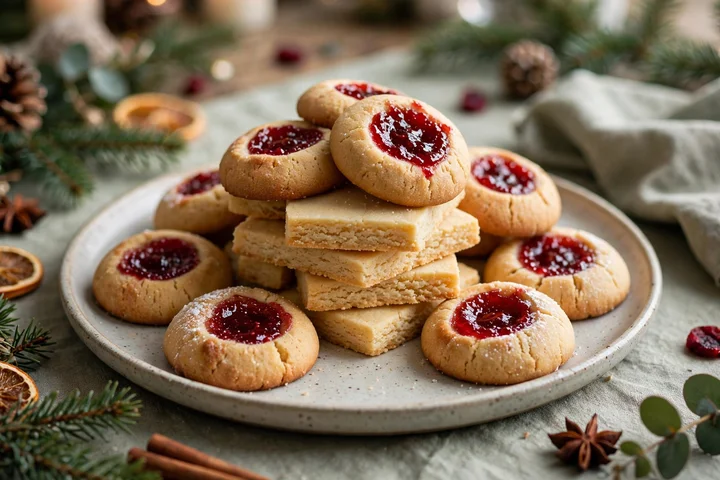
Buttery, nutty, and jewel-bright. The thumbprint is the whole point — press firmly, or the jam will not sit.
Ingredients: 1 cup softened butter, 2/3 cup sugar, 2 egg yolks, 1 tsp vanilla, 2 1/4 cups flour, 1/2 tsp salt, 1 egg white (beaten), 1 cup finely chopped nuts, 1/2 cup jam.
Steps: 1) Cream butter and sugar, add yolks and vanilla, then flour and salt. 2) Roll into balls, dip in egg white, roll in nuts. 3) Press a thumbprint deep into each ball and fill with jam. 4) Bake at 350°F for 12–14 minutes. Any jam works — raspberry and apricot are the classics.
6. Chocolate Crinkles
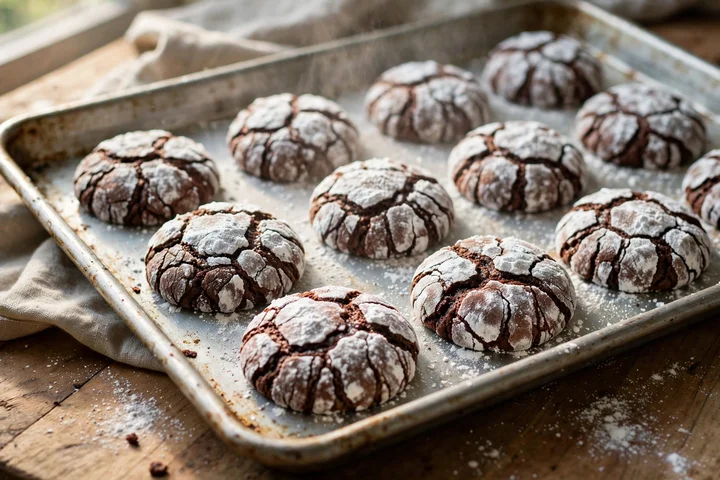
Dark, fudgy, and dramatic. The crackled white top comes from rolling the dough balls in powdered sugar before baking — the sugar splits as the cookie spreads.
Ingredients: 1 cup cocoa powder, 2 cups sugar, 1/2 cup vegetable oil, 4 eggs, 2 tsp vanilla, 2 cups flour, 2 tsp baking powder, 1/2 tsp salt, 1/2 cup powdered sugar for rolling.
Steps: 1) Mix cocoa, sugar, and oil, then beat in eggs and vanilla. 2) Stir in flour, baking powder, and salt. 3) Chill the dough at least 2 hours — this step is not optional; warm dough will not crinkle. 4) Roll into balls, coat thickly in powdered sugar, and bake at 350°F for 10–12 minutes.
7. Peanut Butter Blossoms
The cookie with the chocolate kiss on top. Kids love making these, and they disappear faster than any other cookie on the tray.
Ingredients: 1 3/4 cups flour, 1 tsp baking soda, 1/2 tsp salt, 1/2 cup softened butter, 1/2 cup peanut butter, 1/2 cup sugar, 1/2 cup brown sugar, 1 egg, 1 tsp vanilla, 1/4 cup sugar for rolling, 24 chocolate kisses.
Steps: 1) Whisk the dry ingredients. 2) Cream butter, peanut butter, and both sugars, then add egg and vanilla. 3) Mix in the dry ingredients, roll into balls, coat in sugar, and bake at 375°F for 8–10 minutes. 4) Press a chocolate kiss into the center of each cookie the second it comes out of the oven — the heat melts the base just enough to stick.
8. Spritz Cookies
Buttery, delicate, and pressed into shapes. A cookie press does the work, and the designs — trees, wreaths, snowflakes — look far harder than they are.
Ingredients: 1 cup softened butter, 2/3 cup sugar, 1 egg, 1 tsp vanilla, 1/2 tsp almond extract, 2 1/4 cups flour, 1/4 tsp salt, colored sugar or sprinkles.
Steps: 1) Cream butter and sugar, add egg and extracts. 2) Mix in flour and salt until a soft dough forms. 3) Load into a cookie press and press shapes onto ungreased baking sheets — the dough must grip the pan, so do not use parchment here. 4) Decorate with colored sugar and bake at 375°F for 8–10 minutes.
9. Molasses Cookies
Soft, chewy, and deeply spiced — the cookie for people who think gingerbread is too crisp. The cracked sugar top is the signature.
Ingredients: 2 1/4 cups flour, 2 tsp baking soda, 1 tsp ginger, 1 tsp cinnamon, 1/2 tsp cloves, 1/4 tsp salt, 3/4 cup softened butter, 1 cup sugar, 1 egg, 1/4 cup molasses, 1/4 cup sugar for rolling.
Steps: 1) Whisk the dry ingredients. 2) Cream butter and sugar, add egg and molasses. 3) Mix in the dry ingredients and chill 30 minutes. 4) Roll into balls, coat in sugar, and bake at 375°F for 9–11 minutes. They will look puffy and cracked — that is exactly right.
10. Russian Tea Cakes (Snowballs)
Melt-in-your-mouth shortbread balls rolled in powdered sugar. No eggs, no leavening, five ingredients — and somehow the most elegant cookie on the tray.
Ingredients: 1 cup softened butter, 1/2 cup powdered sugar, 1 tsp vanilla, 2 1/4 cups flour, 1/4 tsp salt, 3/4 cup finely chopped pecans or walnuts, extra powdered sugar for rolling.
Steps: 1) Cream butter, powdered sugar, and vanilla. 2) Mix in flour, salt, and nuts. 3) Roll into 1-inch balls and bake at 400°F for 10–12 minutes. 4) Roll in powdered sugar while warm, cool, then roll again — the double coat is what makes them look like snowballs.
11. Peppermint Bark Cookies
Chocolate cookies studded with crushed candy cane and drizzled with white chocolate. They taste like a candy shop and take fifteen minutes.
Ingredients: 1 1/2 cups flour, 1/2 cup cocoa powder, 1 tsp baking soda, 1/4 tsp salt, 3/4 cup softened butter, 1 cup sugar, 1 egg, 1 tsp vanilla, 1/2 cup crushed candy canes, 1/2 cup white chocolate chips (melted, for drizzling).
Steps: 1) Whisk the dry ingredients. 2) Cream butter and sugar, add egg and vanilla, then mix in the dry ingredients and half the crushed candy. 3) Drop by spoonfuls and bake at 350°F for 9–11 minutes. 4) Drizzle with melted white chocolate and sprinkle with the remaining candy while the drizzle is wet.
12. Linzer Cookies
The showpiece. Two jam-filled sandwich cookies with a cut-out window on top — they look bakery-bought and take one extra step: a small cutter for the center.
Ingredients: 2 cups flour, 1 tsp baking powder, 1/4 tsp salt, 1 cup softened butter, 2/3 cup sugar, 1 egg yolk, 1 tsp vanilla, 1 cup finely ground almonds, 1/2 cup raspberry jam, powdered sugar for dusting.
Steps: 1) Whisk flour, baking powder, and salt. 2) Cream butter and sugar, add yolk and vanilla, then mix in the dry ingredients and almonds. 3) Chill 1 hour, roll to 1/8 inch, and cut equal numbers of solid rounds and rounds with a small center cut-out. 4) Bake at 350°F for 10–12 minutes, cool, spread jam on the solid rounds, sandwich with the cut-out rounds, and dust with powdered sugar.
Baking Science: Why Cookies Fail (and How to Fix Them)
Most cookie failures have one cause, and it is almost never the recipe. The biggest variable is butter temperature: butter that is too soft makes cookies spread into flat discs, while butter straight from the fridge never creams properly and leaves dense, heavy cookies. The target is cool room temperature — butter that yields to a finger but still holds its shape. If your kitchen runs warm, chill the shaped dough for 15 minutes before baking; it is the single most reliable fix in this whole guide.
Spreading also comes from too little flour or a hot pan. Measure flour by spooning it into the cup and leveling it off — scooping packs in up to 30 percent extra, which sounds like a lot until your cookies come out dry and cakey. And never put dough on a warm baking sheet; the butter melts before the structure sets. Rotate pans halfway through, and remember that cookies finish baking on the hot pan after you pull them out — taking them out when they look slightly underdone is correct, not a mistake. For food safety basics around raw dough and eggs, the FoodSafety.gov guidance on safe baking and storage is the authority to check before you start.
Royal Icing & Decorating: The Finish That Sells the Cookie
Royal icing is powdered sugar, egg white (or meringue powder), and a little water — and the entire skill is consistency. Flood consistency (thin, like honey) fills a cookie smoothly; piping consistency (thick, like toothpaste) draws outlines and details. Outline first with the thick icing, let it set for a few minutes, then flood the inside with the thin icing and use a toothpick to guide it to the edges. Work one cookie at a time and let each layer dry before adding the next, or the colors will bleed into each other.
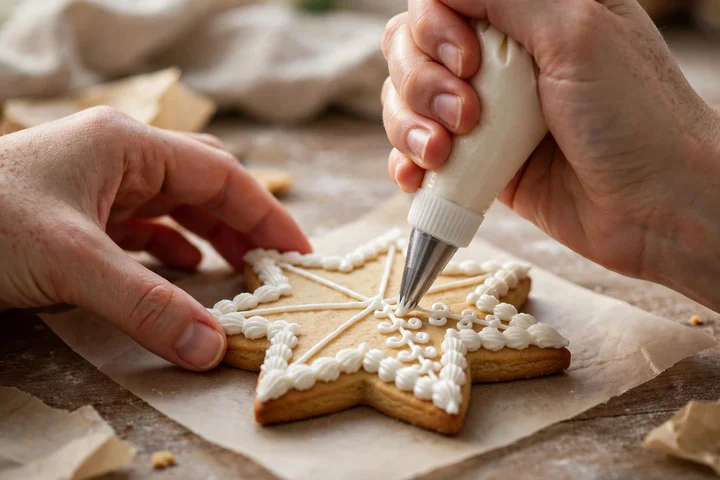
Color with gel food coloring, not liquid — liquid coloring thins the icing and changes the consistency you just worked to get right. A few drops go a long way, and colors deepen as they dry, so mix lighter than you think you need. Sprinkles go on while the icing is wet; anything added after it dries will slide off. And if an icing bag bursts or a line wobbles, scrape it off and start again — royal icing forgives everything except impatience.
Make-Ahead & Freezing: Bake in December Without the Rush
Almost every dough on this list freezes beautifully for up to 3 months. Shape the dough into balls or logs, wrap tightly in plastic, and label with the recipe name and baking temperature — unlabeled frozen dough is a mystery nobody solves. Bake straight from frozen, adding 1–2 minutes to the bake time. Baked cookies keep a week in an airtight container at room temperature and 3 months in the freezer; freeze them in a single layer first, then stack with parchment between layers so they do not crush each other.
Decorated cookies need one extra rule: freeze them undecorated. Royal icing survives the freezer, but condensation on thawing can dull colors and soften details. Thaw at room temperature in the closed container so moisture stays out, then decorate the day you serve them. A smart schedule is one dough a day for a week, baking on the weekend, and decorating the night before the party — the same party where these cookies belong on the dessert table next to the Christmas dinner menu and the Christmas appetizers.
Gifting & Packaging: Cookies People Actually Keep
A cookie tin is only as good as its packing. Line the tin with parchment, layer cookies flat with parchment between layers, and put the sturdiest cookies on the bottom — shortbread and gingerbread travel well, while anything iced or delicate goes on top. Tuck a small silica packet or a slice of bread in the box (the bread keeps soft cookies soft for an extra day, then remove it). Include a card with the cookie names and any allergen notes — nuts, gluten, dairy — because a thoughtful gift is also a safe one.

For gifting, mix textures and colors in every box: one chocolate, one spiced, one iced, one nutty. Six to eight cookies per box feels generous without being wasteful, and a ribbon around the tin matters more than the tin itself. If you are mailing cookies, choose the sturdiest recipes, wrap each cookie individually, and ship early in the week so the box does not sit in a warehouse over the weekend.
Frequently Asked Questions
Which Christmas cookie is easiest for beginners?
Snickerdoodles and molasses cookies. Both are one-bowl doughs, forgiving about timing, and they look right even when they are slightly imperfect.
Why do my cookies spread flat?
Usually butter that was too warm, dough that was not chilled, or a hot baking sheet. Chill shaped dough 15 minutes before baking and always start on a cool pan.
Can I make Christmas cookie dough ahead?
Yes — refrigerate up to 3 days or freeze up to 3 months. Bake frozen dough straight from the freezer, adding 1–2 minutes.
How long do decorated cookies last?
Royal-iced cookies keep about a week in an airtight container at room temperature. Freeze them undecorated and ice them the day you serve them.
What is the best flour for Christmas cookies?
All-purpose flour. Bread flour makes cookies tough, and cake flour makes them too delicate to hold a shape.
Do I need a cookie press for spritz cookies?
Yes, a press is the tool — the dough is too soft to roll and cut. A basic press is inexpensive and lasts for years.
Can I freeze baked Christmas cookies?
Yes, up to 3 months. Freeze in a single layer first, then stack with parchment between layers in an airtight container.
Is it safe to eat raw cookie dough?
No — raw flour and raw eggs can carry bacteria. Bake the dough fully, and keep raw dough away from children who want a taste.

Leave a Reply