
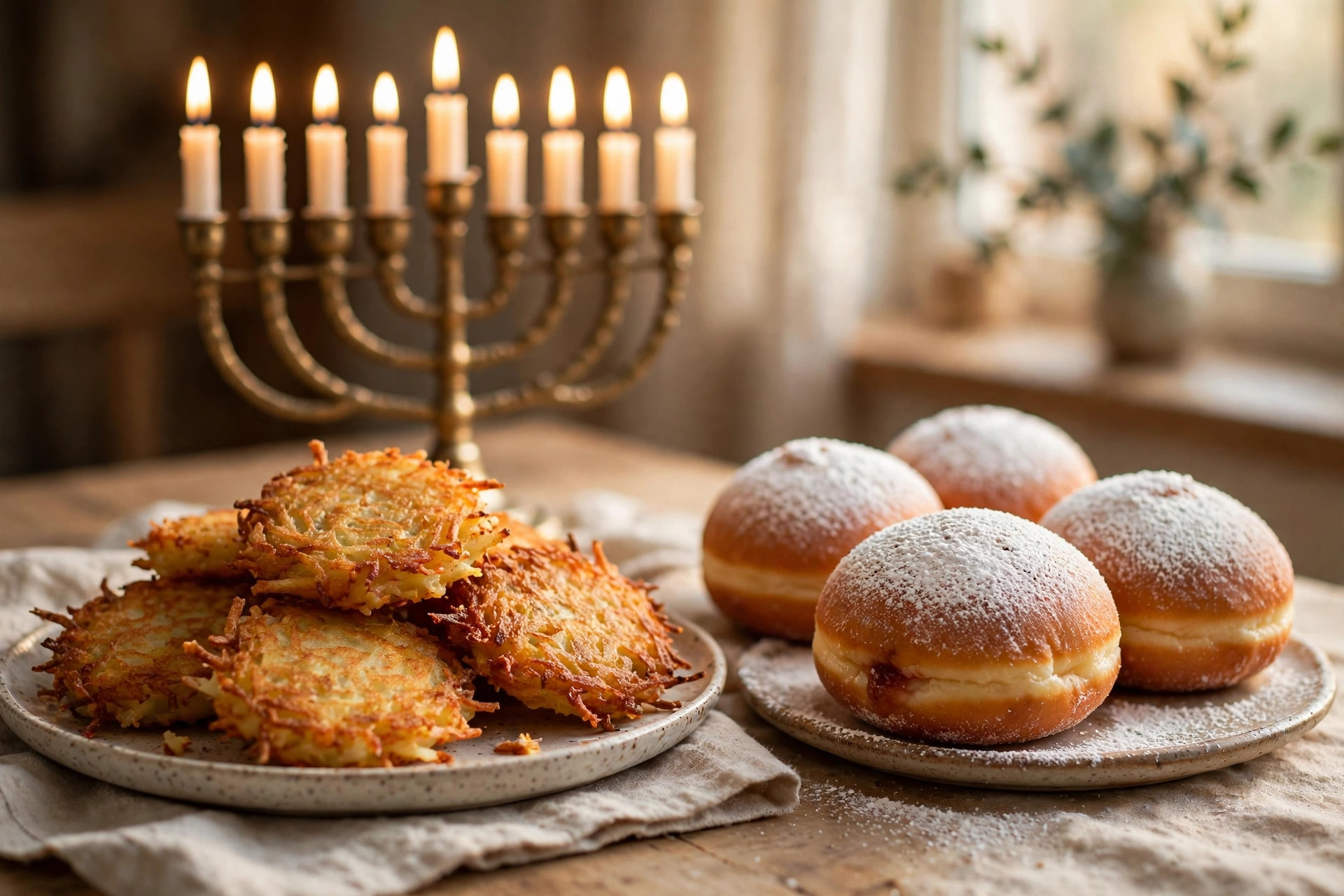
Hanukkah, the Festival of Lights, is celebrated with food that tells the story of the holiday. Hanukkah traditional foods are rich, comforting and full of meaning: dishes fried in oil recall the miracle of the oil that burned for eight days in the Temple in Jerusalem, while dairy foods honour the story of Judith. In 2026, Hanukkah runs from Friday 4 December to Saturday 12 December, and families gather each evening to light the menorah, play dreidel and share a meal. Whether you are celebrating Hanukkah for the first time or looking to deepen your own family traditions, this guide explains the classic dishes, what they mean, and how to serve them.
Key Facts
- Hanukkah 2026 runs from Friday 4 December to Saturday 12 December.
- Foods fried in oil, such as latkes and sufganiyot, recall the miracle of the oil that burned for eight days.
- Dairy foods honour Judith, who is said to have saved her village with cheese and wine.
- Latkes are crispy potato pancakes, traditionally served with sour cream or apple sauce.
- Sufganiyot are jelly-filled doughnuts, dusted with icing sugar.
- Brisket, roast chicken and kugel are classic main dishes for a Hanukkah dinner.
Latkes: The Star of the Hanukkah Table
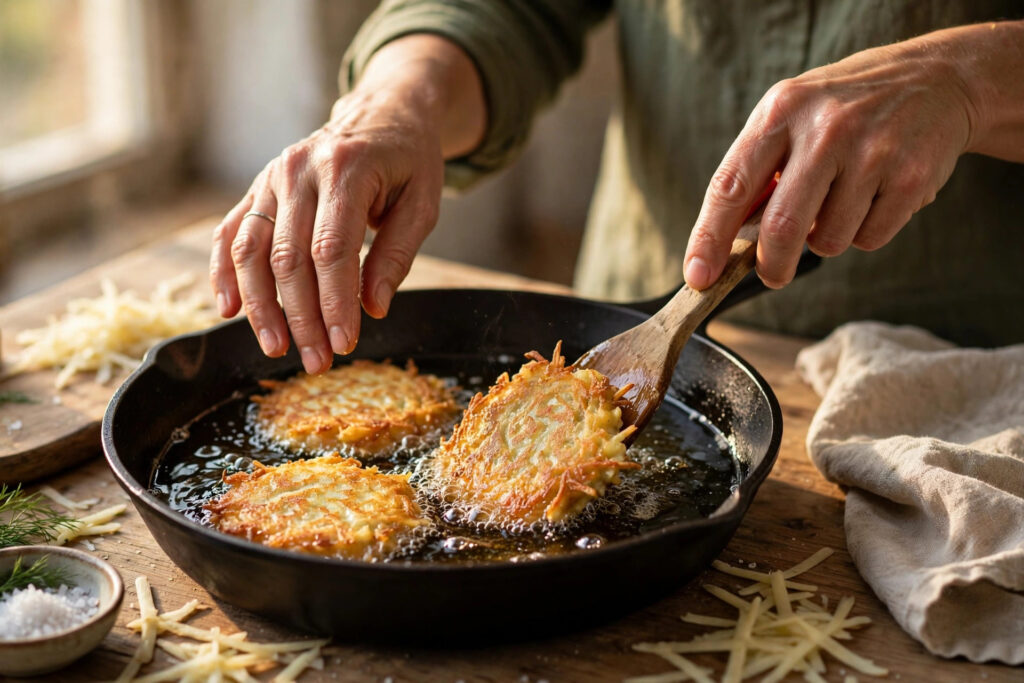
No Hanukkah meal is complete without latkes. These crispy potato pancakes, made from grated potato, onion, egg and a little flour, are fried in hot oil until golden and served straight from the pan with sour cream or apple sauce. The sizzle of the oil and the smell of frying potatoes are part of the celebration itself. For a step-by-step method, see our crispy Hanukkah latkes recipe.
There are many ways to make latkes your own. Some families add grated carrot or sweet potato for colour and sweetness, while others keep the recipe simple and traditional. The key to a good latke is squeezing as much liquid as possible from the grated potato before frying, and using oil that is hot enough to crisp the edges without burning them. Serve latkes as a side dish with brisket or roast chicken, or as a light meal on their own with a green salad. Leftover latkes can be reheated in a hot oven to bring back their crunch.
Sufganiyot: Sweet Jelly Doughnuts
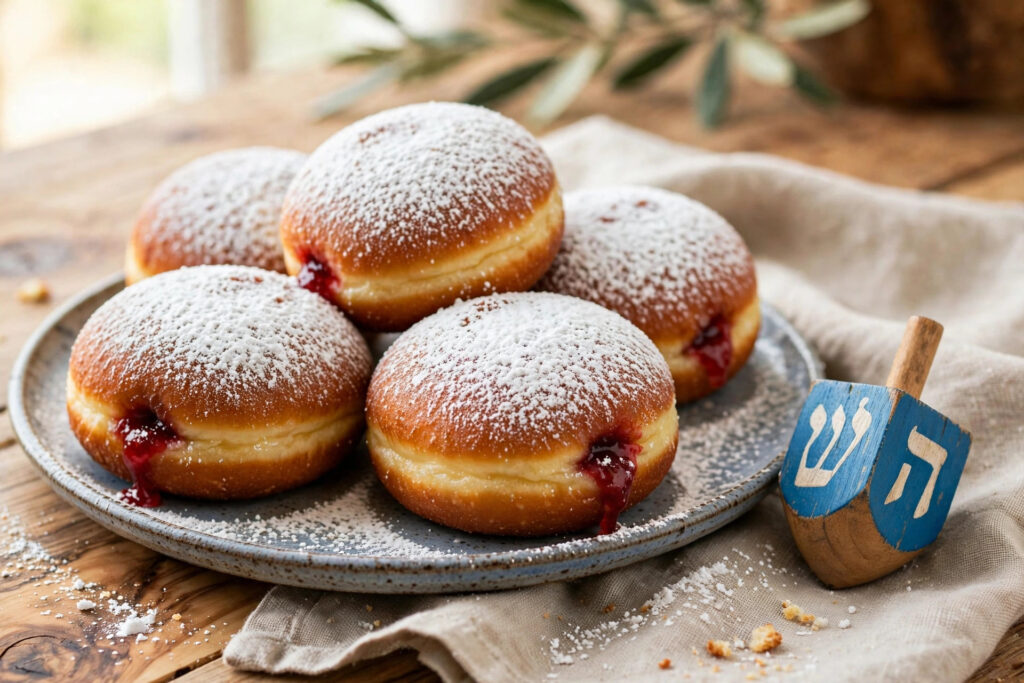
Sufganiyot are the sweetest symbol of Hanukkah. These soft, pillowy doughnuts are fried in oil, filled with jam — traditionally strawberry or raspberry — and dusted generously with icing sugar. In Israel, bakeries compete each year to create the most inventive sufganiyot, with fillings ranging from chocolate and caramel to halva and pistachio. Our Hanukkah sufganiyot recipe shows how to make the classic version at home.
Making sufganiyot is a joyful activity to share with children: they can help roll the dough, watch the doughnuts puff up in the oil, and choose their own fillings. Serve them warm, with the jam still soft inside, and eat them on the day they are made for the best texture. If you are short on time, many bakeries sell sufganiyot during Hanukkah, so you can buy a box and focus your energy on the main meal.
Main Dishes: Brisket, Chicken and Kugel
A Hanukkah dinner usually centres on a slow-cooked main dish that can feed a crowd. Beef brisket, braised for hours until tender in a rich sauce with onions and carrots, is the classic choice, and it tastes even better the next day. Roast chicken with lemon and herbs is a lighter alternative that still feels festive, and a whole roasted chicken makes a beautiful centrepiece for the table.
Kugel, a baked pudding made from egg noodles or potatoes, is a beloved side dish. Sweet noodle kugel, with cinnamon, raisins and a crumbly topping, is served alongside savoury dishes, while potato kugel is crisp on the outside and soft inside. Other traditional sides include roasted root vegetables, a fresh green salad and challah bread for mopping up sauces. A slow-cooked main dish also means the host can enjoy the evening instead of standing over the stove.
Dairy Dishes and the Story of Judith
Dairy foods play a special role in Hanukkah cooking because of the story of Judith, a Jewish heroine who is said to have fed salty cheese to an enemy general and then given him wine, so that he fell asleep and she was able to defeat him. In her honour, many families serve cheese dishes during Hanukkah, such as cheese blintzes — thin pancakes filled with sweet cheese and served with berries — or a creamy cheese kugel.
A cheese board with a selection of soft and hard cheeses, dried fruit and nuts makes a lovely starter or a light lunch during the festival. Macaroni cheese, a favourite with children, can also be given a festive twist with a crispy breadcrumb topping. These dairy dishes are a reminder that Hanukkah food is not only about oil and frying, but also about the stories that have been told at the table for generations.
Cooking and Frying Safely
Because so many Hanukkah dishes are fried in hot oil, a little care in the kitchen goes a long way. Heat oil gradually and never leave a pan of hot oil unattended, especially with children nearby. Keep a lid close at hand, use long-handled tongs, and fry in small batches so the oil temperature stays steady. For meat dishes such as brisket and roast chicken, make sure the meat is cooked right through: check FoodSafety.gov’s safe minimum internal cooking temperatures before serving, so you know the exact temperature each type of meat should reach. Let fried foods drain on kitchen paper to remove excess oil, and serve them hot for the best flavour and texture.
Desserts, Drinks and the Hanukkah Table
Hanukkah desserts go beyond sufganiyot. Rugelach, small crescent-shaped pastries filled with chocolate, cinnamon or jam, are a favourite with coffee or tea. Honey cake, rich and spiced, is another traditional sweet that keeps well for days. Chocolate gelt — coins wrapped in gold foil — are given to children and used as tokens in the dreidel game, and they make a charming table decoration too.
Drinks are simple and festive: a good red wine, sparkling grape juice for children, and plenty of tea and coffee. Set the table with the menorah as the centrepiece, light the candles each evening, and let the meal unfold slowly. For ideas on decorating and hosting, see our Hanukkah party ideas.
Planning Your Hanukkah Menu
A good Hanukkah menu balances fried foods with lighter dishes. Start with a salad or a cheese board, serve latkes as a shared starter, follow with brisket or roast chicken and kugel, and finish with sufganiyot and rugelach. Prepare what you can in advance: brisket can be cooked the day before, latke mixture can be grated ahead and kept in cold water, and sufganiyot dough can be made the night before. Most importantly, leave time to sit together, light the candles and enjoy the meal — the food is the centrepiece, but the company is the real celebration.
Frequently Asked Questions
What are the most traditional Hanukkah foods?
Latkes and sufganiyot are the most traditional Hanukkah foods because both are fried in oil, recalling the miracle of the oil. Brisket, roast chicken, kugel, rugelach and chocolate gelt are also classic parts of the celebration.
Why are Hanukkah foods fried in oil?
Foods are fried in oil to remember the miracle of Hanukkah: a small jar of oil that should have lasted one day is said to have burned for eight days in the Temple in Jerusalem. Latkes and sufganiyot honour that story.
When is Hanukkah in 2026?
Hanukkah 2026 begins on the evening of Friday 4 December and ends on Saturday 12 December. Families light one additional candle on the menorah each evening across the eight nights.
What do you serve with latkes?
Latkes are traditionally served with sour cream or apple sauce. They work as a side dish with brisket or roast chicken, or as a light meal on their own with a salad.
Are sufganiyot the same as doughnuts?
Sufganiyot are a type of jelly-filled doughnut, similar to a jam doughnut but made specially for Hanukkah. They are fried in oil, filled with jam and dusted with icing sugar, and are traditionally eaten warm.
Can I make Hanukkah food ahead of time?
Yes. Brisket tastes better when cooked a day ahead, latke mixture can be prepared in advance, and rugelach and honey cake keep well for several days. Latkes and sufganiyot are best fried fresh, but they can be reheated in a hot oven.
Leave a Reply