
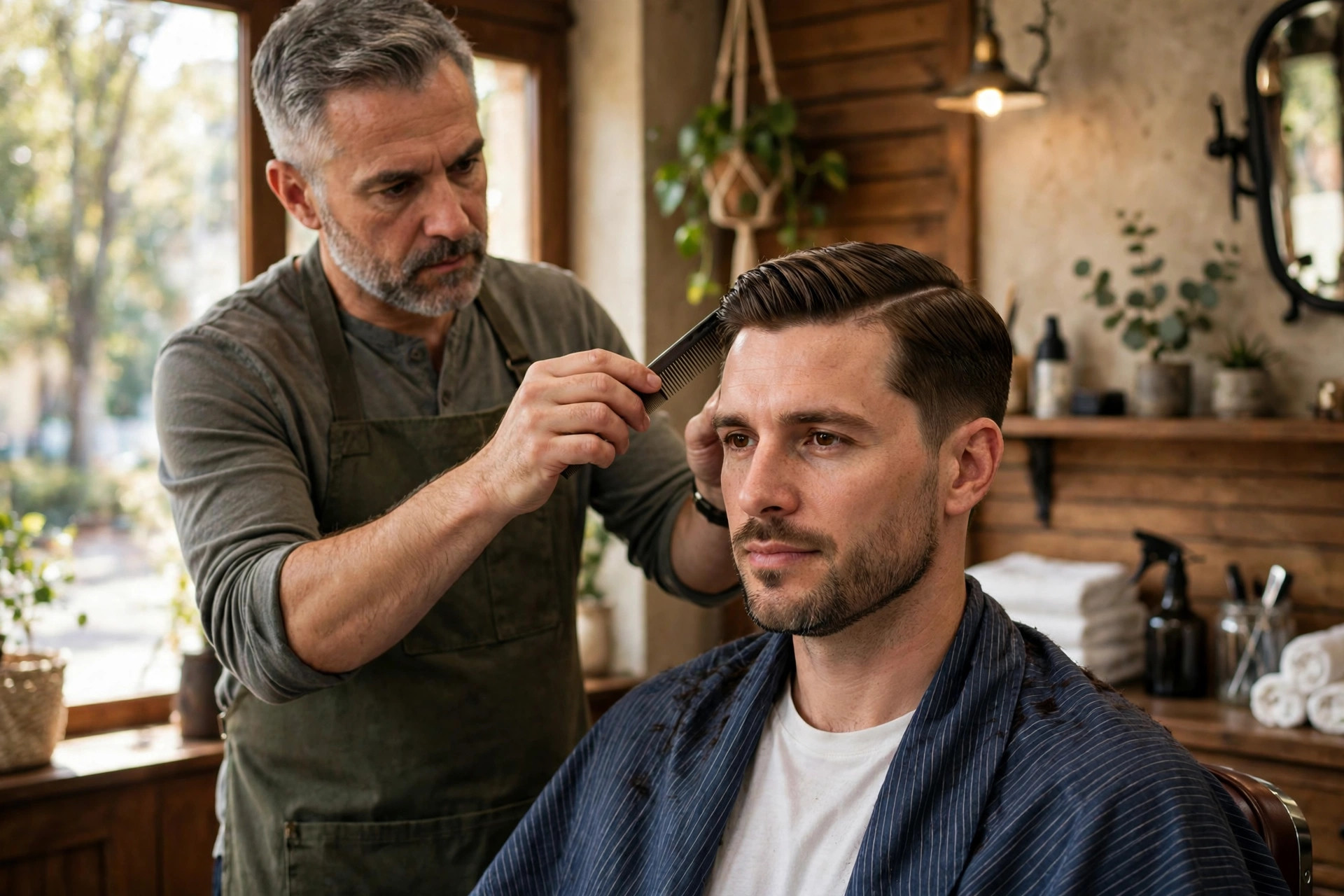
The side part haircut for men is a classic for a reason: it is neat, smart, and flattering on almost everyone, and it has stayed in style for more than a hundred years. The hair on top is kept long enough to comb to one side along a natural or defined parting, while the sides and back are cut shorter and tidier. The result is a clean, polished look that works in an office, at a wedding, or on a relaxed weekend.
Key Facts
- A side part is a classic cut with longer hair on top combed to one side.
- The sides and back are cut shorter, often with a taper or a fade.
- It suits most face shapes, especially oval, square, and oblong faces.
- It works best on straight or wavy hair with medium thickness.
- Styling takes 3 to 5 minutes with a comb and a small amount of product.
- It needs a trim every 3 to 4 weeks to keep the parting and shape tidy.
- The cut can be worn formal and sleek, or relaxed and textured.
What Is a Side Part Haircut?
A side part haircut is defined by a clear parting on one side of the head, with the longer hair on top swept across to the other side. The parting usually sits above the temple, on the left or the right, depending on which way your hair naturally falls. The sides and back are cut shorter than the top, usually with scissors or clippers, and they can be finished with a taper, a low fade, or a classic scissor cut that leaves a little more length.
The top is the key part of the cut. It needs to be long enough to comb over, usually at least 5 to 8 centimetres, so that it has weight and direction. If the top is too short, the parting will not hold, and the hair will fall flat or stick up. If it is too long, it can look heavy and hard to control. A good barber will judge the length by your hair type and by how much styling you are willing to do each morning.
Who Does a Side Part Suit?
The side part is one of the most versatile haircuts for men, and it suits a wide range of face shapes. Oval faces are the easiest match, because their balanced proportions work with the neat, even lines of the cut. Square faces also suit a side part well: the swept top softens a strong jawline while keeping the overall look masculine and structured. Oblong faces benefit too, because the side-swept top adds width and breaks up the length of the face.
Round faces can suit a side part as well, especially if the top is kept a little longer and styled with some height, which makes the face look longer. The cut is less suited to very curly hair, which can be hard to part neatly, although a looser, textured version can still work if the barber cuts it with the curl in mind.
The Best Side Part Variations
The classic side part is the simplest version: a neat parting, medium-length top, and tapered sides cut with scissors for a traditional finish. It is the most formal version, and it works best with a little pomade and a comb for a smooth, polished look. This is the version to choose for work, weddings, and formal occasions.
The side part with a low fade is a more modern take. The top stays the same, but the sides and back are faded down to the skin, which gives a cleaner, sharper contrast. This version looks smart but feels more current, and it suits men who like a tidy, low-maintenance finish on the sides. It needs a trim a little more often than the classic version, because a fade grows out faster. The side part with a hard part is a bolder option. The barber shaves a thin, straight line into the parting with a razor or trimmer, which makes the parting sharp and unmistakable.
The textured side part is the most relaxed version. The top is cut with texture rather than a blunt edge, and it is styled with a matte clay or paste for a natural, slightly messy finish. The parting is softer, and the hair has movement rather than a slick, combed look. This version suits younger men and casual settings.
How to Ask Your Barber for a Side Part
Asking for a side part is straightforward, but a few details will help your barber get the exact version you want. Start by saying “a side part” and then name the variation: classic, with a low fade, with a hard part, or textured. Tell your barber which side you part your hair on, or ask them to find your natural parting if you are not sure. A natural parting is where your hair falls on its own when it is wet, and working with it makes styling much easier.
Mention the length you want on top and how much styling you are willing to do. If you want a low-maintenance cut, ask for a medium length on top and tapered sides. If you are happy to style it every morning, you can ask for a longer top and a sharper finish.
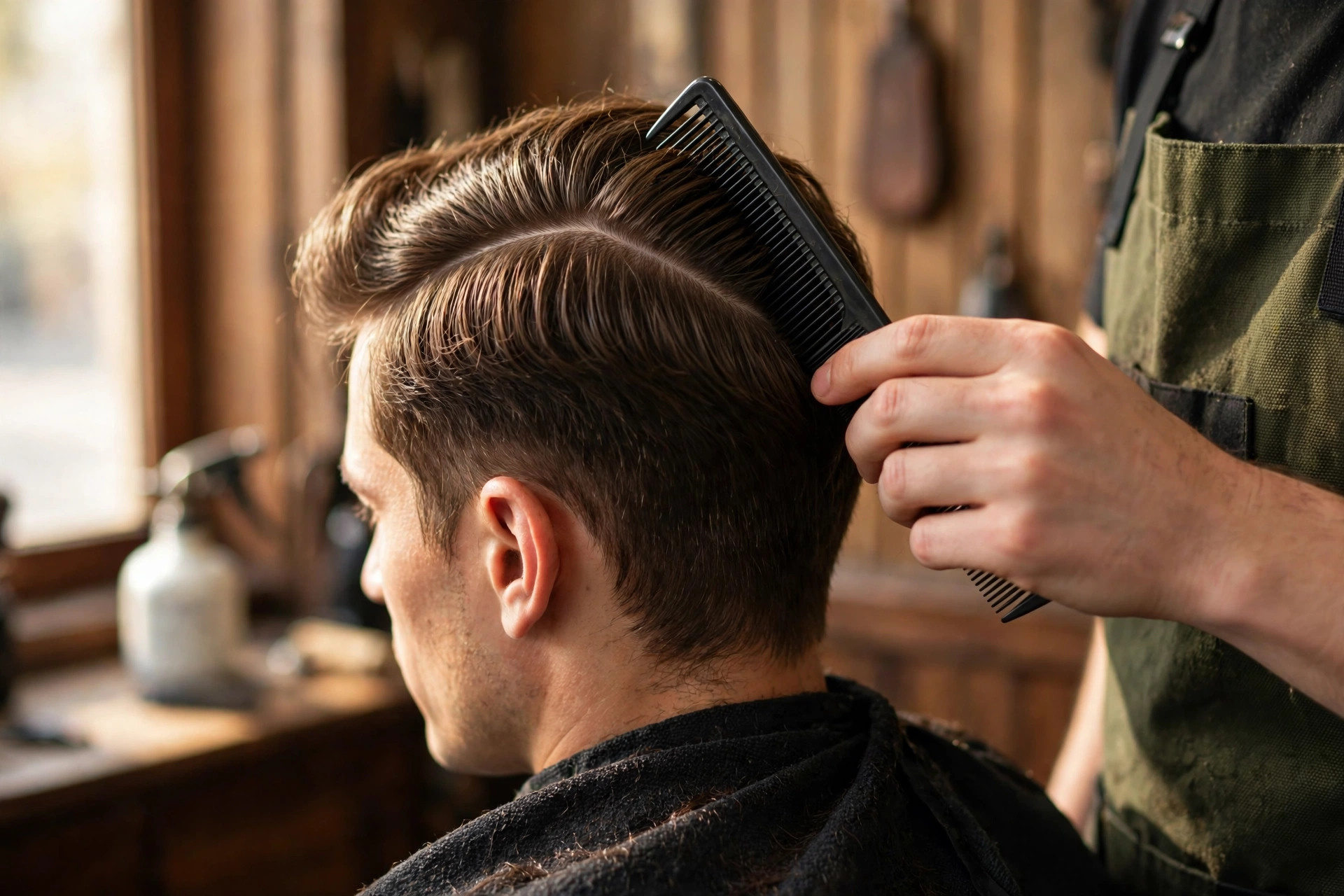
How to Style a Side Part at Home
Styling a side part takes only a few minutes once you know the steps. Start with clean, towel-dried hair that is slightly damp, not dripping wet. Find your parting with a comb, using the line your barber created as a guide. Comb the longer hair across to the opposite side, and comb the shorter side down and back so that it lies flat. If your hair is stubborn, a little water or a light leave-in product can help it settle.
Next, add a small amount of product. For a classic, sleek finish, use a pomade or a light gel and comb the hair into place. For a modern, textured finish, use a matte clay or paste, warm it between your hands, and work it through the top with your fingers before finishing with a comb. Use less product than you think you need: a pea-sized amount is usually enough, and you can always add more. Too much product makes the hair look greasy and heavy. If you use styling products regularly, it is worth choosing ones that suit your hair and skin. Hair products are regulated for safety, and you can read the FDA’s cosmetics safety information to understand how cosmetics are regulated and what to look for on a label.
Side Part Maintenance and Similar Classic Cuts
A side part is not a high-maintenance cut, but it does need regular attention to stay looking its best. Most men need a trim every three to four weeks. After that, the top starts to lose its shape, the sides grow out, and the parting becomes harder to find. A regular trim keeps the lines clean and makes morning styling much quicker.
The side part is often compared with other classic men’s cuts. The slicked back style combs all of the hair straight back, with no parting, which gives a bolder, more dramatic look. The pompadour adds height and volume at the front, with the hair swept up and back. The Ivy League cut is shorter on top than a side part, with just enough length to part to the side, and it is a good choice if you want a side part look with less styling. In short, the side part sits in the middle: smarter than a casual crop, easier than a pompadour, and more versatile than a slicked-back style.

A side part is right for you if you want a haircut that is smart, timeless, and easy to live with, and if you are willing to spend three to five minutes styling it in the morning.
Frequently Asked Questions
Which side should I part my hair on?
Part your hair on the side where it naturally falls. Wet your hair, comb it back, and see where it separates on its own: that is your natural parting.
How long does the top need to be for a side part?
The top usually needs to be at least 5 to 8 centimetres long, so that it has enough weight to comb over and hold the parting. Shorter than that, and the hair will not stay in place.
Can I get a side part with wavy hair?
Yes, a side part works well with wavy hair, and many men prefer it, because the waves give the cut natural texture and movement.
How often should I get a side part trimmed?
Most men need a trim every 3 to 4 weeks to keep a side part looking tidy. After four weeks, the top loses its shape and the sides grow out, which makes the parting harder to style.
What product is best for a side part?
For a classic, sleek side part, use a pomade or a light gel. For a modern, textured side part, use a matte clay or paste. Start with a pea-sized amount, warm it between your hands, and add more only if you need it.
Does a side part suit older men?
Yes, a side part is one of the best haircuts for older men, because it looks smart, distinguished, and timeless.
Leave a Reply