
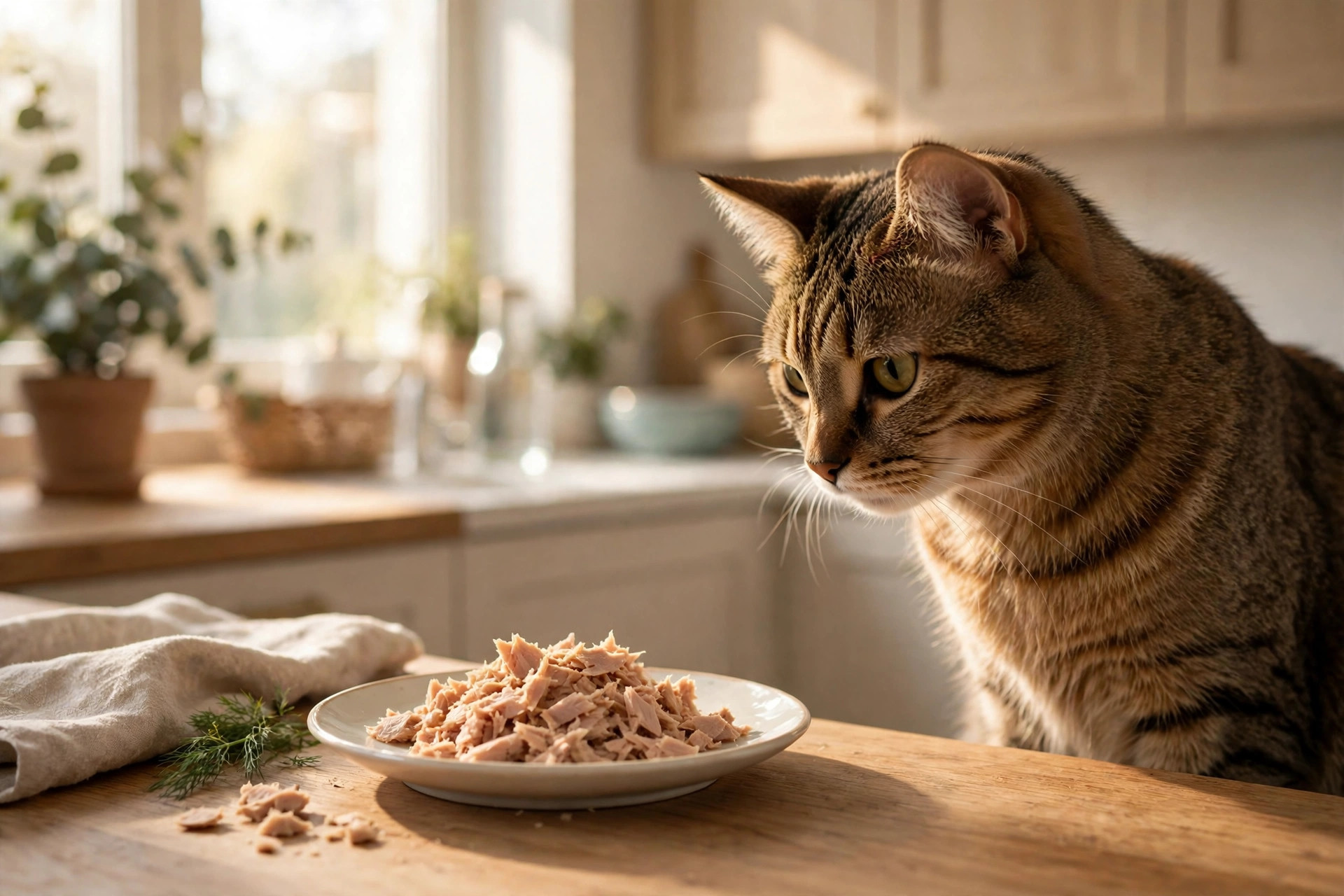
Can cats eat tuna? Yes — plain, cooked tuna given in small amounts as an occasional treat is generally considered safe for most healthy cats. But tuna should never become a regular part of your cat’s diet, because it lacks taurine and other essential nutrients cats need, and eating it too often can lead to mercury exposure and nutritional deficiency. The key is knowing which type of tuna is safe, how much is sensible, and when to leave the tin in the cupboard.
Key Facts
- Plain, cooked tuna in small amounts as an occasional treat is generally considered safe for healthy cats.
- Tuna is not a complete diet: it lacks taurine and other nutrients cats need, so it must never replace balanced cat food.
- Tinned tuna in spring water is the safest choice; avoid tuna in brine, oil, or flavoured varieties.
- Never feed tuna with onion or garlic flavouring — both are toxic to cats.
- Mercury builds up over time, so frequent tuna feeding raises the risk of mercury exposure.
- A tablespoon or so, offered occasionally, is a sensible portion for most adult cats.
Why Cats Love Tuna (and Why That Is Not Enough)
Cats are drawn to tuna because it is rich in protein and has a strong, fishy smell that appeals to their senses. A cat that hears a tin being opened will often appear within seconds, meowing for a share. That enthusiasm can make it tempting to assume tuna must be good for them, but liking a food and thriving on it are two very different things.
Tuna on its own does not contain everything a cat needs. Cats require taurine, an amino acid essential for heart and eye health, along with specific vitamins and minerals in the right balance. A diet built around tuna can leave gaps that cause real harm over time, which is why vets describe tuna as a treat, not a meal.
Which Type of Tuna Is Safest?
Tinned tuna in spring water is the safest option, because it contains nothing extra beyond the fish itself. Tuna in brine carries far too much salt for a cat’s small body, while tuna in oil adds unnecessary fat and calories. Flavoured varieties are the riskiest of all: many contain onion or garlic, both of which are toxic to cats even in small amounts.
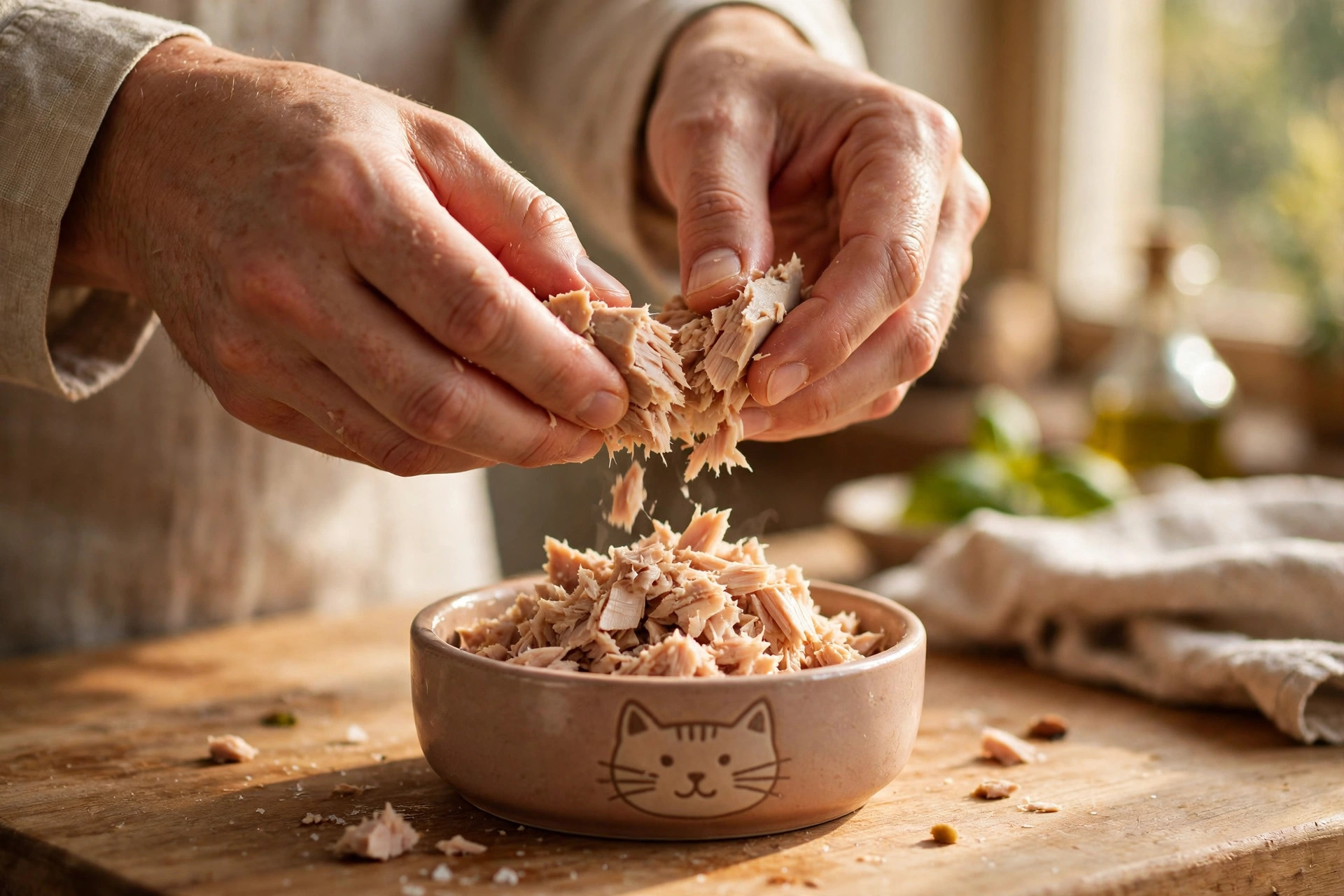
Fresh tuna, cooked plainly with no seasoning, is also acceptable in small portions. What matters is that nothing has been added — no salt, butter, spices, sauces or flavourings. A plain piece of cooked tuna, flaked into small pieces, is the closest thing to a genuinely safe way to share this fish with your cat.
How Much Tuna Can a Cat Have?
A tablespoon or so of plain tuna, offered once in a while, is a sensible portion for most adult cats. That is a treat, not a meal, and it should never replace a proper serving of balanced cat food.
If your cat has never eaten tuna before, start with even less — a few small flakes — and watch for any digestive upset over the next day. Kittens, elderly cats, and cats with health conditions should only be given tuna after checking with a vet. Once a week or less is a reasonable limit for a healthy adult cat; daily tuna turns a treat into a habit, and that is where the risks accumulate.
The Mercury Problem
Mercury is the main reason tuna should stay an occasional food. Tuna is a large predatory fish, and mercury builds up in its flesh over its lifetime. When a cat eats tuna repeatedly, mercury can accumulate in the cat’s body too, and over time this can affect the nervous system.
The risk from a single small serving is very low; the problem is repetition. A cat eating tuna daily takes in mercury far more often than its body can comfortably clear — the same reason health authorities advise people to limit their own tuna intake, and the logic applies even more strongly to a much smaller animal.
Nutritional Deficiency: The Hidden Risk
Beyond mercury, there is a quieter risk that owners often miss. A cat that fills up on tuna may eat less of its proper food, and over weeks and months that can lead to nutritional deficiency. Taurine deficiency is the best-known example: without enough taurine, a cat can develop serious heart and eye problems.
Tuna also lacks the right balance of calcium and other minerals, and it is low in vitamin E. The lesson is consistent: tuna as a treat is fine, tuna as a diet is not.
What to Avoid
Some forms of tuna should never be offered to a cat. Raw tuna carries a bacterial risk and may also contain parasites, so it should stay off the menu entirely. Tuna flavoured with onion or garlic is dangerous, as both ingredients damage a cat’s red blood cells. Spicy or heavily seasoned tuna, tuna in sauces, and tuna salad containing mayonnaise, mustard or other dressings are all unsuitable.
Tinned tuna in brine should also be avoided for its high salt content, and tuna in oil is best skipped too. If the only tin in your cupboard is flavoured, salted or packed in oil, give your cat nothing at all rather than that tin.
For a wider view of which everyday foods can harm pets, the FDA’s list of potentially dangerous items for your pet is a useful reference — it covers the common household foods and products that owners should keep away from cats and dogs.
Can Cats Eat Tuna Every Day?
The honest answer is no. Even if your cat begs for it daily, tuna every day is too much. The mercury exposure adds up, the nutritional gaps widen, and the habit can make your cat fussy about its proper food. Many cats fed tuna regularly begin refusing their balanced cat food, which only makes the nutritional problem worse.
If your cat has developed a strong taste for fish, try a complete cat food with a fish flavour instead. Tuna-flavoured varieties are properly balanced with taurine and the other nutrients cats need, giving your cat the taste it enjoys without the risks of plain tuna from the tin.
Tuna for Kittens and Cats with Health Problems
Kittens have developing bodies and smaller tolerances, so tuna is best avoided until they are older, and even then only in tiny amounts. Their diet should be a complete kitten food that supports growth, and treats should be a very small part of what they eat.
Cats with kidney disease need particular care, since excess salt or mercury adds strain to already hard-working kidneys, and cats with food allergies or sensitive stomachs may also react badly. If your cat has any ongoing health condition, ask your vet before offering tuna at all.
Better Treat Alternatives
If you want to give your cat a fishy treat without the downsides of tuna, there are good alternatives. Small pieces of plain cooked chicken are a popular choice — you can read more in our guide to whether cats can eat chicken. Plain cooked egg is another safe option, and our article on whether cats can eat eggs explains how to offer it. Small amounts of plain cooked ham are sometimes offered too, though you should check our guide on whether cats can eat ham first, since ham is saltier than most owners expect.
Commercial cat treats are the simplest option of all: designed for cats, portioned sensibly, and nutritionally appropriate as an occasional extra.
Frequently Asked Questions
Can cats eat tuna from a tin?
Yes, if it is tinned tuna in spring water with no added flavourings — a small amount as an occasional treat is generally safe for healthy adult cats. Avoid tuna in brine, oil, or flavoured varieties, and never offer tuna containing onion or garlic.
How often can cats eat tuna?
Once a week or less, in a portion of about a tablespoon. Daily tuna is too much because mercury accumulates and the diet becomes nutritionally unbalanced.
Is tuna in spring water safe for cats?
Yes, it is the safest choice among tinned options: no added salt, oil or flavourings. Even so, it should only be an occasional treat, not a regular food.
Can kittens eat tuna?
It is best to avoid tuna for kittens — their growing bodies need a complete kitten food, and treats should be minimal. For an older kitten, keep the amount very small and check with your vet first.
Why is tuna bad for cats if they love it?
Tuna is not poisonous, but it is incomplete as a food: it lacks taurine and other nutrients cats need, it is low in vitamin E, and it contains mercury that builds up with frequent eating.
What should I do if my cat ate tuna with onion or garlic flavouring?
Contact your vet, especially if your cat ate a large amount. Onion and garlic are toxic to cats and can damage red blood cells — watch for lethargy, weakness, pale gums or dark urine, and seek veterinary advice promptly.
Leave a Reply