

Can dogs eat green beans? Yes, most dogs can safely eat plain green beans, and they make an excellent low-calorie treat. Fresh, frozen or canned green beans are fine as long as they are served plain, with no seasoning, butter, salt, onion or garlic. Green beans are crunchy, hydrating and easy to portion, which is why vets and trainers often suggest them as a healthy alternative to calorie-heavy commercial treats, especially for dogs that need to watch their weight.
Key Facts
- Yes, dogs can eat green beans, but only plain ones with no seasoning or added fat.
- Green beans are low in calories and a good source of fibre, vitamins and water.
- Serve them fresh, steamed, or frozen, or canned only if they are low in sodium and rinsed.
- Never give dogs green bean casserole or beans cooked with onion, garlic, butter or salt.
- Treats, including green beans, should make up only a small part of your dog’s daily food.
- Cut beans into small pieces for small dogs and puppies, and watch for choking.
- If your dog reacts badly after eating something new, call your vet promptly.
Why Green Beans Are a Good Treat
Green beans are one of the simplest healthy treats you can offer a dog. They are naturally low in calories, so a handful of beans adds crunch and satisfaction without adding much energy to your dog’s day. That makes them popular with owners of dogs that are overweight or on a weight-management plan, since a dog can enjoy a generous-looking treat that does not undo a careful diet.
How to Prepare Green Beans for Your Dog
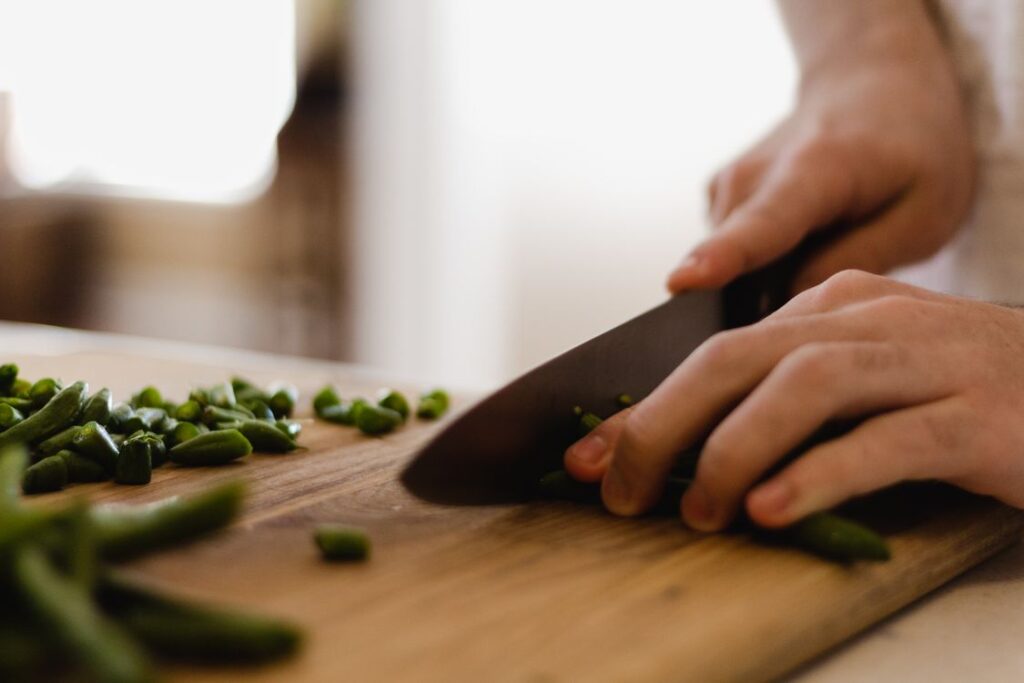
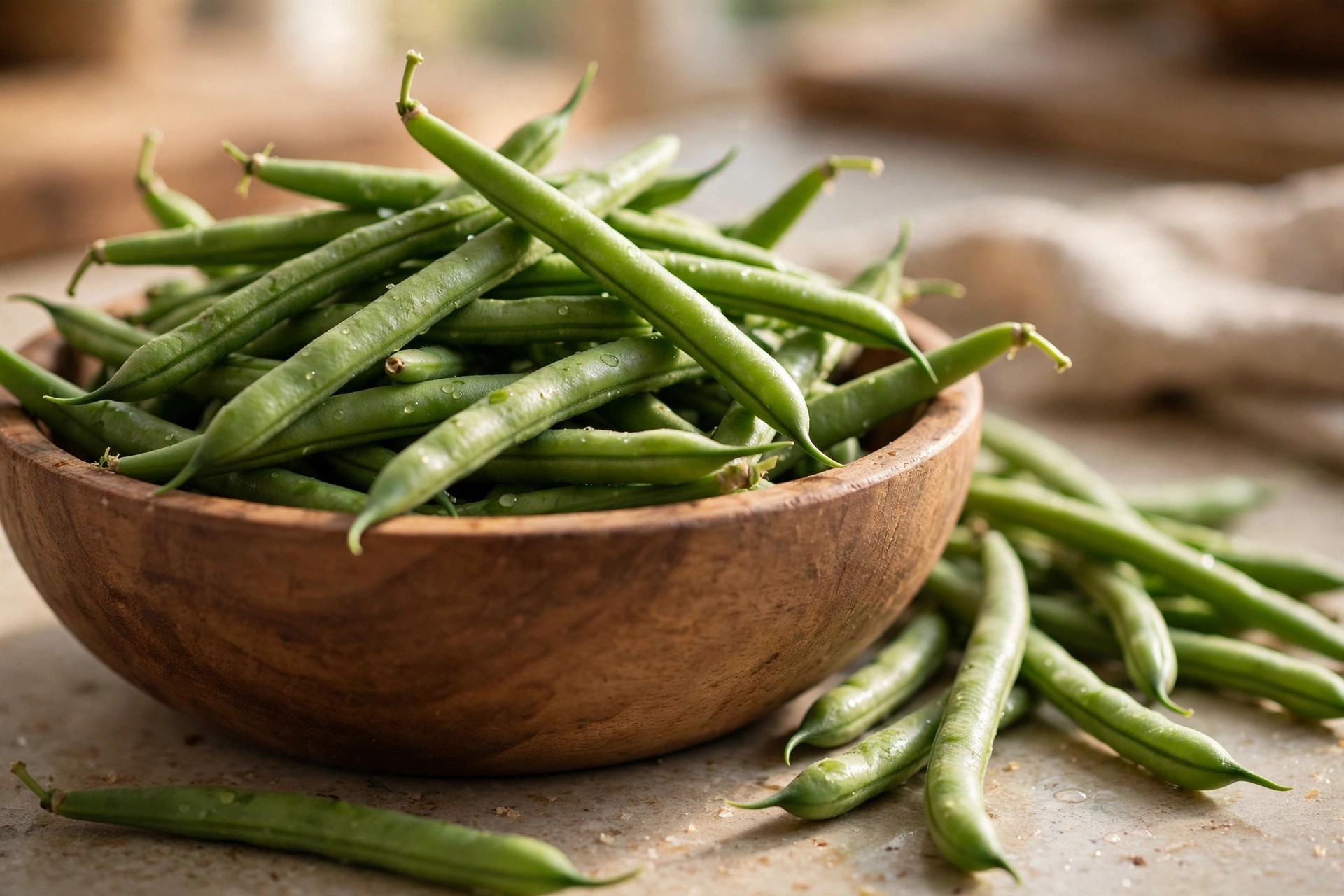
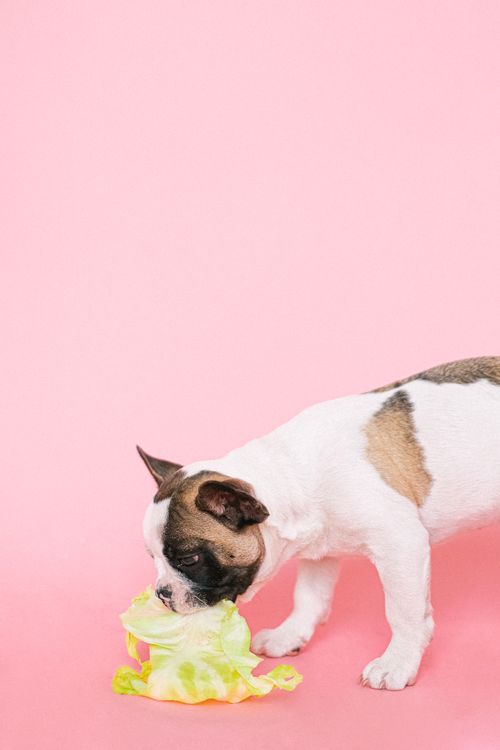
Preparation matters more than the type of bean. Fresh green beans should be washed, trimmed at the ends, and either served raw or lightly steamed until tender. Steaming softens the beans and makes them easier to digest, which is helpful for older dogs or dogs with sensitive stomachs. Let cooked beans cool completely before offering them.
Cut the beans into bite-sized pieces, especially for small dogs, puppies and dogs that tend to gulp their food. A whole long bean can be a choking hazard for a small dog, while a few short pieces are easy to chew and swallow. Introduce green beans gradually, starting with just one or two pieces, and watch how your dog’s stomach responds over the next day before making them a regular treat.
How Much Can Dogs Eat?
There is no single exact portion that suits every dog, because size, age, activity level and overall diet all matter. A useful general guide is the treat rule used by many vets: treats of all kinds together should make up no more than about ten percent of your dog’s daily calories, with the remaining ninety percent coming from their complete, balanced dog food. Within that limit, a small dog might enjoy a few beans, while a large dog can handle a small handful.
What to Avoid: Seasoning, Casseroles and Dangerous Extras
The most important rule with green beans is to keep them plain. Dogs should never eat green beans cooked with butter, oil, salt, pepper, onion, garlic or other seasonings. Onion and garlic are toxic to dogs and can damage their red blood cells, while butter and oil add fat that can upset the stomach and, in larger amounts, contribute to pancreatitis. Salt is also best avoided, since dogs need far less sodium than people.
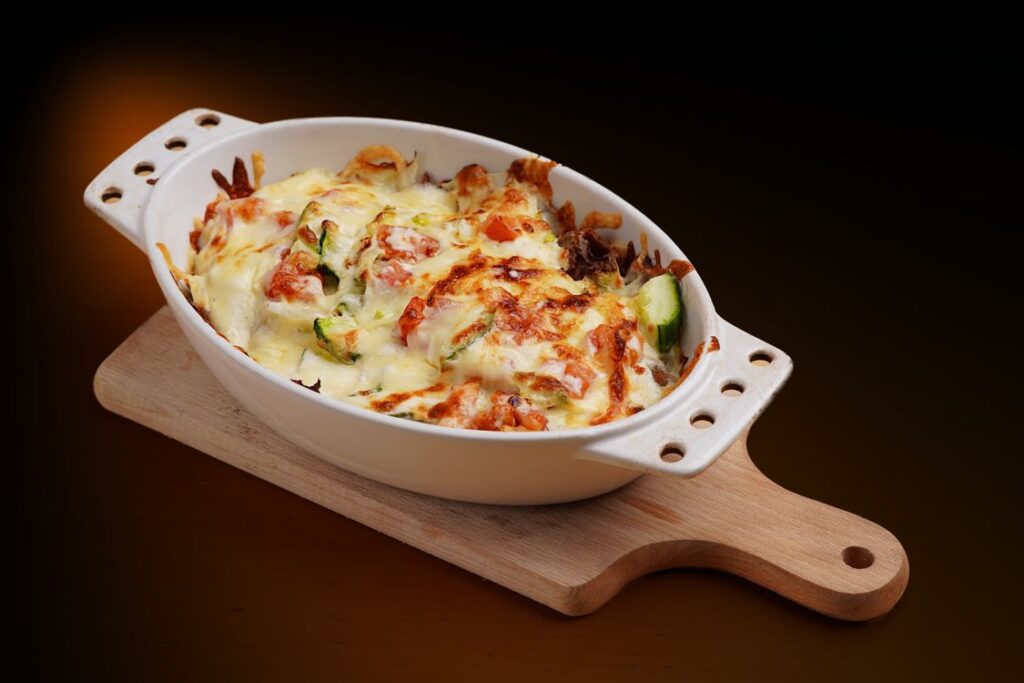
Green bean casserole is not suitable for dogs, even though its main ingredient is beans. The casserole usually contains cream or butter, fried onions, salt and other seasonings that are unsafe or unhealthy for dogs. The same applies to beans from a seasoned stir-fry, a spicy side dish or a takeaway meal. If you are unsure whether a dish contains onion or garlic, do not share it.
It is worth knowing which common foods are genuinely dangerous for pets, since holiday cooking often brings risky ingredients into the kitchen. The FDA’s guide to potentially dangerous items for your pet lists foods and household items, including onion, garlic, grapes and chocolate, that owners should keep away from dogs and cats. A quick look at that list before the holiday season can prevent an emergency vet visit.
Green Beans and Holiday Leftovers
Green beans often appear on holiday tables, which makes this question especially common around Thanksgiving and Christmas. Plain beans from the holiday meal are fine to share, but beans from a casserole or a dish cooked with butter, bacon, onion or garlic are not. When in doubt, set aside a few plain beans before you season the family dish, or cook a small separate portion for your dog. The same care applies to other holiday foods: our guides to can dogs eat turkey, can dogs eat sweet potatoes and can dogs eat cranberry sauce explain which festive dishes are safe and which seasoning traps to avoid.
Puppies, Senior Dogs and Dogs With Health Problems
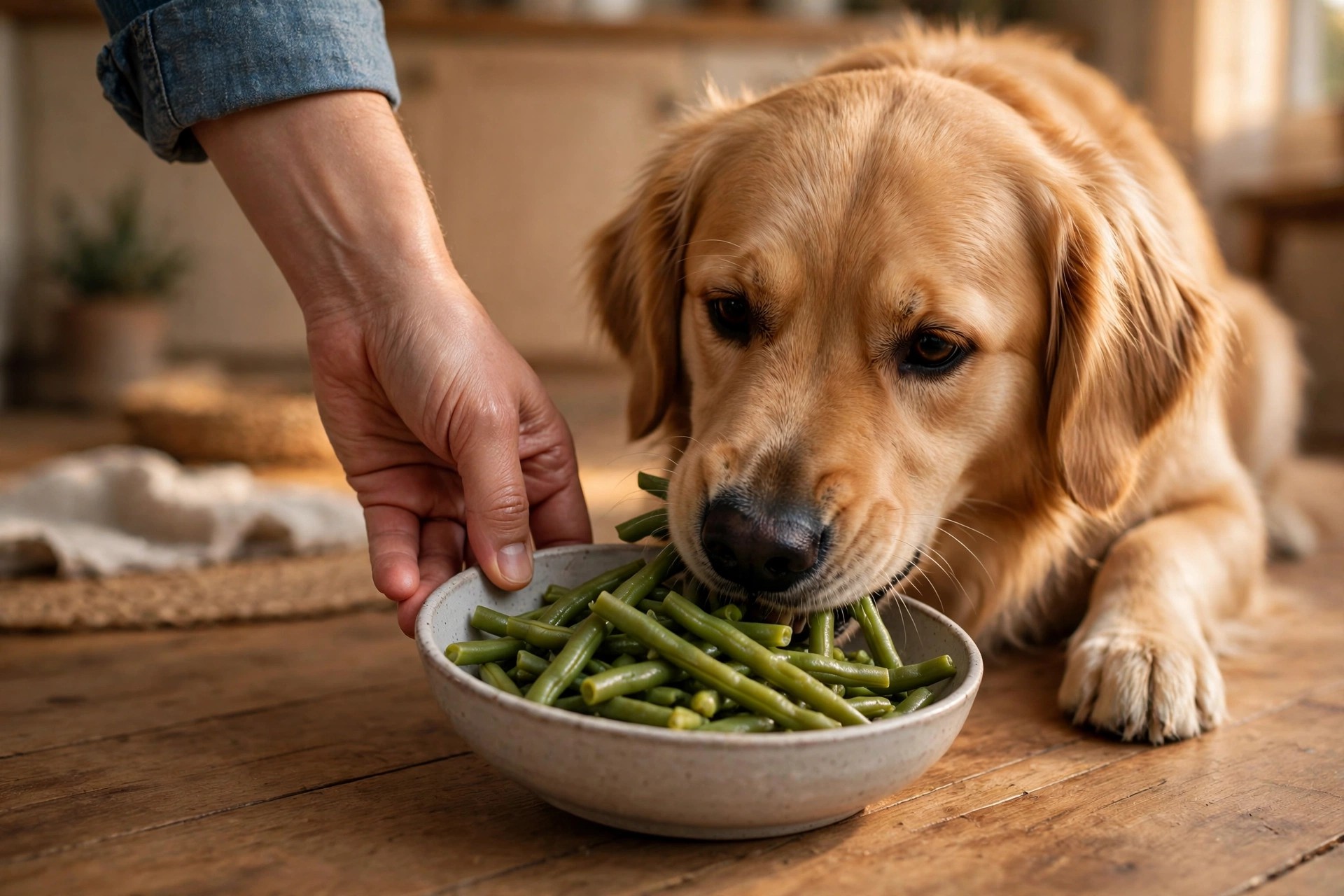
Puppies can eat green beans once they are weaned and eating solid food, but portions should be tiny and the beans should be soft and cut small. A puppy’s digestive system is still developing, so introduce any new food one at a time and in very small amounts. If your puppy has diarrhoea or vomiting after a new food, stop the food and speak to your vet.
Signs of a Bad Reaction and When to Call Your Vet
Choking is the other risk to watch for, particularly in small dogs and enthusiastic eaters. If your dog coughs, paws at its mouth or struggles to breathe after eating, seek emergency veterinary help immediately. Cutting beans into small pieces and supervising treat time greatly reduces this risk.
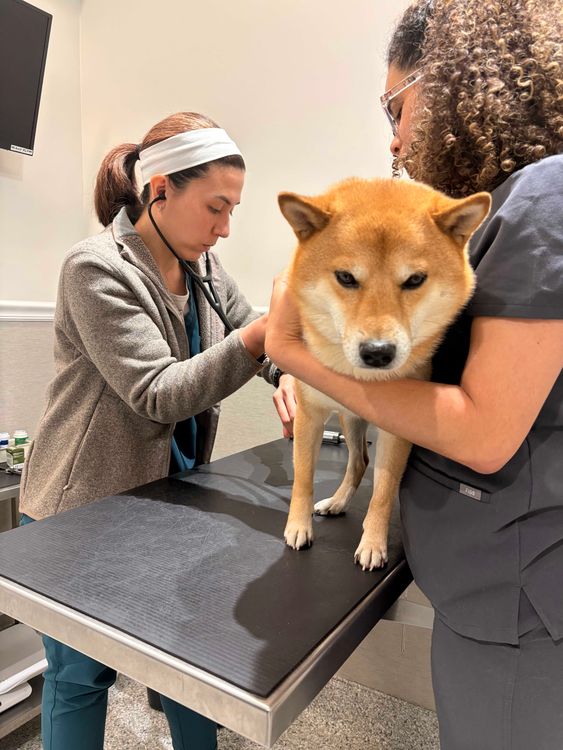
If your dog has eaten beans cooked with onion, garlic or another toxic ingredient, do not wait for symptoms. Call your vet or a pet poison helpline straight away and tell them what your dog ate and roughly how much. Quick action makes a real difference with toxic foods, and a vet can advise whether your dog needs to be seen urgently.
The Bottom Line
Green beans are a safe, simple and healthy treat for most dogs when served plain and in sensible portions. Fresh or steamed beans, cut into small pieces, make a crunchy low-calorie reward that many dogs love. Keep them unseasoned, avoid casseroles and seasoned dishes, introduce them gradually, and check with your vet if your dog has a health condition. Done that way, sharing green beans is an easy win for both you and your dog.
Frequently Asked Questions
Can dogs eat raw green beans?
Yes, healthy adult dogs can eat raw green beans as long as they are washed, trimmed and cut into small pieces. Raw beans are crunchier and firmer than cooked ones, so they suit dogs that chew well but may be harder on sensitive stomachs. Lightly steaming the beans is a gentler option for puppies, senior dogs and dogs with delicate digestion, and it keeps the beans plain and safe either way.
Can dogs eat canned green beans?
Dogs can eat canned green beans only if they are low in sodium or have no salt added, and they should always be rinsed well under running water first. Regular canned beans can contain a lot of salt, which is not good for dogs. Fresh or frozen beans are a better everyday choice, since you control exactly what goes into them and there is no added sodium to worry about.
Are green beans good for overweight dogs?
Green beans are often recommended for overweight dogs because they are low in calories and high in fibre, so they add bulk and crunch without adding much energy. They work best when they replace a fatty treat rather than being added on top of the usual food. If your dog needs to lose weight, ask your vet for a complete feeding plan, since portion sizes and overall diet matter more than any single treat.
Can dogs eat green bean casserole?
No, dogs should not eat green bean casserole. Although the main ingredient is beans, the dish typically contains butter, cream, salt and fried onions, and onion is toxic to dogs. Even a small serving can upset a dog’s stomach or cause more serious harm. If you want to share beans with your dog at a holiday meal, set aside a few plain beans before the casserole is assembled.
How many green beans can a dog eat in a day?
There is no fixed number, since it depends on your dog’s size and overall diet, but treats of all kinds should stay within about ten percent of daily calories. In practice, that means a few beans for a small dog and a small handful for a large dog. Start with one or two pieces, watch for stomach upset, and increase gradually. If your dog develops gas or loose stools, cut back to a smaller amount.
What should I do if my dog eats seasoned green beans?
If your dog eats a small amount of beans with butter or salt, watch for stomach upset and offer fresh water, and call your vet if vomiting or diarrhoea continues. If the beans contained onion or garlic, call your vet or a pet poison helpline immediately, even if your dog seems fine, and tell them what and how much was eaten. Fast advice matters with toxic ingredients, so do not wait for symptoms to appear before calling.
Leave a Reply