
Christmas tree ornaments ideas start with one simple number: hang 10 to 15 ornaments per foot of tree height. A 6-foot tree needs 60 to 90 ornaments, layered from deep inside the branches out to the tips. The ideas below cover every ornament type, a color formula that keeps any tree looking planned instead of random, and safe picks for homes with kids and pets. Follow these christmas tree ornaments ideas in order, and your tree will look planned from every angle.
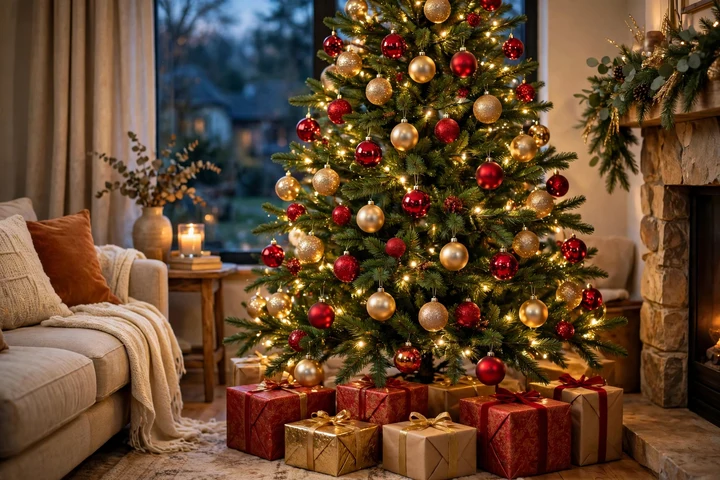
Key Facts: Christmas Tree Ornaments
| Fact | Detail |
|---|---|
| How many per foot | 10–15 ornaments per foot of tree height |
| 6-foot tree | 60–90 ornaments |
| 7-foot tree | 70–105 ornaments |
| Best mix | About 60% filler baubles, 40% feature ornaments |
| Hang order | Lights first, then garland and ribbon, then ornaments, topper last |
| Kid- and pet-safe | Shatterproof plastic, felt, wood, and fabric ornaments |
| Storage tip | Wrap glass ornaments individually; store in a divided box |
How Many Ornaments Does a Christmas Tree Need?
The 10-to-15-per-foot rule is the fastest way to buy the right number of ornaments and the easiest way to avoid a tree that looks either bare or buried. Most Christmas tree ornaments ideas follow this same rule, because it works for any style, any tree, and any budget. Count the height of your tree, multiply, and shop to that number before you fall in love with anything in the store.
| Tree height | Ornaments needed | Filler baubles | Feature ornaments |
|---|---|---|---|
| 4 feet | 40–60 | 25–35 | 15–25 |
| 5 feet | 50–75 | 30–45 | 20–30 |
| 6 feet | 60–90 | 35–55 | 25–35 |
| 7 feet | 70–105 | 40–65 | 30–40 |
| 8 feet | 80–120 | 50–70 | 30–50 |
| 9 feet | 90–135 | 55–80 | 35–55 |
Slim and pencil trees need fewer ornaments because they have less branch volume — take the low end of the range, or even 8 to 10 per foot. Wide, full trees take the high end. If you are working with a real tree, remember that fresh branches droop under heavy glass, so put the heaviest ornaments on strong upper branches close to the trunk and keep the tips light.
A useful shopping split is 60% filler baubles and 40% feature ornaments. Filler baubles are the plain round balls that build color and volume. Feature ornaments are the special pieces: the heirloom angel, the handmade star, the snowflake, the nutcracker, the ornament your child made at school. Without enough fillers, a tree looks sparse between the special pieces. Without enough feature pieces, it looks like a store display instead of your tree.

20 Christmas Tree Ornaments Ideas
These 20 Christmas tree ornaments ideas are organized by type, so you can mix and match them into a look that is yours. Pick one idea from each group and you will have a tree with depth, color, and personality.
1. Classic glass baubles in three finishes. Shiny, matte, and glitter baubles in the same color look far richer together than any one finish alone. Buy them in sets of six or twelve and spread all three finishes evenly through the tree.
2. Oversized baubles for the bottom third. Large 4- to 6-inch baubles fill the wide lower branches fast and make the tree look full from across the room. Keep the biggest pieces low, where the branches are strongest.
3. Mini baubles tucked inside the branches. Small 1- to 2-inch baubles pushed deep into the tree add sparkle in the gaps where light would otherwise fall flat. This is the cheapest way to make a tree look professionally decorated.
4. Mercury glass ornaments. Mercury glass has a silvery, aged finish that catches light beautifully. It works with almost any color scheme and looks especially good on flocked trees and white trees.
5. Heirloom ornaments at eye level. The ornaments with a story — the one from your grandmother, the first ornament from your wedding year, the baby’s first Christmas — deserve the prime real estate between 4 and 6 feet high, where everyone sees them.
6. Handmade salt dough ornaments. Salt dough stars, trees, and snowflakes cost almost nothing and carry more meaning than anything store-bought. Seal them with clear varnish so they last for years, and date the back with a marker.

7. Dried orange slices. Thin orange slices dried in a low oven add warm color, a natural scent, and a handmade look. Thread them with twine and hang them near the lights, where they glow like stained glass.
8. Cinnamon stick bundles. Tie three cinnamon sticks together with twine and hang them like tiny firewood bundles. They smell wonderful, cost very little, and fit rustic, farmhouse, and woodland trees.
9. Wooden ornaments. Laser-cut wooden snowflakes, stars, reindeer, and trees bring warmth and texture. They are light, hard to break, and easy for kids to hang, which makes them a smart pick for the lower branches.
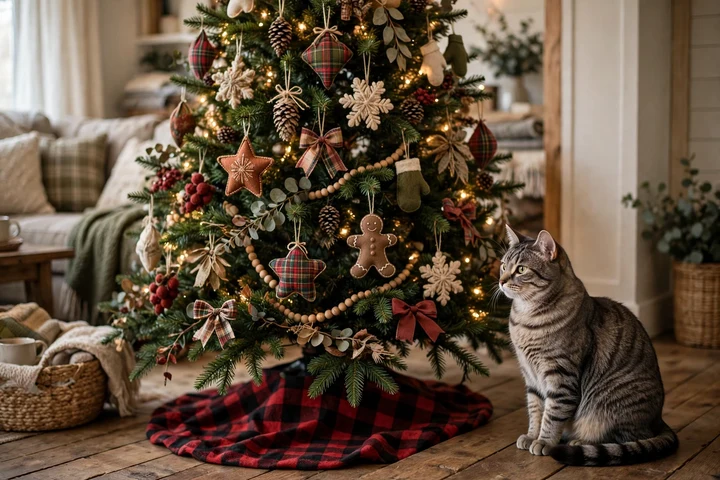
10. Felt ornaments. Felt animals, mittens, stars, and gingerbread people add softness and color without any breakage risk. They are the best choice for the bottom two feet of the tree in a house with toddlers or pets.
11. Personalized ornaments. A family name, a year, or a child’s handprint turns an ordinary bauble into a keepsake. Buy one new personalized ornament each year and your tree becomes a timeline of your family.
12. Photo ornaments. Small framed photos or photo baubles put faces on the tree. Hang them at eye level and mix them with plain baubles so the tree still reads as decorated, not as a photo album.
13. Ribbon-tied ornaments. Swap metal hooks for short lengths of ribbon in a matching color. Ribbon hangers look softer and more finished, and they let you hang ornaments from branches at exactly the height you want.
14. Icicles and crystal drops. Glass icicles and crystal drops catch the light and add a frosty sparkle that baubles alone cannot give. Hang them near the branch tips, where they dangle and move.
15. Pinecones, real or faux. Pinecones add natural texture and fill gaps cheaply. Spray real pinecones with a light coat of white paint for a frosted look, or leave them natural on a rustic tree.
16. Snowflakes in mixed sizes. Paper, wood, metal, and glitter snowflakes in three sizes layered through the tree create a winter look that works with any color scheme. White snowflakes on a green tree are a classic for a reason.

17. Themed character ornaments. Nutcrackers, Santas, reindeer, cardinals, and snowmen give a tree personality. Use them sparingly — three to five characters spread through the tree — so they read as accents, not clutter.
18. Metallic ornaments as neutrals. Gold, silver, copper, and champagne ornaments act like neutrals. When your colors feel stuck, add metallics: they bridge red and green, blue and white, or any two colors that are fighting each other.
19. Vintage ornaments from thrift stores. Old ornaments have shapes and colors you cannot buy new. A few vintage pieces mixed with modern baubles give a tree a collected, lived-in feel that a single boxed set never will.
20. A few ornaments that break the rules. One unexpected piece — a tiny pickle, a favorite sports team logo, a miniature taco — is the ornament everyone remembers and asks about. Every great tree has one conversation piece.
Baubles by Finish: Shiny, Matte, and Glitter
If you only buy one kind of ornament, buy baubles, and buy them in all three finishes. Shiny baubles reflect the lights and make the tree glow. Matte baubles absorb light and give the eye a place to rest, which keeps a tree from looking frantic. Glitter baubles sparkle and read as festive from across the room.
A reliable mix is half shiny, one quarter matte, and one quarter glitter. Hang the shiny ones near the lights so they reflect, the matte ones deeper inside the branches for depth, and the glitter ones on the outer tips where they catch the room light. This single trick — three finishes in one color — is what makes a simple tree look expensive.
Buy baubles in one size for the main fill, usually 3 to 4 inches, and add a second smaller size for tucking inside. Avoid buying every bauble in the same size: a tree decorated with identical balls looks flat, while two sizes create the depth your eye expects from a real, full tree.
Color Rules That Keep a Tree From Looking Random
Color is where most Christmas tree ornaments ideas go wrong, and the fix is a simple formula: 60% of your ornaments in your main color, 30% in your second color, and 10% in an accent color or metallic. A red, green, and gold tree, for example, would be 60% red, 30% green, and 10% gold. The ratio matters more than the colors themselves — any three colors work when they follow the 60-30-10 split.
Metallics are the exception to the rule because they behave like neutrals. Gold, silver, copper, and champagne can be added on top of your 60-30-10 split without breaking it. If you have inherited ornaments in colors that do not match your scheme, metallics are the bridge that ties them in.
Test your palette before you hang anything. Lay your ornaments on a table in three piles by color and look at them together in daylight. If one color shouts and the others whisper, rebalance the piles until the mix feels calm. Then hang the main color first, the second color next, and the accent last, so you can see the balance build as you go.
Layering: Deep, Middle, and Outside
Professional decorators hang ornaments in three layers, and this is the technique that separates a good tree from a great one. The deep layer goes inside the tree, close to the trunk: dark baubles, matte finishes, and larger pieces that create depth and shadow. The middle layer sits on the mid-branches: your main color baubles and most of your feature ornaments. The outside layer lives on the branch tips: glitter, icicles, and your lightest, brightest pieces.
Work in that order — deep, then middle, then outside — and step back every ten minutes to check the whole tree. It is easy to overdecorate one side while the other stays bare, and the only cure is distance. Hang one color or one type at a time through all three layers, then move to the next, so the tree builds evenly instead of in clumps.
Leave breathing room. An ornament needs a few inches of space around it to be seen, and a tree packed edge to edge with baubles looks heavy instead of festive. If you run out of room before you run out of ornaments, you have too many — save the extras for a wreath, a garland, or next year.
Heirloom and Handmade Ornaments
Heirloom ornaments are the soul of a Christmas tree. They are the pieces that carry a story: the ornament your mother hung every year, the one you bought on a trip, the lopsided star your child made in kindergarten. They do not need to match your color scheme, and they should not be hidden. Hang them at eye level, where they can be seen and talked about, and hang them with ribbon instead of wire hooks so they feel honored rather than squeezed in.
Handmade ornaments deserve the same respect. Salt dough, paper stars, embroidered hoops, and painted wooden shapes are often lighter and sturdier than store-bought glass, which makes them ideal for lower branches and for trees in busy family rooms. Date the back of each handmade piece with the year it was made. In ten years, that date will matter more than the ornament itself.
If your heirloom pieces are fragile, hang them on the strongest branches near the trunk, not on the tips, and keep them above the reach of small hands and wagging tails. One broken heirloom is a loss no store can replace.
Kids and Pet-Safe Ornaments
A tree in a house with small children or pets needs a safety plan, not just pretty ornaments. The bottom two feet of the tree are the danger zone: everything there should be unbreakable. Fill that zone with felt, fabric, wood, and shatterproof plastic ornaments, and save the glass for the upper branches where little hands and paws cannot reach.

The U.S. Consumer Product Safety Commission reminds families to check decorations for small parts that can break off and become choking hazards, and to keep fragile ornaments out of reach of young children. Read their full holiday decorating safety tips from the CPSC before you decorate with little ones in the house.
Skip ornaments with sharp wire hooks at toddler height — use ribbon loops or plastic ornament hooks instead. Avoid tinsel and small detachable pieces on the lower branches, and anchor the tree to the wall if you have a climber or a large dog.
How to Hang Ornaments So They Stay Put
Ornaments fall off for three reasons: weak hooks, heavy ornaments on thin branch tips, and branches that bounce when someone walks past. Fix all three and your tree will still be fully dressed on Christmas morning.
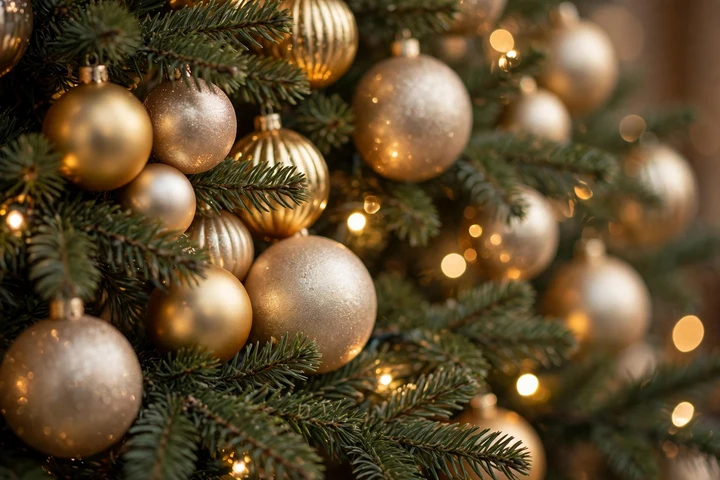
Use proper ornament hooks, not the thin wire that comes in the box, and close each hook into a loop around the branch so it cannot slide off. For heavy ornaments, use two hooks or a short length of floral wire wrapped twice around a sturdy branch. Hang ornaments from the top of the branch, not the underside, so the branch itself carries the weight.
If you are decorating in the right order, you will have already hung your lights and garland before the first ornament goes on. Our guide to Christmas tree decorating ideas walks through that order step by step, and our Christmas lights ideas will help you get the glow right before the ornaments go on. For theme inspiration to match your ornaments to, browse our Christmas tree ideas.
“A Christmas tree is not decorated by the ornaments you buy. It is decorated by the years those ornaments remember.”
FAQs About Christmas Tree Ornaments
How many ornaments do I need for a 6-foot Christmas tree?
A 6-foot tree needs 60 to 90 ornaments, following the rule of 10 to 15 ornaments per foot of height. Aim for about 60% filler baubles and 40% feature ornaments. Slim trees need the low end of the range, while wide, full trees need the high end.
What is the best order to hang ornaments on a Christmas tree?
Hang lights first, then garland and ribbon, then ornaments from the inside out: deep layer first, middle layer next, and the outer tips last. Put the tree topper on after the ornaments are done. Hanging in this order keeps you from knocking ornaments off while you work.
Are glass ornaments safe with kids and pets?
Glass ornaments are safe on the upper branches, out of reach, but the bottom two feet of the tree should use shatterproof plastic, felt, wood, or fabric ornaments. Use ribbon loops or plastic hooks instead of sharp wire hooks at toddler height, and anchor the tree if you have a climber.
How do I store Christmas ornaments so they do not break?
Wrap each glass ornament in tissue paper and store them in a divided ornament box or a box with cardboard dividers. Keep the box in a dry place at a steady temperature, not in a damp basement or a hot attic. Label the box by color so next year’s decorating starts fast.
Can I mix ornament colors that do not match?
Yes, if you follow the 60-30-10 rule: 60% main color, 30% second color, 10% accent. Metallics like gold, silver, and champagne act as neutrals and can tie mismatched colors together. A few heirloom pieces in off-scheme colors look intentional when they are hung at eye level among matching baubles.
How do I make a small tree look full with ornaments?
Use mini baubles tucked deep inside the branches, add a few oversized baubles on the lower branches, and layer in icicles and glitter pieces on the tips. Small trees look fuller when ornaments are hung in three layers — deep, middle, and outside — instead of only on the outer tips. These christmas tree ornaments ideas work just as well on a tabletop tree.
A great tree is not the one with the most expensive ornaments. It is the one where every ornament has a place, a reason, and a little bit of space to shine. Start with your number, pick your colors, layer deep to outside, and hang the pieces that matter most where everyone can see them. That is how these Christmas tree ornaments ideas turn a simple tree into the tree your family remembers.
Leave a Reply