
Table of Contents
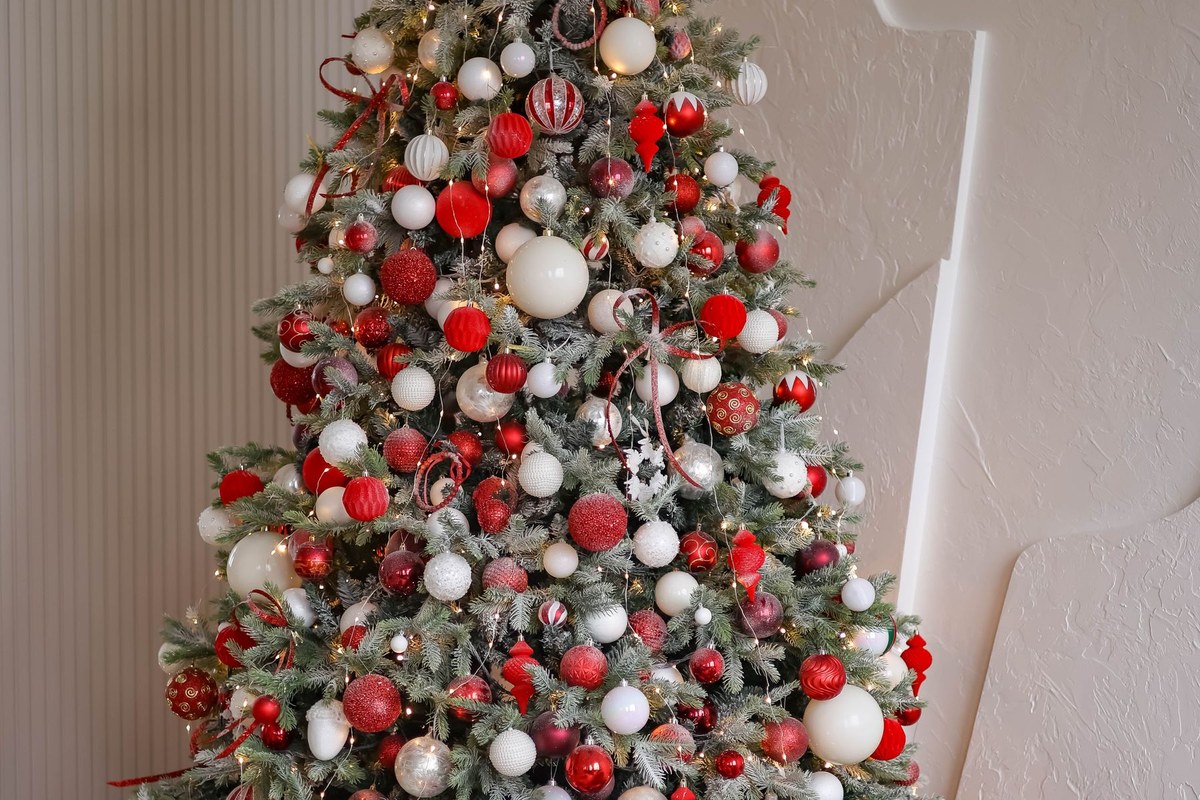
The boxes come down from the attic, the tree goes up, and then comes the part nobody warns you about: standing in the middle of the living room with a pile of ornaments and no plan. Most trees do not look bad because the ornaments are wrong. They look bad because everything went on in whatever order it came out of the box, and because three different colour schemes are fighting for the same branches. Good christmas tree decorating ideas are less about buying more decorations and more about deciding, before you start, what the tree is supposed to look like when you step back.
This guide gives you both halves of the job. First, the order that professional decorators actually follow, from fluffing the branches to setting the topper, so you never have to reach past finished ornaments to fix the lights. Then fourteen complete themes you can copy with ornaments you probably already own, including the vintage glass, tinsel, bubble light, and jewel tone looks that are showing up everywhere this season. There are also sections for slim and tabletop trees, honest budget numbers, and the mistakes that make a good tree look cluttered.
Pick Your Theme Before You Open a Single Box

A theme is not a rulebook. It is a filter that makes every later decision faster. When you know the tree is classic red and gold, you stop debating whether the turquoise baubles from three years ago belong on it. They do not, and the decision takes two seconds instead of twenty minutes. Pick your theme from what you already own first, then buy only the pieces that fill the gaps.
Three questions will narrow it down. First, what does the room look like? A tree in a warm living room with wood furniture and a fireplace takes a classic or woodland theme naturally, while a bright, pale room with white walls suits winter white or a soft pastel scheme. Second, who is going to be near the tree? Small children and cats change the lower branches completely, and that is a decorating decision, not an afterthought. Third, how much time do you actually have? A full themed tree with ribbon, picks, and layered ornaments takes a relaxed afternoon. A simple two-colour tree with lights and baubles can be done in an hour, and it can still look finished.
Once you have a theme, pull out only the decorations that fit it and put the rest back in the box before you start. The ornaments you do not use are not wasted. They are next year’s theme, or a second tree in the hallway. A tree decorated from a tight, chosen set of pieces always looks more expensive than a tree wearing everything you own at once.

The Right Order to Decorate a Christmas Tree
Order matters more than taste. Decorators follow the same sequence on every tree because each step protects the one after it. Hang ornaments before the lights and you will be reaching through glass to push a dead strand deeper into the branches. Put the topper on first and it will be knocked sideways by the time you finish. Work in this order and the tree practically decorates itself.
- Set the stand and straighten the trunk. A wobbly tree is a decorating problem that gets worse, not better, as weight goes on. Tighten the stand fully, step back, and check the trunk from two sides. If the tree leans, fix it now, while it is still bare. For a real tree, fill the reservoir with water before decorating starts, because a decorated tree is much harder to water without spilling.
- Fluff the branches. On an artificial tree, this is the step people rush, and it shows. Work from the inside out and from the bottom up, pulling each branch tip apart and angling the tips slightly upward, like a real tree grows. Take your time here. A fully fluffed tree can look twice as full as a rushed one, and no ornament can hide a flat, gappy tree. On a real tree, trim any branch that sticks out awkwardly or blocks the spot where the tree will sit against a wall.
- Add the lights. Lights go on before anything else decorative, and they go deep into the tree, not draped around the outside. Start at the bottom, weave the strand in and out of the branches, and work upward in a loose spiral. A common rule of thumb, shared by HGTV in its tree-trimming guide, is about 100 mini lights for every foot and a half of tree height, so a six-foot tree takes roughly 400 lights. Warm white suits most themes. Multicolour lights belong on vintage and candy cane trees, where the colour is part of the look. Plug the strand in and check it before moving on, because a dead section found later means undoing work.
- Add ribbon, garland, or picks. Ribbon is the layer that gives a tree its shape. Tuck wide wired ribbon into the branches in loose loops rather than wrapping it flat around the tree like a bandage, and let the tails fall naturally. Garland goes on the same way, draped in soft swags. Decorative picks, the sprigs of berries, pinecones, or glittered leaves that florists sell, push into the branches last in this step to fill bare spots and add texture between ornaments.
- Hang the ornaments, biggest first. Start with the largest ornaments and place them deep in the tree, not only on the outer tips, which gives the tree depth instead of a flat shell of baubles. Then add medium ornaments, then the small and delicate ones near the tips. Hang ornaments in clusters of two or three in the same colour rather than spacing them out evenly, because clusters read as deliberate and even spacing reads as a department store display. Step back every few minutes and look for bare patches and colour clumps.
- Set the topper. The topper goes on last because everything else risks knocking it. A star, an angel, a large bow, or a spray of branches all work, as long as it is in proportion. A topper that is too small disappears, and one that is too heavy will lean within a day. If the topper will not sit straight, a little florist wire wrapped around the top branch holds it without showing.
- Finish the base. A tree skirt, a collar, or a basket hides the stand and finishes the look. This is also where the presents go, and a skirt that matches the theme, even loosely, ties the whole bottom of the tree together. Water a real tree every day from here on. A dry tree sheds needles, and no decorating idea survives a bare patch by the second week of December.
If you want a second opinion on the sequence, HGTV’s step-by-step guide to trimming a Christmas tree follows the same order, with useful detail on stands, light counts, and garland placement. See HGTV: How to Trim a Christmas Tree.
14 Christmas Tree Decorating Ideas
Each theme below is a complete look, not just a colour. Read through them, pick the one that matches what you own and how your house actually lives, and then work through the order above. Most of these can be built from a base of ornaments you already have, with a few new pieces per year.
1. Classic Red and Gold
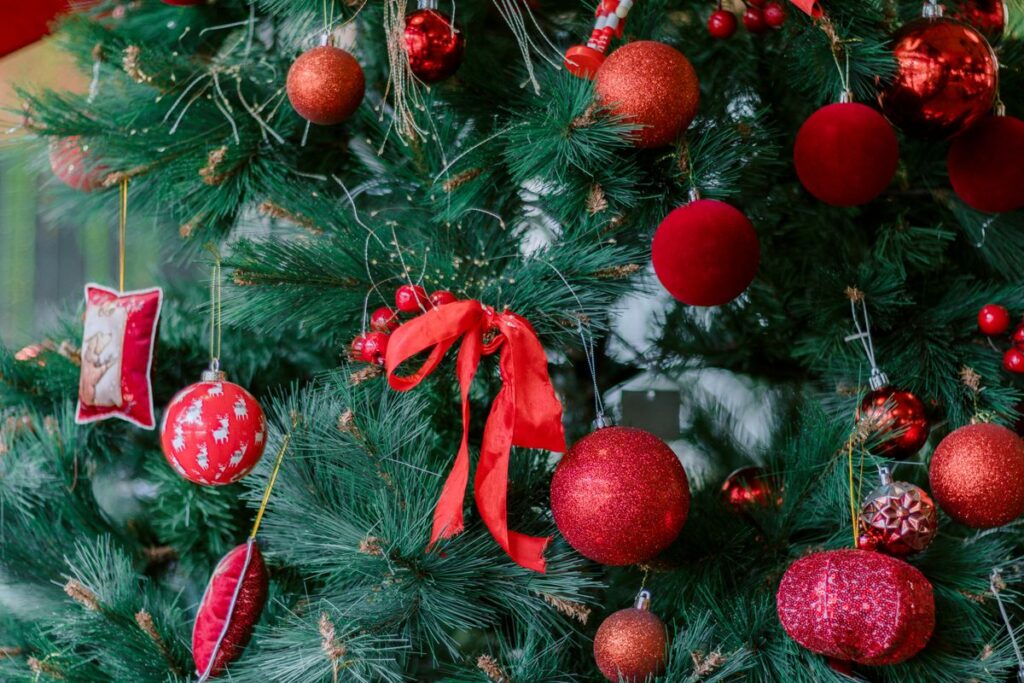
This is the tree most of us grew up with, and it survives for a reason. Deep red baubles in matte, shiny, and glitter finishes, gold ribbon, and warm white lights give a tree that looks rich without trying hard. The trick is mixing finishes: all-shiny red looks flat, while a mix of matte, glitter, and glass reds gives the eye something to move between. Add gold picks, a few gold baubles at different depths, and a simple gold star. A red velvet skirt finishes it. If you only ever decorate one way, decorate this way, because it suits almost any room and photographs well in warm evening light.
2. Winter White and Silver
White ornaments, silver baubles, clear glass, and cool or warm white lights make a tree that feels like a snowy evening. The danger is a tree that looks washed out, so add texture instead of colour: white feather picks, frosted pinecones, silver tinsel, and a mix of matte white and mirrored silver balls. A flocked tree suits this theme best, but a plain green tree works too if the white ornaments are dense enough. Keep the ribbon silver or white, and skip red entirely, because one red bauble on a white tree draws the eye away from everything else.
3. Jewel Tone Glamour
Deep emerald, sapphire, ruby, and plum are the colours designers keep returning to this year, and the rule is to pick two or three jewel tones as a foundation rather than throwing every colour at the tree at once. Emerald usually anchors the palette, with sapphire or ruby on top, and gold ribbon and warm gold lights stop the dark colours from turning heavy. Velvet ribbon in one of the jewel tones is the finishing touch, and glass baubles repeat the same shades at different depths. This theme suits a dark green tree and a room with warm wood or deep wall colours, where the richness has something to sit against.
4. Vintage Glass and Tinsel Revival
The tree many of us remember from a grandparent’s living room is back, and this is the theme that leans into it hardest. Mismatched vintage glass ornaments in odd shapes, teardrops, pinecones, birds, and the shiny striped balls that used to come in cardboard boxes, give a tree its history back. Thin silver tinsel, draped over the branch tips so the ends hang and catch the light rather than wound tightly around the tree, is the other half of the look, and it is the way tinsel was used decades ago. Bubble lights, the little glass tubes that start bubbling once they warm up, add gentle movement no LED can copy.
Multicolour lights suit this tree better than white ones, because the whole point is warmth and nostalgia rather than a coordinated palette. Thrift stores and estate sales are the best source for real vintage pieces, and a few genuine ornaments make the new ones look authentic. Design coverage of the 2026 season, including a roundup published on October 30, 2026, names tinsel, bubble lights, and vintage glass ornaments among the year’s defining tree trends, so this is a theme with the moment behind it.
5. Kid-Friendly and Shatterproof

A tree with small children in the house is decorated differently on purpose, and it can still look good. The lower third of the tree gets shatterproof plastic, fabric, felt, and wooden ornaments, with glass and heirloom pieces kept to the top half. Ribbon and twine ties replace metal hooks, which end up on the floor and in small hands. Let the children hang their own ornaments, even if the placement is not where you would put them, because a tree they helped decorate is a tree they are proud of rather than a display they are told not to touch.
Felt ornaments, wooden animals, and a few soft, oversized baubles fill the lower branches safely. Keep tinsel off a tree small children can reach, since long, thin strands are a choking and swallowing risk.
6. Woodland and Natural
Pinecones, wooden ornaments, dried orange slices, cinnamon sticks, burlap ribbon, and a few plaid baubles make a tree that looks like it was gathered rather than bought. This is the easiest theme to build cheaply, because much of it comes from outside or from the craft drawer: pinecones collected on a walk, orange slices dried in a low oven, and simple wooden stars. Warm white lights, a burlap or linen tree skirt, and a wooden star topper finish it. The palette stays in browns, creams, and deep greens, with one accent colour, usually red, used sparingly so the natural materials stay the focus.
7. Scandinavian Simplicity
Scandinavian trees are about restraint: fewer ornaments, more space between them, and materials that look honest. White and pale wood ornaments, paper stars, straw decorations, and a few clear glass baubles, with warm white lights and a simple linen or paper star topper. The tree itself matters more here than on any other theme, because there is nothing hiding a sparse or gappy tree, so fluffing is essential. This theme suits a smaller tree in a bright room, and it pairs well with a plain white or natural linen skirt rather than anything patterned.
8. Coastal and Beachy
Not every Christmas happens in the snow. A coastal tree uses pale blue, sea glass green, white, and sand tones, with shells, starfish, driftwood ornaments, and rope or jute ribbon. Clear glass baubles read as sea glass, and a few white coral-style picks fill the gaps. Warm white lights keep it soft, and a driftwood star or a simple white topper finishes it. This theme is a good choice for a beach house or a bright room with pale furniture, and it is one of the few themes where a white or flocked tree looks wrong, because the look needs the green of a real tree to anchor the pale colours.
9. Farmhouse Plaid and Tin
Red and black buffalo plaid ribbon, galvanized metal ornaments, galvanized stars, and a galvanized tree collar give a farmhouse tree its character. Add wooden bead garland, burlap, and a few cream baubles to soften the metal, and warm white lights throughout. This theme is forgiving, because plaid and metal hide uneven ornament placement, and it suits a tree in a kitchen or a family room with wood floors and a lot of foot traffic. A metal collar instead of a skirt is the signature detail, and it is practical too, since it does not shift when the dog walks past.
10. Blush Pink and Rose Gold
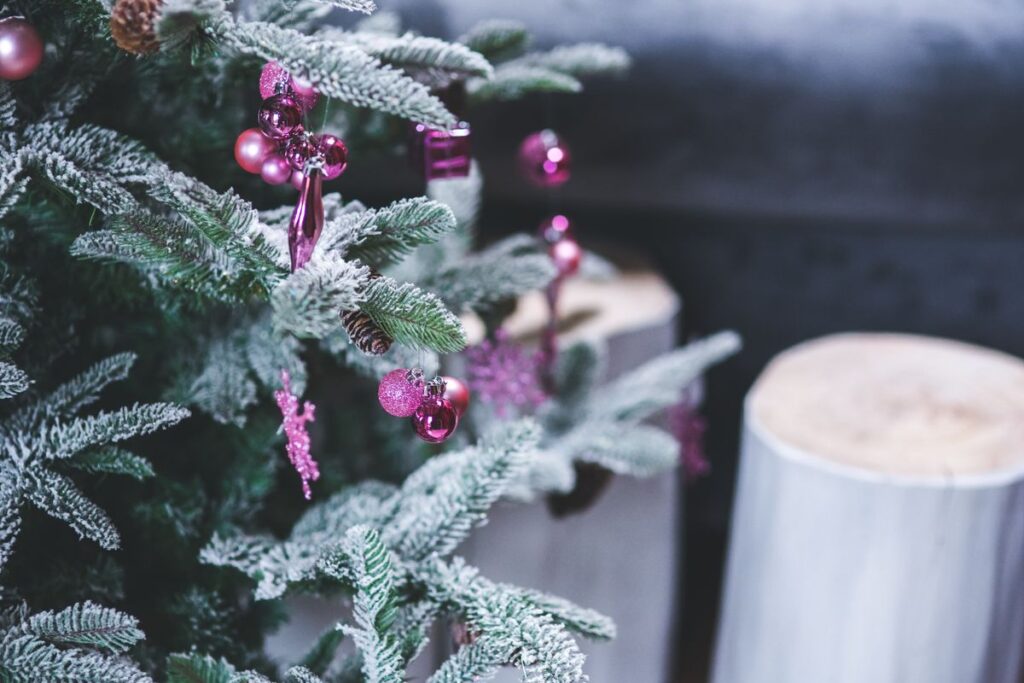
Blush baubles, rose gold glitter ornaments, and cream flowers layered together look elegant rather than sweet, as long as the pink stays dusty rather than bubblegum. Mix matte blush, rose gold metallic, and clear glass, and use cream or pale gold ribbon rather than bright gold, which can turn the whole tree brassy. This theme suits a flocked tree or a white tree particularly well, and it works in a bedroom or a smaller living space where a full red tree would feel heavy. A rose gold star or a cream bow topper finishes it.
11. Icy Blue and Silver
Silver tinsel garlands, mirrored baubles, crystal icicles, snowflake ornaments, and clear glass balls layered until the whole tree glitters like ice. Cool white lights are essential here, because warm light yellows the silver and turns the icy look muddy. Add pale blue baubles sparingly for depth, and keep the ribbon silver or pale blue. This is a dramatic theme that needs a lot of ornaments to work, because the look depends on density and reflection, so it is best for a tree you plan to decorate fully rather than a quick job.
12. Candy Cane Classic
Red and white, with nothing else. Striped baubles, white ornaments, candy cane picks, red ribbon, and multicolour or warm white lights, depending on how playful you want it. The discipline is the point: when the palette is only two colours, every ornament has to earn its place, and the tree reads as intentional rather than random. Add white feather picks and a red bow topper, and keep the tree skirt red or white. This theme is a favourite for a hallway tree or a second tree, because it is cheerful from across the room and easy to build from a small set of ornaments.
13. Gold Glamour and Champagne
Gold and champagne is the tree for a formal living room. Mix glitter baubles with matte gold balls, gold leaf picks, and a beaded garland, then let warm lights bounce off every surface. Add a few clear glass ornaments to give the eye a rest between all the shine, and use champagne ribbon in loose loops rather than tight wraps. A gold star topper and a cream or gold skirt complete it. This theme looks expensive with relatively few ornaments, because gold reflects the lights so well, which makes it a good choice if your ornament collection is still growing.
14. Black, White, and One Bold Colour
A modern tree in black and white baubles, with one bold accent, usually red or emerald, repeated in clusters through the tree. The black ornaments give the tree a graphic, contemporary edge, and the single accent colour stops it from looking like a Halloween tree. Use matte black and white baubles in roughly equal numbers, then add the accent in about a third of the ornaments, clustered rather than scattered. A black ribbon or a white star topper finishes it. This is the theme for a modern living room, and it is the easiest of all fourteen to keep tidy, because the limited palette makes a stray ornament obvious.
Christmas Tree Decorating Ideas for Small Spaces

A small flat or a corner of a room does not mean a sad tree. It means a tree chosen for the space. Slim and pencil trees are made for this: they are six to seven feet tall but only about two feet wide at the base, so they fit against a wall or in a corner without eating the room. Decorate them the same way as a full tree, but use fewer, smaller ornaments and keep the ribbon narrow, because wide ribbon overwhelms a narrow tree. A pencil tree with one colour scheme and warm lights can look more deliberate than a full tree squeezed into a corner it does not fit.
Tabletop trees, usually two to four feet tall, suit a sideboard, a console, or a bedroom. The same order applies, but the light count drops to one or two short strands, and the ornaments should be small. A tabletop tree is also the best place for a theme you love but would not want on the main tree, like a full vintage glass collection or a set of handmade ornaments. Corner trees work well with a half tree, the flat-backed kind designed to sit against a wall, which gives you a full-looking tree in half the floor space.
Whatever you choose, measure the spot before you buy, including the ceiling height and the width of the tree skirt, because a tree that blocks a doorway will be resented all December.
What a Tree Costs: Three Budget Levels
Decorating a tree does not need to be expensive, and knowing the rough numbers helps you spend where it shows. At the under-50-dollar level, you are decorating with what you own plus one or two new pieces: a spool of ribbon, a box of baubles in your theme colour, and a set of warm white lights if last year’s strand has dead bulbs. This is enough to refresh a tree completely if the base collection is solid.
At the 50-to-150-dollar level, you can buy into a new theme properly: a set of matching baubles, ribbon, a few picks, and a topper, plus a new tree skirt. This is the level where most people land when they switch themes, and it is the level where shopping after Christmas for next year pays off, because the same sets sell for half price in January.
At the splurge level, above 150 dollars, you are buying a pre-lit tree, a full set of glass ornaments, or a statement topper, and the money goes furthest on the tree itself and the lights, because those are the parts that last a decade. Ornaments are the easiest place to overspend and the hardest place to notice the difference, so spend on the tree and the lights first.
One more budget habit that costs nothing: buy one good ornament a year instead of a box of cheap ones. In five years you will have five ornaments you love, and in ten years you will have a collection with a story. A tree full of ornaments with stories behind them is the one people remember.
Mistakes That Make a Good Tree Look Off
Most tree problems come from the same short list, and all of them are fixable in ten minutes. The first is ornaments only on the outer tips, which leaves the tree looking like a shell. Push some ornaments deep into the branches, where they catch the light from inside. The second is lights only on the outside, which has the same effect. Weave the lights in and out of the branches so the tree glows from within.
The third is too many colours. A tree with five colours and no dominant one looks busy rather than festive. Pick two main colours and one accent, and let everything else support them. The fourth is a topper that is too small or leaning, which draws the eye straight to the top of the tree for the wrong reason. The fifth is a bare bottom, where the lower branches have no ornaments at all because nobody wanted to crouch down. Crouch down. The bottom third of the tree is what people see when they sit on the sofa, and it is where the presents sit, so it deserves the same attention as the top.
The last mistake is decorating in bad light. If you decorate in the evening with the room lights on, the tree will look different in daylight, and the reverse is true too. Check the tree with the tree lights on and the room lights off, because that is how it will look most evenings, and that is when it matters.
Taking It Down: Pack It Away Right
A decorated tree is only half the job. The other half is January, when the ornaments come off and need to survive eleven months in a box. Take the tree down in reverse order: topper first, then ornaments, then ribbon, then lights, so nothing gets tangled or crushed. Wrap glass ornaments individually in tissue paper, keep heavier ornaments at the bottom of the box and lighter ones on top, and label the box with its contents and the room it belongs to. Our guide on how to store Christmas decorations covers the full pack-away, including lights, garlands, wreaths, and artificial trees, and it is worth reading before you start stuffing things into the first box you find.
If you have a cat, the decorating plan changes on the lower branches, and it is worth reading our guide on cat proof Christmas trees before you hang anything breakable within reach. Shatterproof ornaments low down, ribbon ties instead of metal hooks, and a properly anchored tree keep both the cat and the ornaments safe.
One small tradition worth starting: once the tree is up and the lights are on, write the Christmas cards by it. Our collection of merry Christmas wishes for 2026 has ready-to-use messages for family, friends, and colleagues, and a card written next to a lit tree tends to come out warmer than one written at a desk.
Frequently Asked Questions
How many ornaments do I need for a Christmas tree?
A rough guide is about ten ornaments per foot of tree height, so a six-foot tree takes around sixty ornaments, not counting lights, ribbon, and picks. That number is a starting point, not a rule. A tree with large ornaments needs fewer, a tree with small ornaments needs more, and a tree with ribbon and picks can look full with fewer baubles. If the tree looks bare, add picks and ribbon first, because they fill space faster than buying more ornaments.
Should lights go on before or after ornaments?
Always before. Lights go deep into the branches, and ornaments hang on the outside. If you hang ornaments first, you will be reaching through glass to place the lights, and you will knock ornaments off in the process. Fluff, then lights, then ribbon, then ornaments, then the topper.
What is the best colour scheme for a Christmas tree in 2026?
There is no single best scheme, but the looks getting the most attention this year are vintage glass with tinsel and bubble lights, deep jewel tones with gold, and classic red and gold. The right choice is the one that suits your room and your existing ornaments. A theme you can build from what you own will always look better than a trendy theme bought in a hurry.
How do I make a small tree look full?
Fluff the branches properly first, then weave the lights deep into the tree rather than draping them on the outside. Add ribbon or garland to fill gaps, push some ornaments into the interior of the tree, and use picks to fill bare spots. A small tree with dense lights and layered ornaments looks fuller than a larger tree decorated thinly.
Can I mix warm white and multicolour lights?
You can, and on a vintage or retro tree it works well, because the mixed light is part of the nostalgic look. On a classic, white, or jewel tone tree, stick to one type, because mixed lights fight with a coordinated palette. If you are unsure, warm white is the safer choice for almost every theme.
When should I decorate the Christmas tree?
Most households decorate in the first two weeks of December, and a real tree put up much earlier will be shedding needles by Christmas Day unless it is watered daily. An artificial tree can go up whenever you like. The practical answer is to decorate when you have a free afternoon, because a rushed tree is the one that ends up with tangled lights and a leaning topper.
Leave a Reply