

Table of Contents
Knowing how to store Christmas decorations properly is the difference between a joyful decorating day next December and an afternoon spent untangling lights, picking glass out of a box, and wondering where the tree skirt went. Most decoration damage does not happen while decorations are on display. It happens in the box, in the attic, and in the months when nobody is thinking about them at all.
I used to be the person who stuffed everything into two large boxes on the last day of the holidays, told myself I would sort it next year, and then spent the next December buying replacements for things I already owned but could not find. The year I finally changed the system, I did not buy fancy storage. I bought clear bins, tissue paper, and labels, and I spent one extra hour packing properly. The next December, decorating took half the time, nothing was broken, and I did not buy a single replacement ornament.
This guide covers the whole pack-away: sorting and cleaning, ornaments, lights, garlands, wreaths, artificial trees, outdoor decorations, and where to store everything so it survives heat, cold, damp, and pests. It is written for the days just after the holidays, when the tree comes down and the boxes come out, and it is meant to make next Christmas easier, not just this January tidier.
Before You Pack Anything: Sort, Clean, and Test
Do not pack a box until you know what is in it. Lay everything out on a clean table or a bed, and sort it into broad groups: ornaments, lights, tree accessories, indoor decorations, outdoor decorations, wrapping supplies, and sentimental pieces. Sorting first is what makes labeling honest later, because a box labeled “Christmas” tells you nothing in December, while a box labeled “Glass ornaments, living room tree” tells you everything.
Set aside anything that is broken beyond repair, anything you no longer like, and anything you have in duplicate. It is tempting to keep a cracked ornament out of guilt, but a cracked ornament in a box is just weight and a sharp edge next to good ornaments. Let it go, donate what is still usable, and keep only what you would genuinely hang again.
Clean everything before it goes away. Wipe hard ornaments with a soft, dry cloth, dust artificial greenery, and let fabric items like stockings and tree skirts air out fully before packing. Anything packed damp can develop mildew over a year in storage, and dust left on glass can dull finishes over time. If an item is still damp from cleaning, wait until it is completely dry. A day of drying now saves a ruined ornament later.
Test every string of lights and every battery-operated decoration before you store it. Plug each strand in, check for dead bulbs, frayed wires, and loose sockets, and discard any strand with damaged wiring. Remove batteries from battery-operated decorations, because batteries can leak during long storage and ruin the item they were left in. Note which strands need new bulbs, and put that note in the box, so you are not surprised next December.

How to Store Christmas Ornaments Without Breaking Them
Ornaments need individual protection, not just a box. Glass, ceramic, and handmade ornaments should never be packed loose in a large bin, because they shift during transport and stacking, and they crack when they collide.
Use Divided Boxes or Make Your Own
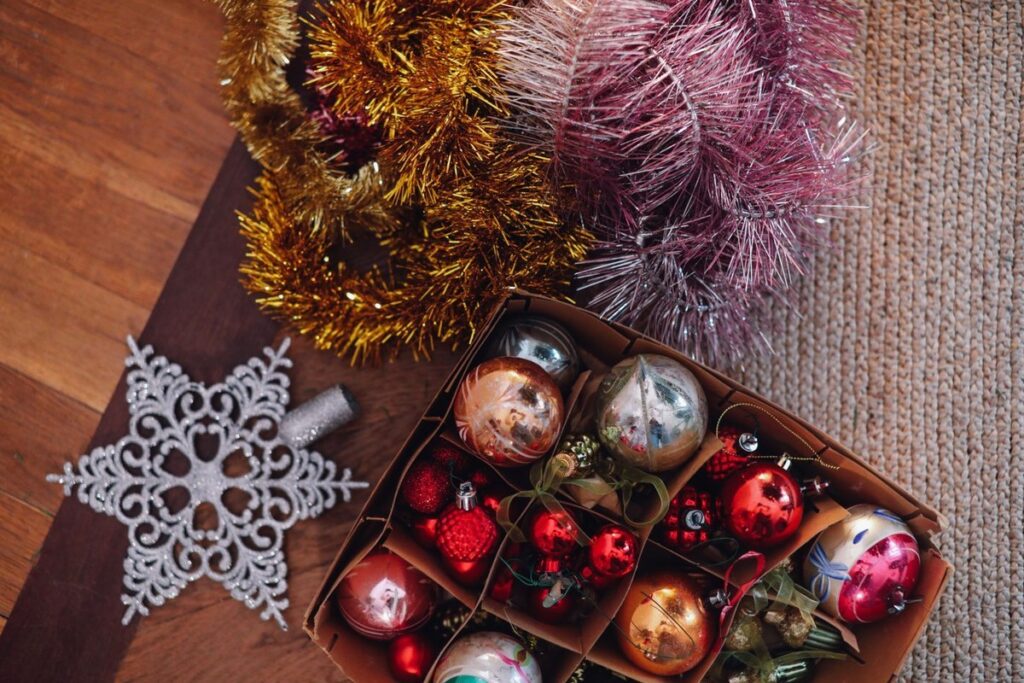
A divided ornament box with individual compartments is the simplest solution, and it is worth the cost if you own glass ornaments. If you do not have one, make compartments with cardboard dividers, small boxes inside a larger bin, or even clean egg cartons for small ornaments. Wrap each delicate ornament individually in tissue paper or a soft cloth before it goes into its compartment. Avoid newspaper, because ink can transfer onto surfaces, and avoid packing ornaments inside each other, even if they look like they nest neatly, because finishes rub and chip.
Keep heavier ornaments at the bottom of the box and lighter ones on top, and store hooks and hangers in a small labeled bag inside the same box, so you are not hunting for hooks next year. Label the box with its contents and with “fragile” and “this side up” if it contains glass. A box that is labeled properly is a box that gets stacked correctly.
Sentimental Ornaments Deserve Extra Care
Handmade ornaments, children’s ornaments, and family keepsakes are often more fragile than store-bought ones, and they are irreplaceable. Give them their own small box, wrapped individually, with a note inside saying what each piece is and who made it. That note matters more than you think. In ten years, nobody will remember which paper ornament came from which school year unless someone wrote it down.
How to Store Christmas Lights Without Tangles
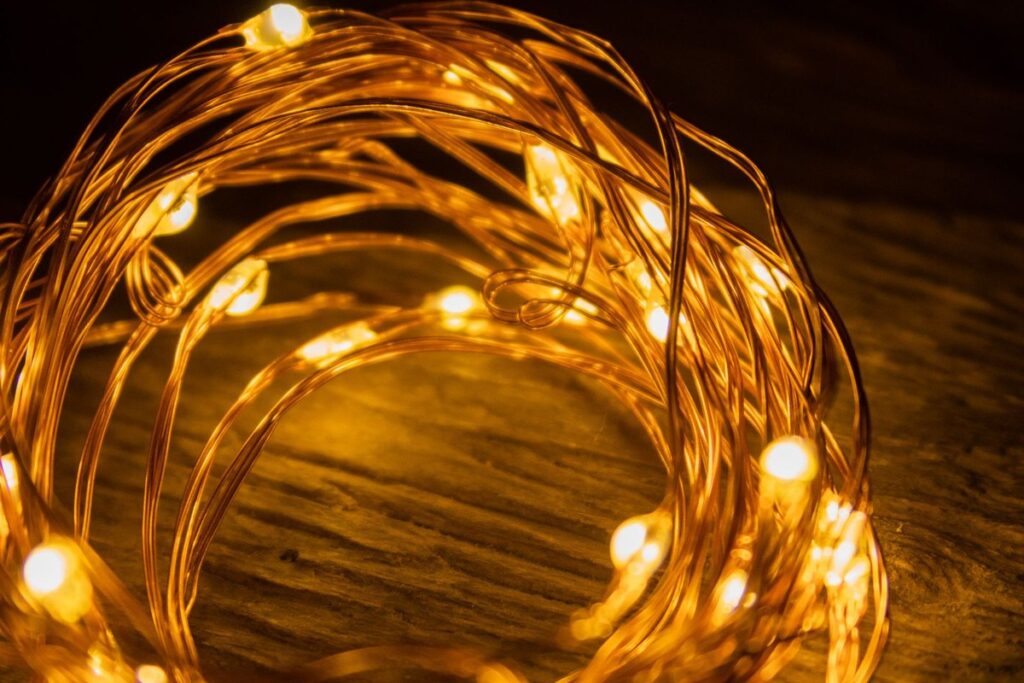
Tangled lights are the most common storage failure, and they are also the most avoidable. The trick is to wind each strand the same way every year, and to store each strand separately, not piled together in a bag.
Wind each strand around a piece of sturdy cardboard, a purpose-made light winder, or even a large coffee can, keeping the tension even and the loops neat. Secure the ends with a twist tie or a velcro strap, not a rubber band, because rubber bands dry out, snap, and leave sticky residue on wires. Put each wound strand in its own bag or its own section of a bin, and label it with where it goes: “front porch,” “living room tree,” or “mantel.” That label is what turns next year’s decorating from a guessing game into a quick job.
For pre-lit artificial trees, do not wrap the lights tightly around the branches for storage. Drape them loosely between sections as you disassemble the tree, so the wires are not strained or kinked. If a strand on a pre-lit tree is damaged, note it now, because finding a matching replacement strand in December is much harder than ordering one in January.
For more on putting lights up in the first place, see our guide on how to hang Christmas lights, which covers safe placement and the kind of strands that last longest.
Garlands, Wreaths, and the Artificial Tree
Garlands tangle like lights, so wind them around a rigid cardboard tube or a length of pipe, rather than coiling them loosely into a box. Keep garlands in a long, narrow bin or a tall bag, so they are not crushed under heavier boxes. If a garland is made of delicate materials, wrap it in tissue paper before winding it, to protect the finish.
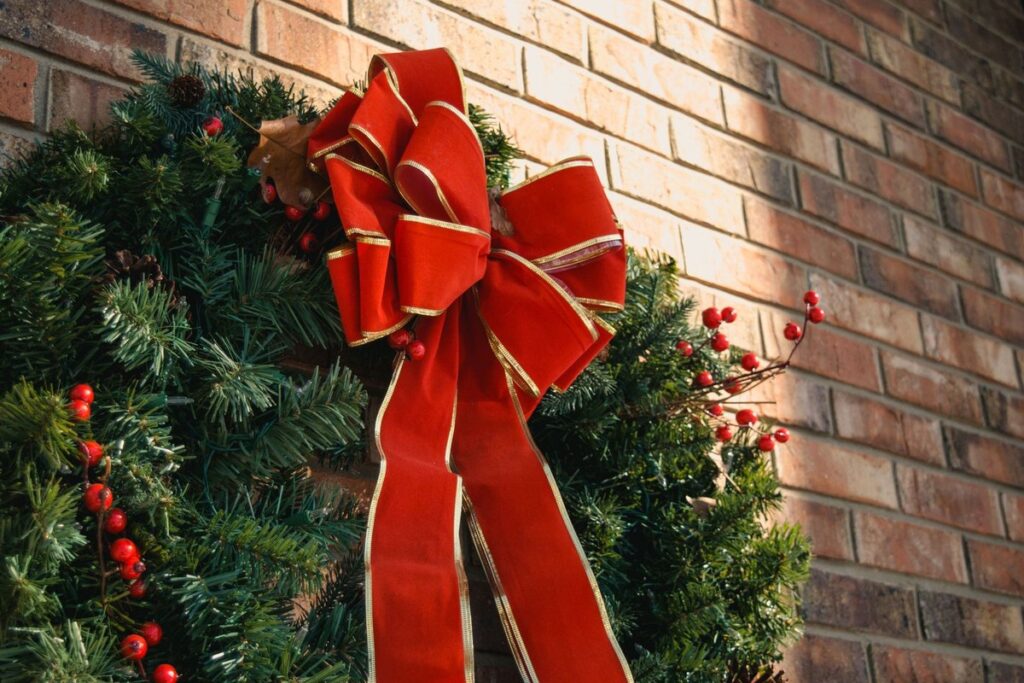
Wreaths need a different shape of storage. A wreath bag, or a large, flat box, keeps a wreath from being squashed. Hang the bag on a hook if you have wall space in a storage area, because a hanging wreath keeps its shape far better than a wreath stacked under three bins. If you must stack, put the wreath on top of everything else, never at the bottom.
For an artificial tree, disassemble it section by section, and use a dedicated tree storage bag with handles and wheels if you have one. These bags prevent branch breakage and make the tree far easier to move than a cardboard box. If you do not have a tree bag, wrap each section in an old sheet before boxing it, to keep branches from snagging each other. Store the tree upright if possible, and do not stack heavy boxes on top of it, because bent branches rarely spring back fully.
Outdoor Decorations, Inflatables, and Wrapping Supplies
Outdoor decorations need cleaning before storage, because dirt, salt, and moisture left on them over a year will corrode finishes and damage wiring. Wipe down outdoor figures, check outdoor light strands for cracked sockets and frayed wires, and let everything dry completely before packing. Store outdoor decorations in sealed plastic bins, not cardboard, because garages and sheds are damp and cardboard soaks up moisture.
Inflatables need special care. Deflate them fully, clean them with a damp cloth, and let them dry completely before folding. Fold them loosely rather than compressing them tightly, because tight folds can crack the material over time. Store the blower and the stakes in the same bin as the inflatable, so you are not searching for stakes in the dark next December.
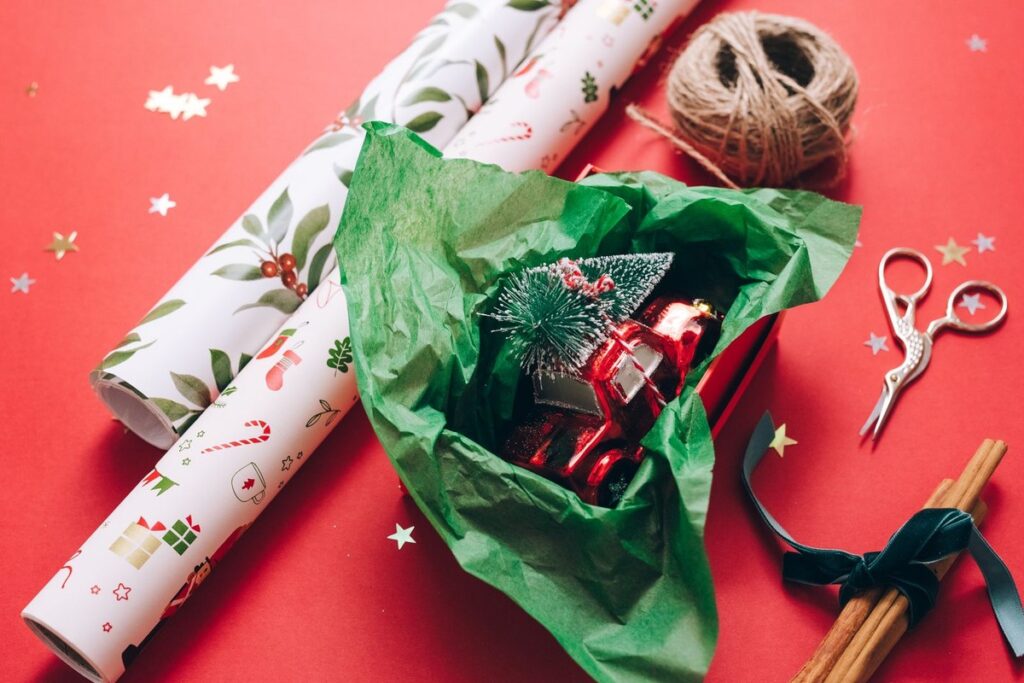
Wrapping supplies are often forgotten in the pack-away, and they are the first thing people buy again unnecessarily. Roll wrapping paper and store it upright in a tall bin or a wrapping paper organizer, so it does not crease or tear. Keep ribbons on spools, in a bag, and keep gift bags folded flat in a single box. Put a small note in the wrapping box listing what you already have, because nobody remembers in December how many rolls of paper they own.
Choosing Bins and a Storage Spot
Clear, stackable plastic bins with tight-fitting lids are the best general choice for Christmas decorations. Clear bins let you see what is inside without opening every box, and tight lids keep out dust, moisture, and pests. Use uniform bin sizes where you can, because uniform bins stack safely and do not topple, while a tower of mixed boxes is an accident waiting to happen.
Label every bin on two sides, not just the top, because the top is hidden once bins are stacked. Write the contents, the room they belong to, and any handling note, such as “fragile” or “lights, front porch.” A label maker is nice, but a permanent marker on masking tape works just as well, and it is easier to update next year.
Where you store the bins matters as much as what you store them in. The ideal spot is clean, dry, temperature-stable, and accessible. A spare closet or a dry basement shelf is better than an unheated attic or a damp garage floor, because extreme heat, cold, and humidity damage glass, metal, fabric, and wiring over time. If you must use an attic or garage, keep bins off the concrete floor on shelves or pallets, because moisture wicks up from concrete, and avoid storing decorations directly under a roof leak or next to a heat source.
Pests are another reason for sealed bins. Mice and insects love cardboard boxes and fabric stored in garages. Sealed plastic bins, kept off the floor, are far less inviting, and a quick check of the storage area in spring and autumn catches problems early.

How to Store Christmas Decorations: A Pack-Away Checklist for Next Year
Before you close the last bin, make a short list for next December and put it in the first box you will open. That list should say what needs replacing, what needs new bulbs or batteries, what you donated or threw away, and anything you want to do differently next year. It takes five minutes in January and saves an hour of confusion in December.
Here is a simple order that works for most households:
- Take down in reverse order: outdoor decorations first, then the tree, then indoor decorations, so nothing gets packed while it is still needed.
- Sort and clean as you go, not after everything is in a pile, because a pile is where sorting goes to die.
- Test lights and remove batteries before any strand or decoration goes into a bin.
- Pack fragile items first, while you still have patience, and pack sturdy items last.
- Label every bin on two sides, with contents and room, before you stack it.
- Stack heavy bins low and fragile bins high, and keep everything off the floor on shelves or pallets.
- Write the next-year note and put it in the first bin you will open.
The same labeling and bin discipline that works for Christmas decorations works for general household storage too. For the wider picture, see our guide on home organization ideas for small spaces, and if you are planning next year’s celebrations early, our guide on Christmas party games is a good place to start.
For another practical storage walkthrough, see How to Store Christmas Decorations: 7 Simple Steps.
Frequently Asked Questions
When should I take down and store Christmas decorations?
Most households take decorations down in the first week of January, and the sooner you pack them after taking them down, the less chance they have of being damaged, dusty, or lost. Do not leave boxes unsorted in a hallway for weeks, because that is when things get crushed, stepped on, or thrown away by mistake.
Can I store Christmas decorations in the attic?
You can, but it is not ideal for fragile or valuable items, because attics swing between very hot and very cold, and that expansion and contraction can damage glass, metal, and fabric over time. If the attic is your only option, use sealed plastic bins, keep them off the floor, and keep the most fragile ornaments in a closet inside the house instead.
How do I stop Christmas lights tangling in storage?
Wind each strand separately around cardboard or a light winder, secure the ends with a twist tie or velcro strap, and store each strand in its own bag or section. Never pile multiple strands loose into one bag, because that is how tangles happen.
Should I keep the original boxes for ornaments?
Yes, if you have them and they are in good condition, because original ornament boxes are already shaped and padded for those ornaments. If the original boxes are damaged or missing, a divided ornament box or homemade cardboard compartments work just as well.
What should I do with decorations I no longer want?
Donate usable decorations to a charity shop, a school, or a community group, and recycle or throw away broken ones. Keeping decorations you no longer like just takes up bin space and makes next year’s sorting harder.
Leave a Reply