
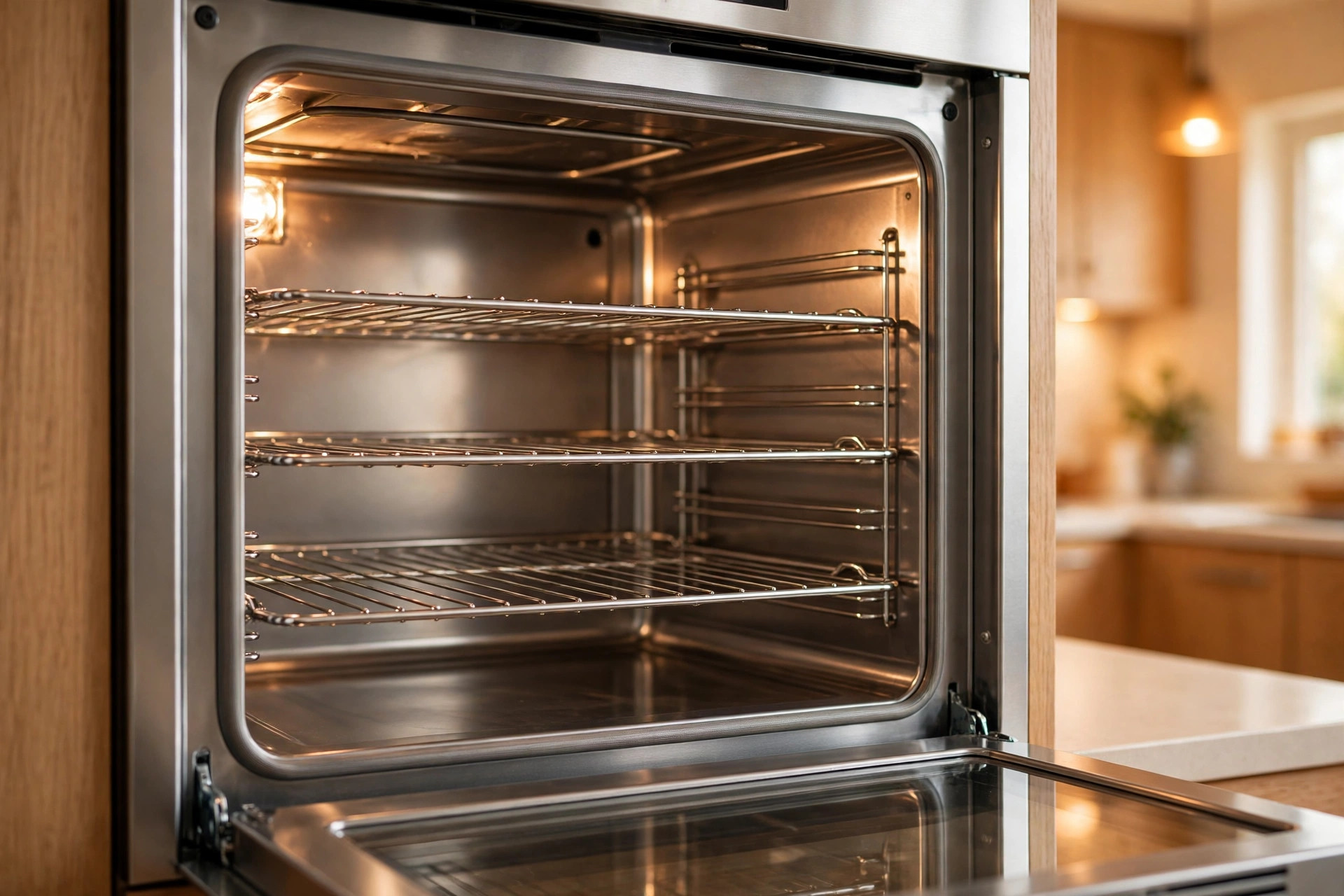
Learning how to clean your oven before Thanksgiving is one of the smartest jobs on your holiday checklist. Your oven will work hard on the big day, and a dirty one can smoke, smell, and affect the taste of your food. Cleaning it a week or two ahead means no last-minute panic and even heating when it matters most.
Oven cleaning is simpler than most people expect. This guide covers both methods — self-clean cycle and manual scrub — plus the racks, the door glass, and the safety rules, including which cleaners never to mix.
Key Facts
- Clean your oven 1 to 2 weeks before Thanksgiving, not the day before.
- A self-clean cycle heats the oven to a very high temperature to burn off grease.
- Never mix cleaning chemicals — especially bleach and ammonia, which create toxic fumes.
- Always follow your oven manual: some racks and finishes cannot handle the self-clean cycle.
- Ventilate the kitchen and keep children and pets away during self-cleaning.
- Baking soda and vinegar work well for a gentler, fume-free manual clean.
What You Need Before You Start
Gather your supplies first: for a manual clean you will need baking soda, white vinegar, dish soap, a spray bottle, rubber gloves, a plastic scraper, a scouring pad, and old towels to protect the floor. For a self-clean cycle you need far less — a damp cloth, dish soap, and a scraper for loose debris.
Start by removing everything: racks, trays, thermometers, and any foil or liners. Then check your oven manual. Some ovens warn against the self-clean cycle with certain racks inside, and some finishes can be damaged by oven cleaner sprays. If you have lost the manual, most manufacturers publish it free on their website — search by the model number on the sticker inside the door frame.
Give the oven a quick wipe first: scrape out loose crumbs and burnt bits, then wipe the floor with a damp cloth. Removing loose debris now makes both methods faster and reduces smoke during a self-clean cycle. If your kitchen has been reorganised for the holidays, our small kitchen organization ideas can help you find a place for everything.
How to Use the Self-Clean Cycle
The self-clean cycle is the easiest option if your oven has one. It locks the door and heats the oven to a very high temperature, turning grease and burnt food into fine ash you can wipe away once it cools. The cycle takes 2 to 4 hours plus cooling time, so pick a day when you do not need the oven.
First, remove the racks unless your manual says they are safe to leave in — many discolour or warp at self-clean temperatures. Wipe out loose debris, close the door and select the self-clean setting. Choose the shortest cycle that will do the job; a lightly soiled oven rarely needs the longest.
While the cycle runs, ventilate well: open windows and switch on the range hood, as the cycle produces heat, smoke and odours. Keep children and pets out of the kitchen — the door gets extremely hot, and the fumes can harm birds in particular. Never leave the house while it runs. Once the oven has cooled and the door unlocks, wipe the ash out with a damp cloth; a baking-soda paste will lift any stubborn spots.
How to Clean Your Oven by Hand, Step by Step
If your oven has no self-clean cycle, or you prefer not to use it, a manual clean works just as well. This baking-soda method is gentle, cheap, and free of harsh fumes.
First, remove the racks, then mix half a cup of baking soda with a few tablespoons of water to make a thick paste. Wearing rubber gloves, spread it over every interior surface, avoiding the heating elements, and pay extra attention to the floor and lower walls, where grease collects. Leave it for at least 12 hours, or overnight — the longer it sits, the less scrubbing you will need.
The next morning, wipe out as much dried paste as you can, then spray the inside with white vinegar: it fizzes where it meets the remaining baking soda, loosening the last grime. Wipe again with a clean damp cloth. For stubborn spots use a plastic scraper or non-scratch pad — never steel wool, which scratches the lining. Repeat until the surfaces feel clean and no paste remains.

Cleaning the Racks, Door and Glass
Racks are usually the dirtiest part and clean best outside the oven. Place them in a bathtub or large tub lined with old towels, cover with hot water, and add half a cup of dish soap or a cup of baking soda. Soak for several hours or overnight, then scrub and rinse. If a bathtub is not an option, a large bin bag works: place the rack inside, add hot soapy water, seal it, and lay it flat.
Door glass collects grease on both sides, and the inside is often the worst. Clean the outside with dish soap and a damp cloth. For the inside glass, apply the same baking-soda paste, leave it for 30 minutes, and wipe clean. Some doors come apart for cleaning — check your manual first, as the clips can be tricky and the glass is heavy.
Do not forget the stovetop: a quick wipe of the knobs, control panel and worktops finishes the job. Add it to your Thanksgiving cooking timeline so it is done well before the big day.
Oven Cleaning Safety: Read This First
Oven cleaning is safe when you follow a few simple rules. The most important is never to mix cleaning chemicals: bleach and ammonia together create toxic fumes that can cause serious breathing problems. Use one product at a time, and if you switch products, rinse the surface thoroughly first.
Always follow your oven manual: it tells you whether your model has a self-clean cycle, which cleaners are safe, and whether the racks can stay inside. Using an oven cleaner spray in a self-clean oven can damage the interior coating, and some sprays should never be used on a hot surface.
Ventilate whenever you clean: open a window, switch on the range hood, and wear gloves. Keep children and pets away from the oven while you work, especially during a self-clean cycle, when it reaches very high temperatures. If you feel dizzy or your eyes sting, leave the room immediately and get fresh air.
Also check whether your oven model has ever been recalled. The U.S. Consumer Product Safety Commission lists appliance recalls, including ovens with faulty doors or controls, on its Recalls page — a quick search by brand or model takes a minute. And once the oven is clean, make sure your Thanksgiving shopping list is ready.

How Often Should You Clean Your Oven?
For most households, a deep oven clean every 3 to 6 months is enough; if you cook roasts often, do it more frequently. A quick wipe after a spill, once the oven is cool, stops grease from baking on and turning into a bigger job.
Before Thanksgiving, finish the deep clean 1 to 2 weeks ahead. That leaves time for a test bake, airing the oven out, and fixing anything you notice, such as a worn door seal or a bulb that needs replacing. A clean oven also heats more evenly, so your turkey cooks properly and baked sides turn out golden.
Frequently Asked Questions
When should I clean my oven before Thanksgiving?
One to two weeks before is ideal: time for the oven to air out and for a test bake. Do not leave it to the day before — a self-clean cycle takes hours plus cooling, and a manual clean needs an overnight paste.
Can I use the self-clean cycle the day before Thanksgiving?
It is not a good idea: the cycle takes 2 to 4 hours plus cooling, produces smoke and odours, and can reveal a problem like a faulty door lock. Clean the oven a week or two ahead instead.
Is it safe to use oven cleaner spray?
Yes, if you use it exactly as the label directs: wear gloves, ventilate the room, and never use it on a hot oven or in a self-clean oven unless the label says it is safe. Never mix it with other cleaners, especially bleach or ammonia.
How do I clean oven racks without a bathtub?
Place each rack in a large bin bag, add hot water and half a cup of dish soap, seal it, and lay it flat for several hours. Then scrub and rinse. A large plastic storage tub works the same way.
What is the best natural way to clean an oven?
A baking-soda-and-water paste, left overnight, is the most effective natural method. Spray with white vinegar the next morning to loosen the residue, then wipe clean. It is cheap and fume-free — just avoid the heating elements.
Why does my oven smoke after cleaning?
Smoke after cleaning usually means leftover cleaner or grease is burning off. Run the empty oven at a moderate temperature for 20 to 30 minutes with the windows open. If it continues or smells chemical, switch the oven off, let it cool, and wipe the interior again.
Leave a Reply