
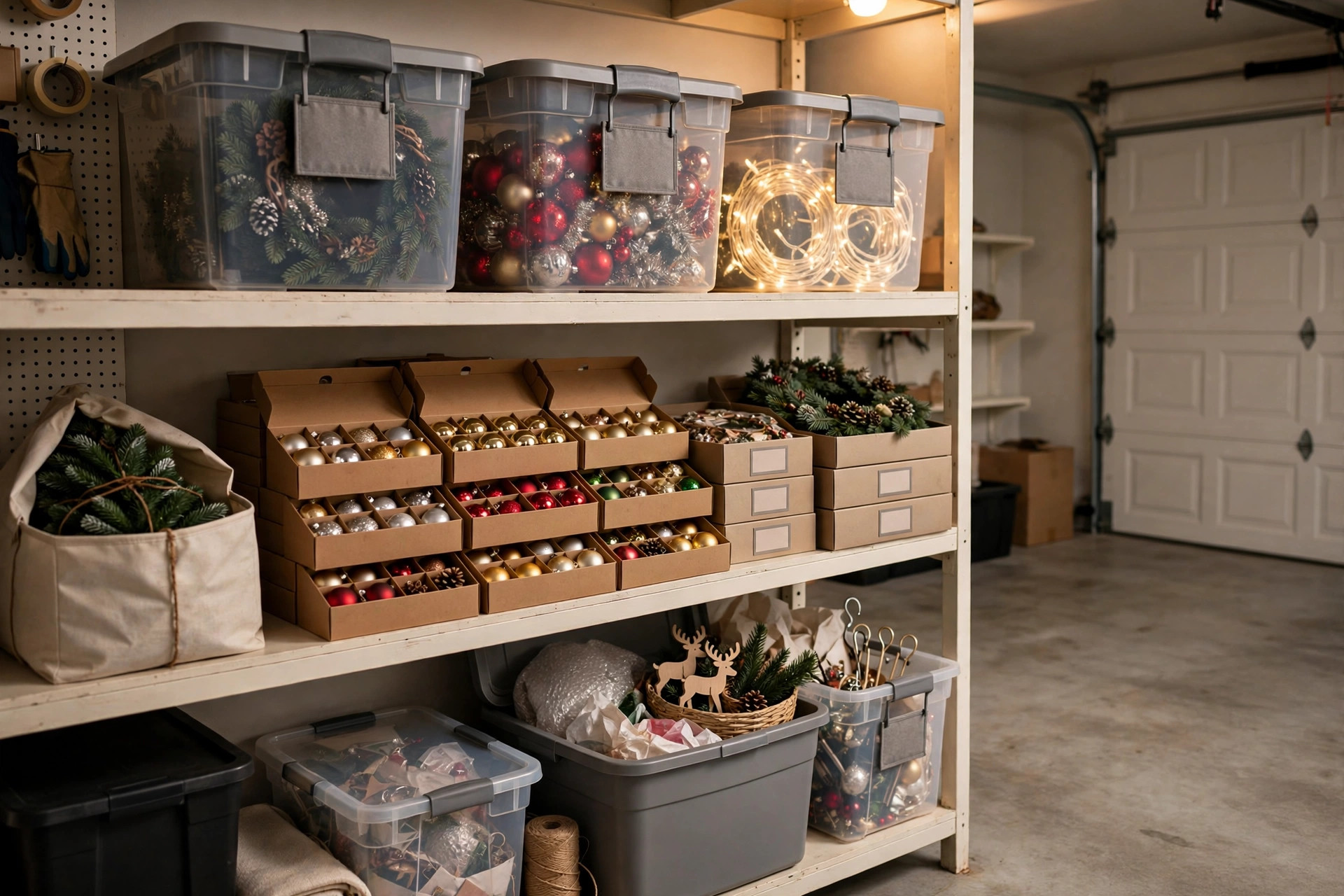
Learning how to store Christmas decorations properly is the unglamorous part of the holidays, but it decides whether next December starts with excitement or frustration. When ornaments are wrapped carefully, lights are coiled instead of tangled, and every box is labelled, unpacking next year takes an afternoon rather than a weekend of untangling and replacing broken pieces. Good storage does not need expensive equipment or a large house — just a little patience, a simple system, and a few habits that protect fragile items from dust, damp, and crushing.
The best time to take decorations down is usually within a week or two after Christmas Day, which falls on Friday 25 December 2026. Dried-out natural greenery becomes a fire risk the longer it stays indoors, and ornaments left on a tree in a busy room are more likely to be knocked off. There is no need to rush on Boxing Day, though. Pick a calm hour, put on some music, and work room by room so nothing gets shoved into a bag in a hurry.
Key Facts
- Take decorations down within a week or two after Christmas Day, Friday 25 December 2026, and remove dried-out greenery promptly.
- Check lights and electrical decorations for damage before packing them away, and replace anything frayed, cracked, or faulty.
- Wrap fragile ornaments individually in tissue paper and store them upright in divided boxes, never loose in a bag.
- Coil string lights around cardboard or a reel so they do not tangle, and label each strand by length and colour.
- Store decorations in a cool, dry place in sturdy, labelled, lidded containers, away from damp floors and direct heat.
- Photograph each room before taking decorations down so you can recreate the display quickly next year.

Start With a Quick Safety Check
Before anything goes into a box, give your decorations a quick once-over. Check string lights and anything that plugs in for frayed wires, cracked sockets, loose bulbs, and plugs that look discoloured or feel warm. If a strand is damaged, do not try to repair it with tape or hope it will be fine next year. Throw it away and add a replacement to your shopping list for next season.
It is also worth checking whether any lights or electrical decorations have been recalled before you pack them away for another year. The U.S. Consumer Product Safety Commission keeps a searchable list of recalled products, and you can look up any item you have doubts about through the CPSC recalls database. This matters most for older lights and items bought from unfamiliar brands. If an item has been recalled, follow the instructions given for it rather than storing it and using it again.

Sort Before You Pack
The biggest packing mistake is organising by room instead of by type. Boxes organised by room feel logical in the moment, but fragile ornaments end up next to heavy candle holders and lights get buried under garlands. Instead, sort into groups: ornaments, lights, tree decorations, wreaths and garlands, table decorations, outdoor items, and wrapping supplies. Next year, open only the boxes needed for each decorating stage.
As you sort, photograph each room while it is still decorated. A quick photo of the tree, the mantel, and the front porch gives you a ready-made plan for next year. If you are short on storage space, this is also the time to be selective: keep the pieces you genuinely love and use, and let go of duplicates and items unused for two or more years. A smaller, well-loved collection is far easier to store. Our guide to small-space Christmas decor also shows displays that are simpler to pack away.

How to Pack Fragile Ornaments
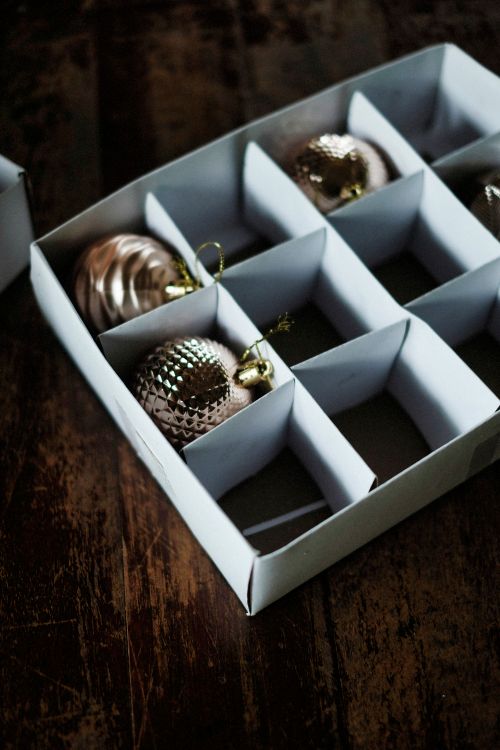
Ornaments cause the most heartbreak in storage, and they are the easiest to protect. The rule is simple: every fragile ornament gets wrapped individually. Tissue paper is ideal because it is soft, light, and cheap. Avoid newspaper, which can transfer ink onto light-coloured ornaments and delicate finishes. Place wrapped baubles upright in a divided box, or a sturdy box with cardboard dividers. Keep ornament hooks together in a small labelled bag, and for reusable ideas see our DIY Christmas decorations guide. Never stack heavy items on top of them.
Storing Lights Without the Tangle
Tangled lights are the classic January frustration, and they are almost entirely avoidable. Wind each strand around something as you take it down, rather than gathering it into a loop in your hands. A notched piece of cardboard works perfectly and takes minutes to make. Start at the plug end, wind evenly, and secure the loose end with a twist tie. Label the cardboard with the length, colour, and where the lights were used, for example “living room tree, warm white.”
Taking Down and Storing the Tree
For an artificial tree, remove ornaments first, then garlands, then lights, working from the top down. For display ideas to revisit next year, see our Christmas tree ideas guide. Most artificial trees fold or come apart in sections. If yours came with a storage bag, use it; if not, a large box or a purpose-made tree bag will protect the branches from dust and crushing. Keep it away from heat sources, and avoid sealed bags that trap moisture.
A real tree should go out promptly once the holidays are over — never try to store one. Many towns run tree recycling schemes in January, so check your council’s arrangements. Clean and dry the tree stand before storing it so it does not rust. Store the tree skirt, topper, and special tree decorations with the ornaments, not with the tree, so they are easy to find when the tree goes up. If your topper is fragile, wrap it separately and label the box.

Wreaths, Garlands, and Table Decorations
Wreaths are awkward to store because they are round, hollow, and easy to crush. The best option is a wreath storage bag or a large, flat box wider than the wreath itself. Hang the bag on a hook if you have space, or lay it flat on top of other boxes — never underneath heavy containers. Compost natural wreaths once they dry out, and coil garlands loosely rather than folding them sharply.

Choosing Containers and a Storage Spot
Sturdy plastic containers with lids are the best choice for most decorations. They keep out dust and pests, protect against light damp, and stack neatly. Clear containers let you see what is inside, but if you use solid-coloured ones, good labels matter even more. Label every box on at least two sides and be specific: “Tree ornaments — glass, fragile” is far more useful than “Christmas.” A contents list taped inside the lid saves opening several containers to find one item.
A Simple System for Next Year
The final step makes the whole job worthwhile: leave a note for your future self. Inside the first box you will open next year, place a short note listing what needs replacing, what you decided to change, and where anything unusual is stored. A note like “replace living room lights — warm white; topper in ornament box 2” takes two minutes and saves much guesswork.
Frequently Asked Questions
When should I take down my Christmas decorations?
Most people take decorations down within a week or two after Christmas Day, Friday 25 December 2026, and this is a sensible target. Natural greenery dries out and becomes a greater fire risk over time, and ornaments left on display are more likely to be knocked or damaged.
How do I stop Christmas lights from tangling in storage?
Wind each strand around a flat piece of cardboard or a purpose-made reel as you take it down, starting at the plug end and securing the loose end with a twist tie. Label it with length, colour, and where it was used, so you can find the right strand without unwinding several.
What is the best way to store fragile glass ornaments?
Wrap each ornament individually in tissue paper and place it upright in a divided box, keeping heavier items in separate containers. Avoid newspaper, which can transfer ink onto light finishes, and never store fragile ornaments loose in a bag where they can knock against each other and chip.
Can I store Christmas decorations in the attic or garage?
You can, but choose the spot carefully and keep boxes off the floor on shelves or pallets. Attics can become very hot in summer and very cold in winter, which can damage adhesives, candles, and delicate finishes, while garages can be damp, so sturdy lidded plastic containers are a wise choice.
Should I keep decorations I no longer use?
It is worth letting go of decorations that have sat unused for two or more years, along with duplicates and anything broken beyond simple repair. Keeping only the pieces you genuinely love makes storage easier, unpacking faster, and decorating more enjoyable, and items in good condition can often be donated.
How do I store a real Christmas tree after the holidays?
A real tree should not be stored at all — it should be taken out promptly once the holidays are over and recycled or collected through your local council’s January scheme if one is available. Clean and dry the tree stand before storing it so it does not rust, and sweep up fallen needles before they spread through the house.
Leave a Reply