
Table of Contents
Thanksgiving dinner is remembered for the food, but it is felt at the table. Guests do not remember whether the plates matched. They remember whether they could see the person across from them, whether there was room for their elbows, and whether the table looked like someone had thought about it before they sat down. Good thanksgiving table decor ideas are not about spending a fortune or copying a magazine spread. They are about a table that is set in the right order, kept low enough to talk across, and dressed in colours that make a late-November afternoon feel warm.
This guide covers the whole job: the order to set the table, the one rule about centerpieces that matters more than any other, fifteen complete table settings you can copy, how to layer a place setting piece by piece, what each look costs, and how to handle the kids table. Nothing here is about food. The turkey, the sides, and the cooking schedule belong to other guides. This one is purely about how the table looks when everyone sits down.
Set the Table in the Right Order
Setting a table is like decorating a tree: the order protects the work. Put the centerpiece on first and you will be reaching around it to lay the plates. Put the glasses down before the plates and you will be moving them twice. Work from the biggest, lowest layer upward, and finish with the things people will touch.
- Clear and clean the table. Take everything off, wipe the surface, and check the table is stable. A wobbling table with a full Thanksgiving setting is a spill waiting to happen, and a folded napkin under one leg fixes it in thirty seconds.
- Lay the cloth and the runner. A tablecloth protects the wood and sets the base colour. A runner down the centre adds a second colour and gives the centerpiece something to sit on. If you are using placemats instead of a cloth, lay them now, one per seat, with about an inch of table showing around each mat.
- Place the chargers and dinner plates. A charger is the large decorative plate that sits under the dinner plate, and it is the single easiest way to make a table look finished. Centre one at each seat, about an inch from the edge of the table, then set the dinner plate on top. Leave roughly 24 inches of table width per person. If the table is too small for that, it is better to set a second small table than to squeeze everyone elbow to elbow.
- Lay the flatware. Forks on the left, knives on the right with the blade facing the plate, spoons to the right of the knives. If you are serving soup or dessert with a separate fork, those pieces go on the outside, because guests work from the outside in. Keep it simple if you are unsure: one fork, one knife, one spoon, and a dessert fork above the plate if you have one.
- Set the glasses. A water glass goes above the knife, and a wine glass to its right if you are serving wine. Two glasses per person is enough. More than that, and the top of the place setting starts to look like a bar.
- Fold the napkins and add place cards. Napkins go on the plate, to the left of the forks, or in the glass, depending on the look you want. A simple fold beats a complicated one that collapses before dinner. Place cards, even handwritten ones on plain card, make guests feel expected rather than herded, and they solve the seating question before anyone has to ask.
- Build the centerpiece last. The centerpiece goes on after every place is set, because that is the only way to check the sightlines properly. Sit down in a chair, look across the table, and check that you can see the face of the person opposite. If you cannot, the centerpiece is too tall. Take something out. A centerpiece that blocks conversation is a decoration that works against the dinner.
The Low-Centerpiece Rule
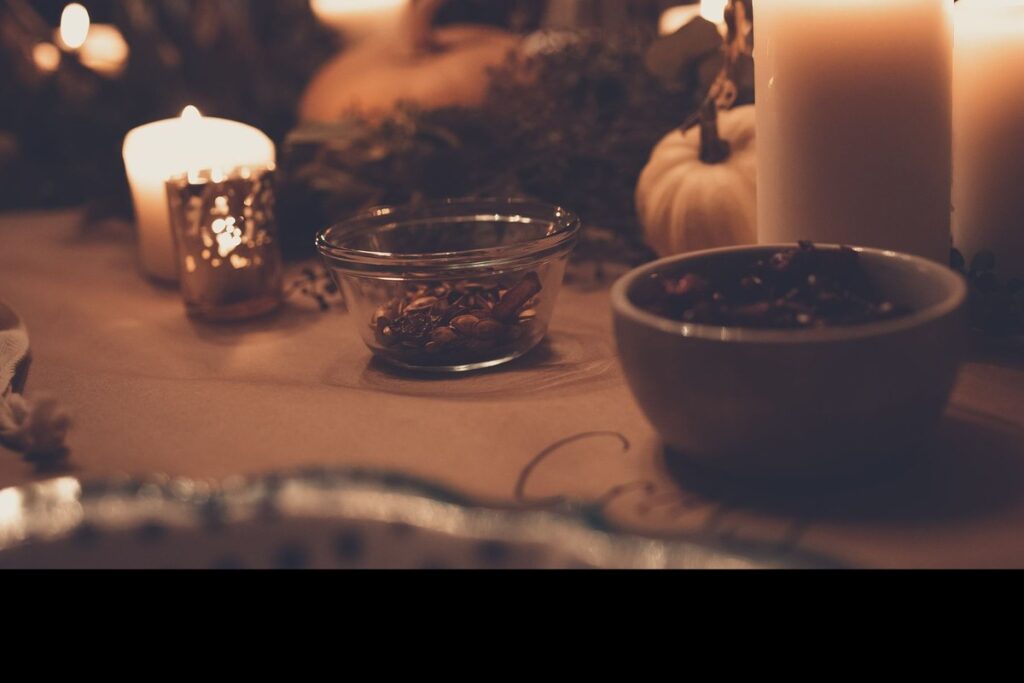
If this guide had only one rule, it would be this: keep the centerpiece low. Guests sit across from each other to talk, and a tall arrangement turns a shared meal into two separate tables. The practical limit is about twelve inches high for anything in the middle of the table. Below that height, people can see each other, pass dishes, and reach the salt without standing up.
Low does not mean boring. A long, low arrangement has more visual impact than a tall one, because it runs the length of the table and every guest sees it. A wooden dough bowl filled with small pumpkins and greenery, a row of pillar candles in different heights with the tallest kept under a foot, or a garland of eucalyptus and autumn leaves laid flat along the runner all give you presence without height. If you love tall candles, use taper candles in slim holders, because a single thin candle does not block a face the way a wide arrangement does, and the flame sits above eye level rather than at it.
There is one exception, and it is a useful one. If the table is long and the meal is served buffet-style from a sideboard, the main table can carry a taller arrangement, because nobody is passing dishes across it. Even then, keep the tallest element at one end rather than in the middle, so the sightline down the table stays open. And whatever you build, light the candles before guests arrive and check them from a seated position. A candle that looks fine standing up can flicker straight into someone’s eyes when they sit down.
15 Thanksgiving Table Decor Ideas
Each setting below is a complete look for a table of six to ten. Pick the one that matches your dishes, your room, and the mood you want, then follow the setting order above. Most of these can be built from things you already own, with a few new pieces per year.
1. Classic Harvest
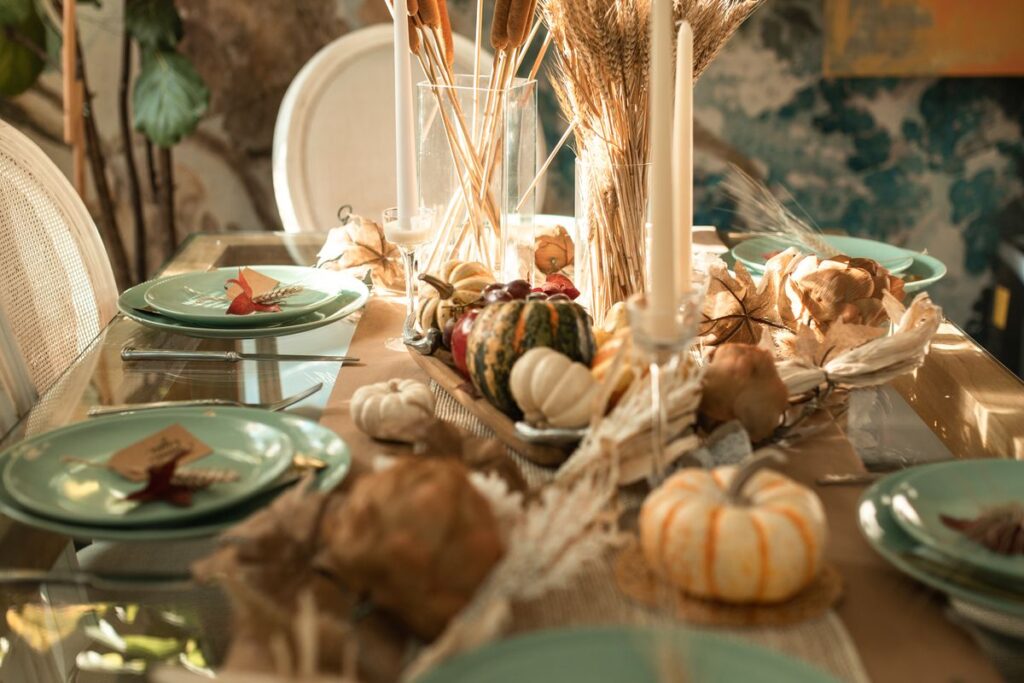
The traditional Thanksgiving table: a cream or rust tablecloth, a plaid or solid runner, orange pumpkins of different sizes down the centre, taper candles, and amber glass. The palette is orange, brown, and gold, and it works because it is the colour of the season itself. Use real pumpkins and gourds rather than plastic ones, because the variation in shape and colour is what makes it look gathered rather than bought. A few maple leaves scattered on the runner and a simple white plate at each setting keep it from turning heavy.
2. White Pumpkin Modern
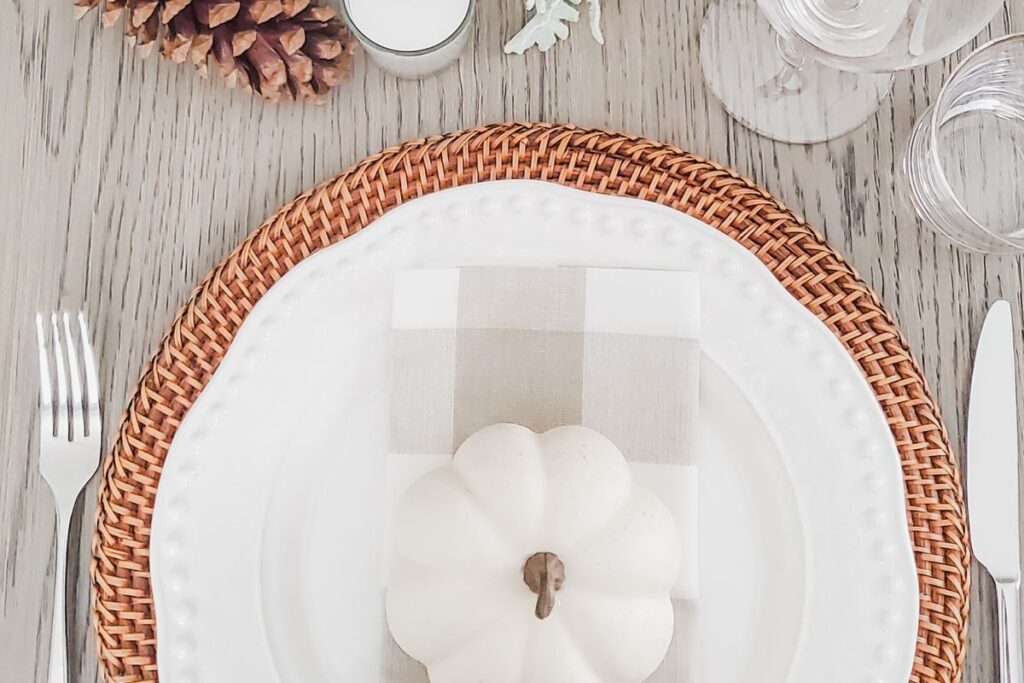
White pumpkins, cream linen, white plates, and gold flatware, with greenery for the only colour. This is the cleanest of the fifteen settings, and it suits a modern dining room or a table with white walls behind it. The trick is texture: linen napkins, a woven runner, matte white pumpkins mixed with glossy ones, and a few sprigs of eucalyptus keep the white from looking flat. Gold flatware is the warmth in the scheme, and it is worth borrowing a set if you do not own one.
3. Jewel Tone Dinner Party
Rich jewel tones give the Thanksgiving table the feel of a dinner party rather than a family lunch. A plum jacquard runner anchors the palette, violet tapers rise from a candelabra at the centre, and cobalt pressed-glass goblets, dusty blue linen napkins, and olive glass compotes filled with white flowers layer on the cool colours. Gold flatware and a silver goblet bring a touch of shine. This setting suits an evening dinner with candles lit and the room lights low, and it is the most dramatic of the fifteen, so it works best when the rest of the room is kept simple.
4. Coastal Blue and White
A pale blue table, white plates, and a blush runner, with white pumpkins and a few gilded ones down the centre. This is a fresh direction for hosts who find the traditional orange and brown palette tired, and it is a look that HGTV highlighted in its October 2026 Thanksgiving decorating roundup, which featured pale blue, blush pink, and other unexpected hues alongside the classics. The key is keeping the blue soft rather than bright: dusty blue, sea glass, and pale slate, with warm candlelight to stop it feeling cold. White flowers in small jars along the runner complete it.
5. Farmhouse Wood and Linen
No tablecloth at all, just a bare wood table, a linen runner, woven placemats, and a centrepiece of greenery, pinecones, and pillar candles. This setting is about the table itself, so it works best on a wood table with some character. The plates should be simple, cream or stoneware, and the flatware can be everyday rather than formal, because the look is honest and unpretentious. A basket of bread at each end of the table doubles as decoration and as part of the meal, which is the farmhouse way: everything on the table should earn its place.
6. Minimalist Linen and Candlelight
A plain linen tablecloth in natural or oatmeal, white plates, clear glasses, and a single row of white pillar candles of different heights down the centre, with a few sprigs of greenery tucked between them. That is the whole setting, and it works because the restraint is the point. This is the setting for a small table, four to six people, where a big centrepiece would crowd the meal. The candles do the decorating, and when they are lit the table looks far more considered than the ingredient list suggests.
7. Candlelit Evening
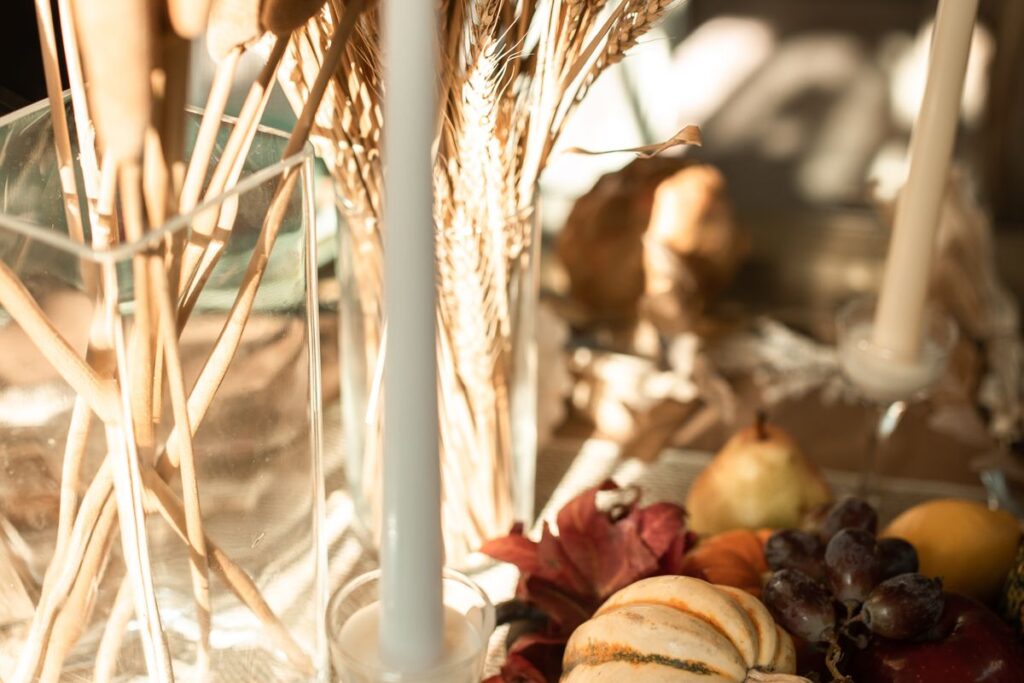
This setting is built for a dinner that starts at four and runs into the evening. Taper candles in brass holders, votives in textured glass, and a low arrangement of dark greenery and deep red berries down the centre, with cream plates and gold-rimmed glasses. The room lights stay low and the candles carry the mood. Keep the candle count generous but the heights low, and put a small plate or tray under any candle that might drip. The warmth of this setting is its whole appeal, so use real candles rather than LED ones if you can do so safely.
8. The Kids Table, Done Properly
The kids table is not a lesser table. It is a table with a different job. Use a washable cloth or a roll of kraft paper as the table covering, so children can draw on it, and set out crayons or markers in jars down the centre instead of candles. Small pumpkins at each place, paper place cards the children can decorate themselves, and unbreakable plates and cups make the table theirs.
Keep the centrepiece low and soft: a row of small gourds, a few pinecones, and a paper leaf garland. The kids table works best when it is close enough to the main table that children feel included, but far enough that a spilled drink does not reach the good tablecloth.
9. Buffet Sideboard Style
When the table is too small for both food and decoration, move the food to a sideboard and let the main table be purely a place to sit. The sideboard gets the serving dishes, a runner, and a small arrangement, while the main table carries a low centrepiece and full place settings with room to breathe. This is the most practical setting for a large group in a small dining room, and it has a hidden advantage: guests serve themselves, so the host is not passing heavy dishes across a crowded table. Keep the sideboard arrangement simple, because it is behind the food, not in front of it.
10. Outdoor Porch Table
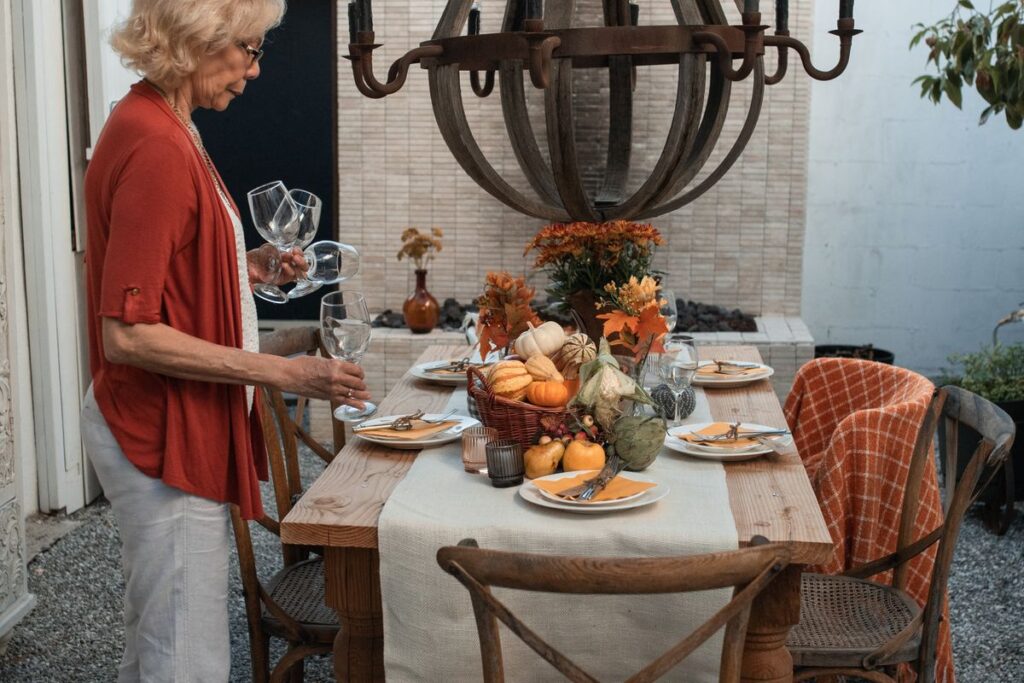
A Thanksgiving table on a porch or patio, for the years when the weather allows it. A wood table, a plaid or canvas runner, lanterns instead of open candles, and a centrepiece of pumpkins, gourds, and autumn leaves that can handle a breeze. Use heavier plates and glasses that will not blow over, and skip paper place cards in favour of small pumpkins with names written on them in marker. The outdoor table needs less decoration than an indoor one, because the setting does half the work, and the light in late afternoon does the rest.
11. Plaid and Tartan
A red or green plaid tablecloth, or a plaid runner over a solid cloth, with cream plates, brass candlesticks, and a centrepiece of greenery and red berries. Plaid is the most forgiving pattern for a Thanksgiving table, because it hides stains, it suits the season, and it looks intentional even when the rest of the setting is simple. Keep the flatware simple and the glasses clear, so the plaid is the pattern and nothing competes with it. A plaid napkin at each setting, folded simply, ties the look together.
12. Black and Copper Modern
Black chargers, cream plates, copper flatware, and a centrepiece of dark greenery, copper candle holders, and a few white pumpkins. This is the most modern of the fifteen settings, and it suits a dining room with dark furniture or a table with a black or walnut finish. The copper is the warmth that stops the black from feeling stark, and it is worth buying real copper-toned flatware rather than painting anything, because the finish is what makes it look expensive. Keep the flowers white or cream, because colour would fight with the copper.
13. Citrus and Greenery
Fresh and bright rather than heavy: a white or pale green cloth, a garland of eucalyptus and olive branches down the centre, and whole oranges, lemons, and small pumpkins tucked into the greenery. The citrus gives the table colour and scent without any orange or brown, and it is the setting for a host who finds the traditional palette too dark. Use clear glass candle holders and white plates, and let the greenery be the pattern. This setting also has a practical advantage: the fruit in the centrepiece is the decoration, and it does not wilt the way cut flowers do.
14. Vintage China, Mixed and Matched
Different plates at every setting, gathered from thrift stores, family cupboards, and flea markets, unified by one thing: they are all the same colour family, usually cream and gold, or blue and white. The charm of this setting is that no two places match, and that is the point. A linen runner, mismatched brass candlesticks, and a low arrangement of white flowers and greenery down the centre hold it together. This is the setting for a host who already owns the pieces, and it is the one guests photograph most, because every place looks slightly different.
15. Gratitude and Place Cards
The simplest setting, and the one that guests remember longest. A plain cloth, white plates, a low row of candles, and at each place a handwritten card with one line about that guest: a memory, a thank you, or a reason you are glad they are here. The cards are the decoration. A small sprig of greenery or a single dried leaf tucked under each card finishes it. This setting costs almost nothing and takes the most thought, which is exactly why it works. People keep these cards. Nobody keeps a memory of a napkin fold.
Layered Place Settings, Piece by Piece
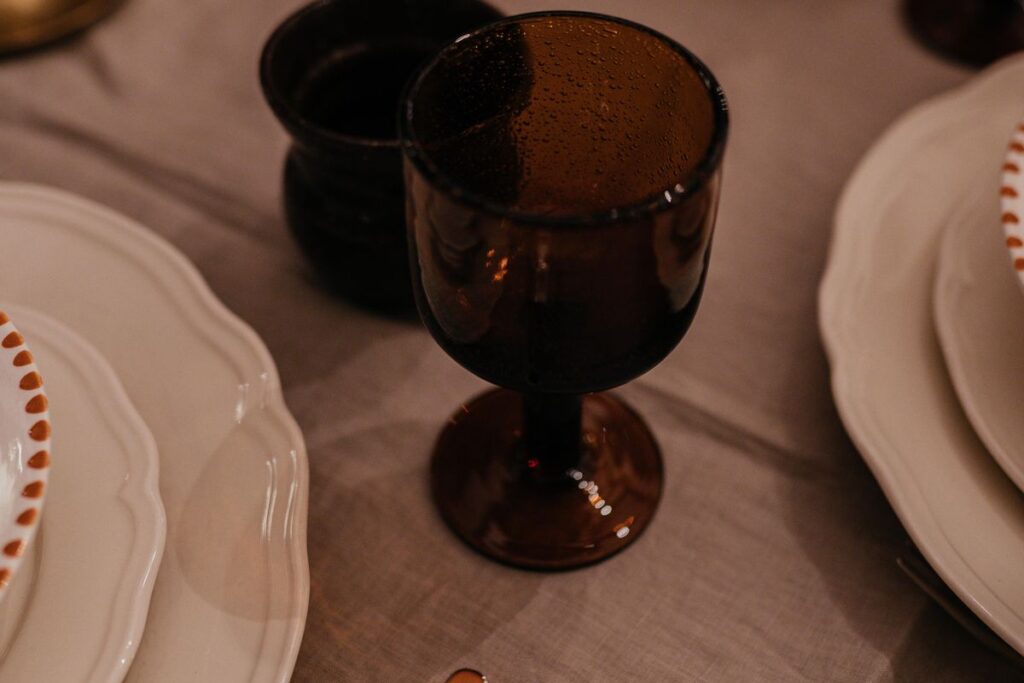
A place setting is a stack of layers, and each layer has a job. The charger is the frame: it is larger than the dinner plate, it stays on the table through the main course, and it is the piece that makes a plain white plate look dressed. Under the charger, a placemat or the tablecloth itself is the base. The dinner plate sits on the charger, and a salad plate or a soup bowl goes on top of that if you are serving courses.
The napkin is the layer people touch first, so it should be cloth rather than paper if you can manage it. A simple fold, a rectangle folded in thirds and laid on the plate, or a loose knot through a napkin ring, looks better than an elaborate fold that falls apart when someone picks it up. The napkin ring can be as simple as a loop of twine with a sprig of rosemary or a dried leaf tucked into it, and that small detail is often the thing guests notice.
Flatware and glasses follow the same rule as the setting order: work from the outside in, and keep it to what you will actually use. A place setting with three forks and two spoons looks formal, but if the meal does not need them, they are clutter. One fork, one knife, and one spoon, plus a dessert fork laid above the plate, covers almost every Thanksgiving meal. Water glasses go above the knife, wine glasses to the right of the water glass, and that is enough. A place setting that is easy to use is a place setting that looks good, because guests relax into it instead of studying it.
Thanksgiving Table Decor Ideas on a Budget
A beautiful table does not need a big budget, and the money goes furthest on the things guests touch and see at eye level. At the under-25-dollar level, you are working with what you own plus candles and greenery: a bag of taper candles, a bunch of eucalyptus from the grocery store, and a few small pumpkins from a farm stand. That is enough to transform a plain table, because candlelight and greenery do more than any single purchased decoration.
At the under-50-dollar level, add one strong piece: a table runner in your palette, a set of cloth napkins, or a pair of candlesticks you will use for years. Buy the piece that will last, not the piece that will be thrown away in January. At the splurge level, above 50 dollars, the money goes to chargers and flatware, because those are the pieces that make every future table look better, not just this one. A set of gold or copper flatware, bought once, will dress a Thanksgiving table for a decade.
The cheapest decoration of all is free: greenery cut from the garden, pinecones collected on a walk, and leaves gathered the morning of the dinner. A table decorated with things from outside the house looks more personal than a table decorated from a single store, and guests can tell the difference even if they cannot name it.
Set It the Night Before
The single best piece of Thanksgiving advice is to set the table on Wednesday night, not Thursday morning. Thursday morning belongs to the turkey and the oven, and a table set the night before means the dining room is finished before the cooking starts. Lay the cloth, set the plates and glasses, fold the napkins, and build the centrepiece, then cover the whole table with a clean sheet if you have pets or small children who might disturb it overnight.
Setting the table the night before also gives you time to catch the problems that are invisible at noon and obvious at dinner: a chair that does not fit, a glass that is chipped, a place setting that is short a fork. Our Thanksgiving dinner timeline and hosting checklist builds the table-setting job into Wednesday evening for exactly this reason, and it works backwards from a 4 p.m. dinner on Thursday, November 26, 2026, so every job has a slot.
For the wider planning, including guest count and seating, our guide to planning Thanksgiving dinner covers the headcount and the seating decisions that shape how the table is set. And if the gathering is small, four to six people, our small Thanksgiving dinner menu scales the meal to the table, which is the other half of getting the setting right.
One last check before you finish: sit in every chair. Not just your own. Sit in the chair at the far end, the chair nearest the kitchen, and the chair where the tallest guest will sit. Check the sightline, check the elbow room, and check that nobody is facing a blank wall while everyone else faces the room. A table that has been sat in from every seat is a table that works for everyone who will use it.
For more setting inspiration, HGTV’s gallery of Thanksgiving table decor ideas shows place settings in unusual colours, including coastal blue, coral pink, and teal, with low arrangements that keep conversation easy. See HGTV: Thanksgiving Dinner Table Place Settings in Unusual Colors.
Frequently Asked Questions
How far in advance should I set the Thanksgiving table?
Set the table the night before, on Wednesday, November 25, 2026. Lay the cloth, plates, glasses, flatware, and napkins, and build the centrepiece, then cover the table with a clean sheet if you have pets or children. Setting it Thursday morning competes with the cooking, and it is the job most often rushed.
How tall should a Thanksgiving centerpiece be?
Keep it under twelve inches high so guests can see each other across the table. A long, low arrangement has more impact than a tall one, because it runs the length of the table and every guest sees it. Tall taper candles are the exception, because a single thin candle does not block a face the way a wide arrangement does.
How much table space does each guest need?
Allow about 24 inches of table width per person. If the table is too small for that, set a second small table rather than squeezing everyone together. Elbow room matters more than matching chairs, and guests remember a cramped table long after they forget the centrepiece.
What is the cheapest way to decorate a Thanksgiving table?
Candles and greenery. A few taper candles, a bunch of eucalyptus or autumn leaves, and a handful of small pumpkins cost under 25 dollars and transform a plain table. Greenery cut from the garden and pinecones collected outside cost nothing at all, and they look more personal than store-bought decorations.
Should the Thanksgiving table match the rest of the house?
It should suit the room, not match it exactly. A table in a warm living room takes a classic harvest palette naturally, while a bright, pale room suits white pumpkins or coastal blue. The table is the centrepiece of the evening, so it can be bolder than the rest of the room, but it should not clash with it. One shared colour between the table and the room is enough to tie them together.
How do I decorate a small Thanksgiving table?
Keep it simple and low. A linen runner, white plates, one row of low candles, and a small arrangement of greenery and a few pumpkins is enough for four to six people. Skip the charger if space is tight, use one glass per person, and let the food on the table, once it is served, be part of the decoration. A small table that is not crowded looks more generous than a large table that is packed.
Leave a Reply