
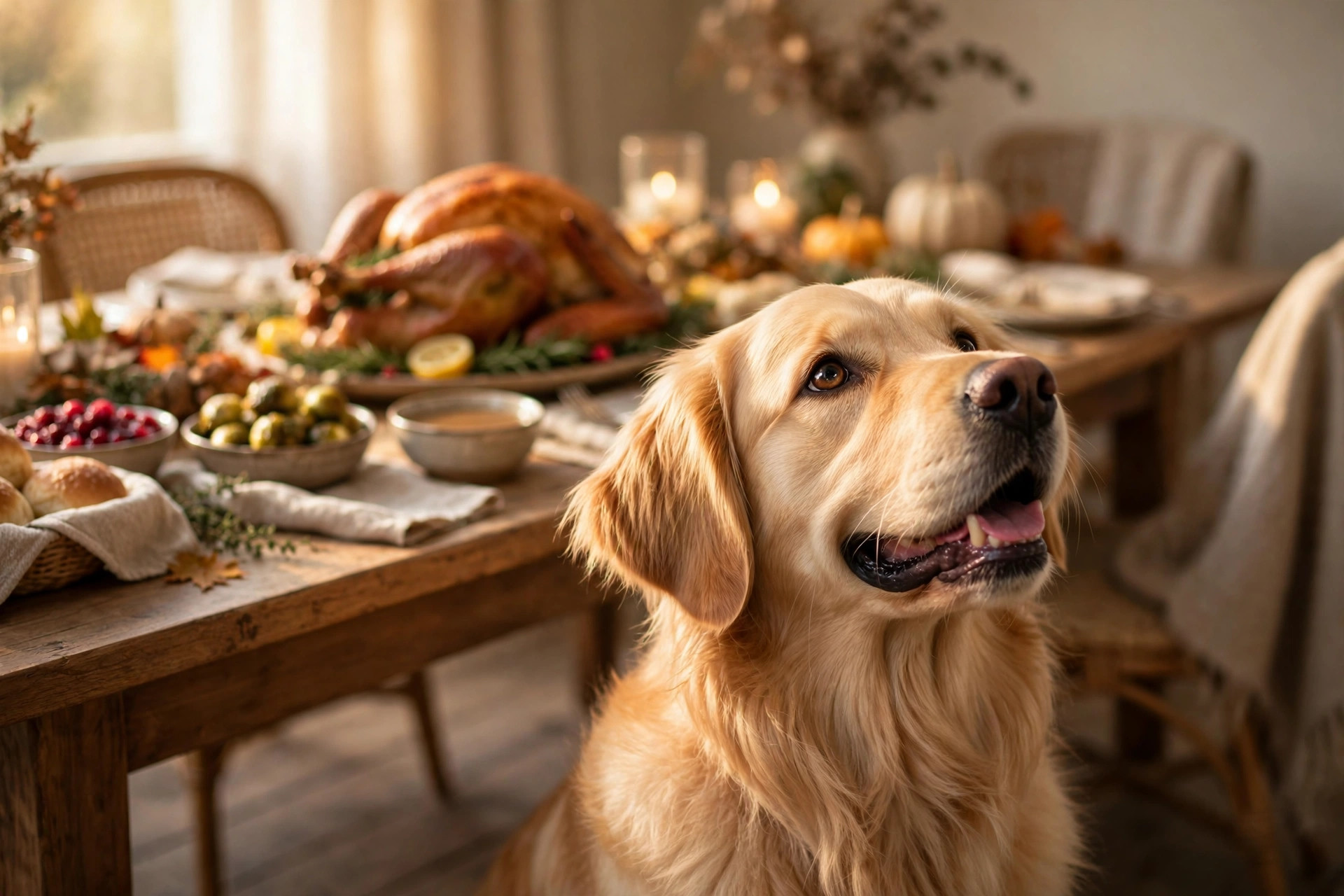
Can dogs eat turkey? Yes, in most cases plain, cooked turkey meat given in a small amount is generally considered safe for dogs, but the turkey served at a Thanksgiving table is often very different from plain turkey. Skin, bones, gravy, stuffing, butter and onion or garlic seasoning can all turn a harmless treat into a stomach upset, or something more serious. The safest approach is simple: if you want to share a little turkey with your dog, offer a small piece of unseasoned, boneless, skinless meat, and keep everything else off their plate.
Key Facts
- Plain, cooked, boneless, skinless turkey meat in a small amount is generally safe for most healthy adult dogs.
- Turkey skin, cooked bones, gravy, stuffing and buttered or seasoned meat are not safe choices for dogs.
- Onion, garlic, leeks and chives are toxic to dogs, so any turkey cooked with them should be avoided.
- Treats, including turkey, should make up no more than about 10 percent of a dog’s daily calories.
- Rich, fatty food can trigger vomiting, diarrhoea or, in some dogs, pancreatitis, a painful inflammation of the pancreas.
- Puppies, small dogs, elderly dogs and dogs with health problems are more vulnerable to rich or fatty scraps.
- If your dog eats cooked bones, watch closely and contact your vet promptly, especially if they show pain, vomiting or blood in their stool.
What Kind of Turkey Is Safe for Dogs?
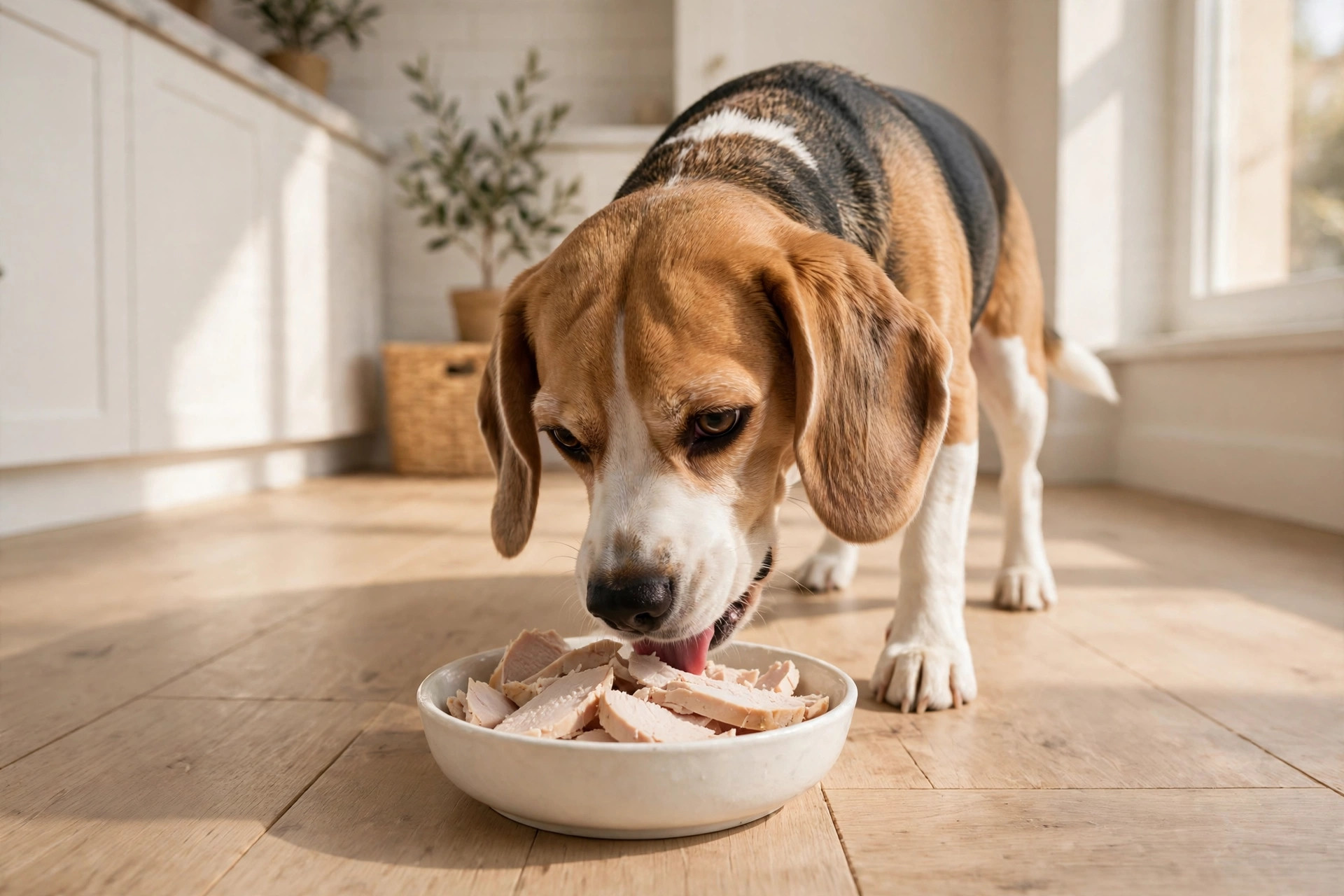
The only turkey worth sharing is plain turkey: white or dark meat that has been cooked thoroughly, with no skin, no bones, no butter, no salt, no herbs and no seasoning. That means meat taken from the inside of the bird, away from the crispy skin and the seasoned outer layer, is the best choice. A few small pieces, roughly the size of a treat rather than a meal, are enough.
Why Turkey Skin, Bones and Gravy Are a Problem
Turkey skin is very high in fat. A dog that eats a pile of crispy skin, or laps up fatty drippings, can develop an upset stomach within hours, with vomiting, diarrhoea or a loss of appetite. In some dogs, especially those prone to digestive problems, a single fatty meal can trigger pancreatitis. This condition causes abdominal pain, vomiting and lethargy, and it often needs veterinary treatment. It is one of the main reasons vets warn against table scraps at holidays.
Cooked bones are another serious risk. Cooking makes bones brittle, so they can splinter when a dog chews them. Splinters can cut the mouth, throat or digestive tract, or cause a blockage. Turkey leg bones, wing bones and the wishbone are all risky, even for large dogs that normally chew well. Raw bones carry their own risks and are not a safe substitute at the dinner table, so the simplest rule is: no bones at all.
Gravy, stuffing and buttered vegetables are usually the hidden danger. Gravy is often made with fat, salt and stock that may contain onion or garlic. Stuffing is frequently seasoned with onion, garlic, sage and butter, and may contain raisins or other ingredients that are unsafe for dogs.
How Much Turkey Can a Dog Have?
Portion size matters more than most people realise. A small dog might only need a piece or two of turkey the size of a thumbnail, while a large dog could manage a small handful. As a rough guide, keep all treats, including turkey, to no more than about 10 percent of your dog’s daily food. If your dog is already getting treats, chews and a special dinner, that allowance is used up quickly.
Introduce turkey slowly if your dog has never had it before. Give a single small piece and wait to see how they react before offering more. Dogs with sensitive stomachs, food allergies or conditions such as pancreatitis, kidney disease or obesity should not be given turkey scraps without checking with a vet first. The same caution applies to puppies, whose digestive systems are still developing, and to older dogs.
What to Do If Your Dog Eats Bones or Rich Scraps
If your dog grabs a cooked bone, try to stay calm. Do not try to pull a bone out of their mouth if they are swallowing it, as this can cause choking or injury, but do remove any remaining bones from their reach straight away. Watch your dog closely over the next day or two for signs of trouble: choking, gagging, drooling, vomiting, abdominal pain, straining to pass a stool, constipation, lethargy or blood in vomit or stool. If you notice any of these signs, contact your vet or an emergency vet clinic promptly and tell them what your dog ate and roughly how much.
If your dog eats a large amount of skin, gravy or stuffing, the most likely result is an upset stomach, but it is still worth calling your vet for advice, especially if vomiting or diarrhoea continues, if your dog cannot keep water down, or if they seem in pain. Puppies, small breeds and dogs with existing health problems should be checked sooner rather than later. Do not try to make your dog vomit at home unless a vet specifically tells you to, as this can cause further harm in some situations.
Safer Ways to Let Your Dog Join Thanksgiving
Your dog does not have to miss out. Set aside a small portion of plain turkey before you season or butter the bird, and serve it in their own bowl, mixed with a little of their normal food. You can also offer dog-safe vegetables such as plain cooked green beans, carrots or sweet potato, without butter or seasoning. A long-lasting chew or a stuffed enrichment toy can keep a dog happily busy while the family eats, and it removes the temptation to beg at the table.
Thanksgiving Foods Dogs Should Avoid
Beyond turkey itself, several classic Thanksgiving foods are unsafe or unwise for dogs. Onion and garlic, in any form, can damage a dog’s red blood cells and should always be avoided. Raisins and grapes, sometimes found in stuffing or salads, are toxic to dogs even in small amounts. Chocolate desserts are toxic, and sugar-free products sweetened with xylitol are extremely dangerous. Alcohol is toxic too, so keep drinks well out of reach.
For more on what dogs can and cannot eat at mealtimes, see our guides on whether dogs can eat corn, whether dogs can eat mango, and whether dogs can eat cheese. The same principle applies each time: plain and simple is safest, and seasoned, rich or processed versions are best avoided.
Frequently Asked Questions
Can dogs eat turkey breast?
Yes, plain cooked turkey breast without skin, bones or seasoning is usually the safest choice for dogs, in a small amount. Avoid turkey breast that has been brined, smoked, buttered or coated in seasoning, as the added salt and fat can upset a dog’s stomach.
Can dogs eat turkey skin?
No, turkey skin is best avoided. It is very high in fat and can cause vomiting, diarrhoea or pancreatitis in dogs, even in a fairly small amount. Remove the skin before offering any turkey to your dog.
Can dogs eat turkey bones?
No, cooked turkey bones should never be given to dogs. They can splinter and cause choking, cuts in the mouth or digestive tract, or a blockage. If your dog eats a cooked bone, monitor them closely and contact your vet for advice.
Can dogs eat turkey with gravy?
It is best not to. Gravy is usually high in fat and salt and may contain onion or garlic, both of which are toxic to dogs. Plain turkey without gravy is a much safer treat.
Can dogs eat leftover turkey the next day?
Leftover plain turkey that has been stored safely in the fridge and is still fresh can be given in a small amount, as long as it is boneless, skinless and unseasoned. Throw away leftovers that have been sitting out for hours, or that are more than a few days old.
What should I do if my dog has diarrhoea after eating turkey?
Mild diarrhoea after a rich meal often settles within a day, but offer fresh water, feed a bland diet only if your vet advises it, and watch for vomiting, blood, lethargy or pain. Contact your vet promptly if symptoms continue, worsen, or affect a puppy, small dog or dog with a health condition.
This article is general information only and is not veterinary advice. If your dog is ill, has eaten something dangerous, or has a health condition, contact your vet or an emergency veterinary clinic promptly.
Leave a Reply