

Table of Contents
A cat proof Christmas tree sounds like a contradiction if you have ever watched a cat launch themselves at a tree in the middle of the night. The good news is that a cat proof Christmas tree is not about winning a battle with your cat. It is about setting the tree up so that climbing, chewing, and batting at ornaments does not end in a broken tree, a hurt cat, or a trip to the emergency vet.
My own cat taught me this the hard way. The first year we had her, I decorated the tree the way I always had, with glass ornaments at the bottom, tinsel everywhere, and a loose stand. She climbed it on the first night, the tree leaned, and a glass bauble smashed on the floor while she sprinted out of the room. Nobody was hurt, but I spent the next hour picking glass out of the carpet and rethinking the whole setup. The tree that survived the following years was not a different tree. It was the same tree, anchored properly, decorated differently, and placed with a cat in mind.
This guide covers the full setup: how to anchor the tree, which ornaments and decorations are safe, how to handle cords and tree water, which holiday plants are dangerous, and what to do if your cat swallows tinsel. The safety points follow guidance from the ASPCA and from Cornell University’s veterinary experts, because a few of these dangers, especially tinsel and lilies, are more serious than they look.
Why Cats Climb Christmas Trees
Cats climb trees because that is what cats do. A Christmas tree is tall, it smells interesting, it moves when touched, and it is covered in small shiny objects that look like prey. Add the fact that cats like to sit up high and watch a room, and the tree becomes the best seat in the house. You are unlikely to train that instinct out of a cat in December, so the smarter plan is to make the tree safe to climb, or at least safe to fall against.
Age matters too. Kittens and young cats are usually the worst offenders, because everything is new and everything needs investigating. Older cats often settle for sitting under the tree and batting at a low ornament now and then. If you have a kitten, assume the tree will be climbed and decorate accordingly for the first year at least.

How to Anchor a Cat Proof Christmas Tree
Anchoring is the single most useful step, and it is the one people skip most often. A tree that tips over can injure a cat, smash ornaments, and spill tree water across the floor. A tree that wobbles but stays upright is a nuisance. A tree that falls is a hazard.
Fix the Base First
Use a wide, heavy stand that fits the trunk properly, and tighten it fully. If the stand wobbles when you push the tree gently, it will not survive a cat. Place the tree in a corner where two walls can support it, or in a spot where furniture blocks one side, so a climbing cat cannot tip it in every direction. Avoid placing the tree next to a shelf, a sofa back, or a windowsill that gives the cat a launch pad onto the upper branches.
Add a Second Anchor
For a determined climber, a stand alone may not be enough. Tie the top of the tree to a wall hook or a ceiling hook with clear fishing line or a discreet cord, so the tree cannot fall forward even if a cat climbs to the top. Test it by pulling the tree gently from different angles. If it holds against a firm pull, it will hold against most cats.
Some people put the tree inside a playpen or behind a low barrier for the first few days, which can help a kitten learn that the tree is not a toy. That works for some households and not others, and it is not essential if the tree is anchored and the lower branches are decorated safely. What matters is that the tree cannot fall on the cat.
Cat Safe Ornaments and Decorations
The lower third of the tree is the cat zone. Everything within a cat’s reach should be safe to bat, chew, or knock off. That means no glass, no sharp hooks, and nothing small enough to swallow.
Use Shatterproof Ornaments Low Down
Put shatterproof plastic or fabric ornaments on the lower branches, and save glass, ceramic, and heirloom ornaments for the top half, well above a standing cat’s reach. If you love your glass ornaments, this is the year to enjoy them higher up. A broken glass ornament on the floor is a cut paw waiting to happen, and cats walk across broken glass without noticing until they are already bleeding.
Swap Hooks for Ribbon and Twine
Metal ornament hooks are a problem. They fall off, they end up on the floor, and a cat can swallow one or cut their mouth on it. Tie ornaments on with short pieces of ribbon, twine, or yarn that are fixed tightly to the branch, so there is nothing loose to eat. Keep the ties short. Long loops of ribbon hanging from branches are just as tempting as tinsel, and just as risky if swallowed.
Skip Tinsel Entirely
This is the clearest rule in the whole guide: if you have a cat, skip tinsel. The ASPCA warns that ingested tinsel can cause severe vomiting, an obstructed digestive tract, dehydration, and surgery. Cats are drawn to the way tinsel shimmers and moves, and once they start chewing it, their tongue anatomy makes them more likely to swallow it than to spit it out.
The same warning applies to ribbon, string, yarn, and angel hair. If it is long, thin, and tempting to chew, it does not belong on a tree in a cat household. Use garlands made of fabric, felt, or wooden beads instead, and keep them fixed to the branches rather than draped loosely.


Cords, Lights, and Tree Water
Electric cords are the second hazard people underestimate. A cat chewing a live light cord can suffer burns to the mouth, and a cord pulled loose can bring a string of lights down with the tree.
Protect Every Cord
Run cords along the wall, not across open floor, and cover the section near the tree with a cord protector or a piece of tubing. Use battery-operated lights on the lower branches if you can, so there is no live cord at cat height at all. Check cords regularly for chew marks, and replace any cord that is frayed or damaged. Unplug the tree lights when you leave the house or go to bed, which is good practice with or without a cat.
LED lights are a better choice than older incandescent strings because they run cooler, but a chewed cord is still a chewed cord. If your cat is a dedicated cord chewer, keep lights on the upper half of the tree and leave the lower branches lit only by reflected light from above.
Cover the Tree Water
The ASPCA advises covering tree water so pets cannot drink it. Tree water can contain fertilizers, preservatives, and bacteria, and it can cause stomach upset, nausea, or diarrhea if a cat drinks it. Cover the reservoir with a tree skirt weighted down at the base, or with a piece of netting that lets you water the tree but blocks the cat. Never add aspirin or commercial preservatives to the water if you have pets, because some of those additives are toxic to cats.
Fallen needles are another small hazard. Sweep them up regularly, because needles can irritate a cat’s mouth and stomach if eaten, and they can get stuck in paws. An artificial tree avoids the water problem entirely, but artificial needles can also cause stomach problems if a cat eats them, so the same rule applies: sweep up loose pieces and watch for chewing.
Holiday Plants That Are Dangerous for Cats
The tree is not the only plant in the house at Christmas, and some of the others are far more dangerous than the tree itself.
Lilies: Keep Them Out of the House
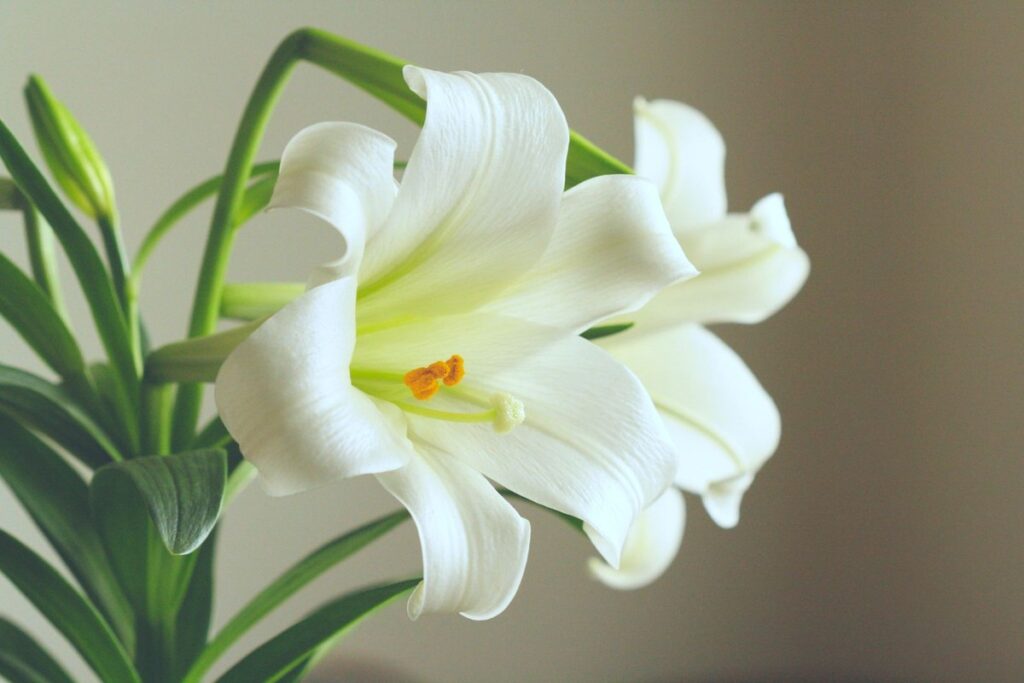
Lilies are the most serious plant danger for cats. The ASPCA notes that many types of lilies found in holiday bouquets are highly toxic and can cause kidney failure in cats. All parts of a true lily are toxic, including the pollen, and even drinking water from a vase holding lilies can be dangerous. If you have a cat, the safest choice is to keep lilies out of the house completely, including bouquets brought by guests. If a guest arrives with lilies, thank them, put the bouquet in a closed room the cat cannot enter, or re-gift it to a household without cats.
Poinsettias, Holly, and Mistletoe
Poinsettias are often thought to be deadly to cats, but the ASPCA says they cause only mild to moderate stomach irritation, and the danger is often overstated. That does not mean you should let your cat eat one. Keep poinsettias out of reach, because chewing them can still cause drooling, vomiting, and irritation to the mouth and stomach.
Holly and mistletoe are more concerning. Holly berries and leaves can cause stomach upset, and mistletoe can cause stomach upset and, in rare cases, heart problems. Keep both out of a cat’s reach, and choose artificial versions for wreaths and garlands if your cat is a chewer. The same goes for amaryllis, which can cause vomiting and stomach irritation.
What to Do If Your Cat Swallows Tinsel
This is the emergency section, and it is worth reading before you need it. If you see tinsel, string, ribbon, or thread hanging from your cat’s mouth or from under their tail, do not pull it. Cornell University’s veterinary experts are explicit on this point: if a linear object has been swallowed, it may have trailed down the intestinal tract, and pulling it can cause the intestines to tear or rupture, leading to a life-threatening infection in the abdomen.
Take the cat to the nearest vet or emergency vet clinic right away. Do not cut the string either, because cutting it does not solve the bunching of the intestines that may already be happening. Signs that a cat may have swallowed a linear object include vomiting, loss of appetite, lethargy, abdominal pain, and straining in the litter box. If you know your cat was playing with tinsel and then shows any of those signs, get to a vet promptly, even if the cat seems mostly normal at first.
The same advice applies to swallowed ornament hooks, small ornaments, and pieces of garland. If you are not sure what your cat swallowed, call your vet and describe what you saw. They would much rather take a phone call about a false alarm than see a cat who arrived too late.
For the Cornell guidance behind this section, see Cornell: Be Ready to Act in a Choking Emergency.
Training and Distraction That Actually Help
You cannot train a cat to ignore a tree, but you can give them something better to do. Put a tall scratching post or a cat tree near the Christmas tree, so the cat has a legal high spot to climb. Cats often climb the Christmas tree because it is the tallest thing in the room. Give them a taller, sturdier alternative, and many cats will choose it.
Play with your cat near the tree during the day, so they burn off energy before the nighttime climbing session. A tired cat is a calmer cat. You can also use a bitter anti-chew spray made for plants on the lower branches, though results vary, and some cats ignore it completely. Citrus scents put some cats off, but never spray essential oils directly on a cat or on branches a cat will chew, because some oils are toxic to cats.
If your cat keeps going for the tree, stay calm and redirect them rather than shouting. A loud reaction often makes the tree more exciting, and a cat who is chased off the tree will usually return the moment you leave the room. Move them gently to their scratching post, give them a toy, and reward them for using it.

Setting Up a Cat Proof Christmas Tree, Step by Step
- Choose the spot: a corner, away from launch pads like shelves and sofa backs, with room to anchor the tree to a wall.
- Anchor it: use a wide, heavy stand, then tie the top to a wall or ceiling hook with fishing line.
- Decorate from the top down: glass and heirloom ornaments high, shatterproof ornaments low.
- Skip tinsel and loose ribbon: use fabric or felt garlands, fixed tightly to branches.
- Protect cords: cover them, run them along walls, and unplug lights when you are out or asleep.
- Cover the water: use a weighted tree skirt or netting, and add nothing toxic to the reservoir.
- Check plants: keep lilies out of the house, and keep poinsettias, holly, and mistletoe out of reach.
- Give an alternative: a tall scratching post nearby, plus playtime before bed.
For more on keeping cats safe around holiday food, see our guide on can cats eat turkey, and for cats who love cheese, our guide on can cats eat cheese covers what is safe and what is not. For the lights themselves, our guide on how to hang Christmas lights covers safe placement indoors and out.

Frequently Asked Questions
Is a real or artificial tree better for a cat proof Christmas tree?
Neither is perfect. A real tree has water that needs covering and needles that need sweeping, while an artificial tree has plastic needles that can cause stomach problems if eaten. An artificial tree is often easier to anchor and has no water, so many cat owners prefer it, but the decoration rules are the same for both.
Can I use tinsel if my cat ignores the tree?
It is still a risk. A cat who ignores the tree for weeks can suddenly start chewing tinsel on a quiet night when you are asleep. The ASPCA’s advice is to use lights and ornaments instead of tinsel, and that advice is worth following even for calm cats.
What ornaments are safe for cats?
Shatterproof plastic, fabric, felt, and wooden ornaments, tied on with short ribbon or twine. Avoid glass, ceramic, small ornaments that can be swallowed, and ornaments with sharp edges or loose parts.
How do I stop my cat climbing the Christmas tree?
Anchor the tree, decorate the lower branches safely, give the cat a taller scratching post nearby, and play with them before bed. You may not stop the climbing completely, but you can make it safe, and most cats calm down once the novelty wears off.
When should I call the vet about the Christmas tree?
Call right away if your cat has swallowed tinsel, string, ribbon, or an ornament, if tinsel is hanging from their mouth or tail, if they have eaten any part of a lily, or if they show vomiting, lethargy, abdominal pain, or trouble breathing. Do not pull visible string, and do not wait to see if it passes on its own.
Leave a Reply