
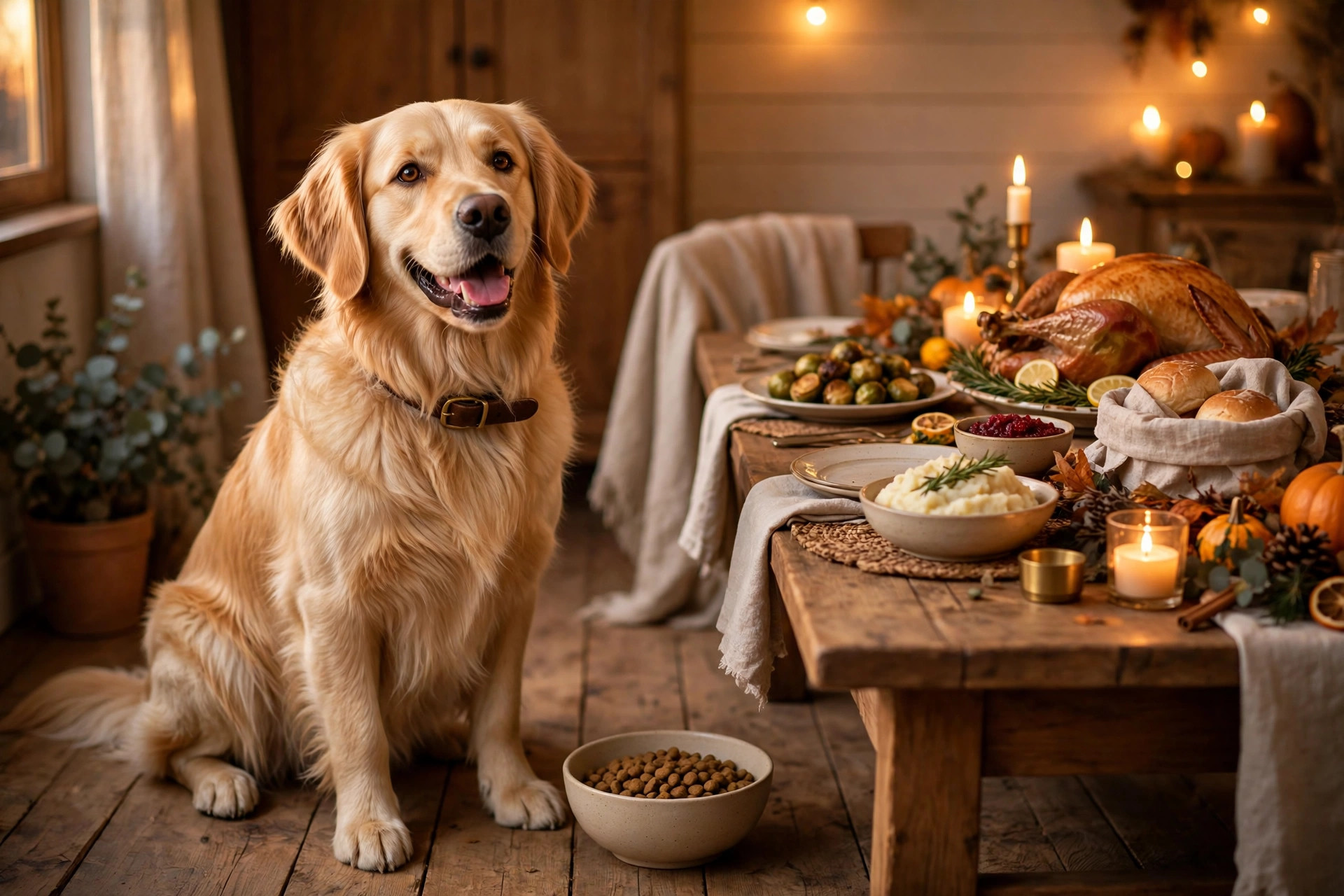
Can dogs eat stuffing? The short answer is that most Thanksgiving stuffing is not a good idea for dogs. While a spoonful of plain bread might seem harmless, the stuffing on most holiday tables is packed with butter, salt, onion, garlic and herbs that can upset your dog’s stomach or cause more serious problems. It is far safer to offer a small portion of plain, dog-friendly food instead of a scoop from the serving dish.
Dogs are famously hopeful at the dinner table, and Thanksgiving is the hardest day of the year to say no. Knowing why stuffing is risky — and what you can serve instead — means your dog can enjoy the day without a trip to the vet.
Key Facts
- Most Thanksgiving stuffing is not safe for dogs because it usually contains onion, garlic, butter, salt and herbs.
- Onion and garlic are toxic to dogs and can damage their red blood cells, even in cooked form.
- Rich, fatty stuffing can trigger vomiting, diarrhoea and, in some dogs, pancreatitis.
- Plain, unseasoned bread stuffing is less risky, but it offers no real nutrition.
- If your dog eats a large amount of stuffing or shows symptoms, contact your vet promptly.
- Safe swaps include plain cooked turkey, plain mashed potato and plain pumpkin.
Why Most Stuffing Is Not Safe for Dogs
Stuffing starts as a simple idea — bread, stock and herbs baked until golden — but the classic Thanksgiving version adds chopped onion and garlic, a generous amount of butter and a heavy hand with salt. Each addition creates a problem for dogs, and together they turn a festive side dish into something best kept off your dog’s plate.
Dogs process food very differently from people. Everyday human-kitchen staples can be harmful to them, and the rich, salty, fatty nature of stuffing is hard on a dog’s digestive system even before you consider the toxic ingredients. Small, older and unwell dogs are at greater risk, so be cautious even if your dog has stolen table food before without obvious trouble.
The Ingredients That Cause Problems
Onion and garlic
Onion and garlic are the biggest concern in stuffing. Both are toxic to dogs: they contain compounds that can damage red blood cells and lead to anaemia, and cooking does not remove the danger. Stuffing often contains a whole chopped onion and several cloves of garlic, so even a modest serving can hold a meaningful amount. Symptoms may not appear straight away — a dog can seem fine on Thanksgiving Day and become unwell over the following days. If your dog has eaten stuffing made with onion or garlic, call your vet for advice rather than waiting.
Butter, salt and fat
Stuffing is usually rich in butter and cooking fat, and many recipes use salty stock or add extra salt. A sudden meal high in fat can cause vomiting and diarrhoea, and in some dogs it can trigger pancreatitis, a painful inflammation of the pancreas that needs veterinary treatment. Too much salt can also cause excessive thirst and more serious problems.
Herbs, sausage and extras
Sage, the herb most associated with stuffing, is not toxic in the small amounts used in cooking, but it can irritate a sensitive stomach. The bigger risk comes from the extras many recipes include: sausage meat adds a lot of fat and salt, chestnuts are hard to digest, and some stuffing recipes contain raisins or currants, which are toxic to dogs. If you did not make the stuffing yourself, you cannot be sure what is in it.

What About Plain, Unseasoned Stuffing?
If your stuffing is genuinely plain — just bread, a little water or unsalted stock, and nothing else — a very small amount is much less risky. Even then, it is not a good choice as a regular treat: plain stuffing is mostly refined carbohydrate with very little nutritional value, and it can fill a dog up so they eat less of their proper food. What looks like a tiny spoonful to us is a large serving for a small dog.
Better: set aside a small portion of plain bread cubes before you add the onion, garlic, butter and seasoning to the main dish. That way your dog gets a taste of the occasion without the risky ingredients. Keep the portion small and treat it as an occasional extra rather than a meal.
What to Do If Your Dog Eats Stuffing
If your dog manages to grab a mouthful of stuffing while your back is turned, try not to panic. First, work out roughly how much they ate and whether the stuffing contained onion, garlic, raisins or sausage meat. Remove any remaining stuffing from their reach and keep an eye on them over the next day or two. Watch for vomiting, diarrhoea, loss of appetite, weakness, pale gums or unusual tiredness, and contact your vet if you notice any of these signs or if your dog ate a large amount.
Do not try to make your dog vomit at home unless your vet specifically tells you to. For reliable guidance on foods that can be dangerous for pets, the FDA’s guide to potentially dangerous items for your pet is worth bookmarking before the holidays. If your dog is already unwell, call your vet or an emergency clinic straight away.
Safer Thanksgiving Foods for Your Dog
Your dog does not have to miss out on Thanksgiving. Set aside safe options before the seasoning and butter go in: plain cooked turkey with the skin and bones removed is a lean protein most dogs love — see our guide on whether dogs can eat turkey. Plain mashed potatoes without butter, milk, garlic or salt are fine in a small portion, and plain cooked pumpkin is a gentle, fibre-rich option. A few pieces of plain cooked carrot or green beans also make a good festive treat.
The trick is to prepare your dog’s plate first, before the rich sauces and seasonings are added to the human dishes. Put it in their bowl at the usual mealtime so they feel included, and ask guests not to feed the dog from the table — a quick word at the start of the meal saves a lot of trouble later.
Keeping Your Dog Safe Around the Holiday Table
Thanksgiving is a busy day, and a dog can get into trouble in ways that have nothing to do with stuffing. Keep turkey bones well out of reach, as cooked bones can splinter and cause choking or internal damage. Make sure the bin is secure, because turkey carcasses, foil, string and food wrappers are all tempting to a curious dog. Keep chocolate desserts, xylitol-sweetened treats and alcohol away from pets entirely.
It also helps to give your dog a quiet place to retreat to. A house full of guests and unfamiliar smells can be stressful, and a stressed dog is more likely to scavenge. A comfortable bed in a quiet room, a long-lasting chew and a fresh bowl of water will keep your dog happy while you enjoy the meal. If you are planning a full Christmas dinner for your dog later in the season, the same rules apply: plain, unseasoned and in small amounts.

Frequently Asked Questions
Can dogs eat a small amount of stuffing?
A tiny amount of plain, unseasoned stuffing made from bread and water is much less risky than regular stuffing, but most Thanksgiving stuffing contains onion, garlic, butter and salt, so it is best avoided. Offer plain cooked turkey or pumpkin instead.
Is stuffing with onion and garlic dangerous for dogs?
Yes. Onion and garlic are toxic to dogs and can damage their red blood cells, even when cooked. Stuffing often contains a whole onion and several cloves of garlic, so even a modest serving can be a problem. Contact your vet if your dog eats any.
What should I do if my dog ate stuffing?
Work out how much they ate and whether it contained onion, garlic, raisins or sausage meat. Watch for vomiting, diarrhoea, weakness or loss of appetite over the next day or two, and call your vet promptly if your dog ate a large amount or shows any symptoms.
Can dogs eat store-bought stuffing mix?
Store-bought stuffing mixes are usually high in salt and often contain onion and garlic powder, so they are not safe for dogs. The dried mixes also swell as they absorb moisture, which can cause stomach discomfort.
Is sage in stuffing bad for dogs?
Sage is not toxic in the small amounts used in cooking, but it can irritate a sensitive stomach. The bigger risks are onion, garlic, butter, salt and extras such as sausage meat or raisins.
What Thanksgiving foods are safe for dogs?
Plain cooked turkey without skin or bones, plain mashed potato, plain pumpkin, plain carrots and plain green beans are all safe in small amounts. Avoid anything seasoned, buttered or containing onion, garlic, grapes, raisins or bones.
Leave a Reply