

Can dogs eat mashed potatoes? Yes, dogs can eat plain mashed potatoes in small amounts, but most Thanksgiving mashed potatoes are not plain, and that difference matters. Plain potatoes, cooked and mashed without butter, cream, salt, garlic or onion, are generally safe as an occasional treat. Rich, seasoned mash made for the holiday table, however, can upset a dog’s stomach and, in some cases, cause more serious problems. This guide explains what is safe, what to avoid, and how much to serve.
Key Facts
- Plain, cooked potatoes without seasoning are generally safe for dogs in small amounts.
- Raw potatoes should never be given to dogs.
- Butter, cream, cheese, salt, garlic and onion make Thanksgiving mash unsuitable for dogs.
- Garlic and onion are toxic to dogs and must be avoided completely.
- A small portion is a treat, not a meal replacement.
- If your dog eats seasoned mash or shows worrying symptoms, contact your vet promptly.
Plain Potatoes Versus Thanksgiving Mash
Potatoes themselves are not the main problem. A cooked potato is a starchy vegetable that dogs can digest in moderation. The problem at Thanksgiving is everything added to make mash taste rich for people: butter, cream, milk, cheese, salt, gravy, garlic and onion. Each of those additions changes the safety picture.
Butter and cream add a large amount of fat. A small dog in particular can develop stomach upset, vomiting or diarrhoea after a fatty meal, and repeated fatty foods increase the risk of pancreatitis, a painful inflammation of the pancreas. Salt in large amounts is also unhelpful for dogs, whose diets are normally much lower in salt than ours.
Garlic and onion are the most serious concern. Both belong to the allium family and are toxic to dogs, even in cooked form and even in relatively small amounts. They can damage red blood cells and cause weakness, vomiting, diarrhoea or pale gums. Onion powder and garlic powder count too, so a mash seasoned with either should never be shared. If you are unsure what went into the potatoes, assume they are not safe for your dog.
How to Serve Mashed Potatoes Safely
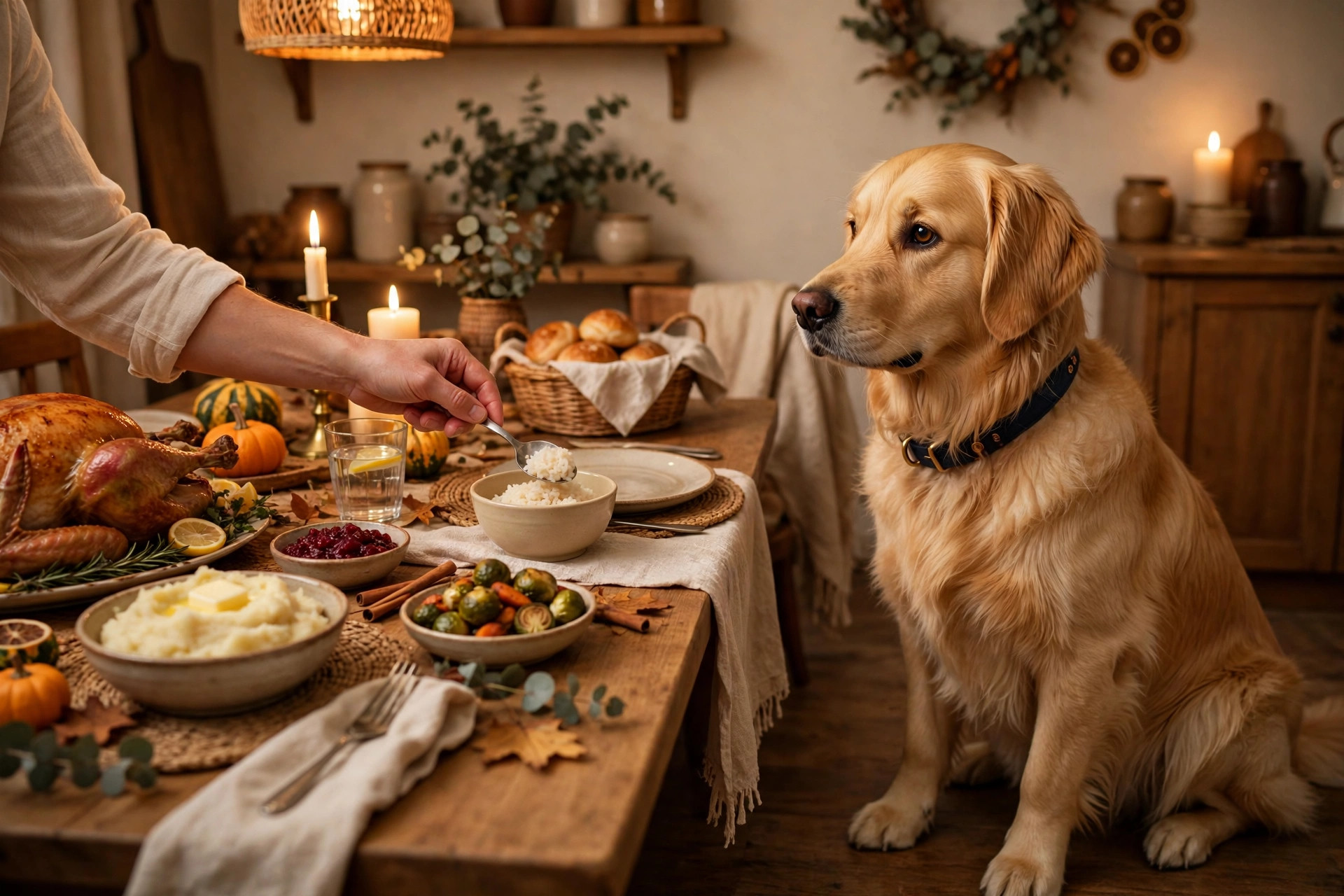
If you want your dog to join in, set aside a small plain portion before you add butter, cream or seasoning to the main batch. Boil or steam peeled potatoes until soft, mash them plain, and let them cool to room temperature. Do not add milk, butter, salt or any seasoning.
Serve only a small amount. For a small dog, a tablespoon or two is plenty. For a medium or large dog, a few tablespoons are enough as a treat. Mashed potato should make up only a small part of your dog’s daily food, with the rest coming from their normal balanced diet. Treats in general should stay within about ten percent of daily calories, and potato is a starchy treat, so moderation matters.
Introduce any new food slowly. If your dog has not eaten potato before, start with a very small amount and watch for stomach upset over the next day. Dogs with diabetes, weight problems, pancreatitis or sensitive stomachs should not be given starchy treats without veterinary advice. When in doubt, skip the mash and offer a safer treat instead.

What to Avoid at Thanksgiving
Thanksgiving is full of foods that look harmless but are risky for dogs. Keep the following away from your dog’s bowl, and be careful about food dropped on the floor or left within reach.
First, avoid all seasoned mash, including mash made with garlic, onion, chives, leeks, butter, cream cheese, sour cream or gravy. Gravy is often salty and fatty, and may contain onion or garlic. Second, avoid stuffing, which commonly contains onion, garlic and herbs that are not suitable for dogs. Third, avoid cooked bones, which can splinter, and avoid chocolate desserts, raisins, grapes and anything sweetened with xylitol, all of which are dangerous for dogs.
It is also worth watching for rich leftovers. A dog that eats a large amount of fatty food in one go, even if no single ingredient is toxic, can still become unwell. Keep bins closed, clear plates promptly, and remind guests not to feed the dog from the table unless you have agreed a safe treat in advance. Children in particular may want to share, so give them a dog-safe treat to offer instead.
If your dog does eat seasoned mash, do not panic, but do act promptly. Note what your dog ate and roughly how much, watch for vomiting, diarrhoea, lethargy, loss of appetite or pale gums, and contact your vet for advice. Garlic and onion poisoning can take time to show, so do not assume your dog is fine just because they seem well at first. The U.S. Food and Drug Administration’s guide to potentially dangerous items for your pet is a useful reminder of household foods and items that can harm pets, and it is worth reading before the holiday.
Healthier Thanksgiving Treats for Dogs
You do not need to leave your dog out of the celebration. Several plain, dog-friendly foods make good Thanksgiving treats when served in small amounts and without seasoning.
Plain cooked turkey meat, without skin, bones or seasoning, is a common choice, but keep the portion small and fatty skin off the plate. Plain cooked sweet potato, without butter or marshmallows, is another option; see our guide on whether dogs can eat sweet potatoes for serving details. Plain cooked carrots, green beans and pumpkin puree, with no added sugar or spice, can also work well.
Avoid pumpkin pie, however tempting it looks. Pie filling usually contains sugar, spices and sometimes ingredients that are not suitable for dogs. Our guide to whether dogs can eat pumpkin pie explains the difference between plain pumpkin and pie. Similarly, plain turkey differs from a seasoned Thanksgiving turkey dinner, as explained in our guide on whether dogs can eat turkey.
The safest approach is to prepare your dog’s treat separately, in advance, and serve it in their own bowl at a calm moment. That way your dog feels included without the risk of table scraps, and you know exactly what they have eaten.
Thanksgiving Day Tips for Dog Owners
Plan ahead on Thanksgiving Day. Feed your dog their normal meal at the usual time, so they are not begging out of hunger. Exercise them earlier in the day if you can, and give them a quiet space to retreat to when guests arrive. A busy house, unfamiliar voices and cooking smells can be stressful, even for sociable dogs.
Keep the kitchen and dining areas as dog-proof as you can. Use a baby gate if needed, keep food out of reach on counters, and do not leave plates unattended on low tables. If guests bring food, ask them to keep it away from the dog. A short, clear message at the start of the meal — that the dog has their own treat and should not be fed from the table — prevents most accidents.
Watch your dog after the meal as well as during it. Some dogs scavenge quietly and only show stomach upset hours later. If your dog vomits repeatedly, has bloody diarrhoea, seems very lethargic, collapses or shows pale gums, seek veterinary care urgently rather than waiting to see if it passes.
Frequently Asked Questions
Can dogs eat mashed potatoes with butter?
No, buttered mash is not a good choice for dogs. Butter adds a lot of fat, which can cause stomach upset and, in larger amounts, pancreatitis. If you want to share potatoes, serve a small portion mashed plain, without butter, cream or salt.
Can dogs eat mashed potatoes with gravy?
No. Gravy is usually salty and fatty, and it may contain onion or garlic, both of which are toxic to dogs. Keep gravy-covered mash away from your dog, even in small amounts.
Are garlic mashed potatoes safe for dogs?
No, garlic mashed potatoes are never safe for dogs. Garlic is toxic to dogs, even when cooked, and can damage red blood cells. Do not give your dog any mash that contains garlic, garlic powder or onion.
How much plain mashed potato can a dog eat?
Only a small amount, as an occasional treat. A tablespoon or two suits a small dog, while a few tablespoons suit a medium or large dog. Potato should not replace your dog’s normal food, and dogs with diabetes, weight problems or pancreatitis should only have it with veterinary advice.
Can puppies eat mashed potatoes?
Puppies have sensitive stomachs and specific nutritional needs, so it is best to stick to puppy food and vet-approved treats. A tiny taste of plain potato is unlikely to cause serious harm in most cases, but there is no need to offer it, and seasoned mash must be avoided.
What should I do if my dog eats seasoned mashed potatoes?
Note what and how much your dog ate, watch for vomiting, diarrhoea, lethargy or pale gums, and contact your vet promptly for advice. Do not wait for symptoms if garlic or onion was involved, as effects can be delayed.
Leave a Reply