
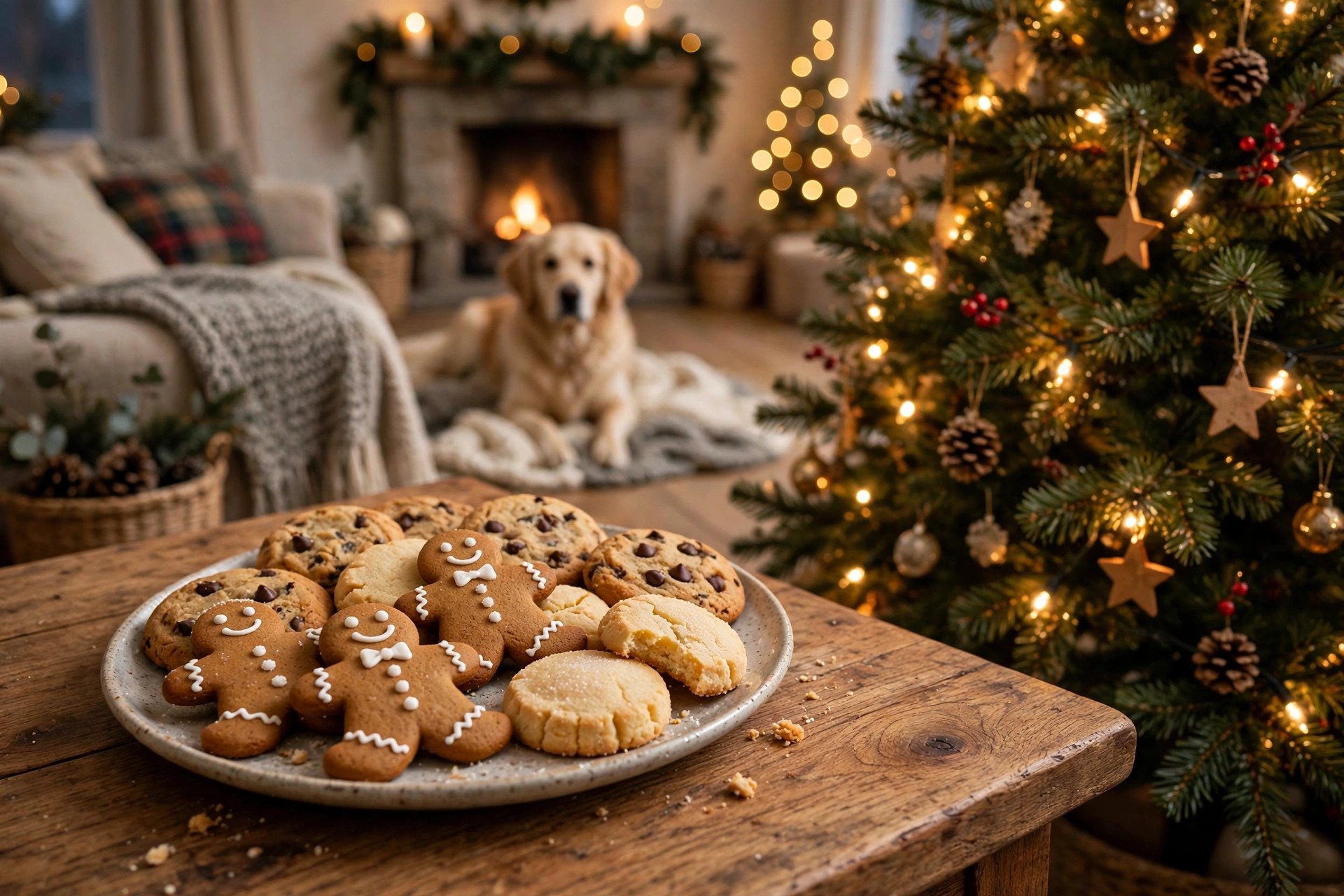
Can dogs eat Christmas cookies? The short answer is no — most Christmas cookies are not safe for dogs. A plain, sugar-free biscuit made for dogs is fine, but the cookies on a typical festive table are packed with sugar, butter and flavourings, and many contain ingredients that are genuinely toxic to dogs, including chocolate, xylitol and dried fruit. A single stolen biscuit is unlikely to be a disaster, but the safest rule over the holidays is to keep human cookies out of your dog’s reach and offer dog-safe treats instead.
Key Facts
- Short answer: No — most Christmas cookies are unsafe for dogs
- Toxic ingredients: Chocolate, xylitol (birch sugar), raisins, currants, sultanas, macadamia nuts and alcohol
- Risky but not toxic: Butter, sugar, nutmeg, and rich icing
- Safe alternative: Plain dog biscuits or homemade treats made with dog-safe ingredients
- If your dog eats a cookie: Check the ingredients, note how much was eaten, and call your vet — especially for chocolate or xylitol
- Best prevention: Keep cookie plates high, use a dog-safe treat tin, and tell guests not to feed the dog from the table
Why Most Christmas Cookies Are Not Safe for Dogs
Christmas cookies are made for human taste buds, not for a dog’s digestive system. A single festive biscuit can contain a lot of sugar, a lot of fat, and often one or more ingredients that are actively toxic. Dogs also process some foods very differently from people: theobromine in chocolate is something a human body clears quickly, but a dog’s body clears it slowly, so it builds up to harmful levels. Xylitol, a sweetener found in many sugar-free baked goods, can cause a dangerous drop in blood sugar in dogs.
Even a cookie with no toxic ingredient is still a poor choice. The high fat content in butter-rich biscuits can upset a dog’s stomach and, in sensitive dogs or after a large amount, contribute to pancreatitis — a painful inflammation of the pancreas that needs veterinary care.
The Dangerous Ingredients to Watch For
Not every Christmas cookie is equally risky. Check the label or recipe to see which ingredients are inside.
Chocolate. Chocolate appears in many Christmas cookies: chocolate chip, double chocolate, chocolate-dipped and cocoa-dusted varieties. Dark chocolate and baking chocolate contain more theobromine than milk chocolate, so they are more dangerous in smaller amounts. Signs of chocolate poisoning include restlessness, vomiting, diarrhoea, a fast heartbeat and, in severe cases, seizures. If your dog eats chocolate, read our guide on what to do if your dog eats chocolate and call your vet straight away.
Xylitol. Xylitol, also sold as birch sugar, is a sweetener used in sugar-free cookies, sweets and peanut butter. In dogs it triggers a rapid release of insulin, which can cause a sudden and dangerous fall in blood sugar within 30 minutes. Symptoms include weakness, wobbling, collapse and seizures. Because xylitol is often hidden in the ingredients list under another name, always check the label of any sugar-free product.
Raisins, currants and sultanas. Mince pies, Christmas pudding, fruit cake and many spiced cookies contain dried grapes, and these are toxic to dogs. Even a small number of raisins can cause kidney failure in some dogs, and there is no reliable “safe” amount. If your dog eats a mince pie or a slice of Christmas cake, treat it as an emergency and contact your vet.
Macadamia nuts. Macadamia nuts appear in some premium Christmas cookies and can cause weakness, vomiting, tremors and a raised body temperature in dogs. The effect is usually temporary, but it still needs veterinary advice.
Alcohol and nutmeg. Rum-soaked fruit, brandy butter and liqueur-flavoured cookies contain alcohol, which dogs tolerate far worse than people. Nutmeg can cause disorientation and a raised heart rate in large amounts. A dog that eats a whole batch of nutmeg-heavy biscuits should be checked by a vet.
The U.S. Food and Drug Administration keeps a useful list of potentially dangerous items for your pet, covering chocolate, xylitol and other common household hazards.
Are Any Christmas Cookies Safe for Dogs?
A plain, unsweetened biscuit made specifically for dogs is the safe option. Many pet shops sell festive-shaped dog biscuits in December, made with dog-safe ingredients and no added sugar. If you enjoy baking, you can make your own dog treats with plain flour, oats, pumpkin purée, mashed banana or unsweetened peanut butter — just check the peanut butter contains no xylitol.
What about a plain digestive biscuit or a simple shortbread? A small piece of a plain, low-sugar biscuit is unlikely to harm a healthy adult dog, but it offers nothing useful and can still upset a sensitive stomach. Keep human biscuits for humans and give your dog something made for them. Remember that “dog-safe” does not mean unlimited: treats should make up no more than about a tenth of your dog’s daily food.
What to Do If Your Dog Eats a Christmas Cookie
Stay calm and act quickly. First, find out exactly what your dog ate. Check the packet or recipe for chocolate, xylitol, raisins, currants, sultanas, macadamia nuts or alcohol, and work out roughly how much was eaten and when. Small dogs are at greater risk from the same amount, because the toxic dose depends on body weight.
If the cookie contained chocolate, our guide on why chocolate is dangerous for dogs and what to do explains the signs to watch for. If it contained xylitol or dried fruit, do not wait for symptoms — call your vet or an emergency animal clinic immediately, because early treatment makes a real difference. If the cookie was plain and contained none of the dangerous ingredients, watch your dog for vomiting, diarrhoea or unusual tiredness over the next 24 hours and call the vet if anything seems wrong. Never try to make your dog vomit at home unless a vet tells you to.
How to Keep Dogs Safe Around Holiday Baking
Christmas is a busy time, and dogs are opportunists. A cooling tray left on a low table, a gift tin of biscuits under the tree, or a well-meaning guest slipping a treat under the table can all end in a vet visit. Keep baking ingredients and finished cookies on high shelves or in closed cupboards, and never leave a plate of biscuits on a coffee table within reach. Store xylitol, cocoa powder and dried fruit in sealed containers, and clean up spills of chocolate chips or cake mixture straight away.
Tell your guests the rule: no feeding the dog from the table, however cute the begging face. A small tin of dog-safe treats by the door lets guests give your dog a festive treat that is actually safe.
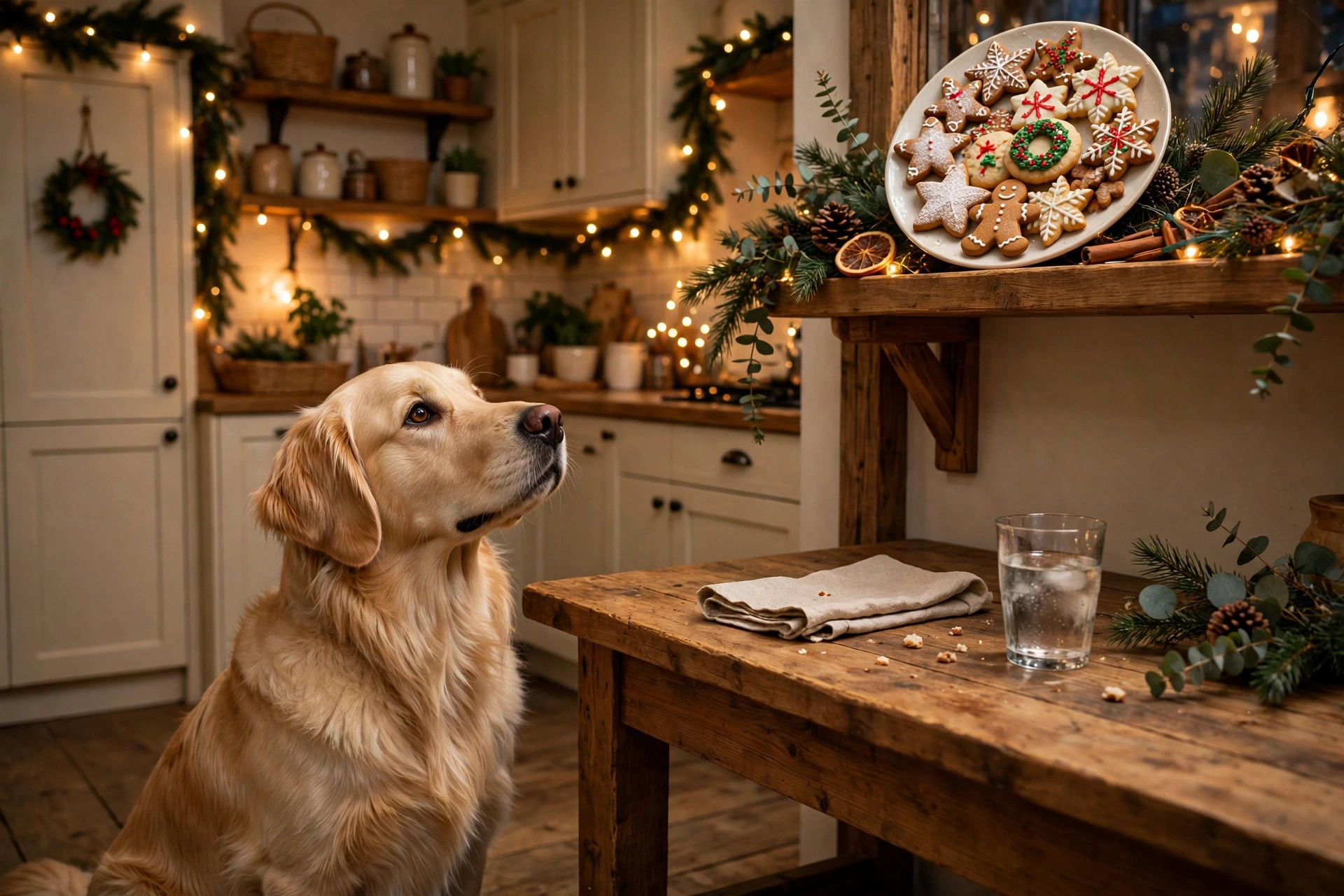
Christmas dinner brings its own questions — our guide to whether dogs can eat Christmas dinner covers turkey, stuffing and gravy, so you can plan a safe plate for your dog.
Safer Festive Treats Your Dog Will Love
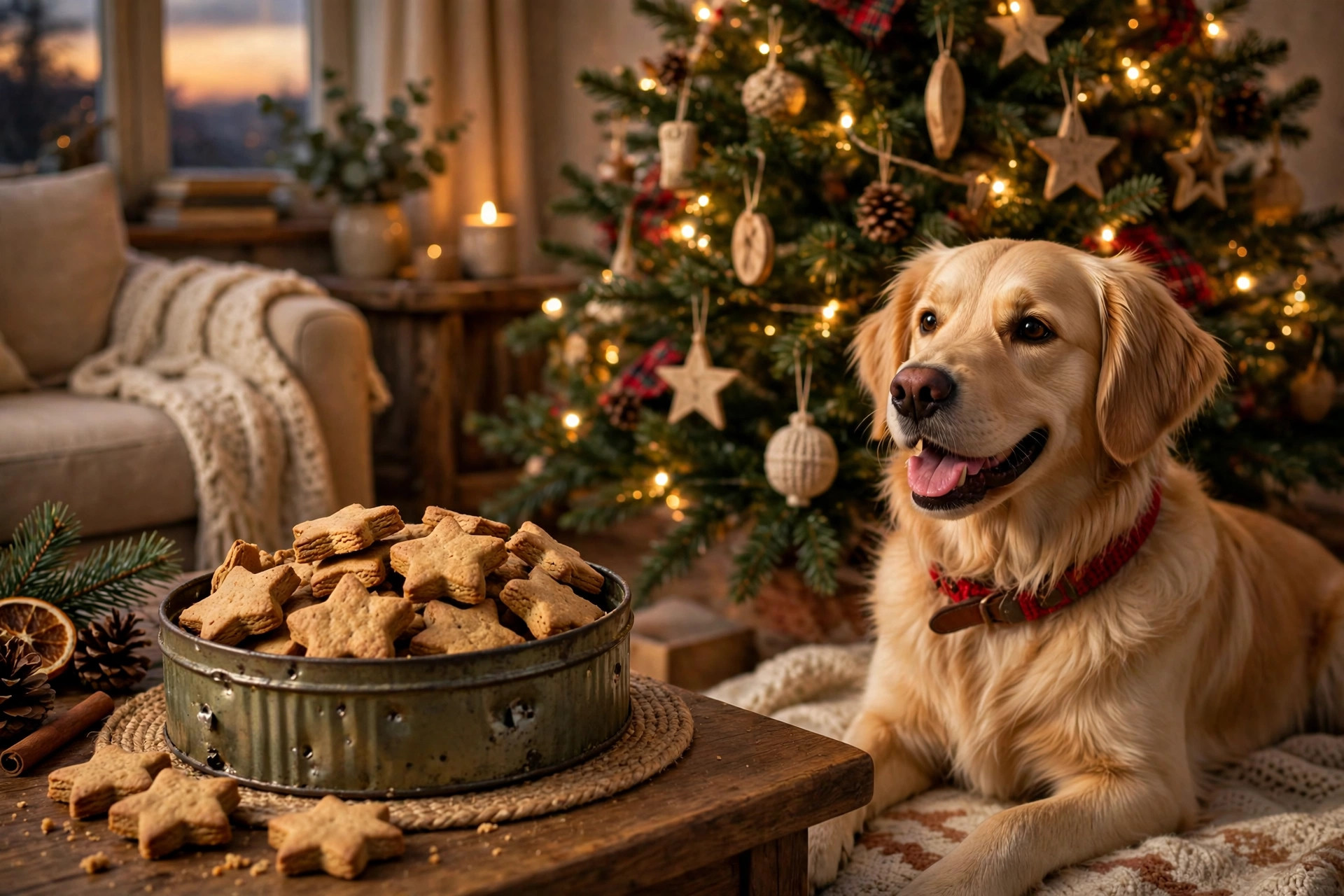
Your dog does not need to miss out on the celebrations. Homemade dog biscuits are easy: mix plain flour, oats and pumpkin purée, cut into star or tree shapes, and bake until firm. A frozen Kong stuffed with plain yoghurt and a few blueberries makes a long-lasting festive puzzle. Small pieces of plain cooked turkey or carrot are safe for most dogs and feel like a real treat. You can even make a “doggy Christmas dinner” of plain turkey, cooked carrots and a spoonful of plain mashed potato — no gravy, no stuffing, no seasoning.
Frequently Asked Questions
Can dogs eat gingerbread cookies?
No. Gingerbread is high in sugar and fat, and often contains nutmeg and sometimes chocolate. A tiny crumb is unlikely to cause harm, but it should not be given as a treat. Offer a plain dog biscuit instead.
Can dogs eat sugar cookies?
Sugar cookies are not toxic in themselves, but they are high in sugar and butter, and decorated ones may contain chocolate or food colourings. A small plain piece is unlikely to harm a healthy dog, but it is not a suitable treat.
How much chocolate is dangerous for a dog?
It depends on the type of chocolate and the size of the dog. Dark and baking chocolate are the most dangerous, and small dogs are at risk from smaller amounts. There is no safe amount — if your dog eats any chocolate, contact your vet with the type, amount and your dog’s weight.
What should I do if my dog eats a mince pie?
Call your vet immediately. Mince pies contain raisins, currants and sultanas, which can cause kidney failure in dogs, and there is no known safe amount. Do not wait for symptoms to appear.
Are sugar-free Christmas cookies safe for dogs?
No — sugar-free cookies are often more dangerous than ordinary ones, because many contain xylitol. Xylitol can cause a rapid, dangerous drop in blood sugar in dogs. Always check the ingredients of any sugar-free product.
Can I give my dog a small piece of shortbread?
A tiny piece of plain shortbread is unlikely to harm a healthy adult dog, but shortbread is very high in butter and sugar, so it can upset the stomach. A plain dog biscuit is a better festive treat.
Leave a Reply