
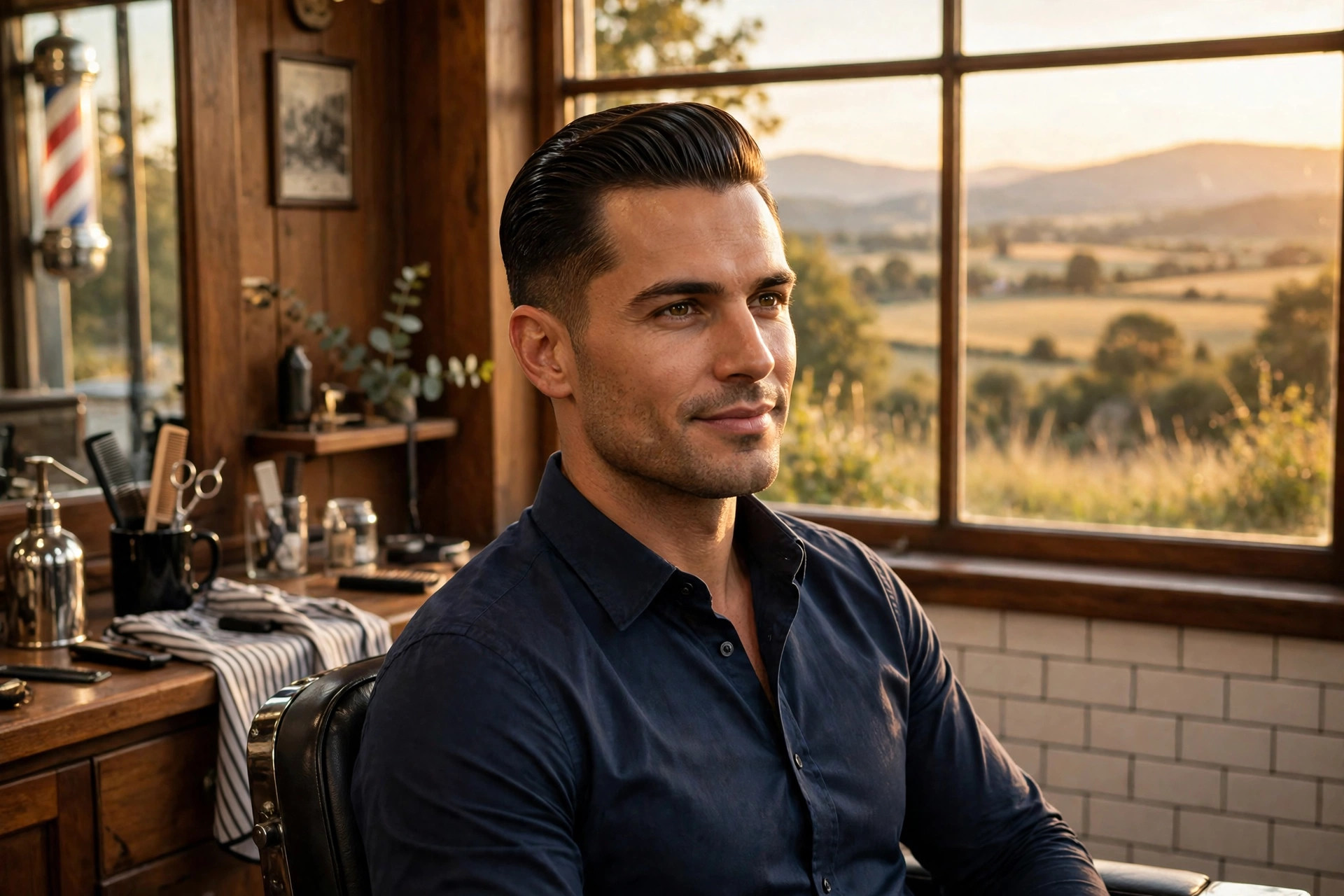
The slicked back haircut is one of the most enduring styles in men’s grooming. Hair is combed straight back from the forehead, creating a smooth, polished look that works in the office, at a wedding and on a night out. It has been worn by film stars, businessmen and barbershop regulars for generations, and it keeps coming back because it suits so many men and so many occasions.
Key Facts
- The look: hair swept straight back from the forehead, smooth and polished
- Best hair length: about 8–15 cm on top, with shorter sides
- Best hair types: straight to slightly wavy hair
- Styling time: five to ten minutes
- Products: pomade, gel or cream
- Maintenance: a trim every three to four weeks
What Is a Slicked Back Haircut?
A slicked back keeps the hair on top long enough to comb straight back, while the sides and back are cut shorter. The top is usually 8 to 15 cm long, and the sides can be a taper, a fade, or a classic scissor cut. The key feature is direction: every strand on top is combed backwards, away from the face, with no parting.
The style opens up the face: with no hair falling forward, your features are fully visible. It also works well with facial hair — a slicked back top with a neat beard is a classic combination — and can be worn with a high shine for formal occasions or a matte finish for everyday.
Who Does the Slicked Back Suit?
The slicked back suits most face shapes, especially oval, square and rectangular faces, where it balances strong features. It also works well for men with a strong jawline. Men with round faces can wear it too, but a little height on top helps lengthen the face.
Hair type matters more than face shape. Straight hair is easiest to slick back, because it lies flat naturally, and slightly wavy hair adds natural texture. Very curly hair needs more product and a longer length to stay in place. Fine hair works with a light product and volume at the front, while thick hair holds the style well but needs a strong-hold product. If your hair is thinning at the front, the style can expose the hairline, so ask your barber for an honest opinion before committing.
How to Ask Your Barber for a Slicked Back
Ask for the top left long — about 8 to 15 cm — and say you want it slicked back. Then describe the sides: a taper or low fade gives a modern look, while a classic scissor cut looks more traditional. Mention whether you want a parting — a true slicked back has none, but some men prefer a subtle side part for a softer version.
Bring a photo — two or three pictures of the exact style you want remove all guesswork. Tell them about your hair type and how much time you will spend styling each morning, because that affects the length and cut they recommend. If it is your first time with the style, ask the barber to show you how to style it before you leave the chair.
How to Style a Slicked Back at Home
Styling a slicked back takes five to ten minutes once you know the routine. Start with clean, towel-dried hair — slightly damp hair is easier to shape than soaking wet or completely dry hair. Warm a small amount of product between your palms: pomade for a classic shiny finish, gel for a strong hold with a wet look, or styling cream or clay for a natural, matte finish.
Work the product evenly through the top, from front to back. Then comb the hair straight back with a fine-toothed comb or brush, starting at the forehead. Use a hairdryer on low heat while combing to set the shape — this is what makes the style last all day. Blow the hair backwards, lifting slightly at the front for volume. Finish with a little product smoothed over the surface to tame loose strands, and a light mist of hairspray if you want extra hold.
Choosing the Right Product
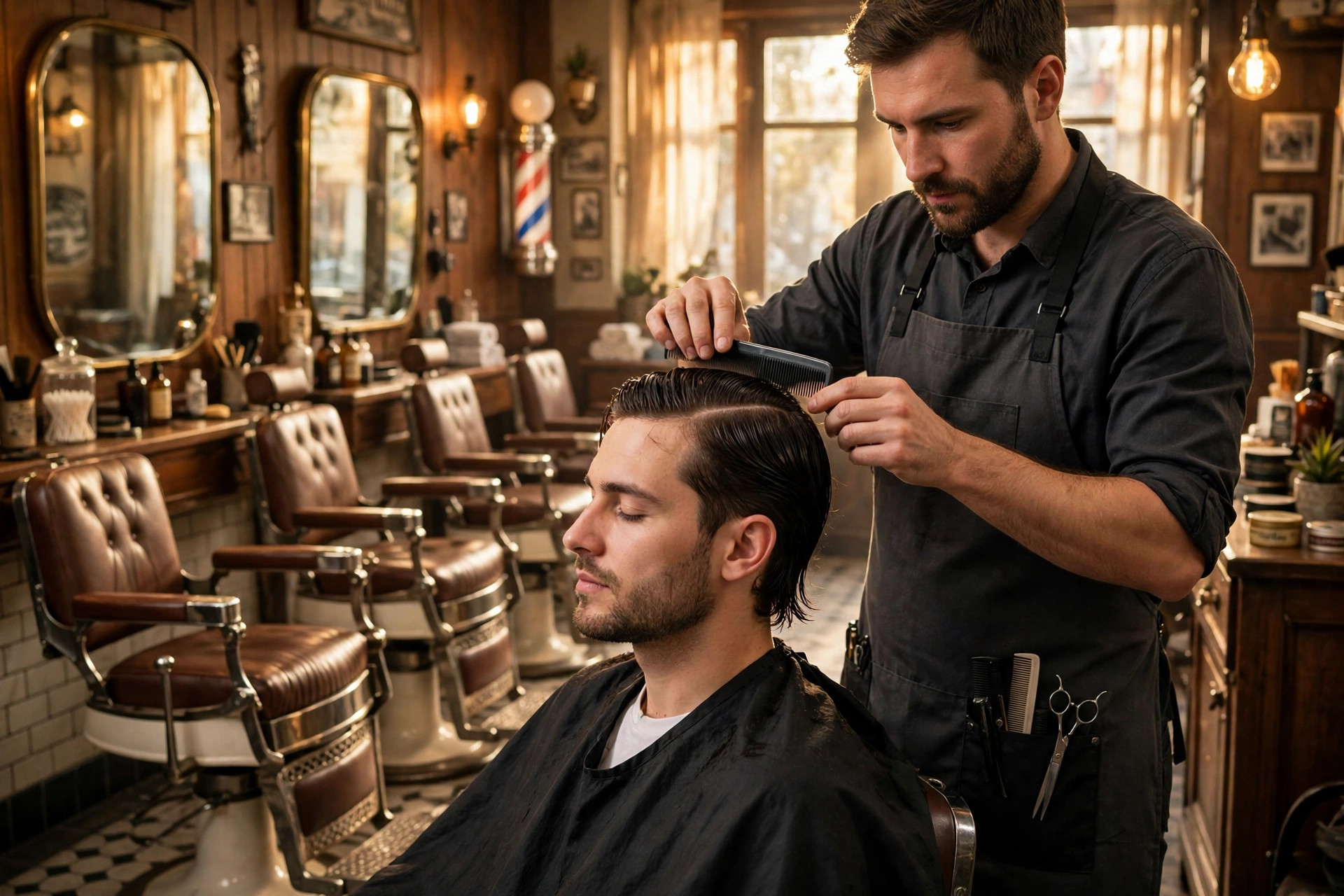
The product you choose decides the finish. Pomade is the traditional choice: it gives shine and a flexible hold, and it can be restyled during the day with a comb. Water-based pomades wash out easily, while oil-based pomades give a stronger shine but need shampoo to remove. Gel gives a firmer hold and a wet look, which suits a sharp, formal style, but it can feel stiff and flake if you use too much. Styling cream or clay gives a matte, natural finish with a lighter hold. Start with a coin-sized amount and add more only if you need it — too much product weighs the hair down and makes it look greasy.
Hair products are cosmetics, and their ingredients and labelling are regulated in the United States. The U.S. Food and Drug Administration cosmetics page explains how cosmetics are overseen and what to look for on a label. As a general rule, choose products from brands you trust, check the ingredient list if you have sensitive skin, and stop using any product that irritates your scalp.
Slicked Back Variations
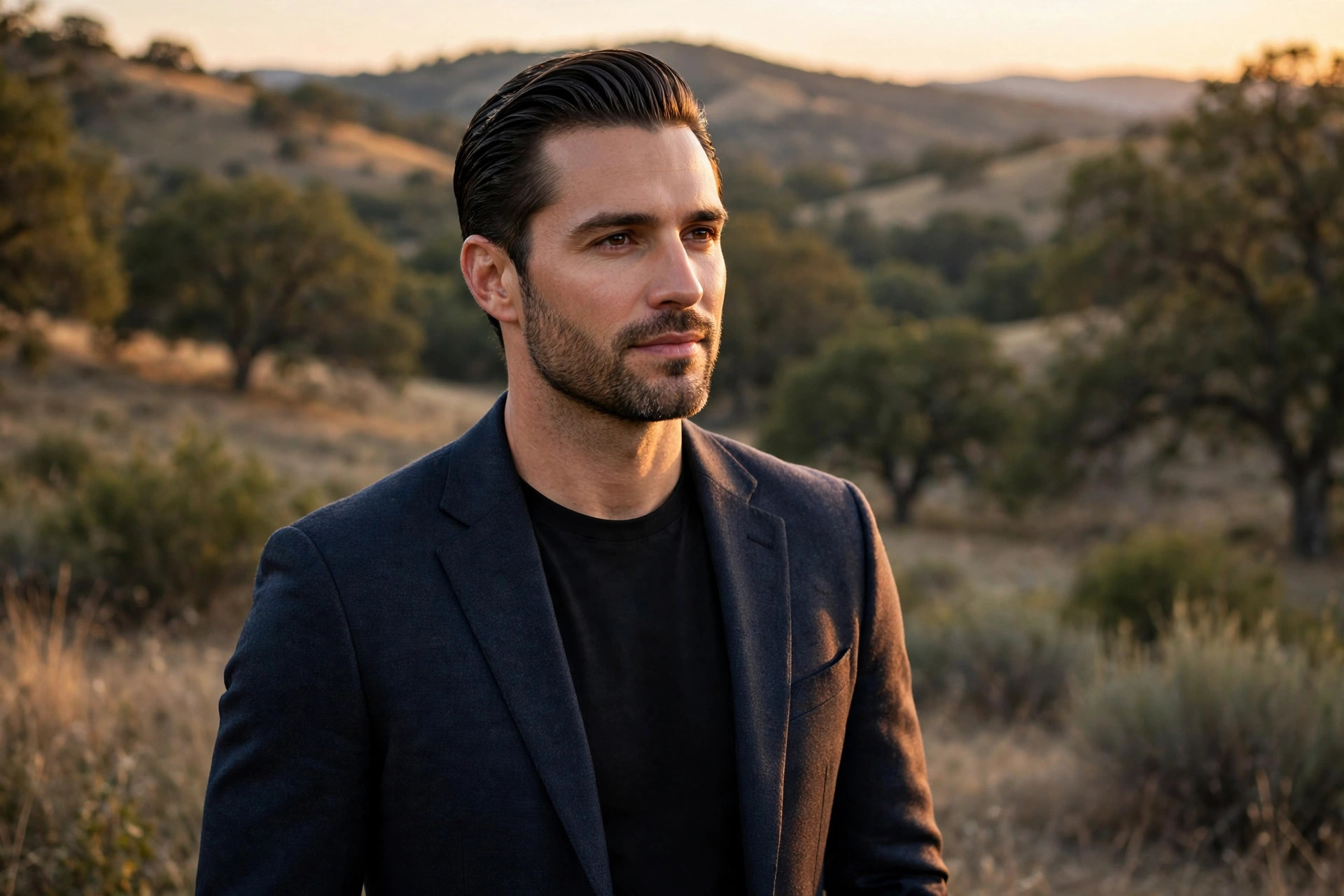
The classic slicked back is only the starting point. A slicked back undercut pairs a long top with very short, disconnected sides. A slicked back fade blends the sides gradually for a clean look. A slicked back taper keeps the sides longer and more traditional. A textured slick back uses a matte product for a relaxed style. A slicked back with a beard balances the polished top with rugged facial hair.
Slicked Back vs Other Classic Cuts
The pompadour also sweeps hair backwards, but it adds dramatic height and volume at the front, making it bolder and harder to maintain day to day. The Ivy League is shorter on top, with a side part, and looks more conservative — a good choice if you want a neat style with very little styling time. The curtain haircut parts the hair in the middle and lets it fall forward, giving a softer, more relaxed look. The slicked back sits between these: more polished than the curtain, less dramatic than the pompadour, and more striking than the Ivy League.
Keeping the Style Looking Sharp
A slicked back needs regular maintenance to keep its shape. Book a trim every three to four weeks, focusing on the sides and neckline, so the contrast between the long top and the short sides stays clean. Between cuts, wash with a gentle shampoo and avoid over-washing, which can dry out your scalp. If you use an oil-based pomade, you may need to shampoo twice to remove it. If the style flattens overnight, a quick comb-through with a little water and product in the morning brings it back. In windy or rainy weather, carry a small comb to tidy up after being outdoors.
Common Mistakes to Avoid
The most common mistake is using too much product. A slicked back should look smooth and controlled, not wet and heavy — start with less than you think you need. The second mistake is combing the hair back while it is soaking wet: it will fall flat and lose volume, so towel-dry first. The third is choosing a length that does not suit your hair type — very short hair cannot be slicked back, and very long hair can look heavy without enough hold. Finally, do not skip the hairdryer if you want the style to last: air-drying works for a relaxed look, but heat sets the shape for the whole day.
Frequently Asked Questions
How long does hair need to be for a slicked back?
The top needs to be at least 8 cm long so it can be combed back and stay in place. Around 10 to 15 cm gives the best result, because there is enough weight for the hair to lie back smoothly.
What is the best product for a slicked back haircut?
Pomade is the classic choice for shine and a flexible hold. Gel gives a firmer hold and a wet look. Styling cream or clay gives a matte, natural finish.
Does a slicked back suit thin or fine hair?
It can, but it needs care. Use a light product, add volume at the front with a hairdryer, and avoid heavy pomades that weigh fine hair down. If your hair is thinning at the front, ask your barber for an honest opinion.
How often should I get a slicked back trimmed?
Every three to four weeks is ideal. The sides and neckline grow out fastest, and keeping them neat is what makes the contrast with the long top look sharp.
Can I slick back curly hair?
Yes, but it takes more product and a longer length. Straighten the hair slightly with a hairdryer while combing it back, and use a strong-hold product. Some men prefer a textured slick back, which works with the natural wave instead of fighting it.
Is the slicked back a formal style or an everyday style?
Both. With a high-shine pomade it looks formal and polished, suitable for weddings and business events. With a matte cream and a looser finish it works as an everyday style.
Leave a Reply