
The best pantry organization ideas come down to one simple system: decant dry goods into clear containers, group everything into zones based on how you actually cook, and use every inch of door and wall space. In this guide you will find 15 smart pantry organization ideas for small pantries, walk-in layouts, and tight budgets, so you can find anything in seconds, waste less food, and stop buying duplicates.
A messy pantry quietly costs you money every week. You buy a second jar of cumin because the first one was hiding behind the oatmeal. You throw away expired cans you forgot you owned. You waste ten minutes hunting for baking powder on a busy weeknight. The right pantry organization ideas fix all of this with simple systems instead of expensive products.
The good news is that these ideas work in almost any kitchen. Whether your pantry is a narrow reach-in closet, one deep cabinet, or a full walk-in room, the same principles apply: make everything visible, group items by use, and give every single thing a home it can return to.
| Best first step | Empty the pantry, toss expired items, and wipe every shelf |
|---|---|
| Best containers | Clear, airtight, stackable containers and glass jars |
| Typical cost | $30 to $150 for a full pantry refresh |
| Time needed | 3 to 5 hours for a deep reorganization |
| Weekly maintenance | 10 minutes to reset zones and check dates |
| Food safety | Follow federal storage guidance (see the FoodSafety.gov link below) |

Before the Ideas: Do a 15-Minute Pantry Reset
Every great pantry organization project starts the same way: with an empty shelf. Pull everything out, group it on your kitchen counter, and check every date as you go. Toss anything expired, stale, or unidentifiable. Donate sealed items you know you will never use. Then wipe down the shelves with warm soapy water and let them dry completely before a single container goes back in.
While the shelves are empty, measure them. Write down the depth, width, and height between shelves, and keep those numbers on your phone. Almost every failed pantry organization attempt comes from buying containers that do not fit the space. Five minutes with a tape measure saves you a return trip to the store.
An organized pantry is not about buying more containers. It is about giving every item a home it can return to.
Pantry Organization Ideas for Decanting and Containers
Decanting, which simply means moving food from store packaging into your own containers, is the single most visible of all pantry organization ideas. It makes shelves look uniform, keeps dry goods fresher, and lets you see at a glance when you are running low. You do not need to decant everything to get the benefit, as the ideas below explain.
1. Decant Dry Goods Into Matching Clear Containers
Flour, sugar, rice, pasta, cereal, oats, and lentils are perfect candidates for clear airtight containers. When every container matches, the shelf reads as one calm system instead of a noisy jumble of boxes and bags, and you can spot low stock instantly. Choose square or rectangular containers over round ones because they use shelf space more efficiently and stack neatly. Matching containers also make open shelves look intentional, a styling trick we borrow from our home decor ideas guide.
2. Use Glass Jars for Baking Staples
Baking powder, baking soda, chocolate chips, cocoa, nuts, and dried fruit belong in glass jars with tight lids. Glass does not absorb odors, it washes clean, and it shows off ingredients beautifully if your pantry has open shelving or a glass door. Pick jars with wide mouths so measuring cups fit inside easily, and keep them in your baking zone so every cookie session starts without a scavenger hunt.
3. Only Decant What You Use Often
Here is the rule professionals follow: decant only the staples you reach for weekly. Specialty flours, holiday sprinkles, and that bag of barley from one soup recipe can stay in their original packaging inside a labeled bin. This saves money on containers and keeps your system honest. When you are unsure whether an older item is still good, check the official storage charts at FoodSafety.gov before you toss it or keep it.
Pantry Organization Ideas for Zones by Use
Grouping food by how you use it, rather than by type or alphabet, is what separates a pretty pantry from a practical one. Zones mean you grab everything for one task in a single motion, which is exactly how real weeknight cooking works.
4. Create a Breakfast Zone
Put cereal, oatmeal, granola, peanut butter, honey, and coffee or tea supplies together on one shelf at a comfortable height. If you make school lunches, add a small bin of granola bars and fruit pouches right beside it. Mornings become an assembly line instead of a treasure hunt, and anyone in the house can make breakfast without asking where things are.
5. Build a Grab-and-Go Snack Zone
Give snacks their own low shelf or bin, especially if you have kids. Crackers, popcorn, pretzels, dried fruit, and single-serve packs go into one or two open bins that little hands can reach. Keep the sugary treats on a higher shelf and the everyday snacks at kid height, and you will hear fewer requests and see fewer ransacked shelves.
6. Group Dinner Ingredients by Meal
Keep pasta, jarred sauce, and parmesan together. Keep rice, coconut milk, and curry paste together. Keep taco shells, beans, and seasoning together. These mini meal kits turn dinner decisions into grab-one-spot cooking, and they make grocery lists easier because you can see which kit is running low. This is one of the pantry organization ideas that saves the most weeknight stress.
If you cannot see it, you will buy it twice.
Small Pantry Makeover Ideas
A small pantry does not need more square footage. It needs smarter use of depth and height, because most small pantries waste both. These pantry organization ideas are designed for narrow reach-in closets and single deep cabinets.

7. Add Pull-Out Drawers to Deep Shelves
Deep shelves are where food goes to be forgotten, because anything behind the front row might as well not exist. Sliding pull-out drawers or wire baskets fix this completely by bringing the back of the shelf to you. Measure your shelf depth first, then add one drawer per shelf for cans, jars, and heavy items. The difference is immediate: everything becomes reachable with one pull.
8. Use Tiered Risers So Nothing Hides in Back
A tiered shelf riser works like stadium seating for cans and spice jars, lifting the back rows so every label faces you. They cost very little, need no installation, and instantly double the usable visibility of a shelf. Use them for canned goods, small jars, and vitamins. Pair a riser with a single row of matching cans and even a shallow shelf looks professionally organized.
9. Stack Up With Vertical Bins
When shelf spacing is generous, stacking bins turn wasted air into storage. Clear stackable bins hold potatoes, onions, bread, and snack bags while keeping them visible from the front. Choose bins with handles so you can pull the whole bin out like a drawer, and never stack more than two high for heavy items so the bottom bin stays easy to lift.
Door and Wall Storage Ideas
The inside of a pantry door is free real estate, and the narrow wall beside a pantry often is too. Door and wall storage adds the equivalent of an extra shelf or two without touching your existing shelves, which makes these some of the highest-impact pantry organization ideas for renters.
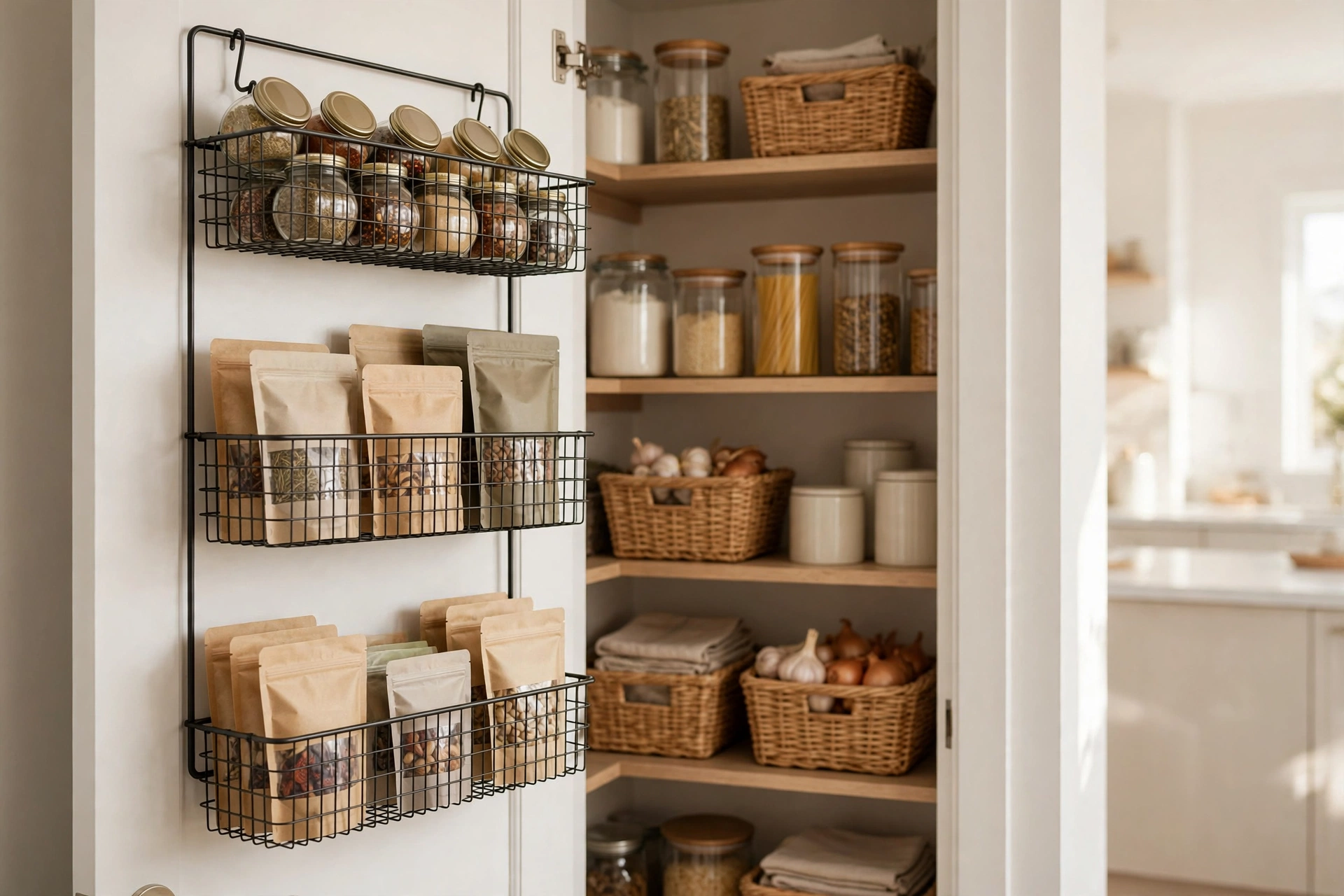
10. Hang an Over-the-Door Organizer
An over-the-door rack with wire baskets or clear pockets holds spices, seasoning packets, small jars, and wraps without a single screw. Check that your door still closes fully before you load it, and keep heavier items on the lower baskets so the door swings smoothly. This one addition can free an entire shelf inside the pantry for bigger items.
11. Mount a Rail With Hooks on an Empty Wall
If your pantry has even a few inches of bare wall, a simple rail with S-hooks creates hanging storage for measuring cups, small baskets, aprons, and reusable grocery bags. Inside a walk-in pantry, a rail near the door keeps everyday tools within arm’s reach. It is a five-minute install that makes the space feel custom.
Zones beat the alphabet: group food by how you use it, not by what it is called.
Walk-In Pantry Layout Ideas
A walk-in pantry is a luxury, but only if the layout works. Without a plan, walk-ins become deep caves where items migrate to the back and expire. These pantry organization ideas keep a large space as easy to use as a small one.
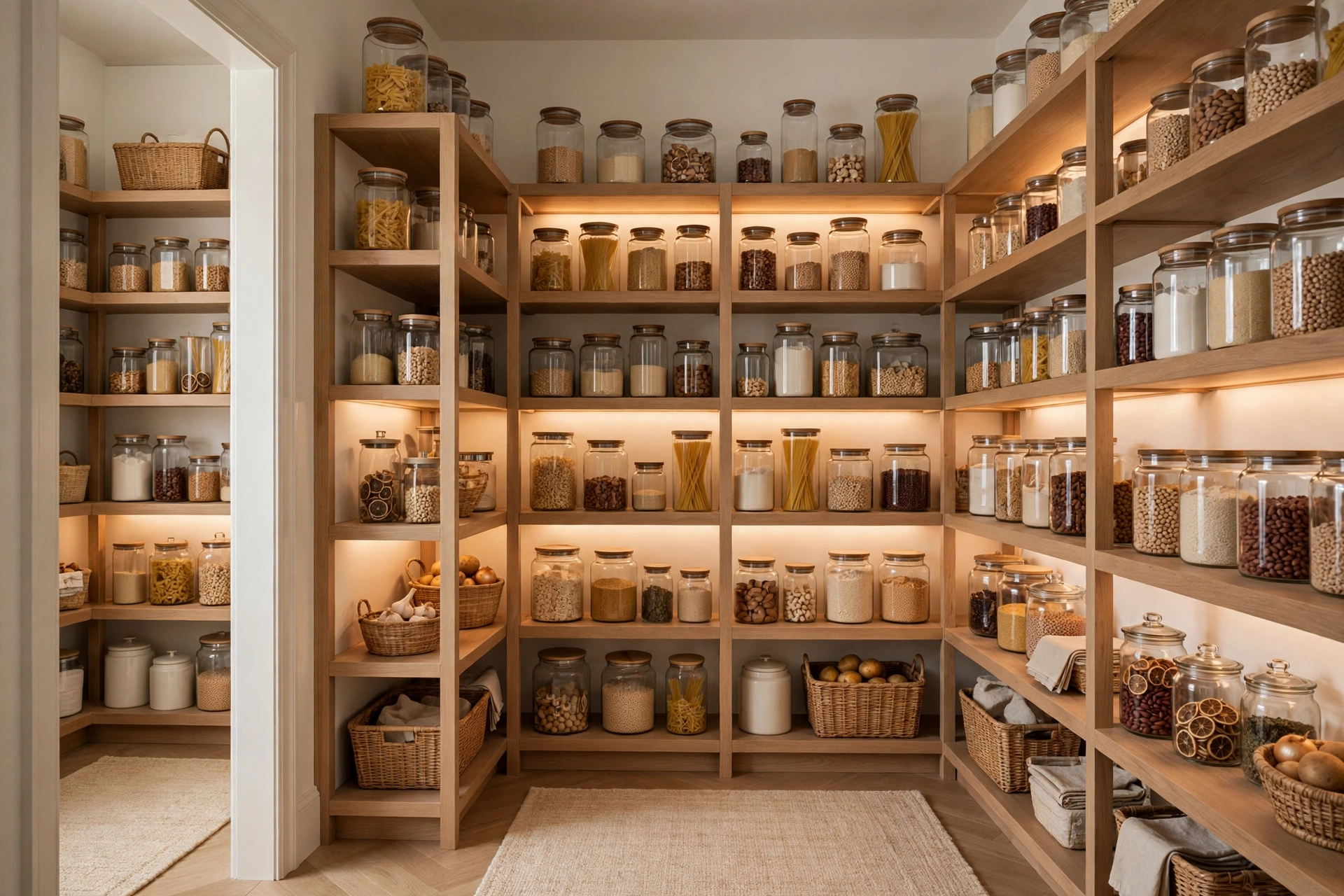
12. Plan a U-Shaped Layout
Shelving on three walls creates a U shape that puts everything within a step or two. Keep daily items on the two side walls at eye level, reserve the back wall for backstock and bulk buys, and leave the center clear for a step stool. Adjustable shelves are worth the investment here because your storage needs will change with the seasons. If your pantry is part of a larger kitchen project, our kitchen remodel ideas guide can help you plan the whole layout around it.
13. Add a Countertop Landing Zone
Even a narrow stretch of counter inside a walk-in pantry changes how the space works. Use it as a landing pad for grocery bags, a spot to decant bulk buys into containers, and a home for small appliances like the toaster or coffee grinder. Under-counter baskets below it hold produce, while the wall above gets a rail for daily tools.
Budget Pantry Organization Ideas With Bins and Baskets
You do not need a big budget to get big results. Some of the most effective pantry organization ideas use the cheapest supplies in the store, because consistency matters more than price.
14. Shop Dollar Stores for Matching Bins
Dollar stores sell sturdy plastic bins in matching colors for a fraction of boutique prices. Buy one size in one color and use them everywhere: one for canned goods, one for baking, one for snacks, one for backstock. Matching bins create the uniform look of expensive systems at about two dollars per bin, and if one cracks, replacing it is painless.
15. Repurpose Baskets for Produce
Woven baskets are ideal for potatoes, onions, garlic, and bread because they allow airflow while hiding visual clutter. Place a washable liner inside for easy cleaning, and keep produce baskets on lower shelves where it is cooler and darker. Baskets you already own work perfectly, which makes this one of the rare pantry organization ideas that can cost nothing at all.
How to Keep Your Pantry Organized
Organization is a system, not a one-time event. The pantries that stay tidy all share one habit: a ten-minute weekly reset. Once a week, straighten each zone, pull items forward, wipe up any spills, and toss anything past its prime. It is faster than one big cleanout and it keeps the system from sliding backward.
Adopt a one-in, one-out rule for gadgets and duplicate staples, and check dates seasonally when you do a deeper clean. Keep a small notepad or phone list inside the pantry door for items running low, so your grocery list practically writes itself. For more practical projects around the house, browse our home improvement ideas.
Frequently Asked Questions
What is the cheapest way to organize a pantry?
Start by emptying and wiping your shelves, which costs nothing. Then buy matching bins from a dollar store, usually one to three dollars each, and group like items together. Repurpose shoe boxes or baskets you already own for produce. Most pantries need only fifteen to twenty bins, so a full refresh can cost under forty dollars.
Should I decant everything into containers?
No, and most organizers advise against it. Decant only the dry goods you use often, such as flour, sugar, rice, pasta, and cereal, because clear containers keep them fresh and visible. Leave rarely used items, oddly shaped packages, and anything you will finish within a week in its original packaging to save money and effort.
How do I organize a very small pantry?
Think vertical and think doors. Add stackable bins, a tiered riser, and an over-the-door rack, which can add the equivalent of two extra shelves without any drilling into studs. Decant bulky boxes into slim containers, keep only daily items at eye level, and move backstock to a hall closet or the top of the kitchen cabinets.
How often should I clean out my pantry?
Do a quick ten-minute reset once a week: straighten zones, push items forward, and toss anything visibly expired. Every three to four months, do a deeper cleanout where you check every date, wipe the shelves, and re-decant anything running low. A seasonal reset keeps the system working and stops mystery cans from collecting dust.
How do I keep a pantry organized with kids in the house?
Give kids their own low snack zone with bins they can reach, and keep treats and breakables up high. Clear bins help because children can see what is inside without pulling everything out. Teach the one-in, one-out rule for snacks, and do the weekly ten-minute reset together so tidying becomes a shared habit instead of a chore.
What containers are best for a pantry?
Clear, airtight, stackable containers win for dry goods because you can see levels at a glance and the seals keep flour, cereal, and snacks fresh for months. Glass jars suit baking staples and look beautiful on open shelves. For everything else, use inexpensive plastic bins and woven baskets, which corral small items and slide easily on deep shelves.
Final Thoughts
The best pantry organization ideas are the ones you will actually maintain. Start with the reset, pick three or four ideas from this list that fit your space and budget, and build from there. A pantry where everything is visible, grouped by use, and easy to reach will save you time, money, and weeknight frustration for years.
Leave a Reply