
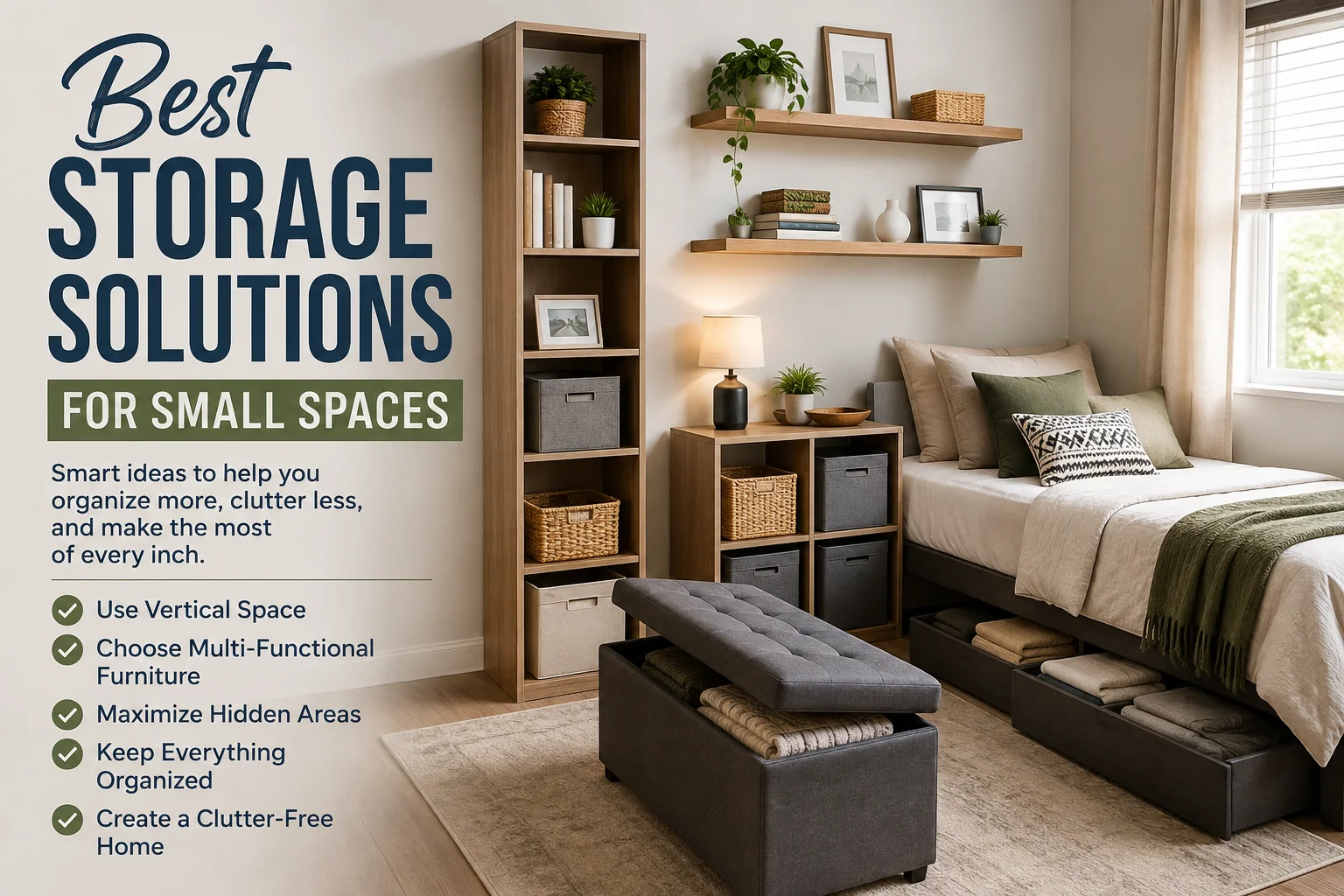
Living in a small home does not mean you have to live with constant clutter. The right storage solutions can help you make better use of walls, corners, cabinets, furniture, and other overlooked areas.
The key is to choose storage that fits your space and your daily routine. Adding more boxes or shelves is not always the answer. Sometimes the best solution is removing items you no longer use, moving rarely needed belongings elsewhere, or replacing two pieces of furniture with one.
Here are some of the best storage solutions for small spaces that can help you create a more organized and functional home.
What Are the Best Storage Solutions for Small Spaces?
The best storage solution depends on the room and what you need to store. Some of the most useful options include:
- Vertical shelving
- Under-bed storage
- Multifunctional furniture
- Floating shelves
- Wall-mounted cabinets
- Over-the-door organizers
- Storage ottomans
- Closet organizers
- Narrow rolling carts
- Stackable containers
- Drawer organizers
- Hidden storage
- Corner storage
- Storage benches
- Pegboards and wall rails
The goal is not to fill every available space. Good storage should make your belongings easier to access while keeping enough open space for comfortable movement.
1. Use Vertical Storage
When floor space is limited, look at the walls.
Tall bookcases, shelving units, wall cabinets, and other vertical storage options can provide useful capacity without taking up much additional floor space.
Vertical storage works well for:
- Books
- Clothing
- Kitchen supplies
- Bathroom products
- Office supplies
- Cleaning products
- Decorative items
Keep everyday items within easy reach and use higher shelves for things you only need occasionally.
A tall, narrow storage unit can often be more practical than a wide cabinet because it uses unused wall height.
2. Make Use of Under-Bed Storage
The space underneath your bed is valuable storage that is often overlooked.
You can use it to store items that do not need daily access, such as:
- Seasonal clothing
- Extra bedding
- Shoes
- Luggage
- Holiday decorations
- Hobby supplies
Beds with built-in drawers offer convenient storage, while separate containers provide more flexibility.
Keep similar items together and label containers when necessary. This makes it easier to find things without turning the area under your bed into hidden clutter.
3. Choose Multifunctional Furniture
Multifunctional furniture can save valuable space because one item can serve more than one purpose.
Popular examples include:
- Storage beds
- Storage ottomans
- Storage benches
- Lift-top coffee tables
- Sleeper sofas
- Desks with shelves
- Beds with built-in drawers
For example, a storage ottoman can provide seating while also storing blankets, pillows, or other household items.
The important thing is to choose furniture that genuinely replaces another item. Extra features are not useful if you never use them.
4. Add Floating Shelves
Floating shelves are useful when you need additional storage but do not want another large piece of furniture on the floor.
They can work in:
- Bedrooms
- Living rooms
- Kitchens
- Bathrooms
- Home offices
Use them for books, small plants, toiletries, photographs, or frequently used accessories.
Before installing shelves, check the manufacturer’s weight rating and use mounting hardware suitable for the wall.
5. Use the Back of Doors
The back of a door can provide useful storage without taking up floor space.
Over-the-door organizers can hold:
- Shoes
- Accessories
- Cleaning supplies
- Toiletries
- Pantry items
- Office supplies
This can be particularly useful in bedrooms, bathrooms, closets, and small kitchens.
Before installing an organizer, make sure the door can still open and close properly.
6. Organize Your Closet Vertically
A small closet can often hold more than you expect when you use its height efficiently.
Look for unused areas:
- Above hanging clothes
- Below short garments
- Behind the door
- Along side walls
- On the floor
Depending on your wardrobe, you can use:
- Shelf dividers
- Hanging organizers
- Stackable drawers
- Additional hanging rods
- Shoe storage
- Small storage bins
Measure your closet before purchasing an organizer. The best system depends on whether you mostly store hanging clothes, folded clothing, shoes, or accessories.
7. Turn Awkward Corners Into Storage
Small homes often have corners that are difficult to furnish.
A narrow shelf, corner cabinet, rolling cart, or tall storage unit can make these areas more useful.
Corner storage can work particularly well in:
- Kitchens
- Bathrooms
- Bedrooms
- Home offices
- Entryways
Do not feel that every empty corner needs furniture. Only use a corner for storage when the solution improves the room without interfering with movement.
8. Use Narrow Rolling Carts
A narrow rolling cart can fit into spaces where regular furniture cannot.
You can use one for:
- Kitchen supplies
- Cleaning products
- Bathroom items
- Office supplies
- Craft materials
- Household accessories
The main advantage is flexibility. You can move the cart when you need access to the area behind it.
Measure the available gap before buying one, especially if it needs to fit between cabinets or appliances.
9. Add Storage to the Walls
Walls can provide valuable storage while keeping the floor relatively clear.
Depending on your needs, consider:
- Pegboards
- Wall rails
- Hooks
- Shelves
- Magnetic storage
- Wall-mounted cabinets
Pegboards can be especially useful because hooks and accessories can be rearranged as your storage needs change.
Wall storage works best for items you use often or want to keep visible. Avoid covering every wall with shelves because too much open storage can make a small room feel crowded.
10. Use Storage Ottomans and Benches
Storage furniture can be especially useful when you already need seating.
A storage bench can work well in:
- Entryways
- Bedrooms
- Dining areas
- Living rooms
A storage ottoman can hold:
- Blankets
- Pillows
- Toys
- Books
- Seasonal accessories
Because the storage is built into furniture you already need, you can gain storage without adding another separate cabinet or box.
11. Make Kitchen Cabinets Work Harder
Small kitchens often have unused cabinet height or difficult-to-reach areas.
Useful kitchen storage solutions include:
- Shelf risers
- Pull-out shelves
- Drawer dividers
- Lid organizers
- Under-shelf baskets
- Vertical pan storage
- Cabinet-door organizers
The goal is not simply to fit more items into a cabinet. The items should also remain easy to see and reach.
If you have to remove several objects to reach one pan or container, the cabinet may need a better layout rather than more storage.
12. Use Hidden Storage
Hidden storage helps keep a small room organized without making every possession visible.
Look for storage inside:
- Beds
- Ottomans
- Benches
- Coffee tables
- Cabinets
- Drawers
- TV consoles
Hidden storage is particularly useful for items that you need but do not use every day.
Blankets, seasonal items, toys, cables, paperwork, and other small household belongings can often be stored this way.
13. Use Stackable Storage Containers
Stackable containers can make better use of cabinet, closet, and shelf height.
They are useful for:
- Seasonal clothing
- Toys
- Pantry items
- Craft supplies
- Documents
- Household accessories
Always measure your storage area before buying containers.
Check the width, depth, height, and door clearance.
A container that is slightly too large can make an entire cabinet harder to use.
14. Organize Drawers With Dividers
Drawers can become difficult to use when small items are mixed together.
Drawer dividers can separate:
- Kitchen utensils
- Office supplies
- Clothing accessories
- Bathroom products
- Tools
Use dividers to create practical groups rather than filling the drawer with unnecessary compartments.
The best drawer organization system is one that makes it easy to find an item and put it back in the same place.
15. Use Under-Stair and Other Unused Spaces
If your home has stairs, the area underneath them may provide valuable storage space.
Depending on the design, you could use:
- Drawers
- Cabinets
- Shelves
- A small workspace
- Coat storage
Other overlooked areas may include the space above cabinets, beneath benches, or inside unused alcoves.
Always consider access before converting an awkward space into storage.
16. Create a Dedicated Storage Zone
Small homes can become cluttered when the same type of item is stored in several different rooms.
Try to keep similar belongings together.
For example:
Cleaning supplies: one main storage area.
Tools: one dedicated area.
Office supplies: one drawer or cabinet.
Seasonal items: one clearly labeled storage area.
A dedicated storage zone makes items easier to find and can also prevent you from buying duplicates because you cannot remember where something is.
17. Declutter Before Adding More Storage
Before buying another shelf, cabinet, or storage container, look at what you already own.
Remove items that are:
- Broken
- Unused
- Duplicates
- Expired
- No longer needed
- Stored in the wrong room
Organizing things you do not need does not solve a storage problem.
Decluttering first can free more space without spending any money.
Best Storage Solutions for Small Spaces by Room
Small Bedroom Storage
For a small bedroom, consider:
- Storage beds
- Under-bed containers
- Tall wardrobes
- Floating shelves
- Closet organizers
- Storage benches
- Wall-mounted nightstands
Keep everyday clothing and personal items easy to reach. Store seasonal items and rarely used belongings in less accessible locations.
Small Living Room Storage
Useful options include:
- Storage ottomans
- Lift-top coffee tables
- Tall bookcases
- Wall-mounted shelves
- Storage TV consoles
- Storage benches
- Nesting tables
Try to protect the main walking areas. More storage is not useful if it makes the room difficult to move through.
Small Kitchen Storage
Consider:
- Shelf risers
- Drawer dividers
- Vertical pan storage
- Cabinet-door organizers
- Narrow rolling carts
- Wall rails
- Pull-out shelves
Keep frequently used cooking tools close to the areas where you use them.
Small Bathroom Storage
Good options include:
- Over-the-toilet storage
- Wall shelves
- Medicine cabinets
- Under-sink organizers
- Door organizers
- Narrow carts
- Shower storage
Keep daily toiletries accessible and move backup products into less convenient storage.
Small Entryway Storage
A small entryway can quickly become cluttered with shoes, coats, bags, and keys.
Consider:
- Wall hooks
- Narrow shoe cabinets
- Small benches
- Floating shelves
- Baskets
- Over-door organizers
Give frequently used items a permanent location so they do not end up on the floor or furniture.
Best Storage Solutions for Renters
Renters often need storage that does not require permanent construction.
Some practical options include:
- Freestanding shelves
- Rolling carts
- Over-door organizers
- Storage furniture
- Removable organizers
- Under-bed storage
- Shelf risers
Before drilling into walls or attaching heavy storage, check your lease and make sure the installation method is appropriate for the surface and weight.
How to Choose the Right Storage Solution
Before buying any storage product, ask yourself a few questions.
What am I storing?
Different items require different types of storage.
Books, clothing, kitchen equipment, and cleaning supplies should not necessarily use the same system.
How often do I use it?
Everyday items should be easy to access.
Rarely used items can go into higher shelves, under furniture, or other less convenient areas.
How much space does it require?
Measure before buying.
Check the product’s:
- Width
- Depth
- Height
- Capacity
- Door clearance
Will it make the room harder to use?
Storage should improve your home, not block walkways or make furniture difficult to use.
Do I already own something that can solve the problem?
Look at your existing furniture and unused areas before buying something new.
You may already have useful storage under a bed, inside an ottoman, above a cabinet, or behind a door.
Small-Space Storage Mistakes to Avoid
Buying Storage Before Decluttering
Adding containers to a room full of unnecessary items can make the problem worse.
Filling Every Empty Wall
Not every empty wall needs a shelf.
Leaving some areas open can make a small room feel more comfortable.
Ignoring Measurements
Always measure the available space and compare it with the storage product’s dimensions.
Making Everyday Items Difficult to Reach
If you use something every day, do not hide it behind several other objects.
Choosing Storage Only for Appearance
A beautiful storage system is not useful if it is difficult to access or maintain.
Overloading Shelves
Follow the manufacturer’s weight limits and use suitable installation hardware for wall-mounted storage.
Ignoring Furniture Stability
Tall bookcases, dressers, and other furniture should be properly secured when required. The U.S. Consumer Product Safety Commission recommends anchoring furniture such as dressers and bookcases to help prevent dangerous tip-over incidents.
A Simple Small-Space Storage System
If you are not sure where to begin, follow these steps.
Step 1: Declutter
Remove broken, unused, and duplicate items.
Step 2: Group Similar Items
Keep similar belongings together.
Step 3: Measure Your Space
Identify the storage areas you already have.
Step 4: Prioritize Everyday Items
Give frequently used belongings the easiest storage locations.
Step 5: Use Vertical Space
Look at walls and unused cabinet height.
Step 6: Use Hidden Areas
Check underneath beds, inside furniture, behind doors, and in awkward corners.
Step 7: Add Storage Only When Necessary
Use new furniture and organizers to solve remaining problems.
Step 8: Maintain the System
If items repeatedly end up outside their storage locations, reconsider whether the storage system is convenient enough.
Frequently Asked Questions
What are the best storage solutions for small spaces?
The best storage solutions include vertical shelving, under-bed storage, multifunctional furniture, floating shelves, closet organizers, storage ottomans, over-door organizers, and other systems that use unused space without unnecessarily reducing floor space.
How can I maximize storage in a small apartment?
Start by decluttering, then use vertical walls, under-bed space, cabinet height, door backs, corners, and multifunctional furniture. Keep everyday items accessible and store seasonal belongings in less convenient areas.
How can I add storage without making a small room feel smaller?
Use hidden storage, vertical shelving, shallow cabinets, and furniture with built-in storage. Avoid filling every wall and keep walking areas open.
What is the best storage for a small bedroom?
Storage beds, under-bed containers, tall wardrobes, closet organizers, floating shelves, and storage benches can all work well. The right option depends on what you need to store.
How can I organize a small space without buying anything?
Start by removing items you no longer need, grouping similar belongings, using unused cabinet and wall space, and giving frequently used items a permanent location.
Are storage bins useful in small spaces?
Yes, when they improve organization, stacking, or access. Avoid using bins simply to hide clutter. Choose containers based on the storage space you already have.
Is vertical storage safe?
Vertical storage can be useful, but tall furniture and wall-mounted systems need proper installation and weight management. Secure furniture according to the manufacturer’s instructions and use appropriate hardware for the wall type.
Final Thoughts
The best storage solutions for small spaces are not necessarily the products that hold the most items.
Good storage makes your home easier to use.
Start by removing things you no longer need. Then use the space you already have more effectively. Look at walls, cabinet height, under-bed areas, doors, corners, and furniture that can perform more than one function.
When you do buy storage, choose it based on your actual belongings and daily habits.
A small home does not need to be packed with organizers to be organized.
The best system is one that makes it easy to find what you need, use it, and put it back where it belongs.
Leave a Reply