
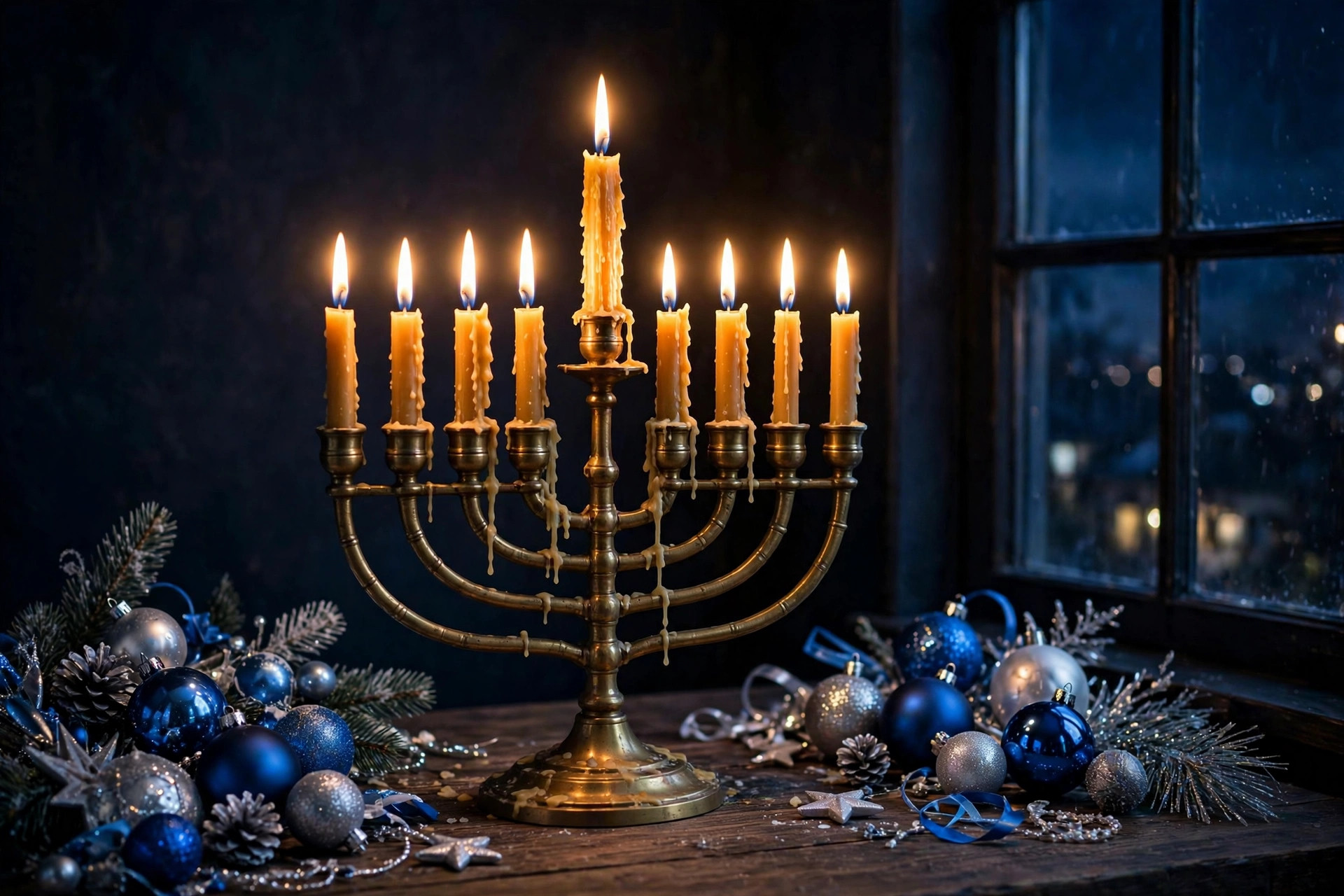
Learning how to light the menorah is the heart of celebrating Hanukkah at home. Each night of the eight-night festival, families gather to light one more candle, sing songs, and share food and stories together. The ritual is simple once you know the order — candles are placed from right to left and lit from left to right — but the details matter, from the helper candle called the shamash to the blessings said before lighting. In 2026, Hanukkah begins on the evening of Friday 4 December, with the first candle lit that night.
Key Facts
- Hanukkah lasts eight nights, and one additional candle is lit each night.
- The menorah used for Hanukkah is called a hanukkiah and has nine branches: eight for the nights of Hanukkah plus the shamash, the helper candle.
- Candles are placed in the menorah from right to left, and lit from left to right, so the newest candle is always lit first.
- The shamash is used to light the other candles and sits in a raised or separate holder.
- Hanukkah in 2026 begins on the evening of Friday 4 December, with the last candle lit on the evening of Friday 11 December.
- Menorah candles are open flames, so they need a stable surface, a safe spot, and adult supervision at all times.
What Is the Menorah?
The menorah used during Hanukkah is properly called a hanukkiah. It has nine branches: eight candle holders in a row, one for each night of Hanukkah, plus a ninth holder for the shamash, the helper candle. The shamash usually sits higher than the others or in a separate position, so you can tell it apart at a glance.
Hanukkah celebrates the rededication of the Temple in Jerusalem more than 2,000 years ago, when a small amount of oil is said to have burned for eight days. Our guide to what is Hanukkah explains the story in full.
Menorahs come in many styles, from simple brass holders to modern glass designs, and families often keep the same one for years. Children may also have their own small menorah to light alongside the family one. Whatever style you choose, check that the candle holders are the right size for your candles and that the menorah stands firmly on a flat surface.
What You Need to Light the Menorah
Before the first night, gather everything you will need so the lighting goes smoothly.
- A hanukkiah with nine holders, placed on a stable, heatproof surface.
- Candles: 44 candles in total for all eight nights — one on the first night, two on the second, and so on, plus one shamash each night. Most families buy a box of Hanukkah candles, which are sold in packs of 44 or 45.
- Matches or a lighter for lighting the shamash.
- A candle or tray underneath to catch dripping wax, if your menorah does not have a drip tray.
- A prayer book or printed blessings, if you would like to say them. Many families also sing traditional songs such as “Maoz Tzur” after lighting.
How to Light the Menorah: Step by Step
Follow these steps each night. The routine is the same every evening — only the number of candles changes.
Step 1: Place the candles. On the first night, place one candle in the far-right holder. On the second night, place two candles in the two far-right holders, and so on. Each night, add the new candle to the left of the previous ones. In other words, candles are always placed from right to left.
Step 2: Place the shamash. Put the shamash in its own raised or separate holder. It is lit first and used to light the other candles, and it stays lit with them while they burn.
Step 3: Light the shamash. Light the shamash with a match or lighter. This is the only candle you light directly from a match.
Step 4: Say the blessings. Before lighting the other candles, say the blessings. Two blessings are said every night: one thanking God for the commandment to kindle the Hanukkah lights, and one thanking God for the miracles of Hanukkah. On the first night only, a third blessing, the Shehecheyanu, is added to mark the start of the festival.
Step 5: Light the candles. Use the shamash to light the other candles from left to right. This means the newest candle — the one you added tonight — is lit first, then the ones to its right. After lighting them, put the shamash back in its holder.
Step 6: Let the candles burn. Hanukkah candles should burn for at least half an hour after nightfall. While they burn, families often sing songs, eat festive food, play dreidel, and exchange small gifts. Enjoy the light, and let the candles burn down on their own — do not blow them out early unless safety requires it.

When to Light the Menorah
The menorah is traditionally lit after sunset, once the stars come out. In 2026, the first candle is lit on the evening of Friday 4 December, and the eighth and final candle is lit on the evening of Friday 11 December. Because the first night falls on a Friday, families light the menorah before the Shabbat candles that evening, following the usual order for a Friday night.
Menorah Candle Safety
Menorah candles are open flames, so safety comes first — especially in a home with children or pets. Place the menorah on a flat, stable, heatproof surface, away from curtains, paper decorations, and anything flammable. Keep it out of reach of small children and pets, and never leave lit candles unattended in a room.
Use candles that fit snugly in the holders so they do not tip over, and keep a small fire extinguisher or a jug of water nearby, just in case. If a candle falls or the flame catches something, blow it out calmly and move the menorah to a safer spot. Before you buy a new menorah, candles, or any children’s Hanukkah product, it is worth checking the U.S. Consumer Product Safety Commission’s recalls and product safety warnings for any safety notices on the items you plan to use.
Making the Lighting a Family Tradition
The lighting takes only a few minutes, but it can become the best part of the evening. Gather everyone together, turn off the overhead lights, and let the candles be the only light in the room. Sing a song, tell the story of Hanukkah to the children, or share one thing you are grateful for that day.
After the lighting, many families eat latkes and sufganiyot, play dreidel, and give small gifts. Our Hanukkah recipes have simple versions of the classic dishes, and our Hanukkah decoration ideas can help you dress the table for the festival.
If you are celebrating Hanukkah for the first time, do not worry about getting every detail perfect. The heart of the tradition is simple: light the candles, gather your family, and share the light. With each night, the menorah grows brighter, and by the eighth night the whole row glows — a lovely picture of the festival itself.

Frequently Asked Questions
How many candles do you light on the menorah each night?
One candle on the first night, two on the second, and so on, adding one each night until all eight are lit on the eighth night. You also light the shamash, the helper candle, every night.
Which direction do you light the menorah?
Candles are placed in the menorah from right to left and lit from left to right. This means the newest candle is always lit first, and the shamash is used to light the others.
What is the shamash candle?
The shamash is the helper candle. It sits in a separate or raised holder on the menorah, is lit first with a match, and is then used to light the other candles. It stays lit alongside them while they burn.
When is Hanukkah in 2026?
Hanukkah begins on the evening of Friday 4 December 2026, when the first candle is lit. The eighth and final candle is lit on the evening of Friday 11 December 2026.
How long should menorah candles burn?
Hanukkah candles should burn for at least half an hour after nightfall. Most standard candles are made to last about that long. Let them burn down on their own, and keep the menorah in view until the flames go out.
Leave a Reply