
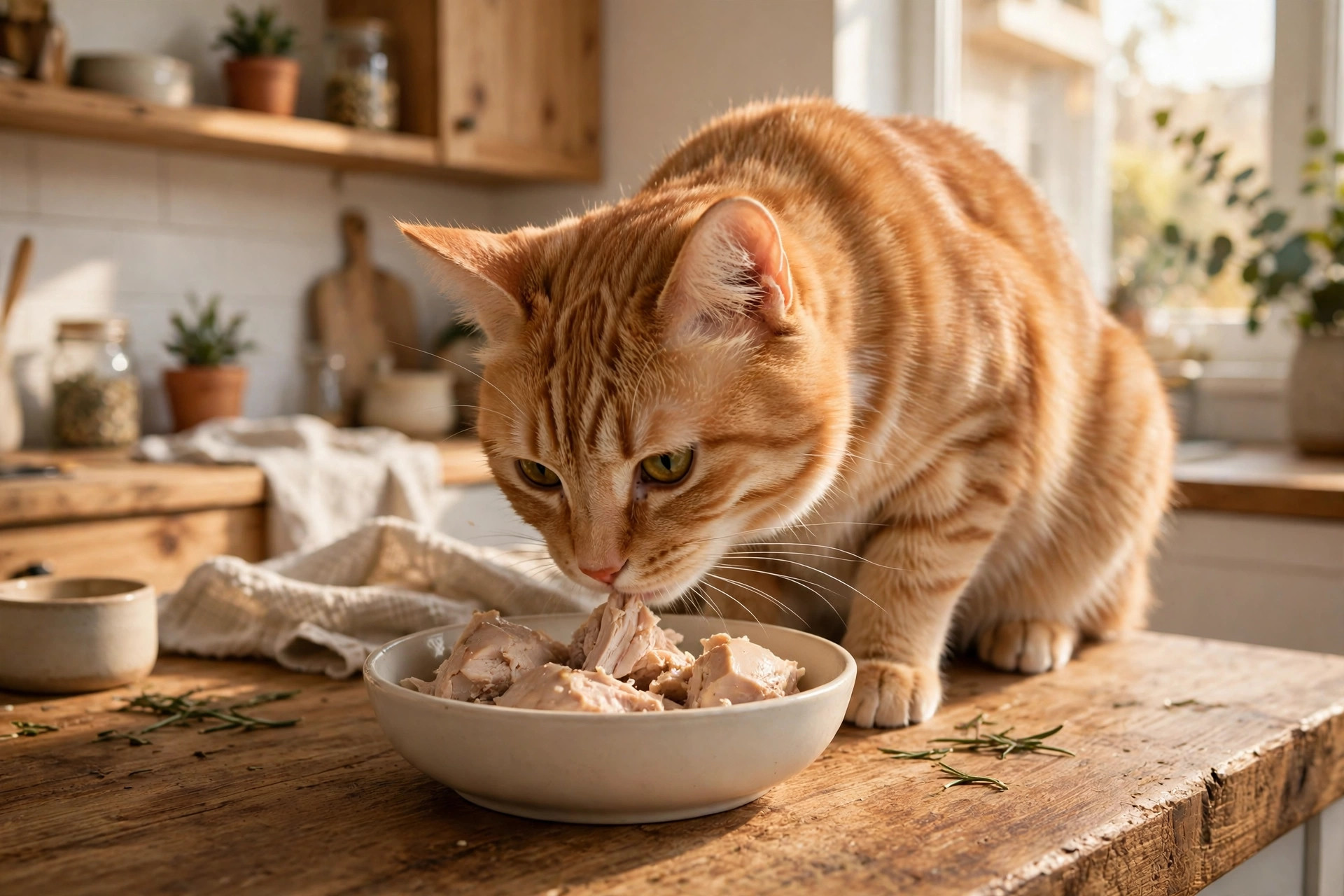
Can cats eat chicken? Yes, plain cooked chicken is one of the safest and healthiest treats you can give a cat. It is lean, high in protein and easy to digest, and most cats love it. Cooked chicken is so well suited to cats that it is often one of the main ingredients in commercial cat food. The important details are in the preparation: chicken must be cooked thoroughly, served plain without skin, bones or seasoning, and given in small amounts as a treat rather than a replacement for a balanced cat food.
Key Facts
- Plain, cooked chicken without skin, bones or seasoning is safe for cats.
- Chicken is lean, high in protein and easy for cats to digest.
- Cooked bones can splinter and cause serious injuries, so remove them all.
- Raw chicken can carry salmonella and other bacteria, so it should be cooked thoroughly.
- Onion, garlic and rich sauces served with chicken are toxic or harmful to cats.
- Chicken is a treat, not a complete diet, and should stay within about 10 percent of daily calories.
Why Cooked Chicken Suits Cats
Cats are obligate carnivores, which means they need animal protein to thrive. Chicken is an excellent source of that protein: lean, low in fat when the skin is removed, and rich in the amino acids cats need. It is also gentle on the stomach, which is why vets often recommend plain boiled chicken for cats recovering from a digestive upset.
Because chicken is so digestible, it suits fussy eaters and cats with sensitive stomachs, and a few small pieces can tempt a cat that has gone off its food. That said, chicken alone does not provide the full range of nutrients a cat needs, so it should always be an addition to a complete cat food, not a substitute for it.
How to Serve Chicken Safely
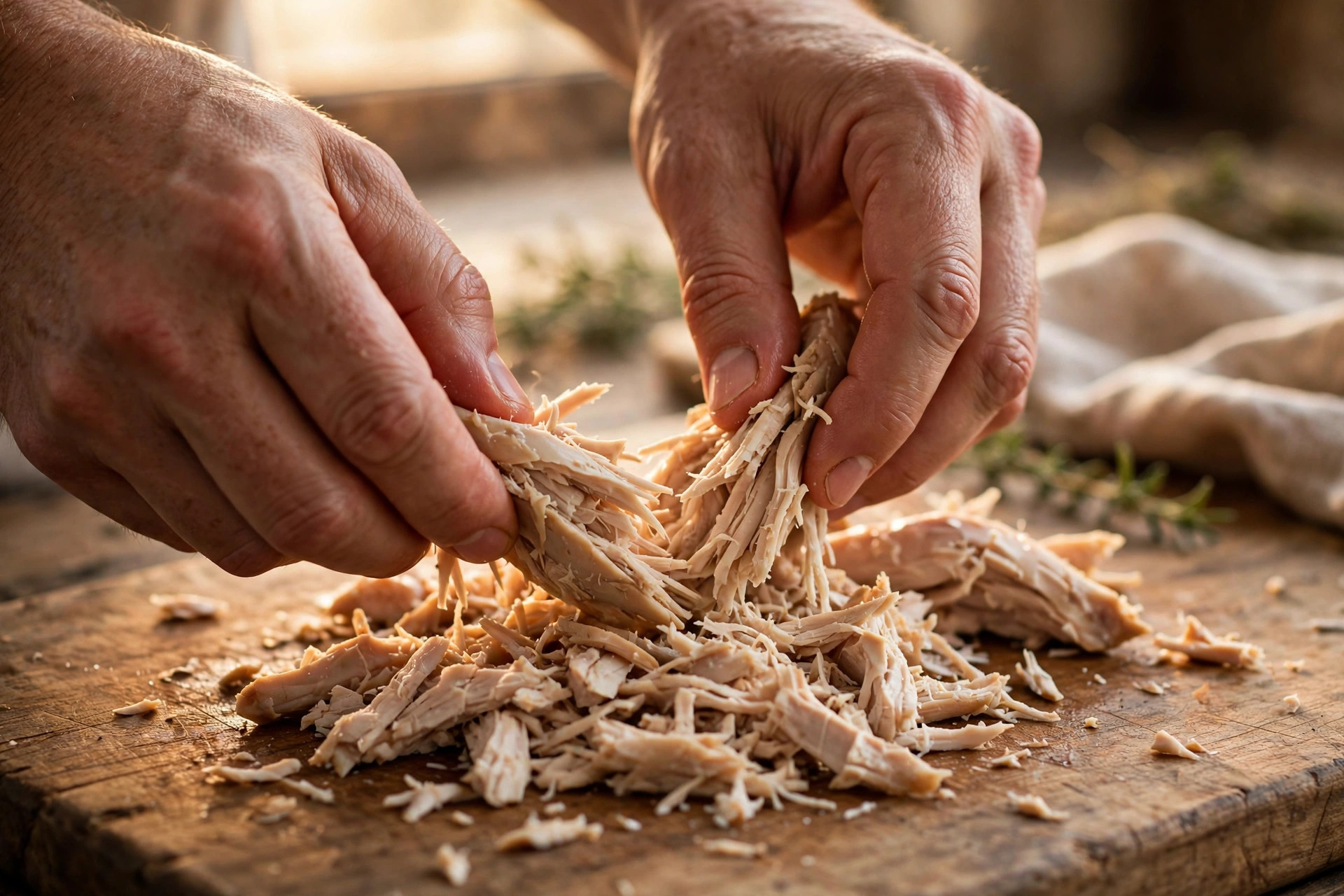
The safest way to prepare chicken for a cat is to boil, bake or grill it with no oil, butter, salt, seasoning or marinade. Poaching a chicken breast in plain water is the simplest method and keeps the meat moist and easy to shred. Let it cool to room temperature, remove all skin and bones, and cut or shred it into small, cat-sized pieces.
A tablespoon or two is plenty for most cats as a treat. If your cat has never had chicken before, start with a very small piece and watch for any signs of digestive upset over the next day. Kittens, elderly cats and cats with kidney disease or food sensitivities should be introduced to new foods gradually — check with your vet first.
Raw Chicken: Why It Is Risky
Raw chicken should not be given to cats. Raw poultry can carry salmonella, campylobacter and other bacteria that can make both cats and people in the household ill. A cat that eats raw chicken can shed these bacteria in its faeces, which is a particular concern in homes with small children, elderly people or anyone with a weakened immune system.
Some raw-feeding supporters argue that cats eat raw prey in the wild, but shop-bought raw chicken carries a different risk profile, and most veterinary organisations advise cooking poultry thoroughly before feeding it to pets.
The same caution applies to other raw animal products. Raw eggs, for instance, carry a salmonella risk and can also interfere with the absorption of biotin, a B vitamin, so they should always be cooked too, as our guide on whether cats can eat eggs explains.
What to Avoid: Bones, Skin and Seasoning
Bones are the most serious hazard. Cooked chicken bones become brittle and can splinter into sharp pieces that cut the mouth, throat or intestines, or cause a blockage. This includes the small bones in wings and drumsticks, which are easy to overlook. Never give a cat a chicken bone, even a large one, and keep the carcass out of reach while clearing up after a meal.
Chicken skin is very fatty and can cause vomiting, diarrhoea or pancreatitis, a painful inflammation of the pancreas. Always remove the skin before serving chicken to your cat. Fatty trimmings and the skin from a roast should go in the bin, not in the cat’s bowl.
Seasoning is the third risk. Onion and garlic, whether raw, cooked or powdered, are toxic to cats and can damage their red blood cells. Shop-bought rotisserie chicken is often rubbed with garlic, onion powder, paprika and salt, so it is not a safe choice even though the meat itself is cooked. Sauces and gravies are usually full of fat, salt and onion as well. Plain, home-cooked chicken is always the safest option.
Can Cats Eat Chicken Every Day?
Chicken can be offered regularly in small amounts, but it should not become the main part of your cat’s diet. A cat that eats mostly chicken will miss out on the balanced vitamins, minerals and amino acids in a complete cat food, including taurine, which cats cannot produce themselves and which is essential for heart and eye health.
A practical approach is to offer a small portion of plain cooked chicken a few times a week as a treat or a topper on the cat’s normal food. If your cat is on a veterinary diet for a medical condition, ask your vet before adding chicken, since even a small change can affect the diet’s balance.
Cheese is another food owners often offer alongside chicken, and our article on whether cats can eat cheese explains why most cats tolerate only a tiny amount, since many are lactose intolerant.
Chicken for Cats With Sensitive Stomachs
Plain boiled chicken is one of the first foods vets recommend for cats with a mild digestive upset, precisely because it is so easy to digest. It is often paired with a small amount of plain cooked pumpkin, which adds gentle fibre and can help firm up loose stools. Our guide on whether cats can eat pumpkin explains how to prepare it and how much to serve.
If your cat has been vomiting or has diarrhoea, offer small, frequent portions of plain chicken rather than a large meal, and make sure fresh water is always available. If symptoms last more than a day, or your cat becomes lethargic, stops drinking or shows signs of pain, contact your vet.
Keeping Chicken Safe in the Kitchen
Good kitchen hygiene matters when you are preparing chicken for your cat. Keep raw chicken separate from other foods, wash your hands and any boards or knives that touched raw meat, and store cooked chicken in the fridge for no more than two to three days. Do not leave cooked chicken out at room temperature for long periods, and never offer chicken that smells off or has passed its use-by date.
If you want a fuller picture of which common foods and household items to keep away from your pet, check the FDA’s list of potentially dangerous items for your pet, which covers the foods and products that most commonly cause problems for cats and dogs.
What to Do If Your Cat Eats Something Unsafe
If your cat eats a chicken bone, seasoned meat, stuffing or skin, watch it closely for the next 24 hours. Signs of trouble include vomiting, diarrhoea, loss of appetite, lethargy, drooling, coughing or difficulty swallowing. If your cat has eaten onion, garlic or a cooked bone, contact your vet straight away, even if the cat seems fine, because symptoms can be delayed and a bone can cause damage as it moves through the gut.
Do not try to make your cat vomit at home unless your vet specifically tells you to. Note what your cat ate, how much and when, and take any packaging with you if you visit the vet. Quick, accurate information helps the vet decide on the right treatment.
Frequently Asked Questions
Can cats eat chicken every day?
In small amounts, yes, but chicken should not replace a complete cat food. It lacks the full balance of vitamins, minerals and amino acids a cat needs daily. Offer a tablespoon or two a few times a week as a treat or topper.
Is raw chicken safe for cats?
No. Raw chicken can carry salmonella and other bacteria that can make cats and people ill. Always cook chicken thoroughly before offering it to your cat, and wash your hands and utensils after handling raw meat.
Can cats eat chicken bones?
No. Cooked bones can splinter and injure the mouth, throat or intestines, or cause a blockage. Never give a cat any chicken bone, and dispose of the carcass where the cat cannot reach it.
Can kittens eat chicken?
Yes, a kitten over eight weeks old can have a tiny amount of plain cooked chicken as an occasional treat. Keep portions very small, shred the meat finely, and make sure the kitten’s main diet is a complete kitten food.
Can cats eat rotisserie chicken?
It is best to avoid it. Shop-bought rotisserie chicken is usually seasoned with garlic, onion powder, salt and other flavourings that are not safe for cats, and the skin is very fatty. Plain, home-cooked chicken is a much safer choice.
Can cats eat chicken skin?
No. Chicken skin is very high in fat and can cause vomiting, diarrhoea and pancreatitis. Always remove the skin and any visible fat before offering chicken to your cat.
Leave a Reply