
Can cats eat pumpkin? Yes, cats can eat plain, cooked pumpkin in small amounts, and it is often suggested as a gentle, fibre-rich addition to a balanced diet. The key word is plain: unsweetened, unspiced, cooked pumpkin flesh, or plain canned pumpkin with no added sugar, salt, spices or other ingredients, is the only form that belongs in a cat’s bowl.
Pumpkin pie filling, spiced mixes, raw pumpkin and decorative pumpkins are not suitable, and they can cause stomach upset. Cats are obligate carnivores, so meat must form the foundation of their diet, but small amounts of certain plant foods can still play a useful supporting role. Pumpkin is soft, mild and rich in soluble fibre, which can help with both mild constipation and loose stools. Even so, it is a supplement, never a substitute for complete cat food.

Key Facts
- Cats can eat plain, cooked pumpkin in small amounts; it is not toxic to cats.
- Only plain pumpkin is safe: no sugar, salt, spices, butter, cream or pie filling.
- A typical serving is about one teaspoon for an average-sized adult cat, offered occasionally.
- Pumpkin is rich in soluble fibre, which may help mild digestive upsets in either direction.
- Pumpkin pie filling and spiced pumpkin products are not safe for cats.
- Introduce a new food slowly and stop if vomiting, diarrhoea or loss of appetite follows.
- Kittens, senior cats and cats with medical conditions need veterinary advice before any diet change.
Why Pumpkin Can Help Cats
The main benefit of pumpkin for cats is its fibre content. Soluble fibre absorbs water and forms a gel-like substance in the gut, which can slow digestion slightly and give the bowel something to work with. For a cat with mild constipation, that added bulk and moisture can make passing stools easier. For a cat with mild, short-lived diarrhoea, the same fibre can help firm things up by absorbing excess water.
Pumpkin also contains vitamin A, vitamin C, potassium and beta-carotene, which gives the flesh its orange colour. These nutrients are present in modest amounts, and a teaspoon of pumpkin will not transform a cat’s health on its own. The real value is practical: pumpkin is easy to prepare, easy to portion, palatable to many cats, and low in fat and calories, so a small serving will not unbalance an otherwise complete diet. It is not a medicine, however, and it will not fix a serious digestive problem, a blockage or an infection.
Which Pumpkin Is Safe, and Which Is Not
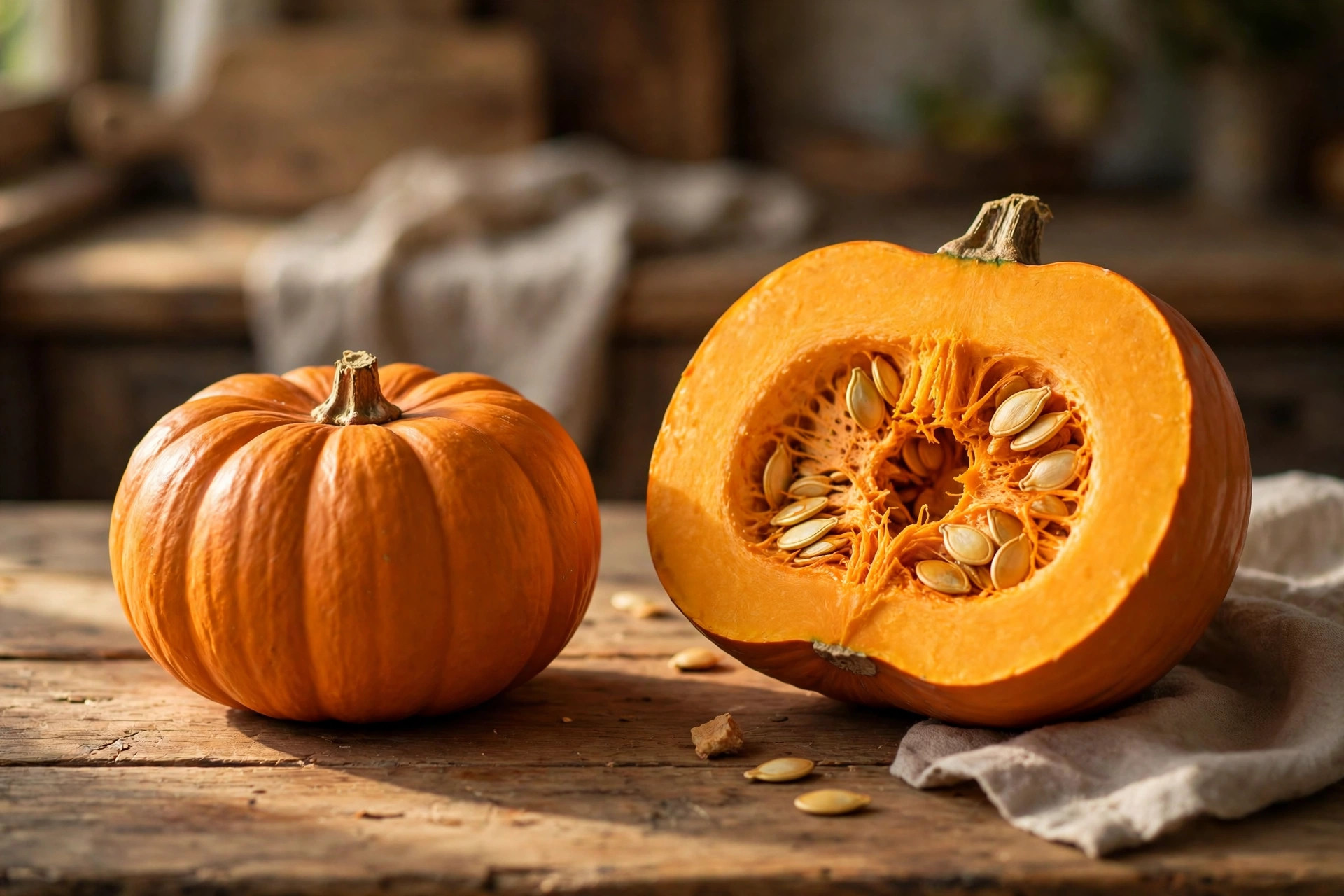
Fresh pumpkin, cooked until soft and mashed without additions, is a good choice. Cut it into chunks, remove the skin and seeds, boil, steam or roast it plain, then mash and cool it before serving. Plain canned pumpkin is equally suitable and often more convenient, provided the label lists pumpkin as the only ingredient. Check the tin carefully: many tins that look similar contain pumpkin pie mix, which is sweetened and spiced, and that product must not be given to cats.
Raw pumpkin is hard and difficult to digest, so it should not be offered. The skin, stem and seeds can be choking hazards or irritants, and they are best discarded. Decorative pumpkins, carved lanterns and pumpkins that have been sitting out for days can harbour mould and bacteria, and they may have been treated with preservatives or paint. The same caution applies to pumpkin-flavoured treats and desserts made for people, where sugar, dairy and spices make them unsuitable.
How Much Pumpkin to Give a Cat
For an average-sized adult cat, one teaspoon of plain mashed pumpkin, offered once a day at most and only a few times a week, is a sensible starting point. Some larger cats may tolerate a tablespoon, but there is no benefit in pushing the amount higher, and larger servings are more likely to cause soft stools or a reduced appetite for their proper food.
Start smaller than you think you need to. Offer half a teaspoon mixed into wet food or served on its own, and watch your cat for a day. If the stool remains normal and your cat seems comfortable, you can continue with the small serving. If you notice vomiting, diarrhoea, flatulence or a refusal to eat, stop and return to the usual diet. Kittens, senior cats and cats with diabetes, kidney disease or digestive conditions should not be given pumpkin without veterinary guidance, because even a harmless food can interact with a treatment plan.
How to Serve Pumpkin to Your Cat
For fresh pumpkin, peel it, remove seeds and stringy pulp, cut the flesh into small cubes, and cook until completely soft. Drain well, mash to a smooth consistency, and let it cool to room temperature. For canned pumpkin, spoon out the amount you need and check that it is plain, with no added ingredients. Leftover pumpkin should be refrigerated and used within a few days, or frozen in small portions, such as in an ice cube tray, for later use.
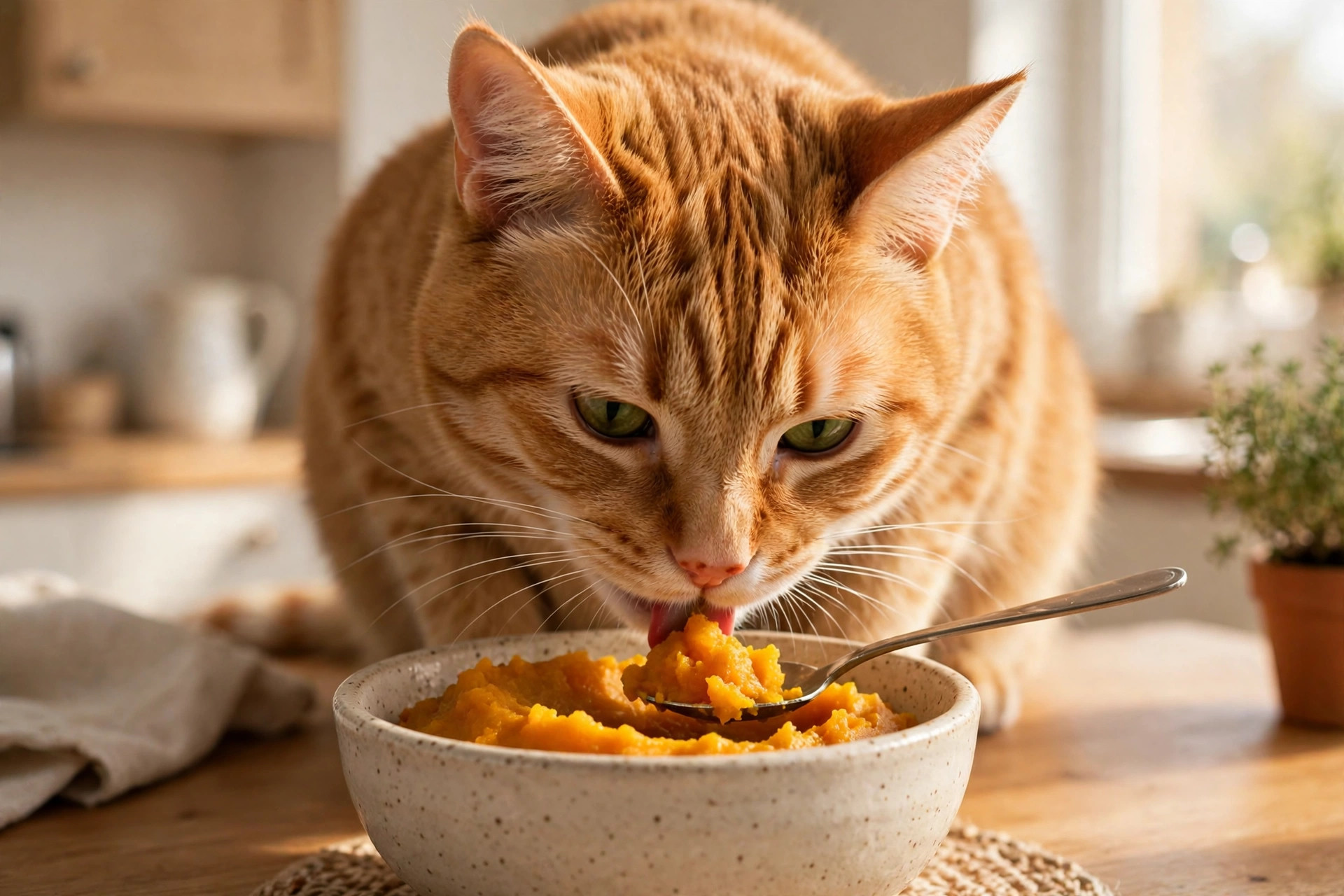
Place a small amount in a separate dish beside the usual food, or mix it into wet food so the flavour is less obvious. Mixing often works better for cautious cats, because the familiar smell of their regular food dominates. Do not add butter, oil, salt, honey, cinnamon, nutmeg or any sweetener. Nutmeg in particular is worth avoiding, as it is not suitable for cats, and spiced products frequently contain it.
For a wider sense of how nutrition data is recorded, the USDA FoodData Central database provides detailed nutrient information for pumpkin and many other foods, which can help owners understand what a food actually contains rather than relying on marketing claims.
Risks and When to Call the Vet
Plain pumpkin is well tolerated by most healthy adult cats, but no new food is entirely without risk. The most common problem is digestive upset from too large a serving or from an ingredient that was not actually plain. Vomiting, diarrhoea, gas and a reduced appetite are the usual signs, and they normally settle once the food is withdrawn. If symptoms are severe or persistent, or accompanied by lethargy, blood, or a refusal to drink, seek veterinary advice promptly.
Allergies to pumpkin are uncommon, but any new food can theoretically trigger a reaction, so introduce only one new food at a time. Another risk is displacement: if treats and extras regularly replace part of a complete diet, the cat may miss out on essential nutrients, particularly protein. Treats and extras combined should make up no more than about ten per cent of daily calories. Skip home additions and call the vet if your cat has not passed a stool for more than two days, is straining, has a swollen abdomen, is vomiting repeatedly, or has blood in vomit or stool.
Pumpkin, Turkey and Eggs: The Same Plain-and-Small Rule
Cat owners who also keep dogs sometimes assume that what suits one pet suits the other, but cats need a higher proportion of animal protein than dogs, which are omnivores. Pumpkin can suit both species in its plain form, yet the pie version is a different food entirely, as our guide to can dogs eat pumpkin pie explains. Holiday cooking raises similar questions for other foods: plain cooked turkey differs from seasoned, fatty leftovers, as covered in our guide to can cats eat turkey, and preparation and portion decide the answer for eggs too, as our guide to can cats eat eggs shows.
Frequently Asked Questions
Can cats eat pumpkin every day?
A small amount can be offered occasionally, but daily pumpkin is unnecessary for most cats. A few times a week at most is plenty, and it should never replace complete cat food.
Is canned pumpkin safe for cats?
Plain canned pumpkin with pumpkin as the only ingredient is safe in small servings. Avoid pumpkin pie filling and any tin with added sugar, salt, spices or other ingredients.
Can cats eat pumpkin seeds?
Pumpkin seeds are best avoided. They are hard, can be a choking hazard, and offer no benefit that the soft flesh does not already provide more safely.
How much pumpkin should I give my cat?
Start with half a teaspoon for an average adult cat and, if tolerated, use about one teaspoon occasionally. Larger servings increase the risk of stomach upset.
Can pumpkin help a constipated cat?
Pumpkin’s soluble fibre may help mild constipation by adding bulk and moisture to stools. If constipation lasts more than two days or your cat is straining, contact a vet instead.
Can kittens eat pumpkin?
Kittens should not be given pumpkin without veterinary advice, because their digestive systems and nutritional needs are still developing and are more sensitive to dietary changes.
Leave a Reply