
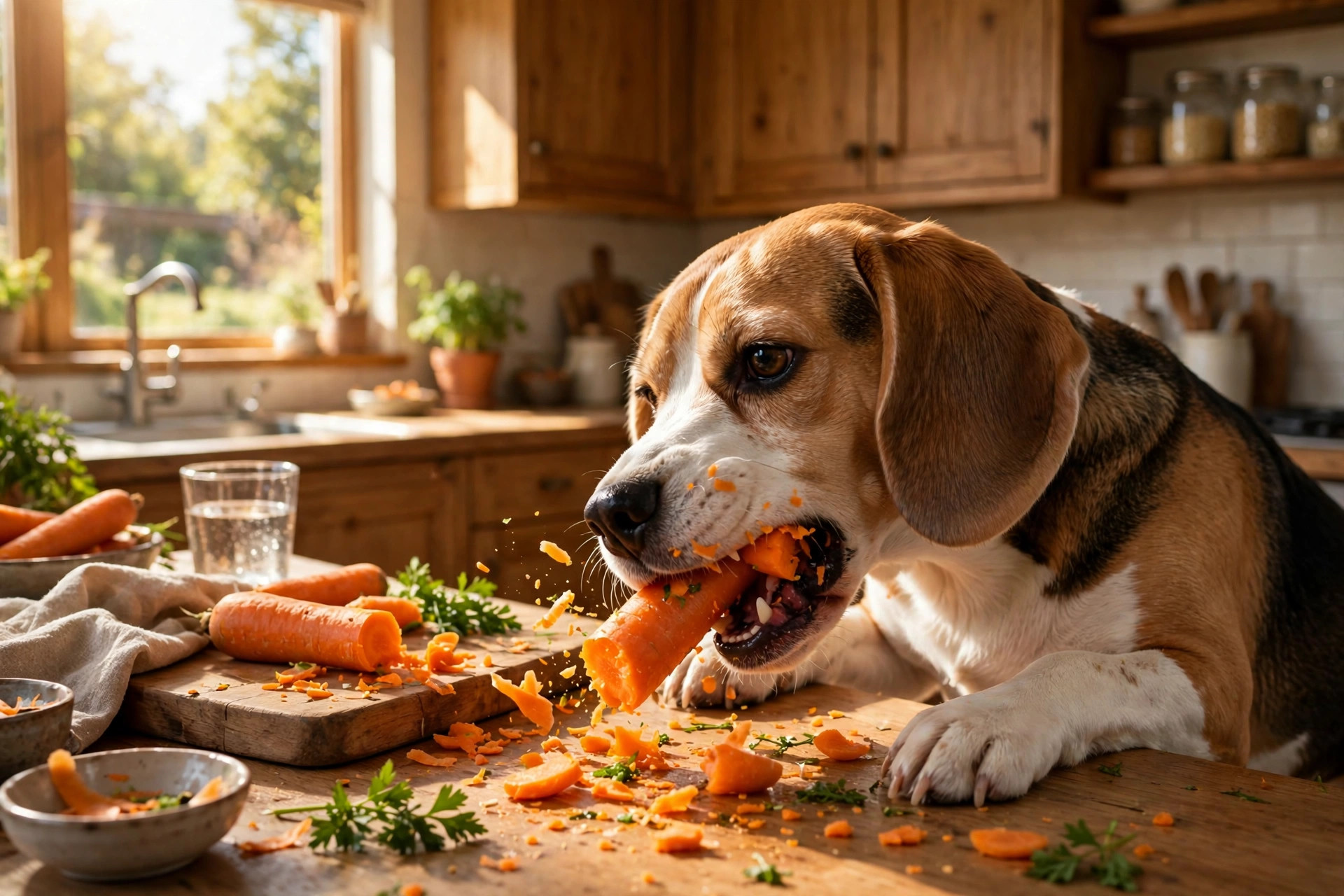
Yes, can dogs eat carrots? Plain carrots are safe for most dogs when they are served in moderation, and they make a healthy, low-calorie alternative to many shop-bought treats. Raw carrots are crunchy and satisfying, while cooked carrots are softer and easier to digest, so most dogs can enjoy them in one form or another. The key is the right size, the right amount, and a plain preparation with no seasoning, butter, glaze, or added sugar.
Key Facts
- Plain raw and cooked carrots are safe for most dogs in moderation.
- Carrots are low in calories and a good source of fibre, vitamin A, and beta-carotene.
- Cut carrots into bite-sized pieces to reduce the risk of choking, especially for small dogs.
- Treats, including carrots, should make up no more than 10% of your dog’s daily calories.
- Never serve seasoned, glazed, buttered, or sugared carrots to a dog.
- Introduce carrots slowly and watch for any digestive upset or allergic reaction.
- If your dog has a health condition or is on a special diet, ask your vet first.
Why Carrots Are Good for Dogs
Carrots offer several genuine benefits, which is why vets often mention them as a sensible treat. They are naturally low in calories and fat, so they are a good choice for dogs that need to lose weight or stay at a healthy weight. A medium carrot contains only a small number of calories, yet it feels substantial to a dog because of its crunch and size. That makes it far more satisfying than a tiny biscuit of the same calorie value.
Carrots are also a useful source of fibre, which supports healthy digestion, and vitamin A, which the body makes from beta-carotene and which supports vision, skin health, and the immune system. The crunch of a raw carrot can help scrape away some plaque from the surface of the teeth, although it is no substitute for brushing or proper dental care. Many dogs enjoy the texture and mild sweetness, which makes carrots a useful training reward.
Are There Any Risks?
The main risk is choking, particularly with whole carrots or large chunks. Small dogs, puppies, and dogs that gulp their food without chewing are most at risk. A whole baby carrot can lodge in the throat, and a large piece of raw carrot can be hard to swallow. Cutting carrots into small, bite-sized pieces, or grating them for very small dogs, removes most of this risk.
Some dogs may develop digestive upset if they eat too many carrots at once, especially if they are not used to them. Too much fibre in one sitting can cause loose stools, gas, or a mildly upset stomach. This is usually temporary and settles once the amount is reduced, so start with a small portion and increase it gradually. Allergies to carrots are uncommon, but watch for itching, red skin, swelling around the face, vomiting, or diarrhoea, and stop feeding carrots and speak to your vet if you notice any of these signs.
Preparation matters as much as the carrot itself. Plain carrots are safe, but carrots cooked with butter, oil, salt, garlic, onion, sugar, or glaze are not a good idea. Garlic and onion are toxic to dogs, and sugary glazes add calories without any benefit. Carrot cake and other baked goods are also unsuitable, because they usually contain sugar, fat, and other ingredients dogs should not eat. If you are unsure whether a food is safe, check a trusted source first: the FDA publishes the FDA’s list of potentially dangerous items for your pet, which is a useful reference for foods and household items that can harm dogs and cats.
Raw Carrots vs Cooked Carrots: Which Is Better?
Both raw and cooked carrots are safe for dogs, and the best choice depends on your dog. Raw carrots keep their crunch, which many dogs love, and they take longer to eat, so they work well as a chew or a distraction. They are also the simplest option: wash, cut, and serve. For older dogs with worn teeth or sore gums, however, raw carrots can be too hard, and cooked carrots are a kinder choice.
Cooked carrots are softer and easier to digest, which makes them a good option for puppies, senior dogs, and dogs with sensitive stomachs. Steaming or boiling plain carrots until they are tender keeps most of their nutrients while making them much easier to chew and swallow. Avoid frying them or cooking them in butter or oil, and never add salt or seasoning. Once cooked, let them cool completely and cut them into small pieces before serving.
How Many Carrots Can a Dog Eat?
Portion size matters, even with a healthy food like carrots. The widely used guideline is that treats should make up no more than 10% of a dog’s daily calories, with the remaining 90% coming from a complete and balanced dog food. For most dogs, that means a few small pieces of carrot a day, rather than a whole carrot at every meal. A small dog might have one or two baby carrots or a few thin slices, while a large dog could manage a medium carrot cut into pieces across the day.
Start with a small amount when you first introduce carrots. Offer one or two small pieces and watch your dog for a day to see how their stomach responds. If there is no loose stool, gas, or discomfort, you can gradually increase the amount to a sensible daily portion. If your dog has a health condition such as diabetes, kidney disease, or a digestive disorder, ask your vet about a suitable amount first.
How to Serve Carrots Safely
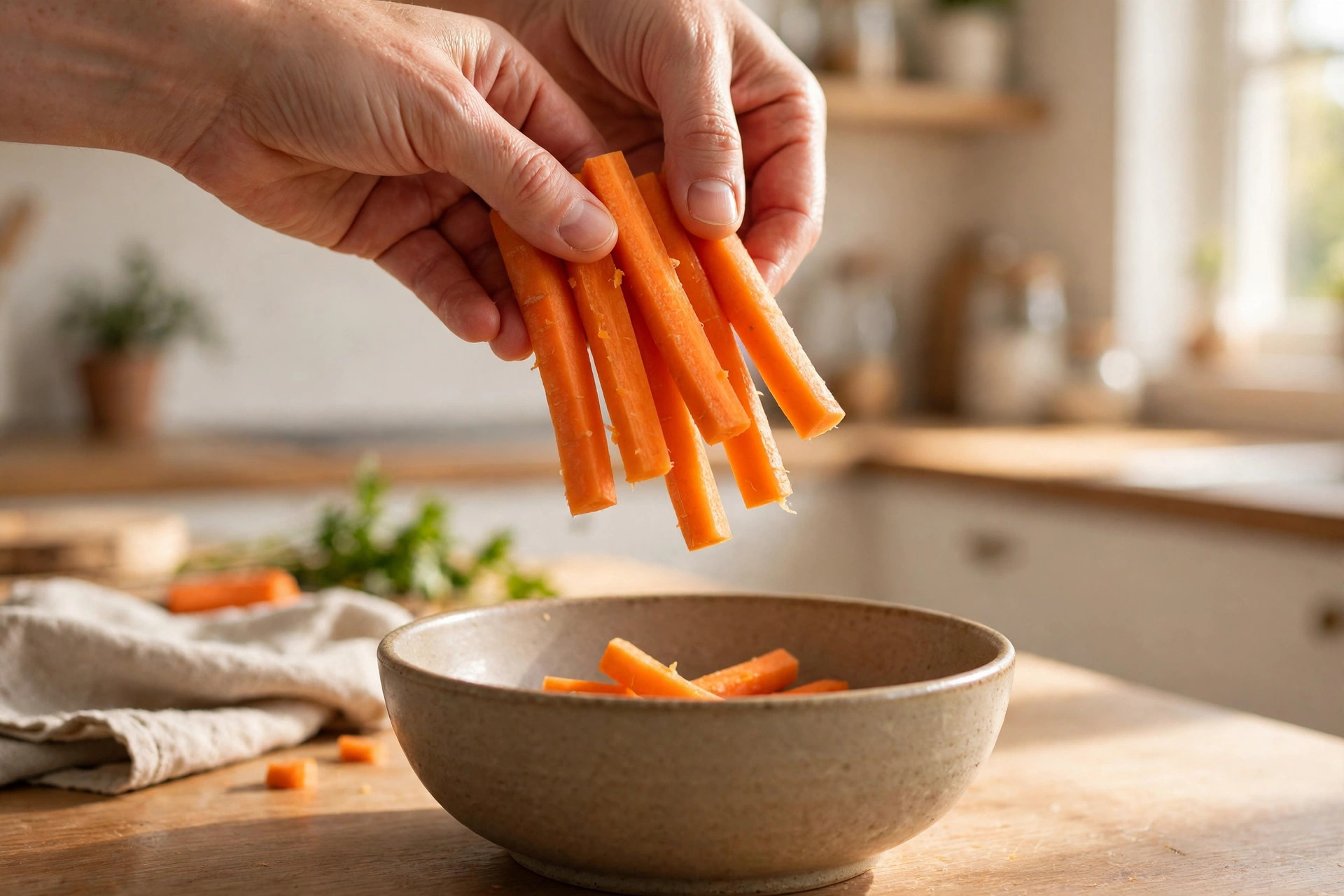
Always wash carrots thoroughly to remove soil and any residue, and peel them if the skin looks dirty. Cut them into pieces that match your dog’s size: thin sticks or small rounds for small dogs, and larger chunks for big dogs that chew properly. Never give a whole large carrot to a dog that gulps food, and always supervise the first few times.
For training, small pieces work best. Cut a carrot into pea-sized cubes so you can reward your dog many times without overfeeding. Avoid carrots from dishes prepared for people: roast carrots, glazed carrots, and carrots in a stir-fry sauce may contain butter, salt, sugar, garlic, or onion, all of which are unsuitable for dogs.
Can Puppies Eat Carrots?
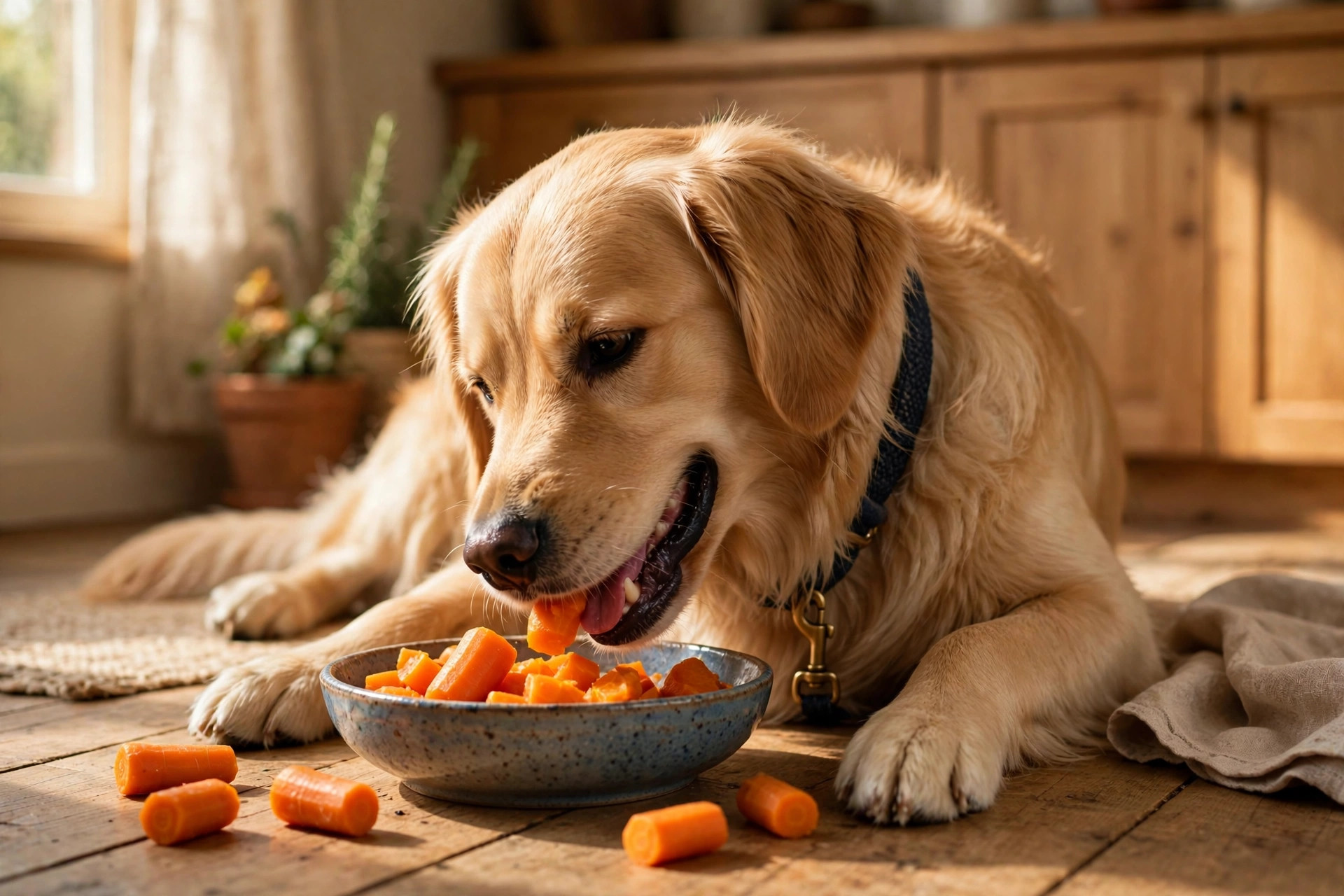
Puppies can eat carrots, and many owners find them especially useful during teething. A cold carrot stick from the fridge can soothe sore gums and give a puppy something safe to chew on. Cut the carrot into pieces a puppy can manage, supervise them while they chew, and introduce carrots in very small amounts, because a young digestive system is more sensitive than an adult’s. Cooked carrot is often the gentlest first option, since it is soft and easy to digest.
Other Healthy Vegetables to Try
If your dog enjoys carrots, there are other vegetables worth trying. Green beans are another low-calorie, crunchy option that many dogs enjoy raw or lightly cooked. Cucumber is refreshing and very low in calories, which makes it a good summer treat, especially for dogs that need to watch their weight. Sweet potatoes, served plain and cooked, are soft, sweet, and rich in fibre, although they are higher in calories than carrots, so portions should be smaller. As with carrots, introduce every new vegetable slowly and serve it plain.
Frequently Asked Questions
Can dogs eat carrots every day?
Yes, most healthy dogs can eat a small amount of plain carrot every day, as long as it stays within the 10% treat guideline. If your dog has diabetes or a digestive condition, check the portion with your vet first.
Are raw carrots safe for dogs?
Yes, raw carrots are safe for most dogs, but cut them into bite-sized pieces to reduce the risk of choking. Small dogs, puppies, and dogs that gulp food should have smaller pieces or grated carrot, and supervise your dog the first few times.
Are cooked carrots better than raw carrots for dogs?
Cooked carrots are softer and easier to digest, so they are often better for puppies, senior dogs, and dogs with sensitive stomachs or dental problems. Raw carrots suit dogs that enjoy a crunchy chew. Both are safe when served plain.
Can dogs eat carrot tops or carrot greens?
Carrot tops are not toxic to dogs, but they are not a good treat either. They can cause digestive upset and are not as nutritious as the root. Remove the green tops and feed only the washed, peeled carrot itself.
Can dogs eat baby carrots?
Yes, baby carrots are safe for dogs, but their small, round shape can be a choking risk, especially for small dogs or dogs that swallow food whole. Cut them in half lengthways or into small pieces before serving, and supervise your dog while they eat.
What should I do if my dog eats too many carrots?
A dog that eats too many carrots may develop loose stools, gas, or a mildly upset stomach, but this usually settles within a day once the amount is reduced. Offer fresh water and watch for vomiting or diarrhoea that lasts more than a day. If symptoms persist, contact your vet.
Leave a Reply