
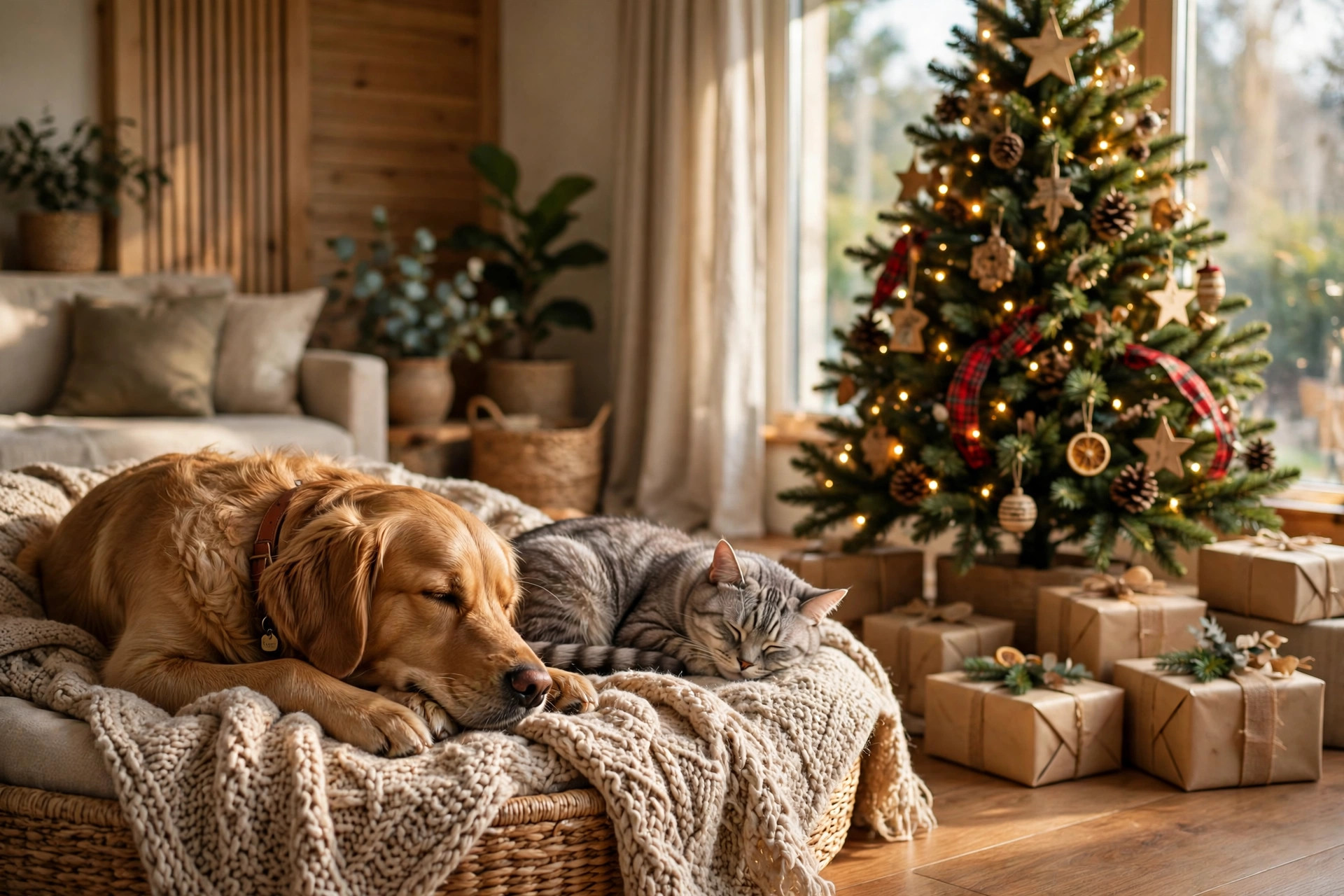
Learning how to keep pets safe during christmas is one of the best gifts you can give your dog or cat this year. The festive season fills homes with temptations and dangers that pets do not understand: chocolate under the tree, tinsel that looks like a toy, candles at nose height, and a house full of excited visitors. Most Christmas pet emergencies are preventable with a little planning. The twelve tips below cover the tree, the food, the decorations, and the guests, so your pets can enjoy the holidays safely.
Key Facts
- Chocolate, xylitol, grapes, raisins, onions, and macadamia nuts are toxic to dogs, and many of them appear in Christmas food.
- Cats are drawn to tinsel, ribbon, and string, which can cause a dangerous intestinal blockage if swallowed.
- Poinsettias, holly, mistletoe, and lilies are all toxic or irritating to pets, with lilies being especially dangerous to cats.
- Christmas tree water often contains preservatives and bacteria, so pets should never be allowed to drink it.
- Loud parties, fireworks, and constant visitors can stress pets, so every pet needs a quiet room to retreat to.
- If a pet eats something toxic, contact a vet immediately rather than waiting for symptoms to appear.
1. Secure the Christmas Tree
A climbing cat or an excited dog can bring a whole tree down in seconds, so anchor it properly. Use a heavy, stable stand, and tie the tree to a wall hook or a ceiling fixing with strong fishing line so it cannot topple. Place the tree in a corner where it is harder to knock over, and keep the most fragile ornaments on the upper branches. For more detail, read our guide to a cat-proof Christmas tree, which covers barriers, deterrents, and safe decoration choices.
2. Choose Pet-Safe Decorations
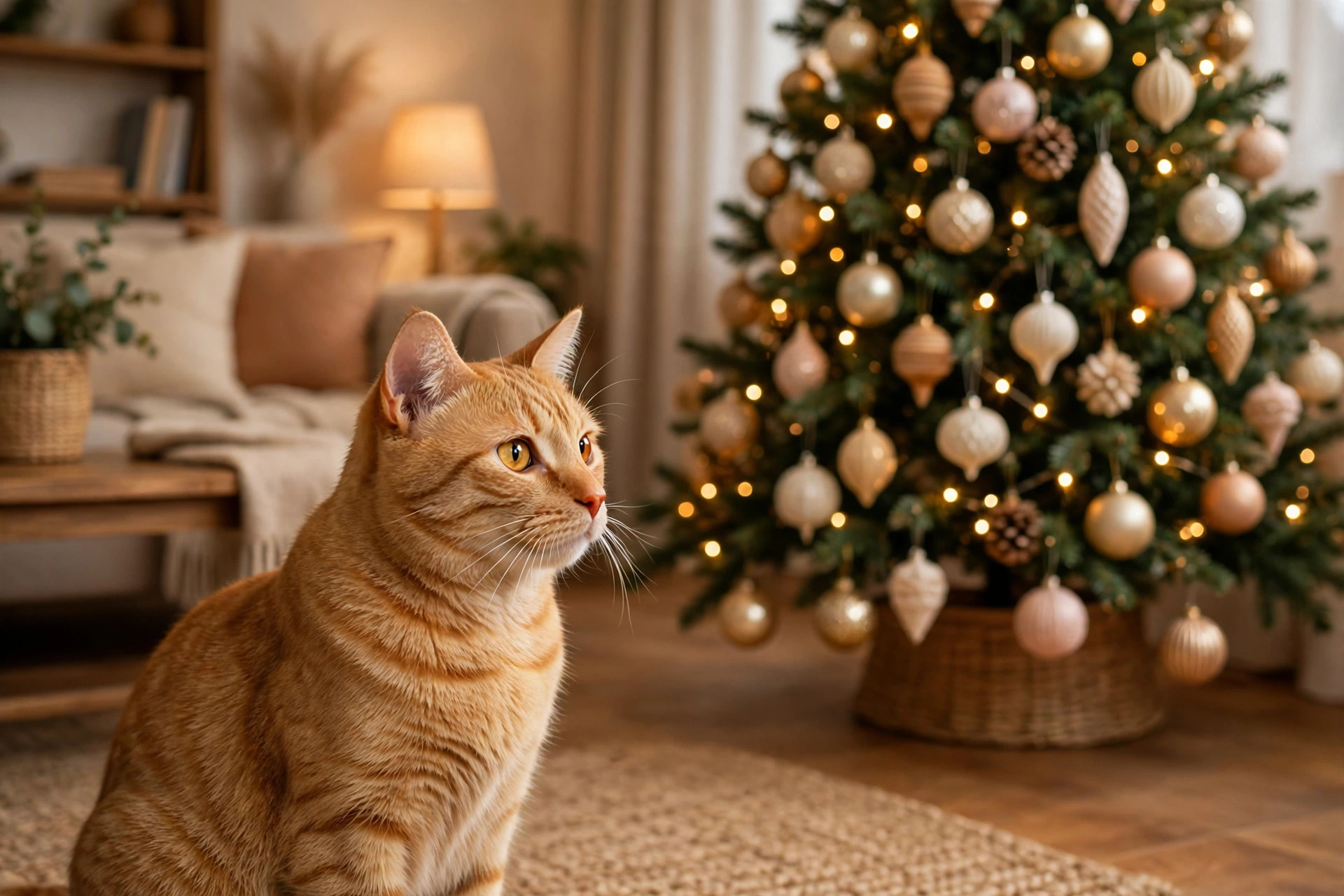
Tinsel and ribbon are beautiful to us and irresistible to cats, but swallowed tinsel can wrap around the intestines and cause a blockage that needs surgery. Skip tinsel altogether if you have a cat, and keep ribbon on presents short or out of reach. Choose shatterproof ornaments instead of glass baubles, which break into sharp pieces when knocked off the tree. Hang ornaments with short loops of string rather than long hooks, and avoid decorations that smell like food.
3. Keep Toxic Foods Out of Reach
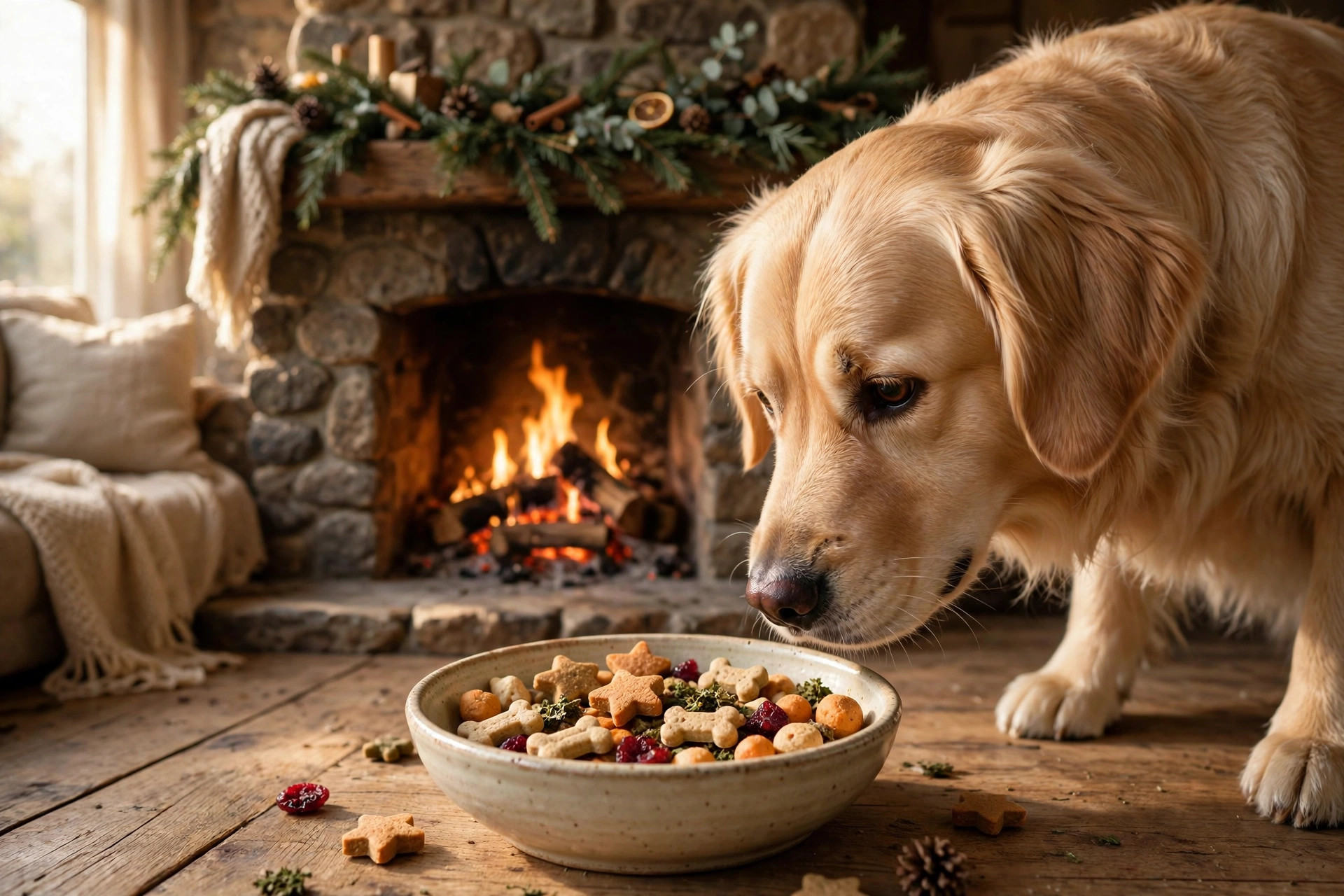
Christmas dinner is a minefield for pets. Chocolate, mince pies, Christmas pudding, and fruit cake often contain raisins, currants, and chocolate, all of which are toxic to dogs. Onions, garlic, and stuffing are dangerous too, and cooked bones can splinter and injure the gut. Guard the food table, remind guests not to slip treats under it, and store leftovers in sealed containers. To share the meal safely, read our guide on can dogs eat Christmas dinner for a clear list of what is safe and what is not.
4. Know the Dangerous Plants
Several classic Christmas plants are toxic to pets. Lilies are extremely dangerous to cats, even a small amount of pollen or a sip of vase water can cause kidney failure. Holly berries, mistletoe, and poinsettias are irritating and can cause vomiting, drooling, and diarrhoea. If you love festive plants, choose artificial versions, or keep real ones in a room your pets cannot enter. A full list of household hazards is on the FDA’s list of potentially dangerous items for your pet, which is worth bookmarking before the holidays.
5. Hide the Cables and Lights
Fairy lights are a chewing hazard for puppies, kittens, and rabbits, and a chewed cable can cause an electric shock or a mouth burn. Run cables behind furniture, cover them with cord protectors, and never leave a string of lights trailing across the floor. Battery-operated lights are safer than mains-powered ones for low decorations, and always switch lights off when you leave the room. The same rule applies to phone chargers left lying around during the festive chaos.
6. Give Pets a Quiet Space
Christmas parties are loud, crowded, and stressful for many pets. Set up a quiet room away from the main gathering, with your pet’s bed, water, a favourite toy, and a litter tray or a clear route outside. Let your pet choose to retreat there, and ask guests, especially children, not to follow or disturb them. A tired, stressed pet is more likely to snap or bolt, so a calm escape route prevents accidents. Soft music or a familiar blanket in the room helps too.
7. Watch the Wrapping Paper and Small Gifts
Wrapping paper, tape, and ribbon are fun to shred but dangerous to swallow, and small gifts such as batteries, magnets, and chocolate coins are a serious hazard. Button batteries are especially dangerous if swallowed, so keep them sealed and out of reach. Clear up wrapping mess promptly rather than letting pets play in it, and check the floor after presents are opened. If you are giving a pet a gift, choose a toy designed for their size and strength, and remove any small parts first.
8. Keep Alcohol Away from Pets
Alcohol is toxic to dogs and cats even in small amounts, and festive drinks are often left at pet height on coffee tables and the floor. A few laps of beer, wine, or a creamy liqueur can cause vomiting, disorientation, and dangerously low blood sugar. Clear glasses away promptly, never leave drinks unattended on low tables, and remind guests that even a small sip can harm a pet. Eggnog and cocktails containing xylitol are doubly dangerous, because the sweetener is toxic to dogs on its own.
9. Be Careful with Ham and Rich Foods
Ham is a popular Christmas meat, but it is very salty and fatty, and it can upset a pet’s stomach or trigger pancreatitis in dogs. A small piece of plain, cooked ham is usually fine for many dogs, but rich gravy, skin, and fatty offcuts are not. Cats are more sensitive to salty food, so check our guide on can cats eat ham before sharing your plate. Keep a stash of pet-safe treats ready so you can offer your pet something of their own while you eat.
10. Protect Pets from Candles and Fireplaces
Candles, open fires, and oil burners are a burn and fire risk for curious pets, especially cats that jump onto mantelpieces and dogs that wag their tails near flames. Never leave a candle burning in a room with an unsupervised pet, use sturdy holders that cannot be knocked over, and keep candles behind a guard or on a high shelf. Electric flameless candles give the same warm glow without the danger. If you have an open fireplace, use a fireguard so your pet cannot reach the hot surface.
11. Keep the Tree Water Covered
Real Christmas trees need water, but the water in the stand quickly becomes a breeding ground for bacteria, and it often contains tree preservatives or fertiliser. Dogs love to drink from it, and the result can be vomiting and diarrhoea. Cover the stand with a tree skirt or a towel so your pet cannot reach the water, and top it up regularly so the tree stays fresh. A well-watered tree also sheds fewer needles, which can irritate a pet’s paws and stomach if eaten.
12. Plan for Fireworks and Visitors
Fireworks, doorbells, and a stream of visitors can frighten even a confident pet. Keep pets indoors on New Year’s Eve and any night when fireworks are likely, close the curtains to block the flashes, and play background music to soften the bangs. Make sure your pet’s microchip details and ID tag are up to date in case they escape, and keep them on a lead in the garden during the festive period.
Frequently Asked Questions
What Christmas foods are toxic to dogs?
Chocolate, xylitol, grapes, raisins, currants, onions, garlic, macadamia nuts, and cooked bones are all dangerous for dogs. Mince pies, Christmas pudding, and fruit cake often contain several of these at once. Keep festive food out of reach and never feed your dog from the table without checking it first.
Can cats eat Christmas dinner?
Some plain cooked meats are safe for cats in small amounts, but ham, stuffing, gravy, and anything with onion or garlic should be avoided. Cats are especially sensitive to salty and fatty foods. Offer your cat a small portion of plain turkey or a cat-safe treat instead.
Is tinsel dangerous for cats?
Yes. Cats love to play with and swallow tinsel, ribbon, and string, which can cause a serious intestinal blockage that may need surgery. If you have a cat, skip tinsel entirely and use shatterproof ornaments instead.
Are poinsettias poisonous to pets?
Poinsettias are mildly toxic and can cause drooling, vomiting, and diarrhoea if eaten. They are less dangerous than lilies, which are extremely toxic to cats, but it is still best to keep poinsettias out of reach or choose artificial plants.
How do I keep my pet calm during a Christmas party?
Set up a quiet room with your pet’s bed, water, and toys, and let them retreat there whenever they want. Ask guests not to disturb them, and give your pet a long walk or play session before the party so they are relaxed.
What should I do if my pet eats chocolate?
Contact your vet immediately, even if your pet seems fine. Tell the vet how much chocolate was eaten, what type it was, and your pet’s weight. Do not wait for symptoms to appear, because early treatment is far more effective.
Leave a Reply